Noah Parker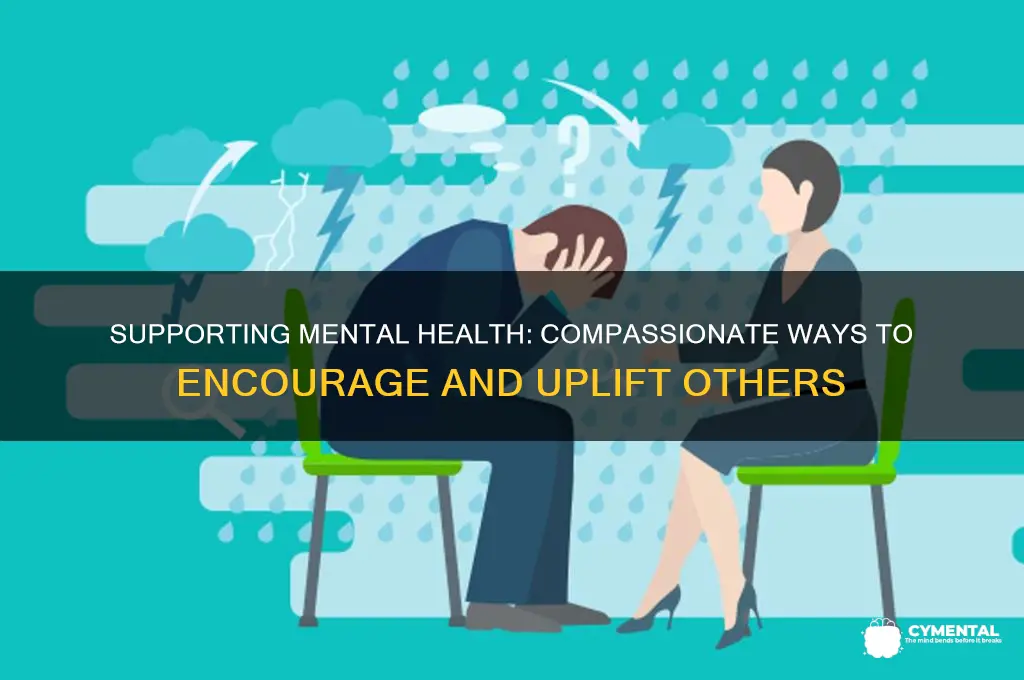
Encouraging someone with mental health issues requires empathy, patience, and understanding. It’s essential to create a safe, non-judgmental space where they feel heard and validated, allowing them to express their feelings without fear of criticism. Simple acts like active listening, acknowledging their struggles, and offering reassurance can make a significant difference. Encouragement should focus on small, achievable steps rather than overwhelming expectations, celebrating progress no matter how minor. Additionally, gently reminding them of their strengths and past resilience can help rebuild their confidence. Encouraging professional support, such as therapy or counseling, while respecting their autonomy, is also crucial. Above all, consistent presence and genuine care can provide the emotional support they need to navigate their journey toward healing.
| Characteristics | Values |
|---|---|
| Active Listening | Give undivided attention, avoid interrupting, and validate their feelings. |
| Empathy and Compassion | Show understanding and avoid judgment; acknowledge their struggles. |
| Non-Judgmental Attitude | Avoid criticism or blame; create a safe space for expression. |
| Encouragement and Positivity | Highlight strengths, progress, and small achievements. |
| Patience and Consistency | Be reliable and understanding; recovery takes time. |
| Avoid Minimizing Their Experience | Refrain from saying "it could be worse" or "just snap out of it." |
| Offer Practical Support | Help with daily tasks, appointments, or resources if they agree. |
| Respect Boundaries | Allow them to set limits on conversations or actions. |
| Educate Yourself | Learn about their condition to better understand and support them. |
| Encourage Professional Help | Gently suggest therapy, counseling, or support groups if needed. |
| Promote Self-Care | Encourage healthy habits like exercise, sleep, and mindfulness. |
| Avoid Pressuring for Solutions | Let them move at their own pace without forcing advice. |
| Stay Connected | Regularly check in without being intrusive; maintain a supportive presence. |
| Use Open-Ended Questions | Ask questions like "How are you feeling?" to encourage dialogue. |
| Celebrate Progress | Acknowledge and celebrate small victories in their journey. |
| Be Mindful of Language | Avoid stigmatizing terms and use respectful, supportive language. |
Explore related products


What You'll Learn
- Active Listening: Show empathy, focus fully, avoid interruptions, validate feelings, and reflect understanding
- Offer Support: Provide practical help, share resources, and remind them they’re not alone
- Encourage Self-Care: Promote healthy habits like sleep, exercise, and mindfulness for mental well-being
- Positive Reinforcement: Acknowledge progress, celebrate small wins, and highlight their strengths
- Be Patient: Understand recovery takes time; avoid pressure and respect their pace

Active Listening: Show empathy, focus fully, avoid interruptions, validate feelings, and reflect understanding
One of the most powerful tools in supporting someone with mental health issues is the art of active listening. It’s not just about hearing words; it’s about creating a safe space where the person feels seen, heard, and understood. Imagine a friend confides in you about their anxiety. Instead of jumping in with advice or sharing your own experiences, you pause, lean in, and say, “It sounds like this has been really overwhelming for you.” This simple act of empathy can make a world of difference. Active listening isn’t passive; it’s an intentional practice that requires presence, patience, and a genuine desire to connect.
To master active listening, start by focusing fully on the speaker. Put away distractions—no phones, no multitasking. Maintain eye contact (when culturally appropriate) and use nonverbal cues like nodding to show engagement. Avoid the urge to interrupt or prepare your response while they’re speaking. For instance, if someone is describing their depression, let them finish their thought before you respond. Interrupting, even with good intentions, can make them feel dismissed or rushed. Instead, give them the gift of your undivided attention, which communicates, “You matter, and what you’re saying matters.”
Validation is another critical component of active listening. Acknowledge the person’s feelings without judgment or minimization. Phrases like, “That sounds incredibly difficult,” or “I can see why you’d feel that way,” can help them feel understood. For example, if someone shares their struggles with self-worth, avoid saying, “You shouldn’t feel that way,” as it invalidates their experience. Instead, reflect back their emotions: “It must be exhausting to carry that weight.” Validation doesn’t mean you agree with their perspective, but it shows you respect their reality.
Reflecting understanding takes active listening a step further. Paraphrase what the person has said to ensure clarity and show you’re processing their words. For instance, if they mention feeling isolated, you might say, “It seems like you’ve been feeling really alone lately.” This not only confirms your understanding but also encourages them to elaborate. Be cautious, though—avoid overusing this technique, as it can feel robotic if done excessively. Aim for a natural flow that prioritizes connection over perfection.
In practice, active listening is a skill that improves with time and intention. Start small: set aside 10 minutes a day to fully engage with someone without distractions. Gradually, you’ll notice how this approach fosters trust and openness. Remember, the goal isn’t to fix their problems but to provide a supportive presence. By showing empathy, focusing fully, avoiding interruptions, validating feelings, and reflecting understanding, you become a beacon of encouragement in their journey toward mental well-being.
Singulair and Mental Health: Frequency of Psychological Side Effects
You may want to see also
Explore related products


Offer Support: Provide practical help, share resources, and remind them they’re not alone
One of the most tangible ways to encourage someone with mental health issues is by offering practical help. Mental health struggles often drain energy and motivation, making everyday tasks feel insurmountable. Step in to lighten their load. For instance, if they’re overwhelmed with household chores, offer to cook a meal, do their laundry, or run errands. Small, concrete actions like these communicate care more effectively than empty words. Practical help doesn’t require grand gestures—it’s about identifying specific needs and addressing them directly. A 2021 study published in the *Journal of Social and Clinical Psychology* found that acts of kindness, even minor ones, significantly improve both the giver’s and receiver’s well-being, creating a positive feedback loop.
Sharing resources is another critical way to offer support. Mental health issues often leave individuals feeling isolated and unsure of where to turn. Equip them with tools to navigate their struggles. For example, if they’re dealing with anxiety, share apps like Calm or Headspace, which offer guided meditations and breathing exercises. For depression, recommend online therapy platforms like BetterHelp or books such as *Feeling Good* by David D. Burns. If they’re hesitant to seek professional help, provide a list of local therapists or support groups. Be mindful of their preferences—some may prefer digital resources, while others might benefit from physical materials like journals or workbooks. The key is to make these resources accessible and non-intrusive, allowing them to engage at their own pace.
Reminding someone they’re not alone is a powerful form of emotional support, but it requires nuance. Avoid clichés like “Everyone goes through this” or “You’ll get over it.” Instead, validate their feelings by saying, “I can see how hard this is for you, and I’m here to help.” Share personal experiences if relevant, but keep the focus on them. For instance, “I’ve felt overwhelmed like this before, and talking about it helped me. Would you like to talk?” Research from the *American Psychological Association* highlights that feeling understood and supported reduces feelings of loneliness and improves mental health outcomes. Pair this emotional reassurance with consistent presence—regular check-ins, whether through texts, calls, or visits, reinforce the message that they’re not facing their struggles alone.
Combining practical help, resource sharing, and emotional reassurance creates a holistic support system. For example, if a friend is struggling with insomnia due to anxiety, you could offer to create a calming bedtime routine together, share sleep hygiene tips, and remind them that sleepless nights don’t define their worth. This multi-faceted approach addresses immediate needs, provides long-term tools, and fosters a sense of connection. Remember, the goal isn’t to “fix” their mental health but to show up consistently, offering both tangible and emotional support. By doing so, you become a reliable anchor in their journey, helping them feel seen, heard, and valued.
Empathetic Strategies for Supporting Clients with Mental Health Challenges
You may want to see also
Explore related products





Encourage Self-Care: Promote healthy habits like sleep, exercise, and mindfulness for mental well-being
Self-care isn’t selfish—it’s survival. For someone grappling with mental health issues, the basics like sleep, exercise, and mindfulness often feel insurmountable. Yet, these habits form the bedrock of resilience. Consider sleep: adults need 7–9 hours nightly, but anxiety or depression can fragment rest into restless hours. Encouraging a consistent sleep schedule—like going to bed and waking at the same time daily—can reset their body’s internal clock. Pair this with a tech-free hour before bed to reduce blue light exposure, which disrupts melatonin production. Small changes like these aren’t just suggestions; they’re tools for reclaiming control over one’s mental state.
Exercise isn’t just about physical health—it’s a potent mood regulator. Studies show that 30 minutes of moderate activity, like brisk walking or cycling, three times a week can reduce symptoms of depression and anxiety. But for someone struggling, the idea of a gym can feel overwhelming. Start small: suggest a 10-minute walk outdoors, where sunlight boosts serotonin levels. Or, if they’re more comfortable indoors, introduce gentle yoga or stretching routines. The goal isn’t to achieve fitness milestones but to create a habit that fosters a sense of accomplishment and reduces stress hormones like cortisol.
Mindfulness isn’t about emptying the mind—it’s about observing thoughts without judgment. For someone overwhelmed by racing thoughts, guided meditation apps like Calm or Headspace offer 5–10 minute sessions that are accessible and non-intimidating. Encourage them to start with just one minute a day if longer sessions feel daunting. Over time, mindfulness can rewire neural pathways, reducing the brain’s default mode of rumination. Pair this with journaling, where they can jot down thoughts before bed to clear mental clutter. These practices don’t erase challenges, but they provide a buffer against being consumed by them.
The key to encouraging self-care is meeting someone where they are, not where you think they should be. Avoid phrases like “just exercise” or “get more sleep,” which can feel dismissive. Instead, ask, “What’s one small step you feel you could take today?” Offer to join them—whether it’s a walk, a meditation session, or simply sitting in silence. Consistency matters more than intensity. By framing self-care as an act of self-preservation rather than a chore, you validate their struggle while empowering them to take actionable steps toward healing.
Mastering Mental Health: Effective Strategies to Manage and Thrive
You may want to see also
Explore related products


Positive Reinforcement: Acknowledge progress, celebrate small wins, and highlight their strengths
Progress, no matter how incremental, is a powerful antidote to the stagnation often felt in mental health struggles. Acknowledging these steps forward, whether it’s waking up earlier, engaging in a hobby, or simply reaching out for help, reinforces the idea that change is possible. For instance, if someone has started journaling after months of avoidance, a simple “I noticed you’ve been writing more—that’s a big step” can validate their effort. This recognition shifts the focus from what’s lacking to what’s being achieved, fostering a sense of agency and hope.
Celebrating small wins isn’t just about applause; it’s about rewiring the brain to notice and value progress. Research in behavioral psychology shows that positive reinforcement increases the likelihood of repeating desired behaviors. For someone with anxiety, completing a task despite fear is a victory worth acknowledging. Practical tips include creating a “win board” where achievements, no matter how minor, are written down and displayed. Over time, this visual reminder counteracts the tendency to minimize accomplishments, a common pitfall in mental health recovery.
Highlighting strengths is equally crucial, as mental health challenges often overshadow personal capabilities. For example, someone with depression might feel worthless, but pointing out their resilience in seeking therapy or their creativity in expressing emotions can reframe their self-perception. A comparative approach can be useful here: “Even when things feel overwhelming, your ability to keep going is something many people admire.” This shifts the narrative from deficit to asset, building confidence and motivation.
However, caution is necessary. Overdoing praise or being insincere can backfire, making the person feel patronized. The key is specificity and authenticity. Instead of a generic “You’re doing great,” try “I admire how you’ve been practicing mindfulness daily—it shows real dedication.” Additionally, avoid tying self-worth to achievements; the goal is to encourage, not create pressure. For younger individuals (teens or early adults), peer-based reinforcement, like group celebrations of shared milestones, can be particularly effective.
In conclusion, positive reinforcement isn’t just about words—it’s a strategic tool to rebuild self-esteem and sustain momentum. By acknowledging progress, celebrating small wins, and highlighting strengths, you create a supportive environment that nurtures growth. Remember, recovery isn’t linear, but every step forward deserves recognition. This approach, when applied thoughtfully, can transform the way someone views their journey, turning it from a battle into a series of achievable, celebrated moments.
Supporting Your Partner: Navigating Mental Health Challenges in Relationships
You may want to see also
Explore related products


Be Patient: Understand recovery takes time; avoid pressure and respect their pace
Recovery from mental health issues is a marathon, not a sprint. It’s a process filled with setbacks, small victories, and periods of stagnation. Understanding this timeline is crucial for anyone supporting someone through this journey. Imagine rebuilding a house after a storm—it requires careful planning, steady effort, and time for the foundation to set. Pushing for quick results can undermine progress, much like rushing construction leads to cracks in the structure. Patience isn’t just about waiting; it’s about recognizing that healing unfolds at its own pace, shaped by individual experiences, resilience, and support systems.
To practice patience, start by adjusting your expectations. Avoid phrases like, “You should be better by now” or “Why is this taking so long?” Instead, focus on acknowledging effort, no matter how small. For instance, if someone manages to leave the house after days of isolation, celebrate that step without questioning why it took so long. Practical tools can help here: set reminders to check in without demanding updates, or use a journal to track progress together, highlighting milestones rather than gaps. Remember, recovery isn’t linear—some days will feel like regressions, but each effort builds strength over time.
Pressure can be a silent saboteur in mental health recovery. It often stems from well-intentioned but misguided attempts to motivate, like suggesting, “Just think positively” or “Try harder.” Such comments can make the individual feel inadequate or misunderstood, deepening their struggle. Instead, create a low-pressure environment by offering unconditional support. For example, if someone cancels plans due to anxiety, respond with, “It’s okay, take the time you need,” rather than expressing disappointment. This approach communicates that their well-being is more important than any external expectations.
Respecting someone’s pace means meeting them where they are, not where you think they should be. This requires active listening and observation. Pay attention to their cues—if they seem overwhelmed, don’t push for deep conversations. If they’re open to activities, suggest low-stakes options like a short walk or a quiet coffee. Tailor your support to their energy levels, which can fluctuate daily. For instance, some days they might engage in therapy or self-care routines, while others might be about survival. By honoring their rhythm, you validate their experience and build trust, which is essential for long-term encouragement.
In conclusion, patience in mental health support is both an art and a discipline. It demands awareness, flexibility, and a commitment to prioritizing the individual’s needs over external timelines. By avoiding pressure, celebrating small wins, and respecting their pace, you create a safe space for healing. Think of it as tending a garden—you can’t force flowers to bloom, but with consistent care, they’ll grow in their own time. This approach not only fosters recovery but also strengthens the bond between supporter and individual, rooted in empathy and understanding.
Understanding the Process of Committing Someone for Mental Health Treatment
You may want to see also
Frequently asked questions
Begin by creating a safe and non-judgmental space. Use open-ended questions like, "How are you feeling lately?" or "Is there something on your mind?" Listen actively without interrupting and validate their feelings by saying things like, "That sounds really tough."
Offer specific, actionable help, such as, "Can I bring you a meal?" or "Would you like me to accompany you to an appointment?" Be consistent in checking in, but respect their boundaries if they need space. Small gestures like sending a thoughtful message or spending quality time together can also make a difference.
Express your concern gently and let them know you’re there to support them. Share resources like helplines, therapists, or support groups, and offer to help them take the first step, such as making a call or scheduling an appointment. Avoid pressuring them and let them move at their own pace.
Steer clear of dismissive or minimizing statements like, "Just think positively," "It could be worse," or "Snap out of it." These phrases can invalidate their feelings and make them feel misunderstood. Instead, focus on empathy and active listening.