Caleb Wright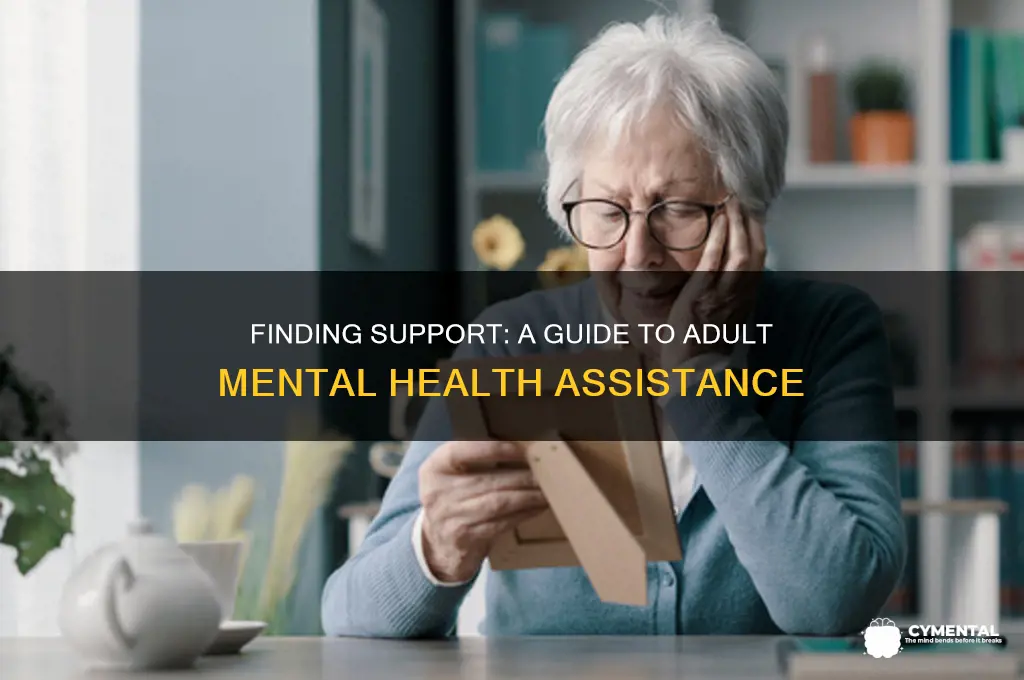
Navigating mental health challenges as an adult can feel overwhelming, but seeking help is a courageous and essential step toward healing and recovery. Adults with mental illness have access to a variety of resources, including therapy, medication, support groups, and community programs tailored to their specific needs. Recognizing the signs of mental illness, such as persistent sadness, anxiety, or changes in behavior, is the first step. Reaching out to healthcare professionals, such as primary care physicians or mental health specialists, can provide a clear path to diagnosis and treatment. Additionally, organizations like the National Alliance on Mental Illness (NAMI) offer valuable information, advocacy, and peer support. With the right support system and resources, adults can manage their mental health effectively and lead fulfilling lives.
Explore related products


What You'll Learn
- Finding Mental Health Professionals: Locate therapists, psychiatrists, or counselors through referrals, online directories, or insurance providers
- Support Groups and Communities: Join peer-led or professional groups for shared experiences and emotional support
- Crisis Hotlines and Resources: Access 24/7 hotlines, text lines, or online chats for immediate mental health assistance
- Medication and Treatment Options: Explore therapy, medication, or alternative treatments with a healthcare provider’s guidance
- Government and Nonprofit Assistance: Utilize free or low-cost mental health services from local or national organizations

Finding Mental Health Professionals: Locate therapists, psychiatrists, or counselors through referrals, online directories, or insurance providers
Finding the right mental health professional can feel overwhelming, but it’s a critical step toward healing. Start by leveraging your existing network: ask trusted friends, family, or healthcare providers for referrals. Personal recommendations often come with insights into a therapist’s style, specialties, and whether they’re a good fit for your needs. For instance, a primary care physician might suggest a psychiatrist who specializes in anxiety disorders or a counselor experienced in trauma-informed care. Referrals can save time and provide a layer of reassurance when navigating an unfamiliar system.
If referrals aren’t an option, online directories are a powerful tool. Platforms like Psychology Today, GoodTherapy, and the American Psychological Association’s Psychologist Locator allow you to filter by location, specialty, and treatment approach. These directories often include detailed profiles, including therapists’ credentials, fees, and whether they offer telehealth services. For example, someone seeking help for depression might narrow their search to therapists trained in cognitive-behavioral therapy (CBT) or those who accept sliding-scale fees. Be sure to read reviews and verify credentials to ensure legitimacy.
Insurance providers are another underutilized resource. Most health plans include mental health coverage, and many insurers offer searchable databases of in-network providers. Log in to your insurance portal or call the member services line to request a list of covered therapists, psychiatrists, or counselors. Keep in mind that in-network providers typically cost less, but out-of-network professionals may still be worth considering if they specialize in your specific needs. Always confirm coverage details, such as copays or session limits, to avoid unexpected expenses.
While these methods are effective, they come with caveats. Referrals may not align with your preferences, online directories can feel overwhelming, and insurance networks might be limited. To mitigate these challenges, approach the search with flexibility and persistence. For instance, if a recommended therapist isn’t accepting new clients, ask if they can suggest a colleague. If online profiles feel impersonal, reach out to a few candidates for brief consultations to gauge compatibility. Remember, finding the right professional is a process, not a race—prioritize someone who makes you feel heard, understood, and supported.
Physical Education: Boosting Mental Health Through Active Learning
You may want to see also
Explore related products


Support Groups and Communities: Join peer-led or professional groups for shared experiences and emotional support
Adults with mental illness often feel isolated, as if their struggles are uniquely theirs. Support groups shatter this illusion by connecting individuals with shared experiences, fostering a sense of belonging and understanding that clinical settings rarely provide. Peer-led groups, in particular, offer a safe space where members can speak openly without fear of judgment, knowing their facilitators have navigated similar challenges. For instance, organizations like the National Alliance on Mental Illness (NAMI) host peer-led programs such as Connection Recovery Support Groups, which meet weekly and follow a structured yet flexible format to encourage dialogue and mutual support.
Professional-led groups, on the other hand, blend emotional support with evidence-based strategies, often incorporating cognitive-behavioral techniques or mindfulness practices. These groups are typically facilitated by licensed therapists or counselors and may focus on specific conditions, such as depression or anxiety. For example, the Anxiety and Depression Association of America (ADAA) offers listings for therapist-led groups that combine education, skill-building, and peer interaction. While peer-led groups thrive on shared vulnerability, professional-led groups provide a more structured environment, making them ideal for those seeking both emotional and clinical guidance.
Choosing the right group depends on individual needs and preferences. Peer-led groups are often free or low-cost, making them accessible to those with financial constraints, while professional-led groups may be covered by insurance but require a co-pay. Online communities, such as those on platforms like 7 Cups or Reddit’s mental health forums, offer flexibility for those with busy schedules or mobility issues. However, virtual groups may lack the intimacy of in-person meetings, so it’s essential to assess which format aligns best with personal comfort levels and goals.
A common misconception is that support groups are only for severe cases or crises. In reality, they serve as a preventive measure, helping individuals manage symptoms before they escalate. For instance, a study published in the *Journal of Clinical Psychology* found that regular participation in support groups reduced relapse rates in individuals with depression by 40%. To maximize benefits, attendees should commit to consistent participation, as building trust and rapport within the group takes time. Additionally, pairing group involvement with individual therapy or medication can create a comprehensive support system.
Ultimately, support groups and communities are not a one-size-fits-all solution but a powerful tool in the mental health toolkit. They bridge the gap between clinical treatment and everyday life, offering a space where vulnerability is met with empathy, and progress is celebrated collectively. Whether peer-led or professionally facilitated, these groups remind participants they are not alone—a message that can be as transformative as any medication or therapy session.
Baseball's Mental Health Benefits: A Game-Changer for Mind and Spirit
You may want to see also
Explore related products


Crisis Hotlines and Resources: Access 24/7 hotlines, text lines, or online chats for immediate mental health assistance
In moments of acute mental distress, immediate access to support can be a lifeline. Crisis hotlines, text lines, and online chats offer 24/7 assistance, providing a safe space to express emotions, gain perspective, and receive guidance. These resources are staffed by trained professionals or volunteers who understand the urgency of mental health crises and can de-escalate situations, connect individuals to local services, or simply listen without judgment. For adults grappling with overwhelming anxiety, depression, suicidal thoughts, or other urgent concerns, these services bridge the gap between isolation and intervention.
Consider the National Suicide Prevention Lifeline (988 in the U.S.), a widely recognized resource available via call, text, or chat. It’s designed for individuals in crisis or those worried about someone else. For those who prefer texting, the Crisis Text Line (text HOME to 741741) offers silent, discreet support, ideal for situations where speaking aloud isn’t feasible. Globally, organizations like Befrienders Worldwide provide country-specific hotlines, ensuring accessibility across cultures and languages. These platforms are not just for emergencies; they’re also for moments of uncertainty, when someone needs reassurance or help navigating next steps.
While these resources are invaluable, it’s essential to understand their limitations. Crisis lines are not a substitute for long-term therapy or psychiatric care. They serve as immediate interventions, offering stabilization and referrals to ongoing support. For instance, a hotline operator might help someone create a safety plan during a panic attack but would also encourage follow-up with a mental health professional. Additionally, response times can vary depending on call volume, so patience is key. Knowing these nuances ensures realistic expectations and maximizes the utility of these services.
Practical tips can enhance the effectiveness of these resources. First, save relevant numbers in your phone or write them down for quick access. Second, if calling feels intimidating, start with a text or chat—many find typing less daunting. Third, be honest about your feelings; these services are confidential and nonjudgmental. Finally, if you’re supporting someone else, offer to stay on the line with them or help them reach out. Crisis hotlines and digital resources are powerful tools, but their impact depends on how and when they’re used. By integrating them into a broader mental health strategy, adults can navigate crises with greater resilience and hope.
Exercise and Mental Health: Uncovering the Powerful Statistical Connection
You may want to see also
Explore related products


Medication and Treatment Options: Explore therapy, medication, or alternative treatments with a healthcare provider’s guidance
Effective treatment for mental illness often begins with a conversation about medication and therapy, two pillars of modern psychiatric care. Medication can stabilize symptoms, offering a foundation for healing, while therapy addresses underlying causes and builds coping skills. For instance, selective serotonin reuptake inhibitors (SSRIs) like fluoxetine (Prozac) or sertraline (Zoloft) are commonly prescribed for depression and anxiety, typically starting at 25–50 mg daily and adjusted based on response. However, medication alone may not suffice. Cognitive-behavioral therapy (CBT), for example, has proven effective in reshaping negative thought patterns, often in 12–20 sessions. Combining these approaches under a healthcare provider’s guidance maximizes their synergistic benefits, tailoring treatment to individual needs.
Alternative treatments are gaining traction as complementary options, particularly for those seeking non-pharmacological routes or additional support. Mindfulness-based stress reduction (MBSR) and transcranial magnetic stimulation (TMS) are two such examples. MBSR, an 8-week program involving meditation and body awareness, has shown promise in reducing symptoms of anxiety and depression. TMS, a non-invasive procedure approved for treatment-resistant depression, uses magnetic fields to stimulate nerve cells in the brain. While these alternatives may not replace traditional methods, they offer viable options for those who do not respond to first-line treatments or prefer holistic approaches. Always consult a healthcare provider to determine their suitability for your specific condition.
Choosing the right treatment requires careful consideration of factors like severity, lifestyle, and personal preferences. For mild to moderate conditions, therapy might be the initial focus, with medication introduced if symptoms persist. For severe cases, such as major depressive disorder with suicidal ideation, medication is often prioritized to rapidly stabilize the individual. Age also plays a role: older adults may metabolize medications differently, requiring lower dosages, while younger adults might benefit from more intensive therapy to address developmental challenges. A healthcare provider can help navigate these complexities, ensuring a balanced and effective treatment plan.
Practical tips can enhance the effectiveness of any treatment approach. Adherence to medication is critical; using a pill organizer or setting daily reminders can help. For therapy, active participation—such as practicing techniques between sessions—amplifies its impact. When exploring alternatives, research credibility and seek evidence-based options. For example, while herbal supplements like St. John’s wort are popular, they can interact with medications, underscoring the need for professional oversight. Finally, patience is key; treatment is rarely linear, and adjustments may be necessary to find the right fit. With guidance, adults with mental illness can navigate these options to achieve meaningful recovery.
Social Connections: Unlocking Mental Health Benefits Through Community and Support
You may want to see also
Explore related products






Government and Nonprofit Assistance: Utilize free or low-cost mental health services from local or national organizations
Adults with mental illness often face financial barriers to accessing care, but government and nonprofit organizations offer a lifeline through free or low-cost services. These programs, funded by taxpayer dollars or charitable donations, provide therapy, medication management, crisis intervention, and support groups to those who might otherwise go without. For instance, the Substance Abuse and Mental Health Services Administration (SAMHSA) operates a national helpline (1-800-662-HELP) that connects individuals to local treatment centers, many of which offer sliding-scale fees based on income. This ensures that cost doesn’t become a prohibitive factor in seeking help.
Navigating these resources requires knowing where to look. Start with your state’s Department of Mental Health or Behavioral Health, which often maintains directories of community mental health centers. These centers typically provide services on a sliding scale, with fees as low as $10–$20 per session for those with limited income. Nonprofits like the National Alliance on Mental Illness (NAMI) also offer free education programs, peer support groups, and advocacy resources. For example, NAMI’s Family-to-Family program provides free 8-week courses for caregivers of adults with mental illness, equipping them with tools to support their loved ones effectively.
While government and nonprofit services are invaluable, they often come with limitations, such as long waitlists or restricted eligibility criteria. For instance, Medicaid covers mental health services in most states, but not all providers accept it due to low reimbursement rates. Similarly, nonprofit programs may have limited capacity or focus on specific populations, such as veterans or young adults. To maximize access, combine these resources with other strategies, like seeking telehealth options or applying for patient assistance programs that subsidize medication costs.
A practical tip for leveraging these services is to gather documentation of your financial situation beforehand. Many programs require proof of income, such as tax returns or pay stubs, to determine eligibility for reduced fees. Additionally, be persistent in following up on applications or referrals—staff turnover and high demand can cause delays. Finally, consider joining advocacy groups like NAMI to stay informed about policy changes that may expand access to mental health care in your area. By strategically utilizing government and nonprofit assistance, adults with mental illness can find the support they need without being burdened by cost.
Anonymous Support for Teens: Finding Mental Health Help Privately
You may want to see also
Frequently asked questions
You can start by contacting your local health department, community mental health centers, or using online directories like the Substance Abuse and Mental Health Services Administration (SAMHSA) treatment locator.
Encourage open communication, express concern without judgment, and involve a trusted professional like a therapist or counselor. In crisis situations, contact local crisis intervention services or emergency services if there’s a risk of harm.
Yes, many community health centers, non-profit organizations, and government programs offer low-cost or free mental health services. Check with local clinics, SAMHSA, or Medicaid for eligibility.
Set boundaries, seek support from groups like NAMI (National Alliance on Mental Illness), and prioritize self-care. Educate yourself about their condition to better understand their needs.
Call 911 if there’s immediate danger, or use the 988 Suicide & Crisis Lifeline for guidance. Have a crisis plan in place, including contact information for their therapist, psychiatrist, or emergency services.