Caleb Wright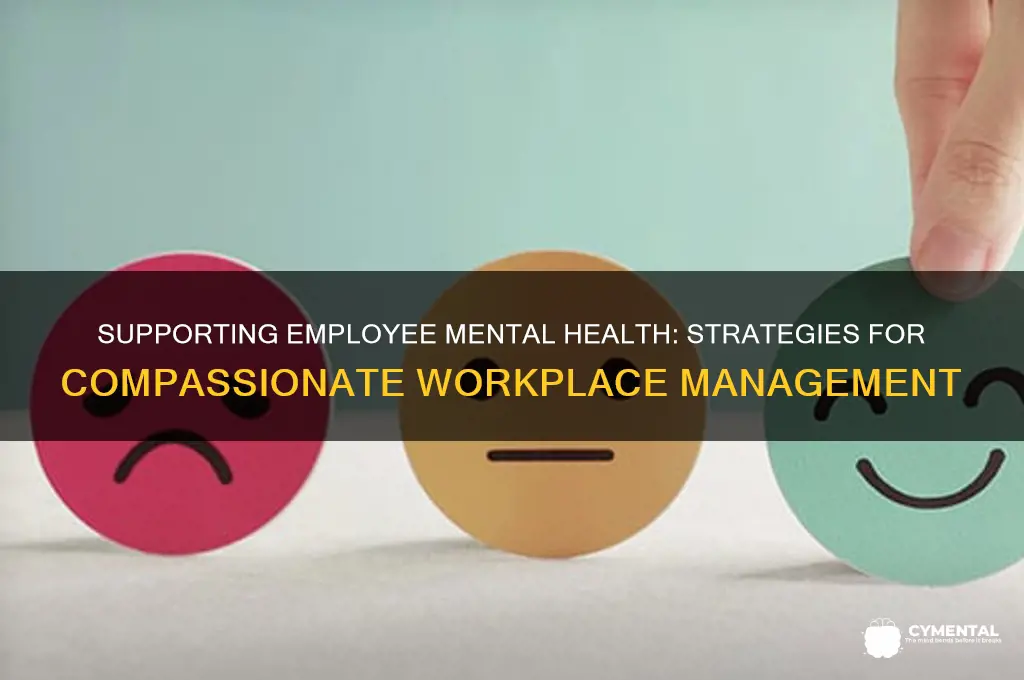
Handling employees with mental health issues requires a compassionate, proactive, and informed approach to create a supportive workplace environment. Employers must prioritize open communication, fostering a culture where employees feel safe discussing their challenges without fear of stigma or retaliation. Implementing policies that promote work-life balance, offering flexible schedules, and providing access to mental health resources, such as counseling services or Employee Assistance Programs (EAPs), are essential steps. Managers should be trained to recognize signs of mental health struggles and respond with empathy, while maintaining confidentiality and focusing on performance support rather than judgment. By addressing mental health with sensitivity and providing appropriate accommodations, organizations can not only support their employees' well-being but also enhance productivity and foster a more inclusive and resilient workforce.
Explore related products


What You'll Learn
- Recognize Signs Early: Train managers to spot subtle changes in behavior or performance
- Create Safe Spaces: Foster open communication and ensure confidentiality for employees to share concerns
- Offer Flexible Support: Provide adjustable work hours, remote options, or reduced workloads as needed
- Access to Resources: Share mental health tools, EAPs, or counseling services proactively with the team
- Regular Check-Ins: Schedule consistent, empathetic conversations to show support and monitor well-being

Recognize Signs Early: Train managers to spot subtle changes in behavior or performance
Subtle shifts in an employee's behavior or performance can be the first indicators of underlying mental health challenges. Untrained eyes might dismiss these changes as minor inconsistencies, but for managers equipped with the right knowledge, they are crucial signals. Recognizing these early signs isn’t about diagnosing conditions—it’s about creating a proactive environment where employees feel supported before issues escalate. For instance, a typically punctual employee suddenly arriving late or a high performer missing deadlines could signal stress, anxiety, or burnout. Managers trained to notice such patterns can intervene early, offering resources or adjustments before productivity or morale suffers.
Training managers to spot these signs involves more than a one-time workshop. It requires ongoing education on mental health literacy, including common symptoms of stress, depression, and anxiety in workplace settings. For example, withdrawal from team activities, increased irritability, or a decline in communication quality can all be red flags. Practical tools, such as behavioral checklists or performance tracking templates, can aid managers in identifying deviations from an employee’s baseline. However, sensitivity is key—managers must approach observations with empathy, avoiding assumptions or stigmatizing language.
A comparative analysis of workplaces with and without such training reveals its impact. Companies that invest in manager training report higher employee retention, improved productivity, and a more positive workplace culture. For instance, a study by the World Health Organization found that organizations with mental health-trained leaders saw a 20% reduction in absenteeism. Conversely, untrained managers often misinterpret signs of struggle as laziness or disengagement, leading to strained relationships and potential turnover. The takeaway is clear: early recognition isn’t just a managerial skill—it’s a strategic advantage.
Implementing this approach requires a structured plan. Start by partnering with mental health professionals to design training modules tailored to your workplace dynamics. Include role-playing scenarios to simulate real-world situations, such as how to approach an employee showing signs of overwhelm. Caution managers against overstepping boundaries—their role is to observe, support, and refer, not to act as therapists. Finally, foster a culture of openness by encouraging managers to share their experiences and challenges in identifying and addressing these signs. When done right, this training transforms managers into allies, ensuring employees receive timely support and the organization thrives as a result.
Understanding and Supporting Your Partner’s Mental Health Journey
You may want to see also
Explore related products


Create Safe Spaces: Foster open communication and ensure confidentiality for employees to share concerns
Employees often hesitate to disclose mental health struggles due to fear of stigma, judgment, or career repercussions. Creating safe spaces within the workplace begins with dismantling these barriers through intentional design and consistent reinforcement. Start by designating physical or virtual areas where employees can speak freely without fear of eavesdropping or interruption. For instance, a quiet room equipped with comfortable seating and calming elements like plants or soft lighting can serve as a refuge for sensitive conversations. Similarly, virtual platforms with end-to-end encryption ensure confidentiality during remote discussions. Pair these environments with clear policies that emphasize privacy, such as limiting access to shared mental health disclosures to only essential personnel.
Fostering open communication requires more than just physical or digital spaces—it demands a cultural shift. Train managers and leaders to recognize subtle signs of distress, such as changes in behavior or productivity, and approach conversations with empathy rather than assumptions. For example, instead of asking, "What’s wrong with you?" use open-ended questions like, "How can I support you right now?" Encourage peer-to-peer support by implementing mentorship programs or employee resource groups focused on mental well-being. These initiatives not only normalize discussions around mental health but also distribute the responsibility of creating a safe environment across the organization.
Confidentiality is non-negotiable when building trust. Establish a clear chain of communication for mental health concerns, ensuring employees know exactly who to approach and how their information will be handled. For instance, designate a trained HR professional or external counselor as the primary point of contact for sensitive issues. Provide written assurances that personal disclosures will not impact job security, promotions, or team dynamics unless explicitly agreed upon by the employee. Regularly audit these processes to identify and address potential breaches, reinforcing the organization’s commitment to privacy.
Finally, measure the effectiveness of these safe spaces through feedback and actionable metrics. Conduct anonymous surveys to gauge employee comfort levels in discussing mental health and the perceived confidentiality of their disclosures. Track participation rates in mental health programs or the frequency of reported concerns as indicators of trust. For example, a 20% increase in employees seeking support within six months of implementing safe spaces could signal progress. Use this data to refine policies, reallocate resources, or introduce new initiatives, ensuring the workplace remains responsive to evolving needs. Creating safe spaces is not a one-time effort but an ongoing commitment to fostering a culture of trust and care.
Therapy's Impact: Reducing Mental Health Issues and Improving Well-being
You may want to see also
Explore related products


Offer Flexible Support: Provide adjustable work hours, remote options, or reduced workloads as needed
Flexibility isn’t just a perk—it’s a lifeline for employees managing mental health challenges. Rigid schedules and overwhelming workloads can exacerbate stress, anxiety, or depression, turning a manageable condition into a debilitating one. By offering adjustable work hours, remote options, or reduced workloads, employers create an environment where employees can thrive without sacrificing their well-being. For instance, allowing a team member to start their day at 10 a.m. instead of 8 a.m. might mean the difference between a productive workday and one spent battling insomnia-induced fatigue.
Consider the practical steps to implement this flexibility. Begin by having open conversations with employees to understand their specific needs. A parent with anxiety might benefit from remote work to avoid commute-related stress, while someone with depression could need a lighter workload during particularly challenging weeks. Use tools like shared calendars or project management software to ensure transparency and accountability without micromanaging. For example, a marketing specialist could shift their hours to 11 a.m.–7 p.m. if that aligns with their energy peaks, as long as team meetings remain accessible during core hours.
However, flexibility isn’t without its challenges. Managers must balance individual needs with team dynamics and business goals. A cautionary note: avoid creating a culture where flexibility feels like a special privilege rather than a standard accommodation. Set clear boundaries, such as requiring advance notice for schedule changes or defining core hours for collaboration. For instance, a policy might state, “Remote work is available up to three days a week, provided deadlines are met and communication remains consistent.”
The takeaway is clear: flexible support isn’t just about kindness—it’s a strategic investment in employee retention and productivity. A study by the World Health Organization found that for every $1 invested in mental health interventions, there’s a $4 return in improved health and productivity. By offering adjustable work hours, remote options, or reduced workloads, employers not only support their team’s mental health but also foster loyalty, creativity, and resilience. It’s a win-win that transforms workplaces into spaces of understanding and growth.
Navigating Termination with Compassion: Supporting Employees with Mental Health Challenges
You may want to see also
Explore related products


Access to Resources: Share mental health tools, EAPs, or counseling services proactively with the team
Employees often hesitate to seek mental health support due to stigma, uncertainty about available resources, or fear of judgment. Proactively sharing mental health tools, Employee Assistance Programs (EAPs), and counseling services removes these barriers by normalizing access and ensuring everyone knows where to turn. For instance, a weekly email highlighting one resource—such as a mindfulness app, a free EAP hotline, or a discounted therapy session—can demystify these tools and encourage usage. Pairing this with testimonials from colleagues who’ve benefited can further reduce hesitation and foster trust.
Consider the logistics of implementation: compile a digital toolkit with links to apps like Headspace or Calm, EAP contact details, and local counseling services. Share this during onboarding and quarterly refreshers to keep it top-of-mind. For example, a company intranet page titled “Wellness Hub” could categorize resources by need—stress management, grief support, or financial counseling—making navigation intuitive. Adding a brief description of each tool’s purpose and a “how-to” guide ensures employees understand the value and ease of use.
However, accessibility alone isn’t enough. Pair resource sharing with education to combat misconceptions. Host a 30-minute workshop explaining what EAPs cover (e.g., legal advice, mental health counseling) and how confidentiality works. For instance, clarify that EAP sessions are private and separate from employer records, a common concern that deters usage. Similarly, when promoting counseling services, emphasize that seeking help is a sign of strength, not weakness, and align this messaging with company values to reinforce cultural acceptance.
Finally, measure impact to refine your approach. Track resource engagement through anonymous surveys or usage metrics (if available) and gather feedback on what’s helpful and what’s missing. For example, if employees report difficulty scheduling EAP appointments, advocate for extended hours or additional providers. By treating resource sharing as an ongoing dialogue rather than a one-time initiative, you signal sustained commitment to employee well-being and create a safety net that evolves with their needs.
Supporting Teens: Navigating Mental Health Challenges with Compassion and Care
You may want to see also
Explore related products


Regular Check-Ins: Schedule consistent, empathetic conversations to show support and monitor well-being
Employees often hesitate to disclose mental health struggles, fearing stigma or job insecurity. Regular, structured check-ins normalize these conversations, signaling that well-being is a priority. Aim for biweekly or monthly meetings, depending on the employee’s needs and role. Consistency builds trust, making it easier for them to open up over time. Use a mix of open-ended questions like, “How are you managing your workload?” or “What support do you need right now?” to encourage honest dialogue. Avoid clinical language; instead, focus on creating a safe, non-judgmental space.
Consider the format of these check-ins to maximize comfort. One-on-one meetings in a private setting work best, but some employees may prefer virtual options for added flexibility. Train managers to listen actively, validate concerns, and avoid interrupting. Equip them with resources to offer, such as EAP programs or mental health days, but let the employee lead the discussion. For instance, if an employee mentions feeling overwhelmed, suggest a temporary adjustment in responsibilities rather than imposing a solution. The goal is to collaborate, not dictate.
Frequency matters, but so does quality. A rushed, superficial check-in can do more harm than good. Allocate at least 20–30 minutes per session to ensure depth. Start with a positive note, like acknowledging recent achievements, to set a supportive tone. If an employee seems hesitant to share, normalize vulnerability by sharing a personal experience (if appropriate) or emphasizing the company’s commitment to mental health. For example, “We’ve seen how small changes can make a big difference, and I’m here to help figure out what works for you.”
Caution: Avoid turning these conversations into performance reviews. Employees may fear repercussions if they disclose struggles, so separate well-being discussions from productivity assessments. If an employee’s mental health is affecting their work, frame it as a collaborative problem-solving opportunity rather than a critique. For instance, instead of saying, “Your deadlines are slipping,” try, “I’ve noticed some challenges—how can we adjust your workload to support you better?” This approach fosters trust and encourages ongoing communication.
Finally, track progress without invading privacy. After each check-in, document key takeaways and agreed-upon actions in a confidential format. Follow up on commitments, such as providing access to counseling services or adjusting deadlines. For employees with chronic mental health conditions, consider longer-term plans, like quarterly reviews or flexible work arrangements. By treating these check-ins as an ongoing process, not a one-off task, you demonstrate genuine care and create a culture where mental health is prioritized, not stigmatized.
Understanding Mental Health Challenges in Tennessee: Prevalence and Insights
You may want to see also
Frequently asked questions
Employers should look for signs such as changes in behavior, decreased productivity, increased absenteeism, or noticeable emotional distress. However, it’s important to approach the situation with sensitivity and avoid making assumptions. Encouraging open communication and creating a safe, non-judgmental environment can help employees feel comfortable discussing their challenges.
Employers should provide access to mental health resources, such as Employee Assistance Programs (EAPs), counseling services, or flexible work arrangements. It’s also crucial to maintain confidentiality, offer reasonable accommodations under applicable laws (e.g., ADA in the U.S.), and foster a workplace culture that prioritizes mental well-being.
Managers should focus on open dialogue to understand the employee’s needs and collaboratively develop a plan that supports their mental health while ensuring work responsibilities are managed. This may involve redistributing tasks, setting realistic deadlines, or providing additional support. Prioritizing empathy and flexibility can help maintain productivity without compromising the employee’s well-being.