Madison Cole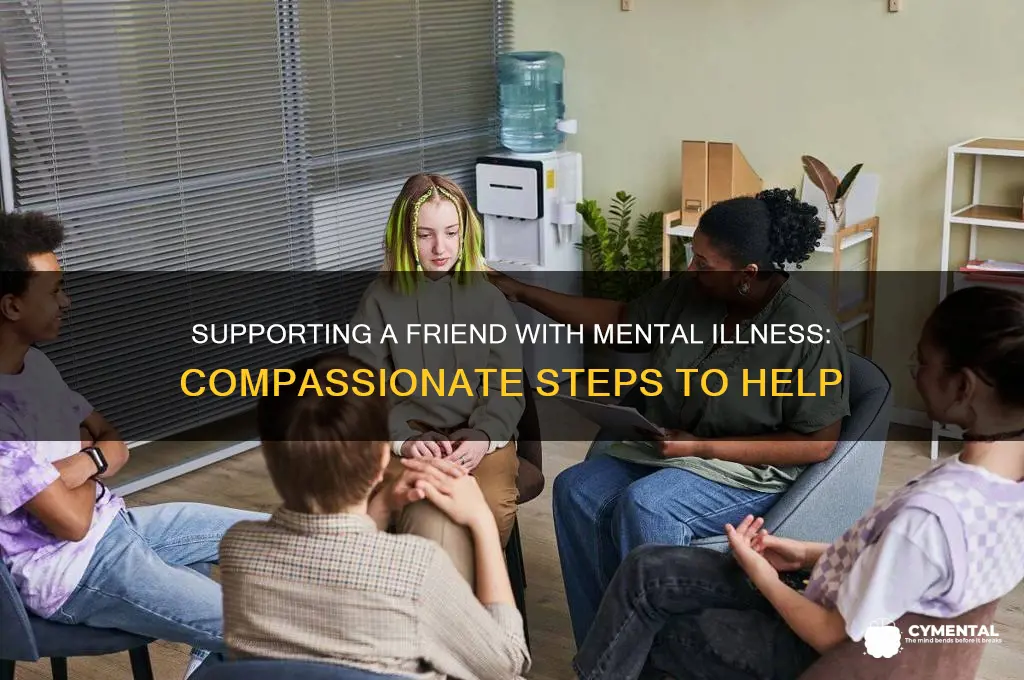
Supporting a friend with a mental illness can be challenging but incredibly meaningful. Start by educating yourself about their condition to better understand what they’re experiencing, while being mindful not to make assumptions. Let your friend know you’re there for them by offering a listening ear without judgment, and validate their feelings rather than trying to “fix” their struggles. Encourage them to seek professional help if they haven’t already, and assist with finding resources if needed. Be patient, as recovery is often a gradual process, and take care of your own well-being to avoid burnout. Small gestures, like checking in regularly or spending quality time together, can make a big difference in showing your support and helping them feel less alone.
Explore related products


What You'll Learn
- Listen Actively, Non-Judgmentally: Create safe space, focus on understanding, avoid interrupting, validate feelings
- Educate Yourself: Learn about their illness, symptoms, triggers, and effective support strategies
- Encourage Professional Help: Gently suggest therapy, medication, or support groups; offer to assist
- Stay Connected: Regularly check in, invite them to activities, maintain consistent presence and support
- Take Care of Yourself: Set boundaries, manage stress, seek support to avoid burnout

Listen Actively, Non-Judgmentally: Create safe space, focus on understanding, avoid interrupting, validate feelings
One of the most powerful ways to support a friend with mental illness is to listen actively and non-judgmentally. This means creating a safe space where they feel comfortable sharing their thoughts and emotions without fear of criticism or dismissal. Start by choosing a quiet, private setting where distractions are minimized. Turn off your phone, maintain eye contact, and use open body language to signal that you’re fully present. Avoid the urge to offer solutions or advice immediately; instead, focus on understanding their perspective. Phrases like, “Tell me more about how that feels,” or “I’m here to listen,” can encourage them to open up. Remember, your role isn’t to fix their problems but to provide a supportive ear.
Active listening requires discipline, particularly in avoiding interruptions. Let your friend express themselves fully, even if their thoughts seem disjointed or repetitive. Interrupting can derail their train of thought and make them feel unheard. Instead, use brief affirmations like, “I see,” or “Go on,” to show you’re engaged. If you need clarification, wait for a natural pause and ask open-ended questions. For example, instead of saying, “Why do you feel that way?” try, “What’s been making that feeling stronger lately?” This approach demonstrates respect for their experience and encourages deeper conversation.
Validation is a cornerstone of non-judgmental listening. Acknowledge their feelings without questioning their validity, even if you don’t fully understand or agree. Statements like, “It makes sense that you’d feel that way,” or “That sounds really tough,” can help them feel seen and accepted. Avoid phrases that minimize their experience, such as, “It could be worse,” or “Just think positively.” Mental illness often involves complex emotions that can’t be brushed aside. By validating their feelings, you reinforce that their struggles are real and worthy of compassion.
Creating a safe space also means being mindful of your own reactions. Avoid expressing shock, disbelief, or frustration, even if their experiences are difficult to hear. Instead, practice empathy by imagining what it might feel like to be in their shoes. If you’re unsure how to respond, it’s okay to say, “I’m not sure what to say, but I’m here for you.” Consistency is key; let them know they can count on you to listen without judgment, even if they need to talk about the same issue repeatedly. Over time, this kind of support can build trust and encourage them to seek help when needed.
Finally, active, non-judgmental listening is a skill that improves with practice. Reflect on your conversations afterward to identify areas for growth, such as reducing interruptions or using more validating language. Remember, the goal isn’t perfection but progress. By prioritizing understanding and creating a safe space, you can become a reliable source of support for your friend, helping them feel less alone in their mental health journey. This simple yet profound act of listening can make a world of difference in their life.
Basil's Mental Health Benefits: Exploring Nature's Calming Herb
You may want to see also
Explore related products


Educate Yourself: Learn about their illness, symptoms, triggers, and effective support strategies
Understanding your friend's mental illness is the cornerstone of providing meaningful support. Each condition has its own unique characteristics, and what helps one person may not work for another. For instance, while someone with depression might benefit from gentle encouragement to engage in activities, a person experiencing a panic attack needs immediate reassurance and a calm environment. Educating yourself about their specific illness—whether it’s anxiety, bipolar disorder, schizophrenia, or another condition—equips you with the knowledge to respond appropriately. Start by researching reputable sources like the National Alliance on Mental Illness (NAMI) or the World Health Organization (WHO) to grasp the basics of their diagnosis.
Once you’ve familiarized yourself with the illness, delve into the symptoms your friend experiences. Mental health conditions often manifest differently from person to person. For example, someone with PTSD might have flashbacks triggered by specific sounds, while another might struggle with emotional numbness. Ask your friend (if they’re comfortable sharing) about their symptoms, or observe patterns in their behavior. This awareness helps you avoid unintentional triggers and allows you to offer targeted support. For instance, if your friend with OCD struggles with contamination fears, you might offer to meet in a quiet, clean space rather than a crowded café.
Triggers are another critical aspect to understand. These can be situational, emotional, or environmental factors that worsen symptoms. For someone with generalized anxiety disorder, a looming deadline might heighten their distress, while for someone with bipolar disorder, lack of sleep could trigger a manic episode. Keep a mental (or written) note of what seems to exacerbate their condition, but be cautious not to overstep boundaries. If you notice a pattern, gently inquire if they’d like help identifying or managing these triggers. Offering practical solutions, like helping them create a structured routine or suggesting mindfulness techniques, can be immensely helpful.
Effective support strategies vary widely but often include active listening, patience, and validation. For example, if your friend is experiencing a depressive episode, avoid phrases like “Just think positively”—instead, say, “I’m here for you, and it’s okay to feel this way.” Learn about evidence-based coping mechanisms, such as grounding techniques for anxiety or mood tracking for bipolar disorder, and encourage their use without being pushy. Additionally, know when to step back and let professionals take the lead. If your friend’s symptoms escalate, have crisis hotline numbers (like the Crisis Text Line or local emergency services) readily available.
Finally, remember that education is an ongoing process. Mental health conditions can evolve, and new research emerges constantly. Stay updated by following mental health advocates, attending workshops, or joining support groups for allies. By committing to this learning journey, you not only become a more informed supporter but also demonstrate to your friend that you’re invested in their well-being. This effort can strengthen your relationship and foster a sense of trust, which is invaluable in times of struggle.
Sauna Therapy: Unlocking Mental Health Benefits for Mind and Body
You may want to see also
Explore related products


Encourage Professional Help: Gently suggest therapy, medication, or support groups; offer to assist
Professional help can be a lifeline for someone struggling with mental illness, yet many hesitate to seek it. Fear of stigma, uncertainty about where to start, or simply feeling overwhelmed can paralyze even the most determined individuals. As a friend, your role isn’t to diagnose or push, but to gently illuminate the path toward resources like therapy, medication, or support groups. Start by normalizing the conversation: “Therapy has helped me a lot with stress—I wonder if it could be useful for you too?” Framing it as a shared human experience, rather than a solution for "their problem," reduces defensiveness.
Offering practical assistance is often more effective than abstract encouragement. Research local therapists or clinics beforehand, and say, “I found a few therapists who specialize in anxiety—would you like me to send you their info?” If cost is a barrier, suggest sliding-scale clinics or online platforms like BetterHelp. For medication, avoid specifics (dosages, drugs) unless you’re a medical professional, but you can say, “Sometimes medication helps balance things out—have you considered talking to a psychiatrist about it?” The goal is to remove logistical hurdles, not to dictate choices.
Support groups are another underutilized resource, particularly for conditions like depression or PTSD. Many are free, peer-led, and available both in-person and online. Share a link to a trusted organization like the National Alliance on Mental Illness (NAMI) and say, “I read about a support group that meets weekly—it might be a good way to connect with others who get it.” Be mindful of their reaction; if they seem hesitant, don’t press. Instead, leave the door open: “No pressure, but let me know if you ever want to check it out together.”
One caution: avoid framing professional help as a last resort or a sign of failure. Phrases like “You’ve tried everything else, maybe this could work” can imply they’ve fallen short. Instead, position it as a proactive step toward healing. For instance, “Getting support early often makes a big difference—it’s like catching something before it gets worse.” This shifts the narrative from desperation to empowerment.
Finally, remember that your role is to support, not to solve. If your friend resists, don’t take it personally. Mental health journeys are deeply personal, and progress is rarely linear. By offering gentle suggestions, practical help, and unwavering empathy, you’re doing more than enough. As the saying goes, “You can lead a horse to water, but you can’t make it drink”—but you can stand by the water, ready with a cup when they’re thirsty.
Therapy's Impact: Unveiling Mental Health Statistics and Recovery Insights
You may want to see also
Explore related products


Stay Connected: Regularly check in, invite them to activities, maintain consistent presence and support
Social isolation often exacerbates mental illness, creating a feedback loop where withdrawal deepens symptoms. Staying connected disrupts this cycle by providing external anchors to reality, emotional validation, and opportunities for positive experiences. A 2020 study in *JAMA Psychiatry* found that individuals with consistent social support showed a 24% reduction in depressive symptom severity over six months compared to those with sporadic or absent support. This data underscores the tangible impact of regular presence in a friend’s life.
To implement this effectively, start with small, low-pressure check-ins. Texting “Thinking of you” or “How’s your day going?” once every 2–3 days establishes a rhythm without overwhelming them. Pair these messages with open-ended questions like “What’s something small that’s brought you joy lately?” to encourage reflection without demanding emotional labor. For phone or video calls, aim for 10–15 minutes every week, gradually increasing duration as they feel comfortable. Consistency matters more than length—a brief, genuine interaction is more valuable than an infrequent, lengthy one.
Inviting a friend with mental illness to activities requires sensitivity to their energy levels and triggers. Frame invitations as low-stakes and flexible: “No pressure, but I’d love for you to join me for a short walk if you’re up for it.” Avoid events with large crowds or high sensory stimulation unless they explicitly express interest. Instead, opt for quiet activities like a coffee date, movie night at home, or a short hike in nature. If they decline, respect their boundaries but reiterate the invitation in a few weeks. Persistence, not insistence, communicates unwavering support.
Maintaining a consistent presence also means being attuned to subtle changes in their behavior or communication. For instance, if their responses become monosyllabic or they stop initiating contact, it may signal a downturn in their mental health. In such cases, switch from digital to more personal forms of connection, like sending a handwritten note or dropping off a small gift. These tangible gestures reinforce your commitment, especially when verbal reassurance feels insufficient.
The key takeaway is that staying connected is not about grand gestures but about embedding support into the fabric of daily life. It’s the cumulative effect of regular check-ins, thoughtful invitations, and unwavering presence that fosters resilience. By prioritizing consistency over intensity, you create a safety net that helps your friend navigate the unpredictable terrain of mental illness. This approach doesn’t cure their struggles, but it reminds them they’re not facing them alone.
Qualifying for Mental Health Support: A Step-by-Step Guide to Accessing Care
You may want to see also
Explore related products


Take Care of Yourself: Set boundaries, manage stress, seek support to avoid burnout
Supporting a friend with mental illness is a profound act of care, but it can also be emotionally taxing. Without intentional self-care, you risk burnout, which diminishes your ability to help effectively. Setting clear boundaries is the first line of defense. Define what you can and cannot do, both in terms of time and emotional capacity. For instance, allocate specific hours for check-ins or conversations, and communicate these limits openly. Avoid overcommitting; it’s not selfish to prioritize your well-being—it’s essential. Boundaries ensure you remain a reliable source of support rather than becoming another stressor in your friend’s life.
Stress management is equally critical. Chronic stress weakens your resilience and can exacerbate your own mental health challenges. Incorporate daily practices like mindfulness, deep breathing exercises, or even a 10-minute walk to reset. Research shows that just 20 minutes of mindfulness meditation per day can reduce cortisol levels, the hormone associated with stress. Additionally, monitor your physical health: sleep 7–9 hours nightly, maintain a balanced diet, and stay hydrated. These habits may seem small, but they cumulatively fortify your ability to handle difficult situations.
Seeking support is not a sign of weakness; it’s a strategic move to sustain your caregiving role. Join support groups for caregivers or speak with a therapist to process your emotions. Friends and family can also provide a listening ear, but be selective about whom you confide in—choose individuals who uplift rather than drain you. If you’re part of a care team, collaborate to share responsibilities, ensuring no one person bears the entire burden. Remember, you cannot pour from an empty cup.
Finally, recognize the signs of burnout: irritability, exhaustion, or detachment from your friend’s struggles. If these symptoms arise, take a step back and reassess. It’s okay to temporarily reduce your involvement while you recharge. By safeguarding your mental health, you not only protect yourself but also ensure your friend receives consistent, compassionate support. Self-care isn’t optional—it’s the foundation of sustainable caregiving.
School Nurses: Vital Allies in Supporting Student Mental Health
You may want to see also
Frequently asked questions
Look for changes in behavior, mood, or daily functioning, such as withdrawal, persistent sadness, irritability, or difficulty concentrating. Gently express your concern and ask open-ended questions like, “How are you feeling lately?”
Listen without judgment, validate their feelings, and let them know you care. Avoid offering unsolicited advice or minimizing their experience. Instead, say something like, “I’m here for you, and I’m glad you shared this with me.”
Set boundaries and prioritize your own well-being. Encourage professional help while offering emotional support, and remember it’s not your responsibility to “fix” their struggles. Seek support for yourself if needed.
Yes, gently suggest professional resources like therapy or counseling. Frame it as a supportive step, such as, “I think talking to someone could really help you feel better. Can I help you find a therapist?”
Offer to spend time together, help with small tasks, or simply check in regularly. Be patient, consistent, and avoid pressuring them to “snap out of it.” Show you care through actions and understanding.