Noah Parker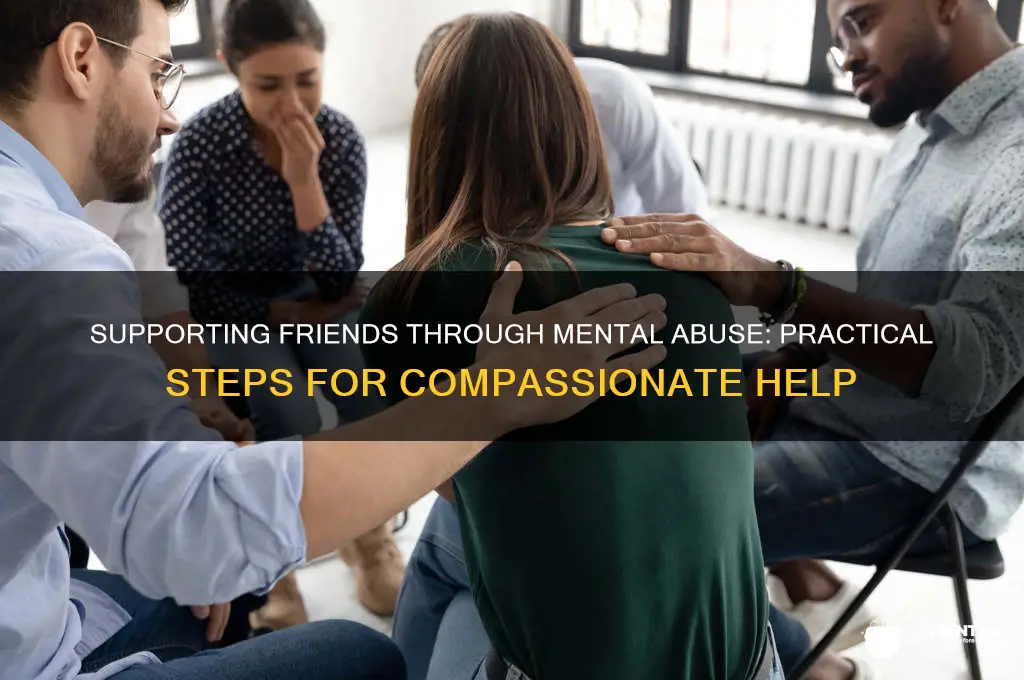
Helping a friend who is suffering from mental abuse requires patience, empathy, and a thoughtful approach. Mental abuse, often subtle and insidious, can erode a person’s self-esteem, confidence, and sense of reality, making it crucial to offer unwavering support. Start by creating a safe, non-judgmental space for your friend to share their experiences, validating their feelings and reassuring them that they are not alone. Encourage them to recognize the signs of abuse, such as gaslighting, manipulation, or constant criticism, and gently remind them that the mistreatment is not their fault. Offer practical assistance, such as helping them connect with mental health professionals, support groups, or trusted resources, while respecting their autonomy and pace. Above all, remain a consistent source of encouragement, reminding them of their strength and worth, and reinforcing that they deserve to be treated with kindness and respect.
Explore related products




What You'll Learn
- Listen Actively and Empathically: Create a safe space for them to share without judgment or interruption
- Encourage Professional Help: Suggest therapy or counseling to address trauma and rebuild self-esteem
- Validate Their Feelings: Acknowledge their pain and affirm that the abuse is not their fault
- Help Set Boundaries: Support them in limiting contact with the abuser to protect their mental health
- Offer Practical Support: Assist with daily tasks, resources, or safety planning if needed

Listen Actively and Empathically: Create a safe space for them to share without judgment or interruption
One of the most powerful ways to support a friend experiencing mental abuse is to offer them a safe and non-judgmental space to express themselves. Active and empathetic listening is a skill that can make a significant difference in their healing journey. When your friend feels heard and understood, it can be a transformative experience, allowing them to process their emotions and thoughts.
The Art of Listening:
Imagine a friend confiding in you about their abusive relationship, where their partner constantly belittles and controls them. As they speak, you maintain eye contact, nod occasionally, and reflect on their words. You might say, "It sounds like you're feeling trapped and unsure of how to break free." This simple act of active listening validates their experience and encourages them to elaborate. Avoid the urge to interrupt with advice or personal stories; instead, let them guide the conversation. For instance, if they mention feeling isolated, explore this further: "You've mentioned feeling alone; can you tell me more about what that's like for you?" This approach demonstrates your engagement and helps them feel truly heard.
Creating a Judgment-Free Zone:
Empathy is the cornerstone of this process. It involves recognizing and sharing their emotions, not just understanding them intellectually. When your friend shares a painful experience, respond with empathy: "I can't begin to imagine how scary that must have been for you." This response acknowledges their fear and provides comfort. Be cautious of phrases like "I understand exactly how you feel," as everyone's experiences are unique. Instead, focus on creating a safe haven where they can express themselves freely, without fear of criticism or dismissal.
Practical Tips for Supportive Conversations:
- Body Language Matters: Ensure your body language is open and inviting. Sit at their level, maintain a relaxed posture, and use gentle gestures to encourage them to continue.
- Ask Open-Ended Questions: Encourage dialogue with questions like, "How did that make you feel?" or "What do you think might help in this situation?" These prompts allow for deeper exploration.
- Avoid Quick Fixes: Refrain from offering solutions prematurely. Sometimes, the best support is simply being present and listening. Let them know you're there for them, and ask how they'd like to be supported.
- Be Patient: Healing takes time. Your friend might repeat themselves or struggle to find the right words. Be patient and let them set the pace.
By mastering the art of active and empathetic listening, you become a trusted confidant, providing a much-needed sanctuary for your friend's thoughts and emotions. This approach empowers them to make sense of their experiences and can be a catalyst for positive change. Remember, sometimes the greatest gift you can give is your undivided attention and a non-judgmental ear.
Beyond Reach: Can Some Minds Resist Mental Health Treatment?
You may want to see also
Explore related products


Encourage Professional Help: Suggest therapy or counseling to address trauma and rebuild self-esteem
Mental abuse leaves invisible scars, and healing often requires more than a supportive friend. While your presence is invaluable, encouraging professional help can be the catalyst for profound transformation. Therapy or counseling offers a safe, non-judgmental space for your friend to process their experiences, identify unhealthy patterns, and develop coping strategies. It’s not about replacing your support but enhancing it with expert guidance tailored to their unique needs.
Consider the analogy of a broken bone: a friend’s encouragement to rest is essential, but a doctor’s expertise is crucial for proper healing. Similarly, mental abuse fractures self-esteem and distorts self-perception. Therapists use evidence-based techniques like Cognitive Behavioral Therapy (CBT) to challenge negative thought patterns or Eye Movement Desensitization and Reprocessing (EMDR) to address trauma. These methods aren’t one-size-fits-all; a qualified professional will tailor the approach to your friend’s specific struggles, ensuring targeted and effective healing.
Broaching the topic requires sensitivity. Avoid phrases like “You need therapy,” which can feel dismissive. Instead, frame it as a collaborative step toward their well-being: “I’ve noticed how strong you are, and I think talking to someone who specializes in this could give you even more tools to feel empowered.” Offer practical assistance, such as helping research therapists, accompanying them to the first session, or simply reminding them of their strength. Remember, the goal is to empower, not pressure.
One common barrier is the stigma surrounding mental health. Normalize therapy by sharing statistics—for instance, over 40% of adults in the U.S. have sought counseling at some point. Mention affordable options like sliding-scale clinics, online therapy platforms, or support groups. If they’re hesitant, suggest starting with a single session as a low-stakes trial. Small steps can lead to significant breakthroughs, and your encouragement might be the nudge they need to take that first step.
Finally, be patient. Rebuilding self-esteem after mental abuse is a marathon, not a sprint. Celebrate their progress, no matter how incremental, and remind them that seeking help is a sign of courage, not weakness. By advocating for professional support, you’re not just helping them survive—you’re helping them reclaim their life.
Writing as Therapy: Unlocking Mental Health Benefits Through Self-Expression
You may want to see also
Explore related products


Validate Their Feelings: Acknowledge their pain and affirm that the abuse is not their fault
Mental abuse leaves invisible scars, and survivors often carry a heavy burden of self-blame. They may believe they provoked the abuse, deserved it, or somehow failed to prevent it. This internalized guilt can be as damaging as the abuse itself, eroding self-worth and hindering recovery.
Step 1: Listen Without Judgment
Begin by creating a safe space for your friend to express their emotions. Avoid interrupting, questioning their experiences, or offering unsolicited advice. Instead, use active listening techniques: maintain eye contact (if culturally appropriate), nod in acknowledgment, and reflect back what they’ve said to show you’re fully present. For example, say, *“It sounds like you’re feeling overwhelmed and confused right now”* rather than *“You shouldn’t feel that way.”*
Step 2: Affirm Their Reality
Mental abuse often involves gaslighting, where the abuser manipulates the victim’s perception of reality. Counteract this by explicitly validating their experiences. Use phrases like *“What you’re describing is absolutely real and painful”* or *“No one deserves to be treated that way, and it’s not your fault.”* Be specific about the behaviors they’ve endured (e.g., *“Being constantly criticized like that would wear anyone down”*) to reinforce that their feelings are a rational response to abuse.
Step 3: Separate Actions from Worth
Abusers frequently blur the line between a person’s actions and their inherent value. Help your friend disentangle these by emphasizing that their worth is unconditional. For instance, *“Your mistakes or choices do not make you deserving of abuse. Everyone makes mistakes, but that doesn’t give anyone the right to hurt you.”* This distinction is crucial for rebuilding self-esteem.
Caution: Avoid Minimizing or Comparing
Resist the urge to downplay their pain (*“At least it’s not physical abuse”*) or compare their situation to others (*“My ex was worse”*). Such statements invalidate their experience and can deepen feelings of isolation. Instead, focus on their unique struggle and affirm its legitimacy.
Validation is not a one-time conversation but an ongoing process. Regularly check in with your friend, reaffirming that their feelings matter and the abuse was never their responsibility. Over time, this consistent support can help them internalize the truth: they are not to blame, and their pain deserves acknowledgment and healing.
Prayer's Mental Benefits: Finding Peace, Clarity, and Resilience Through Connection
You may want to see also
Explore related products


Help Set Boundaries: Support them in limiting contact with the abuser to protect their mental health
One of the most effective ways to support a friend suffering from mental abuse is to help them establish and maintain clear boundaries with their abuser. Limiting contact is a critical step in reclaiming their mental health, but it’s often the hardest to implement. Start by encouraging open conversations about what healthy boundaries look like for them. This could mean reducing communication to essential interactions only, blocking the abuser on social media, or even seeking a formal no-contact order if necessary. The goal is to create a safe emotional and physical distance that allows your friend to heal without constant triggers.
Consider the practical steps involved in setting these boundaries. For instance, if the abuser uses phone calls or texts to maintain control, suggest your friend change their number or use apps that filter messages. If they share living spaces, help them explore temporary housing options or create a safe room within their home. For younger individuals, like teens or college students, this might involve involving school counselors or campus security to ensure the abuser cannot access them on school grounds. Each situation is unique, so tailor your support to their specific needs and circumstances.
It’s crucial to acknowledge the emotional challenges your friend may face when limiting contact. Guilt, fear, and even a misplaced sense of loyalty can make this process agonizing. Remind them that setting boundaries is an act of self-preservation, not selfishness. Share examples of others who’ve successfully reclaimed their lives after cutting ties with abusers, emphasizing the long-term benefits of mental freedom. Encourage them to focus on their own well-being rather than the abuser’s reactions, which are often manipulative attempts to regain control.
Finally, be their consistent ally in enforcing these boundaries. Offer to accompany them to meetings with lawyers, therapists, or support groups. Help them draft clear, firm messages to the abuser if communication is unavoidable. For friends in high-risk situations, such as those dealing with physical threats, assist in creating a safety plan that includes emergency contacts and escape routes. Your role isn’t to take charge but to empower them to take control of their own safety and recovery. By helping them set and uphold boundaries, you’re not just protecting their mental health—you’re helping them rebuild their sense of self.
Supportive Allies: How Others Can Boost Your Mental Well-Being
You may want to see also
Explore related products

$12.14 $19.99


Offer Practical Support: Assist with daily tasks, resources, or safety planning if needed
Mental abuse can drain a person’s energy, focus, and ability to manage even basic tasks. Offering practical support isn’t just about kindness—it’s about restoring their capacity to function and reclaim control. Start by observing their daily struggles without judgment. Are they neglecting meals, missing appointments, or falling behind on bills? Identify specific areas where they’re overwhelmed, then step in with concrete actions. For instance, if they’re too exhausted to cook, offer to prepare a week’s worth of freezer meals or set up a grocery delivery service. Small, consistent actions like these can alleviate immediate stress and signal that they’re not alone.
Safety planning is another critical aspect of practical support, especially if the abuse involves threats or manipulation. Help them create a discreet plan for emergencies, such as keeping a packed bag with essentials (ID, medications, cash) in a trusted friend’s car or a hidden location. Share resources like the National Domestic Violence Hotline (1-800-799-SAFE) or local shelters, but let them decide when and how to use them. If they’re hesitant to leave, focus on building a safety net—for example, setting up a code word they can text you if they’re in danger. The goal is to empower them with options, not force decisions.
Resource assistance is equally vital, as mental abuse often isolates victims from support systems. Research local therapists, support groups, or legal aid organizations and present the information in a non-intrusive way. For instance, compile a list of low-cost counseling services or apps like BetterHelp and Calm, which offer tools for managing anxiety and trauma. If finances are a concern, help them budget or explore financial aid programs. Be mindful of their autonomy; instead of saying, “You should do this,” frame it as, “Here are some options if you’re interested.” Practical support isn’t about taking over—it’s about equipping them with tools to rebuild their independence.
Finally, remember that practical support requires patience and adaptability. What works one week might not work the next, as their needs and circumstances evolve. Regularly check in without being intrusive, asking open-ended questions like, “What’s been challenging lately?” or “How can I help right now?” Avoid making assumptions about their priorities or capabilities. For example, someone who’s been mentally abused might struggle with decision-making, so offering to handle a specific task (e.g., calling a utility company to resolve a billing issue) can be more helpful than asking, “What do you need?” By staying attuned to their changing needs, you become a reliable anchor in their journey toward healing.
Supporting a Friend’s Mental Health: Practical Ways to Show You Care
You may want to see also
Frequently asked questions
Look for signs like sudden changes in behavior, low self-esteem, withdrawal from social activities, excessive apologies, or fear of upsetting others. They may also exhibit anxiety, depression, or reluctance to talk about their relationships.
Let them know you care and are there to support them without judgment. Use phrases like, "I’m here for you," "You’re not alone," or "It’s not your fault." Avoid blaming or pressuring them to take immediate action.
Be patient and respectful of their pace. Offer a listening ear, validate their feelings, and encourage them to seek professional help if needed. Avoid confronting the abuser or making decisions for them, as this could worsen their situation.
Recommend hotlines, counseling services, or support groups specializing in emotional or psychological abuse. Provide information about local or online resources, such as therapists, books, or websites that offer guidance on healing and recovery.