Ava Ramirez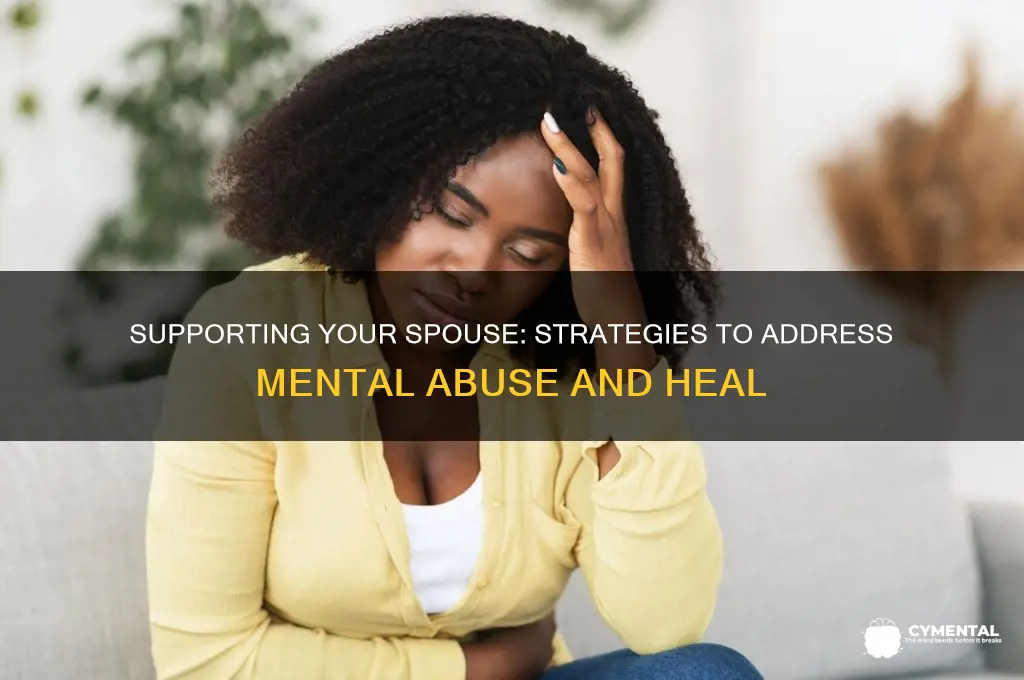
Helping a mentally abusive spouse requires a delicate balance of compassion, boundaries, and professional intervention. Mental abuse, often characterized by manipulation, gaslighting, or emotional harm, can deeply impact both the victim and the perpetrator. To support your spouse, it’s essential to first acknowledge the abusive behavior and its effects, while also prioritizing your own safety and well-being. Encourage them to seek therapy or counseling to address underlying issues, such as unresolved trauma or unhealthy coping mechanisms, which may contribute to their abusive patterns. Simultaneously, establish clear boundaries to protect yourself and communicate the consequences of continued abusive behavior. Remember, change must come from their willingness to take responsibility and commit to healing, and it’s not your role to fix them. If progress isn’t made or the abuse persists, consider seeking support for yourself and evaluating whether the relationship is safe to continue.
Explore related products




What You'll Learn
- Recognize abusive patterns: Identify controlling behaviors, emotional manipulation, and verbal aggression to understand the abuse dynamics
- Set firm boundaries: Establish clear limits on acceptable behavior and enforce consequences for violations
- Seek professional help: Encourage therapy or counseling for both partners to address underlying issues
- Build a support network: Connect with friends, family, or support groups for emotional and practical assistance
- Prioritize self-care: Focus on personal well-being, safety, and mental health to maintain resilience and strength

Recognize abusive patterns: Identify controlling behaviors, emotional manipulation, and verbal aggression to understand the abuse dynamics
Mental abuse often hides in plain sight, masquerading as "concern" or "love." To help a mentally abusive spouse, you must first recognize the patterns that define this toxic dynamic. Controlling behaviors, emotional manipulation, and verbal aggression are the cornerstones of mental abuse, and understanding these tactics is crucial for both intervention and prevention.
Controlling behaviors manifest in subtle yet insidious ways. It's not just about overt dominance; it's the constant monitoring of your partner's actions, the isolation from friends and family, and the dictation of how they should think, feel, or behave. For instance, a spouse might insist on knowing your every move, criticize your choices relentlessly, or make decisions for you without consultation. These actions erode autonomy and foster dependency, making it harder for the victim to recognize the abuse or seek help.
Emotional manipulation is a weapon of choice for mental abusers. It involves exploiting vulnerabilities to gain power. Gaslighting, where the abuser denies reality to make the victim question their sanity, is a prime example. Another tactic is guilt-tripping, where the abuser makes the victim feel responsible for their unhappiness. For instance, phrases like "If you really loved me, you would..." or "You’re the reason I’m so stressed" shift blame and create emotional debt. Recognizing these patterns requires vigilance and a willingness to trust your instincts when something feels wrong.
Verbal aggression is often the most visible yet misunderstood aspect of mental abuse. It’s not just about shouting; it’s the persistent use of words to demean, belittle, or intimidate. Sarcasm, criticism, and threats are tools in the abuser’s arsenal. For example, a spouse might say, "You’re so stupid, no one else would put up with you," or "If you leave, I’ll make sure you regret it." These statements chip away at self-esteem and create a climate of fear. To address this, document specific instances of verbal abuse and seek patterns—frequency, triggers, and impact—to understand the full scope of the harm.
Understanding the dynamics of abuse requires a dual focus: recognizing the behaviors and analyzing their impact. Start by educating yourself on the signs of mental abuse through reputable resources like the National Domestic Violence Hotline or books such as *Why Does He Do That?* by Lundy Bancroft. Encourage your spouse to reflect on their actions by asking open-ended questions like, "How do you think this behavior affects our relationship?" However, proceed with caution: confronting an abuser directly can escalate tension. Instead, focus on creating a safe space for the victim to process their experiences and seek professional help, such as couples therapy with a trained counselor specializing in abusive relationships.
Practical steps can mitigate immediate harm while addressing long-term patterns. Establish clear boundaries, such as refusing to engage in conversations that turn manipulative or aggressive. Encourage the victim to build a support network of trusted friends, family, or support groups. If children are involved, ensure they understand that the abuse is not their fault and provide them with age-appropriate resources, such as counseling or books like *The Color of My Words* by Lynn Joseph, which subtly addresses emotional resilience. Ultimately, helping a mentally abusive spouse requires patience, empathy, and a commitment to breaking the cycle of harm—one pattern at a time.
Social Interaction's Impact: Boosting Mental Health and Well-Being
You may want to see also
Explore related products


Set firm boundaries: Establish clear limits on acceptable behavior and enforce consequences for violations
Boundaries are the invisible fences that protect your mental and emotional well-being. In a relationship marred by mental abuse, these fences often lie trampled, leaving you exposed to harm. Setting firm boundaries isn't about controlling your spouse; it's about reclaiming your right to safety and respect.
Step 1: Define Your Limits with Precision
Start by identifying specific behaviors that are unacceptable—verbal insults, gaslighting, manipulation, or emotional blackmail. Be concrete. Instead of saying, "Don’t be mean," state, "I will not tolerate name-calling or belittling comments." Write these boundaries down to clarify them for yourself and, if necessary, communicate them to your spouse.
Step 2: Communicate Assertively, Not Aggressively
Deliver your boundaries calmly and firmly. Use "I" statements to avoid sounding accusatory: "I feel disrespected when you raise your voice, and I will leave the room if it happens again." Avoid emotional pleas or threats; focus on the behavior and its consequence. Practice this conversation beforehand if needed—confidence is key.
Step 3: Enforce Consequences Consistently
Boundaries without enforcement are empty words. If your spouse crosses a line, follow through immediately. For example, if they resort to insults, leave the room or end the conversation. Consistency is crucial; wavering undermines your credibility and reinforces abusive patterns.
Caution: Prepare for Resistance
Abusers often test boundaries, escalating behavior to regain control. They may guilt-trip, promise change, or deny wrongdoing. Stay resolute. Remind yourself that enforcing boundaries is an act of self-preservation, not cruelty. If you feel unsafe, have a safety plan in place—a trusted contact, a packed bag, or knowledge of local resources.
Takeaway: Boundaries Are Not Barriers to Love
Contrary to popular belief, setting boundaries does not stifle love; it fosters healthier dynamics. By holding your spouse accountable, you create space for genuine change—if they choose it. If they refuse, your boundaries become a bridge to self-respect and, potentially, a decision to prioritize your well-being above a toxic relationship.
Practical Tip: Keep a journal to track boundary violations and your responses. This helps you stay objective and recognize patterns, especially if you’re considering professional help or legal steps. Remember, boundaries are not just lines—they are lifelines.
Austin's Impact: How the City Boosts Mental Health and Well-Being
You may want to see also
Explore related products


Seek professional help: Encourage therapy or counseling for both partners to address underlying issues
Mental abuse in a relationship often stems from deep-seated issues that neither partner may fully understand or know how to address alone. Encouraging both individuals to seek professional help through therapy or counseling can be a transformative step toward healing and change. This approach doesn’t just focus on the abusive behavior but digs into the root causes, offering tools and strategies to rebuild healthier patterns of interaction.
Consider the process as a collaborative effort rather than a one-sided intervention. For the abused partner, therapy provides a safe space to process trauma, rebuild self-esteem, and develop boundaries. For the abusive partner, it offers an opportunity to confront the behaviors, emotions, or past experiences driving their actions. Couples therapy, when both are willing, can further facilitate communication and mutual understanding, though individual sessions should often precede this step to ensure safety and clarity.
Practical steps include researching therapists who specialize in domestic abuse, trauma, or relationship dynamics. Look for professionals trained in modalities like Cognitive Behavioral Therapy (CBT) or Emotionally Focused Therapy (EFT), which are effective for addressing abusive patterns. Encourage the abusive partner by framing therapy as a proactive step toward personal growth, not a punishment. For instance, suggest it as a way to “learn new tools for managing emotions” rather than focusing on past mistakes.
Caution must be taken to ensure safety throughout this process. If the abusive partner resists therapy or uses it as a tool to manipulate, it may be necessary to prioritize the abused partner’s well-being first. Additionally, not all therapists are equipped to handle abusive dynamics, so vetting their expertise is critical. Group therapy or support groups, such as those for survivors of abuse or perpetrators seeking change, can complement individual sessions and provide additional accountability.
Ultimately, professional help isn’t a quick fix but a long-term investment in both partners’ mental health and the relationship’s potential for change. It requires commitment, honesty, and a willingness to confront uncomfortable truths. While not every relationship will survive this process, both individuals can emerge with greater self-awareness and healthier coping mechanisms, whether they stay together or part ways.
Tax Dollars and Mental Health: Funding Institutions for Better Care?
You may want to see also
Explore related products


$17.7 $18.99


Build a support network: Connect with friends, family, or support groups for emotional and practical assistance
Isolation is a cornerstone of mental abuse, eroding self-worth and limiting access to help. Building a support network actively counters this tactic, providing emotional ballast, practical aid, and a reality check against the abuser's gaslighting.
Start by identifying confidants: friends or family members who are trustworthy, empathetic, and capable of maintaining confidentiality. Share specific examples of the abuse, avoiding generalizations that can be dismissed. For instance, instead of "They're always criticizing me," say, "Yesterday, they called me stupid for forgetting the groceries, even though I was exhausted from work." This concreteness helps allies understand the severity and pattern of the behavior.
Support groups, whether in-person or online, offer a unique benefit: connection with individuals who intimately understand the dynamics of mental abuse. Seek out groups tailored to your situation, such as those for survivors of narcissistic partners or emotional abuse. These communities provide validation, coping strategies, and a sense of collective resilience. For instance, the National Domestic Violence Hotline offers resources and can connect you to local support groups.
Practical assistance is equally vital. A support network can help with tasks the abuser may use to control you, such as managing finances, arranging childcare, or providing transportation. For example, a friend could accompany you to a lawyer’s office or help you open a separate bank account. This logistical support is crucial for planning and executing a safe exit strategy.
However, building this network requires caution. Avoid involving individuals the abuser could manipulate or who might inadvertently disclose your plans. Test confidants gradually, sharing small concerns first to gauge their reaction. If they minimize the abuse or suggest "couples counseling" (which can be dangerous in abusive relationships), reconsider their role in your support system.
Ultimately, a robust support network is not just a lifeline—it’s a tool for reclaiming agency. It reminds you that you are not alone, that your experiences are valid, and that there is a path forward. Start small, be strategic, and prioritize safety as you rebuild connections that the abuser has sought to sever.
Pets and Mental Health: Statistical Insights on Emotional Support
You may want to see also
Explore related products

$9.94 $17.99




Prioritize self-care: Focus on personal well-being, safety, and mental health to maintain resilience and strength
Self-care isn’t selfish—it’s survival. In the shadow of mental abuse, your well-being is the first casualty if neglected. Prioritizing yourself isn’t just about bubble baths or meditation; it’s about rebuilding the internal fortress that abuse erodes. Start with the basics: sleep, nutrition, and hydration. Adults need 7–9 hours of sleep nightly, yet stress often disrupts this. Combat insomnia with a consistent bedtime routine—no screens an hour before bed, and a magnesium supplement (400–500 mg daily) can aid relaxation. Pair this with a diet rich in omega-3s (found in salmon, walnuts) and complex carbs (oats, quinoa) to stabilize mood and energy.
Safety isn’t just physical; it’s emotional and psychological. Create boundaries that protect your mental space. Limit exposure to triggers by designating "safe zones" in your home—areas where conflict is off-limits. Use technology to your advantage: apps like Calm or Headspace offer guided meditations tailored to stress reduction, while journaling apps like Day One allow you to track patterns of abuse and your emotional responses. If digital tools feel overwhelming, start small: a 5-minute daily breathing exercise (inhale for 4 seconds, hold for 4, exhale for 6) can recalibrate your nervous system.
Resilience isn’t built overnight; it’s a cumulative process. Incorporate activities that restore your sense of self. For extroverts, this might mean reconnecting with friends weekly; for introverts, solo hikes or painting could recharge. Exercise is non-negotiable—30 minutes of moderate activity (brisk walking, yoga) 5 days a week reduces cortisol levels and boosts endorphins. If motivation wanes, join a group class; accountability can turn a chore into a habit. Remember, resilience isn’t about enduring pain—it’s about reclaiming power, one small act at a time.
Mental health requires proactive maintenance, not reactive repair. Therapy isn’t a last resort; it’s a tool for prevention. Cognitive Behavioral Therapy (CBT) is particularly effective for abuse survivors, helping reframe negative thought patterns. If cost is a barrier, seek sliding-scale clinics or online platforms like BetterHelp. Medication, when prescribed, can provide a baseline of stability—SSRIs like sertraline (25–50 mg daily) are commonly used for anxiety and depression. Pair this with self-compassion practices: treat yourself as you would a friend, with kindness and patience.
Finally, safety planning is self-care in its most critical form. Know your exits—literally and metaphorically. Keep a packed bag in a trusted friend’s home, with essentials like medications, important documents, and a charged phone. Memorize emergency contacts, including local shelters and the National Domestic Violence Hotline (1-800-799-SAFE). If children are involved, teach them age-appropriate safety strategies, like dialing 911 or identifying safe adults. Self-care in abusive situations isn’t indulgent—it’s strategic, ensuring you have the strength to act when the moment demands it.
Boost Your Mental Health: The Power of More Sleep
You may want to see also
Frequently asked questions
Mental abuse includes behaviors like constant criticism, belittling, gaslighting, controlling actions, and emotional manipulation. Pay attention to patterns of behavior that make you feel worthless, confused, or fearful.
Start by setting clear boundaries and communicating your feelings calmly. Seek professional help, such as couples therapy, and consider involving a trusted friend or family member for support.
Confrontation can be risky if your spouse reacts defensively or aggressively. Instead, focus on expressing your feelings using "I" statements and seek a safe space, like therapy, to discuss the issue.
Prioritize self-care by seeking therapy, joining support groups, and engaging in activities that boost your self-esteem. Limit exposure to abusive behavior and consider creating a safety plan if necessary.
If your spouse refuses to acknowledge the abuse, shows no willingness to change, or the situation escalates, it may be time to leave. Consult a professional or domestic violence advocate to assess your options and ensure your safety.