Harper Lewis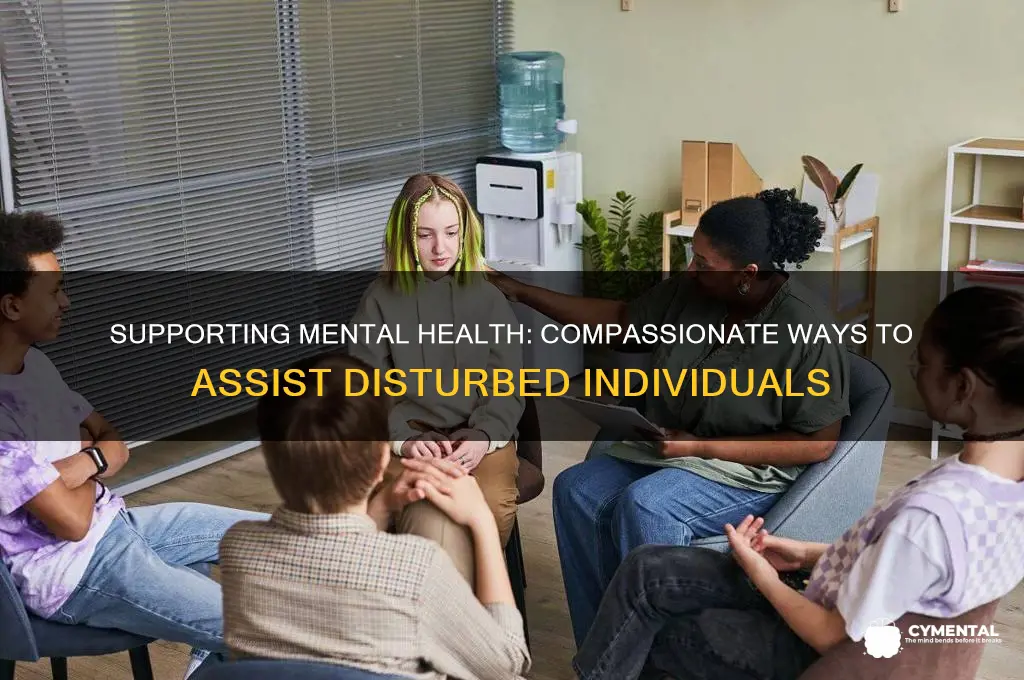
Helping a mentally disturbed person requires empathy, patience, and understanding. It’s essential to approach them with compassion, avoiding judgment or criticism, while actively listening to their concerns without trying to fix or dismiss their feelings. Encouraging professional help, such as therapy or counseling, is crucial, and offering to assist in finding resources or accompanying them to appointments can make a significant difference. Maintaining open communication, setting boundaries to protect your own well-being, and educating yourself about their condition can foster a supportive environment. Above all, reminding them that they are not alone and that recovery is possible can provide hope and motivation during their journey.
Explore related products


What You'll Learn
- Active Listening: Show empathy, listen without judgment, and validate their feelings to build trust and connection
- Encourage Professional Help: Gently suggest therapy, counseling, or medication as essential steps for recovery
- Create a Safe Space: Ensure a calm, non-threatening environment to reduce anxiety and promote comfort
- Educate Yourself: Learn about their condition to better understand their struggles and offer informed support
- Promote Self-Care: Encourage healthy habits like exercise, sleep, and nutrition to aid mental well-being

Active Listening: Show empathy, listen without judgment, and validate their feelings to build trust and connection
One of the most powerful tools in supporting someone with mental distress is the art of active listening. It's not merely about hearing their words but engaging in a way that fosters trust and understanding. When a person is in emotional turmoil, feeling truly heard can be a rare and comforting experience. This simple yet profound act of listening can create a safe space, allowing them to express themselves without fear of rejection or criticism.
The Power of Empathy: Imagine a friend confiding in you about their anxiety, describing a constant sense of dread. Instead of offering quick solutions, you respond, "It sounds like this anxiety is overwhelming, making everyday tasks feel like a battle." This empathetic reflection acknowledges their struggle, showing you're not only listening but also striving to understand their unique experience. Empathy bridges the gap between two individuals, creating a connection that can be therapeutic in itself.
A Step-by-Step Guide to Active Listening:
- Create a Safe Environment: Choose a quiet, private setting where the person feels comfortable. Ensure your body language is open and inviting—maintain eye contact, nod occasionally, and avoid crossing your arms.
- Listen Without Interrupting: Let them speak at their own pace. Resist the urge to finish their sentences or offer immediate advice. Sometimes, people just need to vocalize their thoughts without interruption.
- Reflect and Clarify: Paraphrase what they've said to show understanding. For instance, "It seems like you're feeling trapped in this situation, and it's causing a lot of distress." This encourages them to elaborate and ensures you're interpreting their feelings accurately.
- Validate Their Emotions: Acknowledge the validity of their feelings. Statements like, "It's completely understandable to feel angry in this circumstance," can be immensely reassuring. Validation doesn't mean you agree with every thought but rather recognize the legitimacy of their emotional response.
Cautions and Considerations: Active listening is a skill that requires practice and awareness. Be mindful of your own biases and judgments, ensuring they don't influence your responses. Avoid minimizing their experiences with phrases like "It could be worse" or "Just think positively." Such statements can invalidate their feelings and hinder the trust-building process. Additionally, be cautious not to overwhelm the person with excessive questions or personal stories; the focus should remain on their narrative.
In the realm of mental health support, active listening is a cornerstone. It empowers individuals to explore their emotions, gain clarity, and feel supported. By mastering this skill, you become a trusted ally, offering a non-judgmental space where healing and growth can begin. This approach is particularly effective when combined with professional guidance, providing a holistic support system for those navigating mental health challenges.
Finding Mental Health Support: A Guide to Seeking Professional Help
You may want to see also
Explore related products


Encourage Professional Help: Gently suggest therapy, counseling, or medication as essential steps for recovery
Mental health struggles often require more than a supportive ear; they demand professional intervention. While offering empathy and understanding is crucial, encouraging a mentally disturbed person to seek therapy, counseling, or medication can be a pivotal step toward recovery. This isn't about pushing them into something they're not ready for, but rather framing professional help as a necessary and empowering tool.
Think of it like this: you wouldn't expect someone with a broken leg to heal without medical attention. Mental health conditions, though less visible, are equally deserving of expert care.
The approach needs to be delicate. Start by normalizing the conversation around mental health. Share stories (with consent) of people who've benefited from therapy or medication, highlighting the positive outcomes. Avoid language that implies weakness or failure. Instead of saying, "You need help," try, "Therapy has helped so many people manage their anxiety, and I think it could be really beneficial for you too."
Offer concrete assistance. Research therapists in their area who specialize in their specific struggles. Look into insurance coverage and sliding scale options to address potential financial barriers. If medication is a possibility, accompany them to a doctor's appointment for support.
Remember, the goal is to empower, not control. Ultimately, the decision to seek professional help rests with the individual. Respect their autonomy while continuing to offer encouragement and support throughout their journey. Recovery is rarely linear, and setbacks are common. Be patient, remain a constant source of encouragement, and celebrate their progress, no matter how small.
Supporting Your Daughter’s Mental Health: Practical Steps for Parents
You may want to see also
Explore related products


Create a Safe Space: Ensure a calm, non-threatening environment to reduce anxiety and promote comfort
A mentally disturbed person often experiences heightened sensitivity to their surroundings, making the environment a critical factor in their comfort and recovery. Creating a safe space isn’t just about physical safety; it’s about crafting an atmosphere that minimizes sensory overload and emotional triggers. For instance, harsh lighting, loud noises, or cluttered spaces can exacerbate anxiety, while soft lighting, quiet tones, and organized areas can foster a sense of peace. This deliberate design can significantly reduce the risk of emotional escalation and encourage openness.
To achieve this, start by assessing the environment for potential stressors. Remove sharp objects or anything that could be used for self-harm, but do so discreetly to avoid drawing attention. Use neutral colors like beige, soft blue, or light green for walls and decor, as these hues are scientifically proven to calm the nervous system. Incorporate natural elements like plants or a small water feature, which have been shown to reduce stress levels. If the person is comfortable with it, play instrumental music at a low volume (around 60–70 decibels) to mask sudden noises that might startle them.
Another key aspect is maintaining a consistent routine within the space. Humans, especially those with mental distress, find predictability reassuring. Establish a daily schedule for meals, rest, and activities, and communicate it clearly. For example, if you’re caring for someone at home, ensure they know that breakfast is at 8 a.m., quiet time is from 2–3 p.m., and lights dim at 9 p.m. This structure provides a sense of control and stability, which is often lacking in their internal world.
However, creating a safe space isn’t just about the physical environment—it’s also about your behavior within it. Avoid sudden movements or raised voices, as these can trigger fight-or-flight responses. Instead, speak in a calm, measured tone, using simple, direct language. If the person becomes agitated, gently guide them to a designated "calm corner" equipped with comfort items like a weighted blanket, a soft pillow, or a fidget toy. These tools can help ground them during moments of distress.
Finally, remember that a safe space is dynamic and should adapt to the individual’s needs. Regularly check in with them (if they’re receptive) to see what adjustments might improve their comfort. For instance, someone with PTSD might prefer a room with a clear view of the door, while someone with sensory processing issues might benefit from blackout curtains. By tailoring the environment to their specific triggers and preferences, you’re not just creating a safe space—you’re building a sanctuary where healing can begin.
Boost Your Mind: The Mental Benefits of Playing Board Games
You may want to see also
Explore related products


Educate Yourself: Learn about their condition to better understand their struggles and offer informed support
Understanding a mentally disturbed person’s condition begins with recognizing that mental health disorders are as diverse as the individuals who experience them. Anxiety, depression, schizophrenia, bipolar disorder—each comes with its own set of symptoms, triggers, and challenges. For instance, someone with obsessive-compulsive disorder (OCD) may spend hours performing rituals to alleviate intrusive thoughts, while a person with post-traumatic stress disorder (PTSD) might relive traumatic events through flashbacks. Educating yourself about these specifics is not just an act of empathy; it’s a practical step toward providing meaningful support. Start by researching reputable sources like the National Institute of Mental Health (NIMH) or the World Health Organization (WHO) to grasp the clinical aspects of their condition.
Once you’ve familiarized yourself with the basics, delve into the lived experiences of those with the same diagnosis. Personal narratives, whether through books, podcasts, or support group testimonials, offer insights that clinical descriptions often miss. For example, a person with borderline personality disorder (BPD) might describe emotional dysregulation as feeling like a storm they can’t control, while someone with major depressive disorder could liken their experience to being trapped in a fog. These perspectives humanize the condition, helping you move beyond sympathy to genuine understanding. Pairing clinical knowledge with personal stories creates a well-rounded view, enabling you to respond with sensitivity and relevance.
Practical education also involves learning about treatment modalities and coping mechanisms specific to their condition. For instance, if they’re managing bipolar disorder, familiarize yourself with mood stabilizers like lithium (typically prescribed at 300–900 mg daily) and the importance of maintaining a consistent sleep schedule. If they’re dealing with generalized anxiety disorder, explore techniques like cognitive-behavioral therapy (CBT) or mindfulness exercises. Knowing these tools allows you to offer informed suggestions or simply validate their efforts. Avoid the trap of becoming an amateur therapist; instead, use this knowledge to foster a supportive environment where they feel seen and understood.
A critical caution: avoid making assumptions or generalizations based on your research. Mental health is deeply personal, and what applies to one person may not apply to another. For example, while selective serotonin reuptake inhibitors (SSRIs) are commonly prescribed for depression, they may not work for everyone, and side effects can vary widely. Always prioritize their self-reported experiences over textbook definitions. Additionally, be mindful of your own biases or misconceptions. Educating yourself is an ongoing process, not a one-time task, as mental health research and perspectives evolve.
In conclusion, educating yourself about a mentally disturbed person’s condition is a cornerstone of effective support. It equips you with the knowledge to navigate their struggles alongside them, fostering trust and reducing misunderstandings. By combining clinical understanding, personal narratives, and practical insights, you can offer support that is both informed and compassionate. Remember, the goal isn’t to become an expert but to create a safe, empathetic space where they feel heard and valued. This approach transforms your role from a bystander to an ally in their journey toward healing.
Seeking Private Mental Health Support: A Guide to Confidential Care
You may want to see also
Explore related products


Promote Self-Care: Encourage healthy habits like exercise, sleep, and nutrition to aid mental well-being
Mental health struggles often manifest physically, with fatigue, changes in appetite, and a lack of motivation to move. This creates a vicious cycle: feeling unwell mentally leads to neglecting physical health, which in turn exacerbates mental distress. Breaking this cycle through self-care practices like exercise, adequate sleep, and nutritious eating isn't a cure-all, but it's a powerful tool for managing symptoms and fostering resilience.
Imagine a car trying to climb a steep hill with a flat tire. Pushing the gas pedal harder won't help much until the tire is inflated. Similarly, encouraging healthy habits can be like inflating that tire, giving the person the physical foundation needed to tackle the uphill battle of mental health challenges.
Let's get practical. Aim for 30 minutes of moderate-intensity exercise most days. This could be brisk walking, swimming, cycling, or even dancing. For those new to exercise, start small – 10 minutes a day – and gradually increase duration and intensity. Consistency is key, not intensity. Sleep is equally crucial. Most adults need 7-9 hours of quality sleep each night. Establish a consistent sleep schedule, create a relaxing bedtime routine, and limit screen time before bed.
Think of sleep as the body's repair shop. Skimping on sleep is like neglecting maintenance on a car – it leads to breakdowns.
Nutrition plays a vital role too. A diet rich in fruits, vegetables, whole grains, and lean protein provides the brain with the fuel it needs to function optimally. Omega-3 fatty acids, found in fatty fish like salmon and flaxseeds, are particularly beneficial for brain health. Conversely, processed foods, sugary drinks, and excessive caffeine can worsen mood and energy levels. Think of food as information for the body. Feeding it nutritious "data" leads to better "performance."
Remember, promoting self-care isn't about forcing change. It's about offering gentle encouragement, providing resources, and celebrating small victories. Offer to join them for a walk, cook a healthy meal together, or simply listen without judgment. By supporting the development of healthy habits, you're empowering the person to take an active role in their own healing journey.
Supporting Through Crisis: Texting Tips for Mental Breakdown Assistance
You may want to see also
Frequently asked questions
Approach calmly, speak softly, and maintain a non-threatening posture. Use simple, clear language and avoid overwhelming them with too much information or questions.
Stay calm, avoid confrontation, and give them space. Speak in a soothing tone, acknowledge their feelings, and seek help from a mental health professional or emergency services if necessary.
Encourage professional treatment, set clear boundaries, and focus on their overall well-being. Offer emotional support while avoiding actions that reinforce negative behaviors.
Look for severe symptoms like suicidal thoughts, self-harm, hallucinations, inability to care for themselves, or aggressive behavior that poses a risk to themselves or others.
Listen without judgment, show empathy, and include them in activities they enjoy. Encourage social connections and gently remind them they are not alone.