Caleb Wright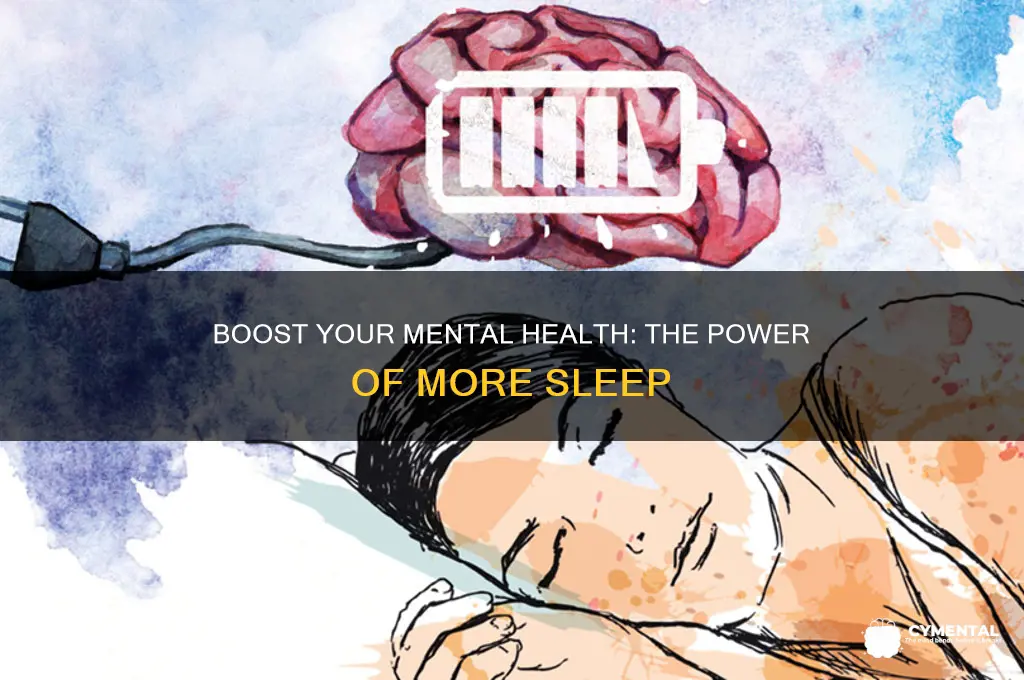
Increasing sleep has been shown to have a profound impact on mental health, as it allows the brain to repair and rejuvenate, reducing symptoms of anxiety, depression, and stress. Adequate sleep, typically 7-9 hours for adults, supports emotional regulation by balancing neurotransmitters like serotonin and dopamine, which are crucial for mood stability. It also enhances cognitive functions such as memory, focus, and decision-making, which can alleviate feelings of overwhelm. Additionally, quality sleep strengthens the brain’s ability to process emotions and cope with challenges, fostering resilience against mental health disorders. By prioritizing sleep, individuals can improve their overall well-being and create a foundation for better mental health.
Explore related products






What You'll Learn
- Improved mood regulation through better emotional processing and reduced irritability
- Enhanced cognitive function, including memory, focus, and problem-solving abilities
- Reduced anxiety and stress levels due to balanced cortisol production
- Lower risk of depression by supporting neurotransmitter and brain health
- Stronger resilience to mental health challenges with restorative sleep cycles

Improved mood regulation through better emotional processing and reduced irritability
Sleep is the brain’s nightly reset button, and its impact on mood regulation is both profound and measurable. During deep sleep stages, the brain processes and consolidates emotions experienced throughout the day, effectively "filing away" negative experiences and reducing their lingering impact. Studies show that individuals who achieve 7-9 hours of uninterrupted sleep exhibit a 30% greater ability to regulate emotions compared to those sleeping 5 hours or less. This emotional processing occurs primarily in the amygdala, which calms its reactivity when well-rested, allowing for more measured responses to stressors.
Consider the practical implications: a teenager pulling an all-nighter before an exam doesn’t just face cognitive fatigue—their amygdala remains hyperactive, amplifying frustration over minor setbacks. Conversely, a middle-aged professional prioritizing 8 hours of sleep is better equipped to navigate workplace conflicts without snapping. The mechanism? Sleep deprivation disrupts the prefrontal cortex’s ability to modulate amygdala activity, leading to heightened irritability. Prioritizing sleep isn’t just self-care—it’s a strategic tool for emotional resilience.
To harness this benefit, implement a two-pronged approach. First, stabilize your circadian rhythm by maintaining a consistent sleep schedule, even on weekends. Second, create a pre-sleep ritual that minimizes emotional stimulation: avoid screens emitting blue light (which suppresses melatonin) for at least 60 minutes before bed, and instead engage in activities like journaling or progressive muscle relaxation. For those over 40, whose sleep architecture naturally fragments, incorporating 20-30 minutes of afternoon sunlight exposure can reinforce circadian cues, improving both sleep quality and emotional processing efficiency.
A cautionary note: while improving sleep can significantly reduce irritability, it’s not a standalone solution for clinical mood disorders. Individuals with conditions like depression or anxiety may find that sleep optimization alleviates symptoms but requires complementary interventions such as therapy or medication. However, for the general population, even incremental improvements in sleep duration—as little as 1 additional hour per night—have been shown to decrease self-reported irritability by 15-20%. This underscores sleep’s role as a foundational pillar in emotional health, not merely a luxury.
Finally, reframe sleep as an active contributor to emotional intelligence rather than a passive state. Just as athletes prioritize recovery to enhance performance, viewing sleep as a training ground for emotional regulation shifts its perceived value. Start tonight: set an alarm 15 minutes earlier than your intended bedtime to prepare for sleep, and observe how small adjustments compound into greater mood stability over time. The data is clear—better sleep doesn’t just quiet the mind; it rewires it for resilience.
Horse Riding: A Therapeutic Journey to Improve Mental Well-being
You may want to see also
Explore related products



Enhanced cognitive function, including memory, focus, and problem-solving abilities
Sleep is the unsung hero of cognitive performance, a nightly reset that sharpens the mind’s tools for the day ahead. During deep sleep stages, the brain consolidates memories, transferring information from short-term to long-term storage. Studies show that adults who consistently achieve 7–9 hours of sleep per night retain 20–30% more information than those who sleep 6 hours or less. For students or professionals, this means the difference between recalling a key detail during an exam or presentation and drawing a blank under pressure. Prioritizing sleep isn’t just rest—it’s an investment in your memory bank.
Consider focus, a cognitive function that crumbles without adequate sleep. Even mild sleep deprivation, defined as losing 1–2 hours of sleep per night, mimics the effects of alcohol on attention span. A well-rested brain filters distractions efficiently, but a sleep-deprived one struggles to sustain concentration for tasks longer than 20 minutes. To combat this, establish a "digital sunset" by turning off screens at least an hour before bed. Blue light disrupts melatonin production, the hormone that signals sleep readiness. By protecting your sleep quality, you safeguard your ability to stay on task during critical moments.
Problem-solving thrives on creativity and logical reasoning, both of which deteriorate without sufficient sleep. Research from the *Journal of Experimental Psychology* found that individuals who slept 8 hours solved complex puzzles 30% faster than those who slept 4 hours. Sleep deprivation impairs the prefrontal cortex, the brain region responsible for decision-making and strategic thinking. For optimal problem-solving, aim for a consistent sleep schedule, even on weekends. Irregular sleep patterns fragment REM sleep, the stage where the brain processes abstract connections and "Aha!" moments occur.
A practical tip for enhancing cognitive function through sleep is to incorporate a 20-minute nap into your afternoon routine. Napping improves alertness and performance without disrupting nighttime sleep, provided it’s kept under 30 minutes. For older adults over 65, who often experience fragmented sleep, napping can offset age-related cognitive decline. Pair this with a sleep-friendly diet—foods rich in magnesium (spinach, almonds) and omega-3s (salmon, flaxseeds)—to further support brain health. Sleep isn’t a luxury; it’s a non-negotiable pillar of cognitive excellence.
Kicking Stigma: Football's Impact on Mental Health and Well-Being
You may want to see also
Explore related products


Reduced anxiety and stress levels due to balanced cortisol production
Sleep acts as a natural regulator of cortisol, the body's primary stress hormone. When you consistently get 7-9 hours of quality sleep each night, your hypothalamic-pituitary-adrenal (HPA) axis functions optimally, leading to a balanced cortisol rhythm. This rhythm peaks in the morning to wake you up and gradually declines throughout the day, reaching its lowest point at night to prepare your body for rest. Disrupt this rhythm through sleep deprivation, and cortisol levels remain elevated, triggering a chronic stress response.
Studies show that even partial sleep deprivation (6 hours or less) for consecutive nights can significantly increase cortisol production, leaving you feeling wired, anxious, and on edge.
Imagine your body as a pressure cooker. Cortisol is the steam building up inside. Adequate sleep acts as the release valve, preventing the pressure from becoming overwhelming. When you skimp on sleep, that valve stays shut, leading to a constant state of heightened tension and anxiety. This isn't just a feeling; it's a physiological response. Elevated cortisol levels contribute to increased heart rate, muscle tension, and a heightened fight-or-flight response, all hallmarks of anxiety disorders.
Conversely, prioritizing sleep allows your body to naturally regulate cortisol, promoting a sense of calm and emotional resilience.
Think of it as a preventative measure. Just as you wouldn't neglect regular exercise for physical health, neglecting sleep undermines your mental well-being. Aim for a consistent sleep schedule, even on weekends. Create a relaxing bedtime routine that signals to your body it's time to wind down. This could include reading a book, taking a warm bath, or practicing deep breathing exercises. Limit screen time before bed, as the blue light emitted by electronic devices suppresses melatonin production, further disrupting your sleep cycle and cortisol rhythm.
Remember, reducing anxiety and stress isn't about eliminating cortisol entirely; it's about achieving balance. By prioritizing sleep, you empower your body to regulate this crucial hormone naturally, fostering a sense of calm and emotional stability throughout the day.
Accessing Mental Health Care Without Insurance: Affordable Options and Resources
You may want to see also
Explore related products


Lower risk of depression by supporting neurotransmitter and brain health
Sleep isn't just downtime for your body; it's active maintenance for your brain. During sleep, the brain clears out waste products, including proteins associated with neurodegenerative diseases. This nightly cleanup is crucial for maintaining the health of neurons and the intricate network of connections that underpin mental health. One of the key players in this process is the glymphatic system, which becomes more active during sleep, flushing out toxins that accumulate during waking hours. Without adequate sleep, this system falters, leaving the brain vulnerable to damage and dysfunction.
Neurotransmitters, the brain's chemical messengers, rely on sleep to function optimally. Serotonin, often called the "feel-good" neurotransmitter, is a prime example. Its production and regulation are heavily influenced by sleep duration and quality. Studies show that chronic sleep deprivation can lead to a significant drop in serotonin levels, which are closely linked to mood disorders like depression. For instance, individuals with insomnia are ten times more likely to develop depression compared to those who sleep well. Ensuring 7-9 hours of sleep per night can help stabilize serotonin levels, acting as a natural buffer against depressive symptoms.
Another critical neurotransmitter affected by sleep is dopamine, which plays a central role in motivation and reward. Sleep deprivation disrupts dopamine signaling, leading to decreased motivation, anhedonia (inability to feel pleasure), and increased susceptibility to depression. A study published in the *Journal of Neuroscience* found that just one night of sleep deprivation reduced dopamine receptor availability by 18%. Over time, this disruption can contribute to the development of depressive disorders. Prioritizing consistent sleep schedules, especially for adolescents and young adults whose brains are still developing, can safeguard dopamine function and reduce depression risk.
Practical steps to support neurotransmitter health through sleep include creating a sleep-conducive environment. Keep the bedroom cool (60-67°F), dark, and quiet. Limit exposure to screens at least an hour before bed, as blue light suppresses melatonin, a hormone essential for sleep. Incorporating magnesium-rich foods (e.g., spinach, almonds) or supplements (300-400 mg daily) can also improve sleep quality by promoting relaxation. For those with persistent sleep issues, cognitive-behavioral therapy for insomnia (CBT-I) has proven effective in restoring healthy sleep patterns and reducing depression risk.
In summary, sleep is a non-negotiable pillar of brain health, directly influencing neurotransmitter balance and lowering depression risk. By understanding the science behind sleep and neurotransmitters, individuals can take proactive steps to protect their mental well-being. Small changes, like optimizing sleep hygiene and addressing sleep disorders, can yield significant long-term benefits for both brain function and emotional resilience.
Empowering Young Hearts: Children Supporting Seniors with Mental Health Challenges
You may want to see also
Explore related products


Stronger resilience to mental health challenges with restorative sleep cycles
Sleep isn't just downtime for your body; it's active maintenance for your brain. During deep sleep stages, the brain clears out waste products like beta-amyloid plaques, which are linked to depression and anxiety. Think of it as a nightly detox for your mental health. Studies show that even one night of poor sleep can increase emotional reactivity by 60%, making you more vulnerable to stress and negative thoughts. Conversely, consistent restorative sleep strengthens the brain's ability to regulate emotions, a key factor in resilience.
Aim for 7-9 hours of uninterrupted sleep each night, prioritizing a cool, dark, and quiet environment.
Building resilience isn't about avoiding challenges; it's about bouncing back stronger. Restorative sleep cycles, particularly slow-wave sleep, play a crucial role in this process. During these deep sleep stages, the brain consolidates memories and processes emotions, essentially "filing away" stressful experiences in a less emotionally charged way. This emotional regulation is a cornerstone of resilience. Imagine a rubber band – consistent restorative sleep keeps it supple and able to stretch without snapping. Irregular sleep, on the other hand, leaves it brittle and prone to breaking under pressure.
While the ideal sleep duration is 7-9 hours, the quality of those hours matters just as much. Aim for a consistent sleep schedule, even on weekends. Establish a relaxing bedtime routine, avoiding screens for at least an hour before bed. Consider incorporating relaxation techniques like deep breathing or meditation to signal to your body that it's time to wind down. For those struggling with persistent sleep issues, consulting a healthcare professional is crucial. They can rule out underlying sleep disorders and recommend personalized solutions, which may include cognitive-behavioral therapy for insomnia (CBT-I).
Remember, investing in restorative sleep isn't a luxury; it's a vital investment in your mental well-being and your ability to navigate life's challenges with greater resilience.
Staying Connected: How Social Bonds Boost Mental Health and Well-Being
You may want to see also
Frequently asked questions
Increasing sleep duration improves mental health by allowing the brain to repair and restore itself, reducing stress hormones, and enhancing emotional regulation. Adequate sleep also supports cognitive functions like memory and decision-making, which are crucial for mental well-being.
Yes, better sleep can reduce symptoms of anxiety and depression by regulating neurotransmitters like serotonin and dopamine, which play a key role in mood. Chronic sleep deprivation, on the other hand, can exacerbate these conditions by increasing irritability and negative thought patterns.
Sleep strengthens emotional resilience by improving the brain’s ability to process and recover from emotional experiences. During deep sleep, the brain consolidates emotional memories, helping individuals cope better with stress and adversity during waking hours.
Sleep plays a critical role in reducing the risk of mental health disorders by maintaining the brain’s structural integrity and supporting its ability to manage stress. Poor sleep is linked to a higher risk of conditions like depression, anxiety, and even psychosis, making quality sleep a protective factor for mental health.