Noah Parker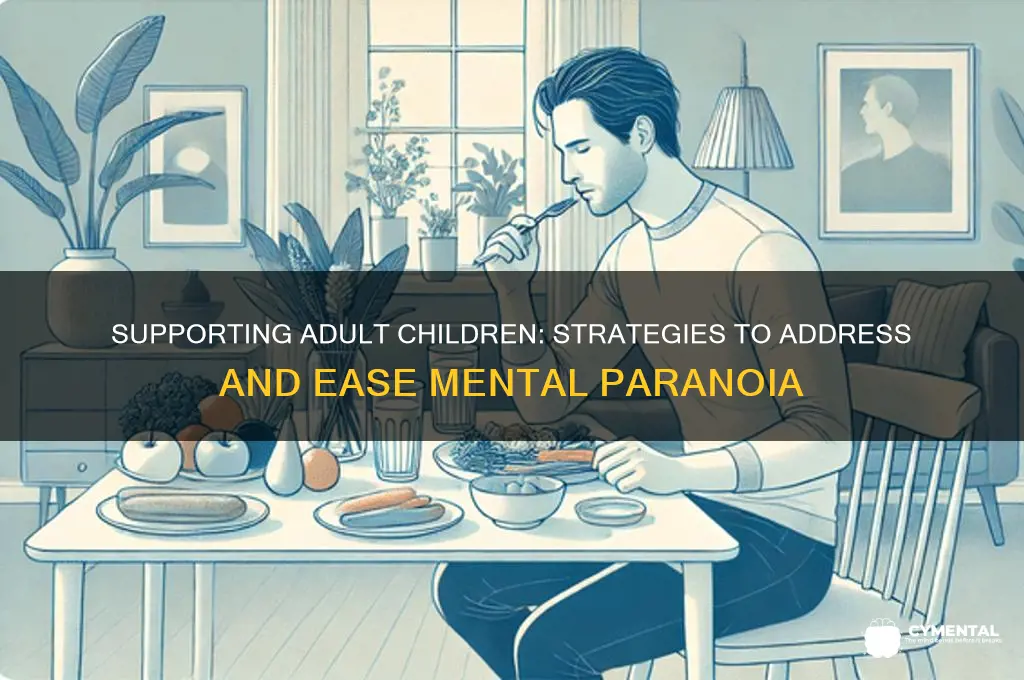
Helping an adult child struggling with mental paranoia can be emotionally challenging yet profoundly important, requiring patience, understanding, and a strategic approach. Paranoia, often rooted in anxiety or trauma, can manifest as persistent mistrust or irrational fears, making it crucial to approach the situation with empathy rather than judgment. Begin by fostering open communication, creating a safe space for your child to express their feelings without fear of dismissal or criticism. Educate yourself about paranoia and its underlying causes to better understand their experience, and consider involving mental health professionals who can provide specialized guidance and treatment options, such as therapy or medication. Encourage self-care practices, such as mindfulness or exercise, to help manage symptoms, and set healthy boundaries to ensure both their well-being and your own. Above all, remain supportive and consistent, as rebuilding trust and fostering resilience takes time and unwavering commitment.
| Characteristics | Values |
|---|---|
| Educate Yourself | Learn about paranoia, its triggers, and associated mental health conditions. Understand symptoms like mistrust, suspicion, and irrational fears. |
| Maintain Patience | Avoid arguing or dismissing their fears. Acknowledge their feelings without reinforcing delusions. |
| Encourage Professional Help | Gently suggest therapy, medication, or psychiatric evaluation. Offer to accompany them to appointments. |
| Build Trust | Be consistent, reliable, and non-judgmental. Show empathy and validate their emotions. |
| Set Boundaries | Establish clear limits to protect your own mental health. Avoid enabling harmful behaviors. |
| Promote Reality Testing | Gently challenge distorted beliefs with factual evidence, but avoid confrontation. |
| Foster Open Communication | Create a safe space for them to express fears without fear of ridicule. Listen actively. |
| Encourage Healthy Habits | Support routines like regular sleep, exercise, and balanced nutrition to reduce paranoia triggers. |
| Avoid Enabling Isolation | Encourage social interaction and engagement in safe, supportive environments. |
| Monitor for Crisis | Be vigilant for signs of worsening paranoia or suicidal ideation. Have crisis resources ready. |
| Collaborate with Professionals | Work with therapists or psychiatrists to understand treatment plans and provide consistent support. |
| Practice Self-Care | Prioritize your own well-being to avoid burnout. Seek support groups or counseling if needed. |
| Use Calm and Neutral Language | Avoid accusatory or confrontational tones. Speak calmly and clearly to reduce anxiety. |
| Limit Exposure to Triggers | Identify and minimize exposure to media, people, or situations that exacerbate paranoia. |
| Encourage Mindfulness or Relaxation | Suggest techniques like meditation, deep breathing, or hobbies to manage stress and anxiety. |
| Be Prepared for Resistance | Accept that they may resist help initially. Remain supportive and persistent without forcing intervention. |
Explore related products


What You'll Learn
- Educate Yourself: Learn about paranoia, its triggers, and effective coping strategies to better understand their experience
- Encourage Professional Help: Gently suggest therapy or medication, emphasizing support and non-judgmental encouragement
- Maintain Open Communication: Listen actively, validate feelings, and avoid dismissing their fears or concerns
- Set Healthy Boundaries: Protect your well-being while offering support, ensuring mutual respect and self-care
- Promote Self-Care: Encourage routines, exercise, and mindfulness to reduce stress and manage symptoms

Educate Yourself: Learn about paranoia, its triggers, and effective coping strategies to better understand their experience
Paranoia, a symptom often linked to conditions like schizophrenia, bipolar disorder, or severe anxiety, can distort an individual’s perception of reality, making them feel threatened even when no danger exists. To support an adult child experiencing paranoia, start by educating yourself about the condition. Understanding its psychological roots—such as trauma, stress, or chemical imbalances—can help you approach their struggles with empathy rather than frustration. For instance, research shows that paranoia often intensifies during periods of high stress or sleep deprivation, so identifying these triggers can guide your interventions.
Begin by consulting reputable sources like the National Alliance on Mental Illness (NAMI) or the American Psychological Association (APA) for accurate information. Books like *Overcoming Paranoid and Suspicious Thoughts* by Daniel Freeman offer insights into the cognitive processes behind paranoia. Online courses or workshops on mental health can also deepen your understanding. For example, learning about the role of dopamine in psychosis can explain why certain medications (e.g., antipsychotics like olanzapine or risperidone) are prescribed, though always defer to their healthcare provider for specifics.
Once you’ve grasped the basics, focus on practical coping strategies. Cognitive-behavioral therapy (CBT) techniques, such as reality testing (gently questioning the evidence for their fears), can help ground your child in reality. Encourage them to keep a journal to track paranoid thoughts and their triggers, which can reveal patterns over time. For instance, if they notice paranoia spikes after caffeine consumption, reducing intake might help. Similarly, mindfulness practices—like deep breathing exercises or guided meditation apps (e.g., Calm or Headspace)—can reduce anxiety and improve emotional regulation.
However, educating yourself isn’t just about acquiring knowledge; it’s about adjusting your communication style. Avoid dismissive phrases like “It’s all in your head” or “Just stop thinking that way,” which can alienate your child. Instead, use validating statements like “I see this is really hard for you” or “Let’s figure this out together.” Role-playing conversations with a therapist can help you practice responding calmly and effectively when paranoia arises. Remember, your goal isn’t to “fix” them but to create a safe, nonjudgmental space where they feel understood.
Finally, recognize the limits of self-education. While learning about paranoia is essential, it doesn’t replace professional treatment. Encourage your child to engage with mental health professionals and support groups, such as those offered by NAMI’s Family-to-Family program. Your role is to complement, not substitute, their care team. By combining your newfound knowledge with patience and compassion, you can foster trust and resilience in your adult child’s journey toward managing paranoia.
Supporting a Friend: A Guide to Accessing Mental Health Assistance
You may want to see also
Explore related products



$6.79 $14.99


Encourage Professional Help: Gently suggest therapy or medication, emphasizing support and non-judgmental encouragement
Paranoia can isolate your adult child, making them resistant to outside help. They may fear judgment, distrust professionals, or believe their perceptions are entirely accurate. This resistance is a symptom, not a personal failing, and requires a delicate approach.
Here's a strategic way to encourage professional intervention:
Frame it as a collaborative exploration. Instead of issuing ultimatums, present therapy or medication as tools for understanding and managing their experiences. Use "we" statements: "We could explore some strategies together," or "Let's see what options are out there that might help." This shifts the focus from fixing them to finding solutions as a team.
Highlight specific benefits, not just "getting better." Avoid vague promises of "feeling better." Instead, connect professional help to tangible improvements they might desire. For example, "Therapy could help you feel more in control of these thoughts," or "Medication might help reduce the intensity of these feelings so you can focus on the things you enjoy."
Offer to accompany them. The prospect of facing a therapist alone can be daunting. Offer to attend the first appointment for support, emphasizing it's about finding the right fit, not forcing a commitment. Even if they decline, knowing you're willing to be there can ease anxiety.
Be prepared for resistance, but don't take it personally. Paranoia often fuels defensiveness. If they react negatively, acknowledge their feelings without arguing. "I understand this feels scary. It's okay to take things at your own pace." Reiterate your love and support, and revisit the conversation later.
Remember, your role is to guide, not force. By approaching professional help with empathy, patience, and a focus on collaboration, you can create a safe space for your child to consider options they might not have otherwise explored.
Accessing Free Mental Health Support: A Comprehensive Guide to Healing
You may want to see also
Explore related products


Maintain Open Communication: Listen actively, validate feelings, and avoid dismissing their fears or concerns
Paranoia can make an adult child feel isolated, as if their fears are both irrational and overwhelming. To bridge this gap, open communication becomes a lifeline. It’s not about fixing their reality but entering it with empathy. Active listening is the cornerstone—focus on their words, tone, and body language without interrupting. Reflect back what you hear to show understanding: *"It sounds like you’re feeling really unsafe when this happens."* This validates their experience, signaling that their emotions matter, even if the content of their paranoia doesn’t align with your perception of reality.
Validation doesn’t mean agreeing with their fears; it means acknowledging the distress those fears cause. For instance, instead of saying, *"That’s not true, you’re overreacting,"* try, *"I can see how upsetting this is for you."* This approach reduces defensiveness and fosters trust. Avoid minimizing their concerns with phrases like *"Just calm down"* or *"It’s all in your head."* Such dismissals can deepen their isolation and reinforce the belief that no one understands them. Remember, paranoia often stems from a place of vulnerability, and invalidation can exacerbate feelings of persecution.
Practical tips can enhance this process. Set aside dedicated time for conversations, free from distractions like phones or TV. Use open-ended questions like, *"What makes you feel this way?"* to encourage them to articulate their thoughts. If they express fear of being monitored, for example, resist the urge to correct them. Instead, ask, *"How can I help you feel safer right now?"* This shifts the focus from debating their reality to addressing their immediate emotional needs. Consistency is key—regular, non-judgmental check-ins build a foundation of trust over time.
Comparing this approach to other communication styles highlights its effectiveness. Consider the alternative: confronting their paranoia head-on or offering unsolicited advice. These methods often backfire, pushing the individual further into their protective shell. In contrast, active listening and validation create a safe space where they feel heard and understood. This doesn’t eliminate their paranoia overnight, but it lays the groundwork for collaboration in seeking professional help or coping strategies.
The takeaway is clear: open communication isn’t about changing their mind but about connecting with their heart. By listening actively, validating their feelings, and avoiding dismissiveness, you demonstrate unconditional support. This approach not only eases their immediate distress but also strengthens your relationship, making it easier to navigate the complexities of paranoia together. It’s a delicate balance, but one that can make a profound difference in their journey toward healing.
The Salvation Army's Mental Health Support: Hope, Healing, and Community
You may want to see also
Explore related products





Set Healthy Boundaries: Protect your well-being while offering support, ensuring mutual respect and self-care
Supporting an adult child with mental paranoia can blur the lines between caregiving and self-sacrifice. Without clear boundaries, your well-intentioned efforts may lead to emotional exhaustion, resentment, or enabling behaviors that hinder their progress. Establishing healthy boundaries isn’t selfish—it’s essential for sustaining your ability to provide meaningful support while preserving your own mental and emotional health.
Start by defining what support looks like in practical terms. For instance, commit to listening empathetically for 30 minutes daily but set a timer to signal the end of the conversation. Avoid open-ended availability, which can foster dependency. If your child calls repeatedly with paranoid thoughts, gently redirect them to coping strategies or professional resources you’ve discussed together. For example, suggest they use a journaling app to track their thoughts before reaching out, reinforcing self-reliance without dismissing their concerns.
Boundaries must also protect your personal space and time. Designate "self-care hours" where you’re unavailable for calls or discussions about their paranoia. Communicate this clearly: "I’m here for you, but from 7–9 PM, I need time to recharge." Be firm yet compassionate, emphasizing that this isn’t abandonment but a necessary part of mutual respect. If they push back, remind them that your well-being directly impacts your ability to support them effectively.
Finally, model healthy behavior by prioritizing your own mental health. Attend therapy, engage in hobbies, or maintain social connections outside your caregiving role. This demonstrates the importance of self-care and provides a positive example for your child. Remember, boundaries aren’t static—reassess them periodically as their needs and your capacity evolve. By safeguarding your well-being, you create a sustainable foundation for offering support that’s both compassionate and constructive.
Nurturing Connections: How Relationships Foster Mental Health and Well-Being
You may want to see also
Explore related products


Promote Self-Care: Encourage routines, exercise, and mindfulness to reduce stress and manage symptoms
Paranoia, a symptom often linked to mental health conditions like schizophrenia or severe anxiety, can be debilitating for adult children, affecting their daily functioning and relationships. One of the most effective ways to support them is by fostering self-care practices that reduce stress and manage symptoms. Establishing a structured routine is the cornerstone of this approach. A consistent daily schedule—including set times for meals, work or study, and sleep—provides a sense of predictability and control, which can counteract the chaos paranoia often brings. For instance, a 25-year-old struggling with paranoid thoughts might benefit from a morning routine that includes 30 minutes of journaling, followed by a balanced breakfast and a clear plan for the day. This simple framework can anchor them in reality and reduce anxiety.
Exercise is another critical component of self-care for managing paranoia. Physical activity releases endorphins, which improve mood and reduce stress, while also providing a healthy outlet for pent-up tension. Aim for at least 30 minutes of moderate exercise, such as brisk walking, yoga, or swimming, three to five times a week. For those who find structured workouts intimidating, incorporating movement into daily activities—like walking to the store instead of driving or taking the stairs instead of the elevator—can be equally beneficial. A study published in the *Journal of Psychiatric Research* found that regular exercise significantly reduced symptoms of paranoia in individuals with schizophrenia, highlighting its therapeutic potential.
Mindfulness practices, such as meditation and deep breathing exercises, are equally powerful tools for managing paranoia. These techniques help individuals stay grounded in the present moment, reducing the likelihood of spiraling into paranoid thoughts. Start with just 5–10 minutes of mindfulness practice daily, gradually increasing the duration as comfort allows. Apps like Headspace or Calm offer guided meditations tailored to anxiety and paranoia, making it easier for beginners to get started. For example, a 32-year-old adult child might use a 10-minute body scan meditation before bed to calm their mind and improve sleep quality, which is often disrupted by paranoid thoughts.
While promoting self-care, it’s essential to approach these suggestions with sensitivity and patience. Forcing routines or activities can backfire, increasing resistance and stress. Instead, collaborate with your adult child to identify practices they find enjoyable and sustainable. For instance, if they dislike traditional exercise, suggest activities like dancing, hiking, or team sports that align with their interests. Similarly, mindfulness doesn’t have to mean sitting in silence; it could involve mindful cooking, gardening, or even listening to music with full attention. The goal is to make self-care feel less like a chore and more like a natural part of their day.
Finally, monitor progress and adjust strategies as needed. Self-care is not a one-size-fits-all solution, and what works today may not work tomorrow. Regular check-ins can help identify what’s effective and what needs tweaking. For example, if a daily exercise routine becomes overwhelming, scale it back to every other day or introduce variety to keep it engaging. By fostering a flexible and supportive environment, you empower your adult child to take ownership of their self-care, building resilience and reducing the grip of paranoia over time.
Diagnosis and Beyond: How Mental Health Labels Impacted My Journey
You may want to see also
Frequently asked questions
Signs of mental paranoia in an adult child may include persistent mistrust, unfounded suspicions, avoidance of social situations, excessive fear of being harmed or deceived, and difficulty distinguishing reality from irrational beliefs. They may also exhibit irritability, anxiety, or withdrawal from family and friends.
Approach them with empathy, patience, and non-judgmental language. Use "I" statements to express concern, such as "I’ve noticed you seem worried lately, and I’m here to support you." Avoid arguing about their beliefs and instead focus on validating their feelings while gently encouraging professional help.
Encourage them to seek professional help, such as therapy or psychiatric evaluation, while offering to accompany them if they’re open to it. Educate yourself about paranoia and mental health to better understand their experience. Set clear, compassionate boundaries to protect your own well-being, such as not enabling avoidance behaviors or engaging in arguments about their suspicions.