Noah Parker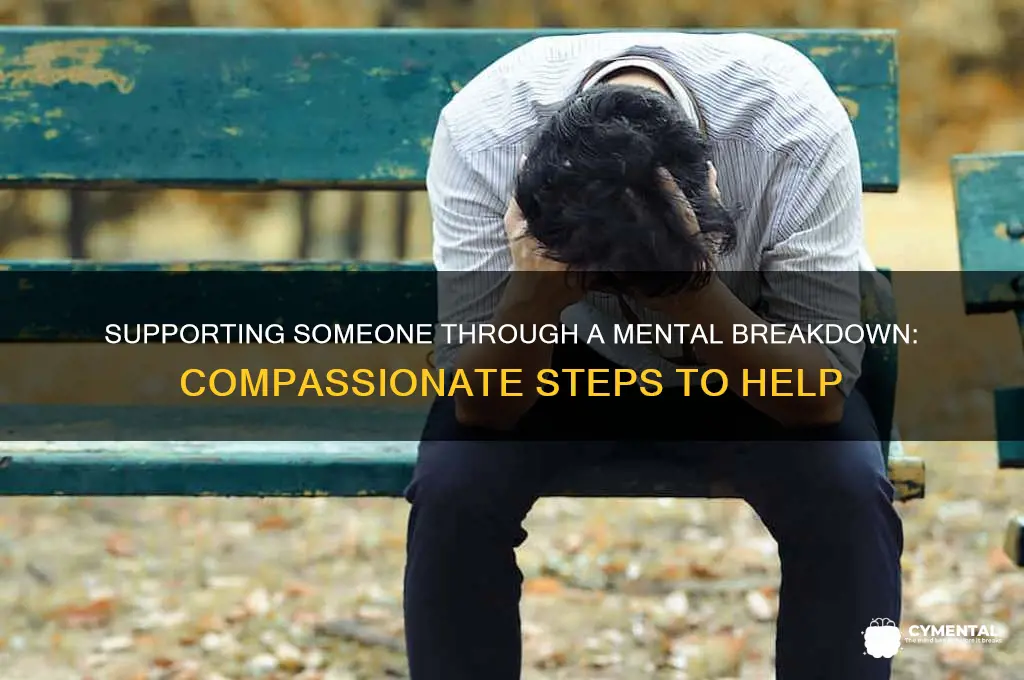
Helping someone experiencing a mental breakdown requires empathy, patience, and a calm, supportive approach. Start by creating a safe and non-judgmental space for them to express their feelings, actively listening without interrupting or offering immediate solutions. Encourage them to seek professional help, such as a therapist or counselor, while reassuring them that their struggles are valid and they are not alone. Offer practical assistance, like helping with daily tasks or accompanying them to appointments, and avoid pressuring them to snap out of it. Educate yourself about their condition to better understand their experience, and prioritize self-care to ensure you can provide sustained support without burning out. Small gestures of kindness and consistent presence can make a significant difference in their journey toward recovery.
| Characteristics | Values |
|---|---|
| Listen Actively | Provide a safe, non-judgmental space for the person to express their feelings. |
| Show Empathy | Validate their emotions and let them know their feelings are understood and accepted. |
| Encourage Professional Help | Gently suggest seeking a mental health professional, therapist, or counselor. |
| Offer Practical Support | Assist with daily tasks like cooking, cleaning, or running errands. |
| Stay Calm and Patient | Avoid pressuring or rushing them; allow them to process their emotions at their own pace. |
| Avoid Minimizing Their Experience | Refrain from saying phrases like "It’s not that bad" or "Just stay positive." |
| Monitor for Safety | Be aware of signs of self-harm or suicidal thoughts and intervene if necessary. |
| Educate Yourself | Learn about mental health to better understand their experience and provide informed support. |
| Encourage Self-Care | Suggest activities like exercise, meditation, or hobbies to promote well-being. |
| Maintain Regular Contact | Check in consistently, even if they don’t respond, to show ongoing support. |
| Respect Boundaries | Allow them space if needed, but remain available when they’re ready to talk. |
| Avoid Confrontation | Steer clear of arguments or debates about their feelings or behaviors. |
| Help Create a Routine | Assist in establishing a structured daily schedule to provide stability. |
| Limit Stressors | Identify and reduce triggers or overwhelming situations in their environment. |
| Be Reliable | Consistently show up and follow through on promises to build trust. |
Explore related products


What You'll Learn
- Listen Actively, Non-Judgmentally: Create safe space, avoid interrupting, validate feelings, show empathy, and offer unconditional support
- Encourage Professional Help: Suggest therapy, provide resources, assist with appointments, and normalize seeking mental health care
- Promote Self-Care: Encourage rest, healthy meals, hydration, gentle exercise, and mindfulness practices to reduce stress
- Limit Overwhelm: Simplify tasks, reduce stimuli, create routines, and help prioritize essential activities for stability
- Stay Connected: Maintain regular contact, offer companionship, avoid isolation, and remind them they’re not alone

Listen Actively, Non-Judgmentally: Create safe space, avoid interrupting, validate feelings, show empathy, and offer unconditional support
During a mental breakdown, the way you listen can either deepen the person's distress or begin to alleviate it. Active, non-judgmental listening isn’t about waiting for your turn to speak or offering quick fixes. It’s about creating a safe space where the person feels heard, understood, and accepted. Start by eliminating distractions—put away your phone, maintain eye contact (if culturally appropriate), and focus entirely on them. Avoid interrupting, even if their thoughts seem disjointed or repetitive. Let them express themselves fully, as this can help them process their emotions and feel less alone.
Validation is a cornerstone of this approach. Phrases like *“That sounds incredibly difficult”* or *“I can see why you’d feel that way”* acknowledge their experience without dismissing it. Avoid minimizing their feelings with statements like *“It’s not that bad”* or *“Just think positively.”* Instead, reflect their emotions back to them: *“You’re feeling overwhelmed and scared right now, and that makes total sense.”* This shows you’re not only listening but also empathizing, which can help them feel more grounded and less isolated.
Empathy goes beyond sympathy—it’s about stepping into their emotional world without judgment. Use open-ended questions like *“How does that feel for you?”* or *“What’s the hardest part of this for you?”* to encourage deeper sharing. If they struggle to articulate their feelings, offer gentle prompts like *“It seems like this is really weighing on you—can you tell me more?”* Avoid inserting your own experiences unless it directly relates to theirs, as this can shift the focus away from their needs.
Unconditional support means being present without expecting them to “snap out of it” or meet your expectations. Let them know you’re there for them, no matter how long it takes or how messy it gets. Offer practical help if appropriate—for example, *“Would it help if I stayed with you for a bit?”* or *“Can I assist with anything right now, like getting you a glass of water?”* But always respect their boundaries; if they need space, honor that while reassuring them you’re available when they’re ready.
Finally, remember that active, non-judgmental listening is a skill that improves with practice. It’s not about having all the answers but about holding space for someone in pain. By creating a safe, empathetic environment, you can help them feel seen and supported, which is often the first step toward healing. This approach doesn’t require expertise—just genuine care and a willingness to listen without fixing, judging, or rushing.
Supporting Your Daughter's Mental Health: A Guide for Concerned Parents
You may want to see also
Explore related products


Encourage Professional Help: Suggest therapy, provide resources, assist with appointments, and normalize seeking mental health care
Professional intervention is often the linchpin in stabilizing someone experiencing a mental breakdown. While emotional support is vital, it’s not a substitute for the expertise of trained mental health professionals. Therapists, psychiatrists, and counselors possess tools—cognitive behavioral therapy, medication management, crisis intervention—that can address the root causes of distress, not just its symptoms. Recognizing this, your role shifts from fixer to facilitator, guiding the individual toward the care they need.
Begin by framing therapy as a collaborative, proactive step, not a last resort. Use neutral language: “Therapy offers strategies to manage what you’re going through” or “Many people find relief in talking to someone trained to help.” Avoid phrases like “You should see someone” or “You need help,” which can feel judgmental. Instead, emphasize shared decision-making: “Let’s look at some therapists who specialize in this area—what do you think?” Provide concrete resources: a list of local clinics, telehealth platforms (e.g., BetterHelp, Talkspace), or hotlines (e.g., National Alliance on Mental Illness Helpline: 1-800-950-NAMI). For those overwhelmed by research, offer to screen options based on their insurance, preferred therapy type, or location.
Logistical barriers often derail good intentions. Offer to accompany them to the first appointment, handle insurance calls, or remind them of dates. If cost is a concern, suggest sliding-scale clinics or community mental health centers, which often charge $20–$60 per session based on income. For those hesitant to leave home, propose telehealth as a low-pressure starting point. Small acts—like booking the appointment yourself with their permission—can turn abstract suggestions into actionable steps.
Stigma remains a silent deterrent to seeking help. Normalize therapy by sharing anecdotes (if appropriate) or statistics: “About 20% of adults see a therapist annually—it’s more common than people realize.” Frame mental health care as routine maintenance, akin to visiting a doctor for physical ailments. Avoid dramatizing their situation; instead, validate their courage in considering professional help: “It takes strength to reach out, and I’m proud of you for thinking about this.” Over time, shift the narrative from “getting help” to “investing in yourself,” reframing therapy as a tool for growth, not a sign of weakness.
Finally, balance encouragement with patience. Some individuals may resist initially, fearing loss of control or judgment. Respect their pace while gently reiterating your support. For instance, “When you’re ready, I’m here to help find the right therapist. No pressure, but I want you to know the option is there.” By combining practical assistance with empathetic persistence, you lower barriers to care while honoring their autonomy—a critical balance in fostering long-term recovery.
Accessing Mental Health Support in Ontario: A Comprehensive Guide
You may want to see also
Explore related products


Promote Self-Care: Encourage rest, healthy meals, hydration, gentle exercise, and mindfulness practices to reduce stress
During a mental breakdown, the body and mind are under immense stress, often leading to neglect of basic needs. Promoting self-care isn’t just about comfort—it’s a critical intervention to stabilize and restore balance. Start by encouraging rest, not as an indulgence but as a necessity. Adults require 7–9 hours of sleep per night, yet stress can disrupt this, creating a vicious cycle of fatigue and anxiety. Establish a consistent sleep schedule, limit screen time before bed, and create a calming environment with dim lighting and white noise. Even short naps (20–30 minutes) can provide immediate relief without disrupting nighttime sleep.
Nutrition plays a silent but powerful role in mental health. Stress depletes essential nutrients like magnesium, vitamin B, and omega-3 fatty acids, which are crucial for brain function. Encourage meals rich in leafy greens, whole grains, lean proteins, and healthy fats. For instance, a breakfast of oatmeal with walnuts and blueberries provides sustained energy and mood-stabilizing nutrients. Avoid processed foods and excessive caffeine, which can exacerbate anxiety. Hydration is equally vital; dehydration mimics symptoms of anxiety, such as dizziness and rapid heartbeat. Aim for 8–10 cups of water daily, with herbal teas like chamomile or lemon balm offering additional calming effects.
Gentle exercise is a misunderstood tool in mental health. It doesn’t require intensity to be effective—a 20-minute walk, yoga session, or stretching routine can reduce cortisol levels and release endorphins. For those feeling overwhelmed, start small: even 5 minutes of deep breathing paired with gentle movement can shift the body’s stress response. Mindfulness practices, like guided meditation or progressive muscle relaxation, complement this by grounding the mind in the present moment. Apps like Headspace or Calm offer accessible, short sessions tailored to stress relief. Consistency is key; daily practice, even for 5–10 minutes, builds resilience over time.
The challenge lies in implementation, as self-care often feels impossible during a breakdown. Frame these practices as acts of self-preservation, not self-improvement. For example, instead of saying, “You need to eat better,” suggest, “Let’s make a nourishing meal together to give your body what it needs.” Pair self-care with accountability by offering to join in—whether it’s cooking, walking, or meditating. Small, manageable steps reduce overwhelm and foster a sense of accomplishment. Remember, the goal isn’t perfection but progress, one mindful choice at a time.
Empowering Minds: How Mental Health Professionals Foster Healing and Resilience
You may want to see also
Explore related products


$14.28 $22.95


Limit Overwhelm: Simplify tasks, reduce stimuli, create routines, and help prioritize essential activities for stability
During a mental breakdown, the brain’s ability to process information becomes severely compromised, often leading to a state of paralysis or panic. Overwhelm is not just emotional—it’s physiological. The prefrontal cortex, responsible for decision-making, shuts down under extreme stress, while the amygdala hijacks the system, flooding the body with cortisol and adrenaline. To intervene effectively, the goal is to bypass this cognitive gridlock by externally restructuring the environment and demands placed on the individual. Simplifying tasks, reducing stimuli, and imposing structure aren’t just acts of kindness; they’re neurological resets.
Start by breaking tasks into micro-steps so small they feel almost trivial. For instance, instead of “clean the house,” reframe it as “wipe one countertop.” Use the “2-minute rule”: if a task takes less than 2 minutes, do it immediately to prevent accumulation. For someone in crisis, even deciding what to eat can be paralyzing—offer a binary choice (e.g., “apple or banana?”) rather than an open-ended question. Digitally, limit notifications to essential apps only, and physically, remove clutter from immediate surroundings. A study in *Journal of Environmental Psychology* found that visual chaos increases cognitive load, exacerbating stress. Aim for a 50% reduction in visible items in their space.
Routines act as scaffolding for a mind struggling to hold itself together. Create a daily structure with non-negotiables: wake-up time, meals, and sleep. Use external cues like alarms or a written schedule to reduce reliance on memory. For example, a 7:00 AM alarm for medication, followed by a 10-minute walk at 8:00 AM, provides anchors in the day. Avoid overloading the routine—limit it to 3–4 key activities initially. For those with sensory sensitivities, incorporate “quiet hours” where auditory and visual stimuli are minimized, such as turning off lights or using noise-canceling headphones for 1–2 hours daily.
Prioritization is often impossible for someone in breakdown mode, so take over this function temporarily. Use the “Eisenhower Matrix” adapted for crisis: categorize tasks as *urgent/essential* (e.g., taking medication), *important/non-urgent* (e.g., therapy appointment), and *eliminate* (e.g., social obligations). Drop anything not in the first category. For caregivers, a practical tool is a whiteboard with color-coded tasks: red for essential, yellow for optional, and green for completed. This visual system reduces mental effort and provides clarity.
The key is to act as an external prefrontal cortex, compensating for what the brain cannot manage. Over time, as stability returns, gradually reintroduce complexity. But in the acute phase, less is not just more—it’s survival. Every unnecessary decision, stimulus, or task removed is a step toward reclaiming mental ground. This isn’t coddling; it’s crisis management.
Dog Parks: Boosting Canine Mental Health and Social Skills
You may want to see also
Explore related products



Stay Connected: Maintain regular contact, offer companionship, avoid isolation, and remind them they’re not alone
Human connection is a lifeline during a mental breakdown. Isolation amplifies feelings of despair and worthlessness, creating a dangerous feedback loop. Regular contact, even brief check-ins, disrupts this cycle, reminding the person they exist within a web of support.
Think of it as tending a fragile plant. Daily sunlight and water are essential, not grand gestures. A short text asking, "How are you holding up today?" or a quick phone call to share a funny meme can be surprisingly powerful. Aim for consistency over intensity. Even if they don't respond immediately, knowing someone cares enough to reach out consistently can be a beacon in the darkness.
Companionship doesn't always require deep conversations or elaborate outings. Sometimes, simply being present is enough. Offer to watch a movie together, go for a walk, or sit in comfortable silence. Physical proximity, even without words, can convey a sense of safety and belonging that words alone cannot.
Remember, the goal isn't to "fix" them, but to create a safe space where they feel seen and heard.
Avoid the trap of assuming they'll reach out when they need help. Mental breakdowns often come with a paralyzing sense of helplessness and shame. Take the initiative, even if it feels intrusive. Let them know your door is always open, your phone is always on, and your willingness to listen is unwavering. Be patient, persistent, and above all, present. Your consistent presence can be the thread that helps them stitch themselves back together.
Qualifying for Mental Health Support: A Step-by-Step Guide to Accessing Care
You may want to see also
Frequently asked questions
Signs include extreme anxiety, inability to perform daily tasks, severe mood swings, withdrawal from social activities, persistent sadness, and physical symptoms like fatigue or insomnia.
Listen without judgment, encourage professional help, offer practical assistance (e.g., meals or errands), and ensure they feel safe and supported. Avoid pressuring them to "snap out of it."
Seek immediate help if the person expresses suicidal thoughts, engages in self-harm, or becomes a danger to themselves or others. Call emergency services or a crisis hotline for guidance.