Lucas Bennett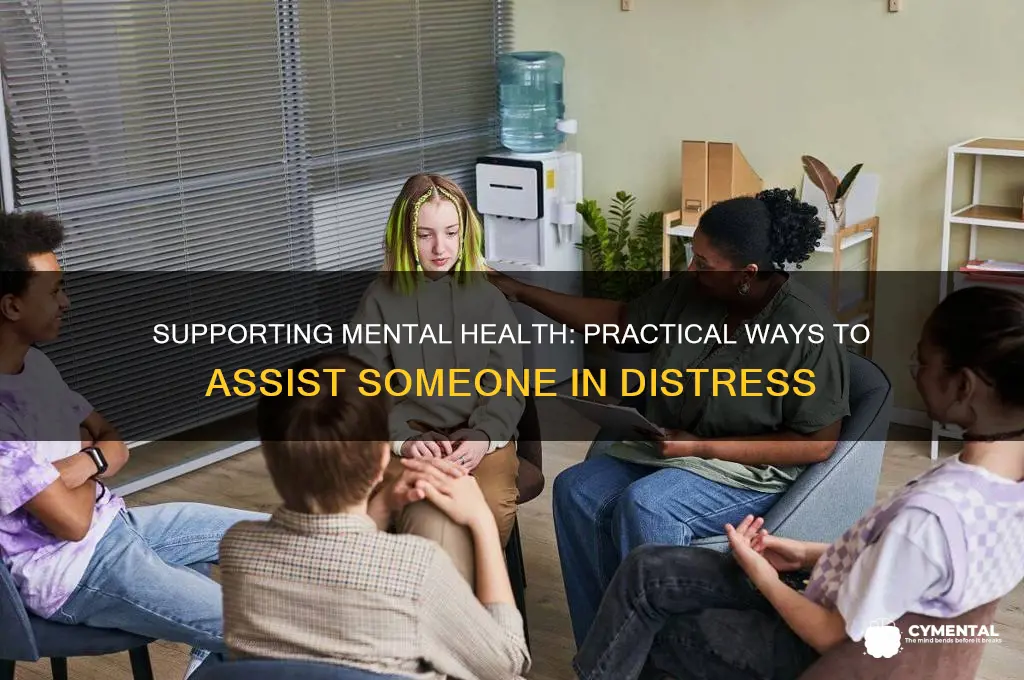
Helping someone in mental distress requires empathy, patience, and a thoughtful approach. Start by creating a safe and non-judgmental space where the person feels comfortable expressing their feelings. Listen actively without interrupting, validating their emotions rather than trying to fix their problems. Encourage them to seek professional help, such as therapy or counseling, while offering to assist with finding resources or accompanying them to appointments. Be present and consistent in your support, but also respect their boundaries and avoid overwhelming them. Small gestures, like checking in regularly or offering practical assistance, can make a significant difference. Remember, your role is to provide understanding and guidance, not to take on their emotional burden, and self-care is essential for both you and the person in distress.
Explore related products


What You'll Learn
- Active Listening: Show empathy, focus fully, avoid judgment, and validate feelings to build trust and understanding
- Encourage Professional Help: Gently suggest therapy, counseling, or support groups as effective resources for recovery
- Create Safe Spaces: Ensure calm, non-threatening environments to reduce anxiety and promote open communication
- Offer Practical Support: Assist with daily tasks, meals, or appointments to alleviate stress and overwhelm
- Stay Connected: Regularly check in, maintain contact, and show consistent support to combat isolation

Active Listening: Show empathy, focus fully, avoid judgment, and validate feelings to build trust and understanding
One of the most powerful tools in supporting someone experiencing mental distress is the art of active listening. It’s not just about hearing words; it’s about creating a safe space where the person feels truly seen and understood. Imagine a friend confiding in you about their overwhelming anxiety. Instead of interrupting with advice or downplaying their feelings, you lean in, maintain eye contact, and reflect back what they’ve shared: “It sounds like this has been really heavy for you lately.” This simple act of validation can be profoundly comforting, signaling that their emotions are valid and worthy of attention.
Active listening is a skill that requires intentionality. Start by minimizing distractions—put away your phone, turn off the TV, and focus solely on the person speaking. Use nonverbal cues like nodding, maintaining open body language, and mirroring their tone to show engagement. When they pause, resist the urge to fill the silence. Instead, ask open-ended questions like, “How has this been affecting your daily life?” or “What’s been the hardest part for you?” These questions invite deeper reflection and demonstrate your commitment to understanding their experience.
A common pitfall is letting judgment creep into the conversation. Phrases like “You shouldn’t feel that way” or “It could be worse” can shut down communication and erode trust. Instead, practice empathy by acknowledging their perspective, even if it differs from your own. For example, say, “I can see how that situation would feel overwhelming,” rather than dismissing their feelings. Empathy bridges gaps, fostering a connection that allows the person to feel safe sharing more vulnerably.
Validation is the cornerstone of active listening. It doesn’t mean you agree with everything they say, but rather that you recognize their emotions as real and understandable. For instance, if someone expresses guilt over struggling with depression, respond with, “It makes sense that you’d feel that way, given how hard you’ve been on yourself.” This approach helps them feel less alone and more accepted, which can be a critical step in their journey toward healing.
Mastering active listening takes practice, but its impact is immeasurable. It transforms conversations from superficial exchanges into meaningful connections, building trust and understanding in ways that advice or solutions often cannot. Remember, the goal isn’t to “fix” the person but to create a space where they feel heard, valued, and supported. In moments of mental distress, that alone can be a lifeline.
Community Support: A Powerful Ally for Mental Health and Well-Being
You may want to see also
Explore related products


Encourage Professional Help: Gently suggest therapy, counseling, or support groups as effective resources for recovery
Professional help can be a lifeline for someone in mental distress, yet many hesitate to seek it due to stigma, fear, or uncertainty. Therapy, counseling, and support groups are evidence-based tools that provide structured, expert guidance for recovery. By gently suggesting these resources, you can help normalize the conversation around mental health and empower the individual to take actionable steps toward healing.
Consider the approach of *framing professional help as a sign of strength, not weakness*. For example, instead of saying, “You need therapy,” try, “Therapy has helped so many people manage similar challenges—it might offer you new tools to feel better.” This shifts the narrative from deficiency to opportunity. Research shows that individuals are more receptive to suggestions when they feel understood and supported, not judged. Use open-ended questions like, “Have you ever thought about talking to someone who specializes in this?” to invite reflection without pressure.
- Practical tips can make the process less daunting. Offer to help research therapists or counselors who specialize in their specific concerns, such as anxiety, depression, or trauma. Share resources like Psychology Today’s “Find a Therapist” tool or local mental health organizations that offer sliding-scale fees for those with financial constraints. If they’re hesitant to commit to individual therapy, suggest starting with a support group, which can feel less intimidating and provide a sense of community. For instance, organizations like the National Alliance on Mental Illness (NAMI) offer free peer-led support groups for individuals and their families.
- Be mindful of timing and tone. Avoid pushing the conversation if the person seems resistant or overwhelmed. Instead, plant the seed and revisit the topic later. For example, “When you’re ready, there are professionals who can help. No one has to go through this alone.” Remember, your role is to encourage, not convince. Recovery is a personal journey, and professional help is one of many pathways—but it’s often a critical one.
Finally, *lead by example when possible*. Share a personal story (if appropriate) about how therapy or counseling helped you or someone you know. Normalizing these experiences can reduce stigma and make the idea of seeking help feel more accessible. By combining empathy, practical support, and a nonjudgmental approach, you can help someone in mental distress recognize professional help not as a last resort, but as a valuable step toward recovery.
Master Mental Math: Unlock Addition Patterns for Quick Calculations
You may want to see also
Explore related products


Create Safe Spaces: Ensure calm, non-threatening environments to reduce anxiety and promote open communication
A person in mental distress often feels like they’re standing on shaky ground, their surroundings amplifying their inner turmoil. Creating a safe space isn’t just about physical comfort—it’s about dismantling the invisible barriers that keep them from expressing their pain. Imagine a room with harsh lighting, cluttered surfaces, and loud noises. Now contrast that with a quiet corner, soft lighting, and minimal distractions. The difference in how someone perceives safety can determine whether they open up or retreat further into their shell.
Steps to Craft a Safe Space:
- Minimize Sensory Overload: Dim bright lights, turn off blaring TVs, and reduce background noise. For someone in distress, even minor sensory inputs can feel overwhelming. If possible, use natural light or warm, soft lamps.
- Ensure Physical Comfort: Offer a comfortable seat, a glass of water, or a blanket. Small gestures signal care without being intrusive. Avoid hovering or forcing physical contact unless they initiate it.
- Remove Judgmental Cues: Clear the area of items that might trigger anxiety, like clocks (which can heighten a sense of urgency) or personal items that feel too intimate. Keep the space neutral but inviting.
Cautions to Consider:
Avoid over-personalizing the space, as this can feel suffocating. For example, while a scented candle might seem calming, someone with sensory sensitivities could find it distressing. Similarly, religious or cultural symbols, though well-intentioned, might alienate someone with different beliefs. The goal is neutrality, not personalization.
A safe space isn’t just a physical location—it’s an atmosphere of acceptance and calm. By controlling the environment, you reduce external stressors, allowing the person to focus on their internal struggle without added pressure. Think of it as clearing a path for them to walk toward vulnerability. Done right, this simple act can be the first step in rebuilding trust and fostering open communication.
ChatGPT and Mental Health: A Supportive Tool or Limited Aid?
You may want to see also
Explore related products


$14.28 $22.95


Offer Practical Support: Assist with daily tasks, meals, or appointments to alleviate stress and overwhelm
Mental distress often manifests as an overwhelming inability to manage even the simplest tasks. Daily responsibilities like cooking, cleaning, or attending appointments can feel insurmountable, exacerbating feelings of helplessness and despair. Offering practical support by assisting with these tasks isn’t just a kind gesture—it’s a tangible way to reduce immediate stress and create a sense of stability for someone struggling.
Consider this scenario: A friend battling anxiety cancels plans repeatedly, citing exhaustion. Instead of assuming disinterest, offer to help with a specific task, like grocery shopping or meal prep. Providing a home-cooked meal or organizing their fridge with ready-to-eat options can remove the mental load of decision-making and physical effort, allowing them to conserve energy for emotional healing. For those with severe depression, even small acts like washing dishes or folding laundry can be transformative, turning chaos into order and providing a sense of accomplishment.
Practical support should be tailored to the individual’s needs and preferences. For instance, someone with social anxiety might benefit from help scheduling appointments via phone or email, while a person with ADHD could use assistance with time management, like setting reminders for medication or therapy sessions. Be mindful of not overstepping boundaries—ask permission before taking action, and respect their autonomy. For example, instead of saying, “I’ll clean your room,” try, “Would it help if I assisted with organizing this space?”
A cautionary note: Avoid making practical support feel like charity or pity. Frame your assistance as a collaborative effort rather than a rescue mission. Use phrases like, “Let’s tackle this together” or “I’m here to help lighten the load.” Consistency is key—sporadic help can create uncertainty, while regular, predictable support builds trust and reliability. For instance, committing to a weekly meal drop-off or a monthly errand run can provide structure without overwhelming either party.
In conclusion, offering practical support is a powerful way to alleviate the daily stressors that compound mental distress. By focusing on specific, actionable tasks and respecting the individual’s autonomy, you can provide meaningful relief while fostering a sense of connection and care. Remember, the goal isn’t to solve their problems but to share the burden, one task at a time.
Supporting Your Wife’s Mental Health: Practical Steps for Partners
You may want to see also
Explore related products


Stay Connected: Regularly check in, maintain contact, and show consistent support to combat isolation
Human connection is a lifeline for those grappling with mental distress. Isolation amplifies feelings of hopelessness and despair, creating a vicious cycle that deepens the struggle. Regular, consistent contact acts as a counterweight, offering a sense of belonging and reminding the individual they are not alone.
Consider this: a simple daily text message, a weekly phone call, or a monthly in-person visit can make a profound difference. The key lies in consistency. Sporadic outreach, though well-intentioned, may leave the person feeling abandoned or forgotten. Aim for a predictable rhythm that fosters trust and reassurance. For instance, set a reminder to message them every evening or schedule a standing coffee date on Saturdays.
However, staying connected isn’t just about frequency—it’s about quality. Avoid superficial check-ins like “How are you?” which often elicit rote responses. Instead, ask specific, open-ended questions: “What’s been on your mind lately?” or “How did your appointment go?” Show genuine curiosity and actively listen. If they share struggles, resist the urge to offer quick fixes or platitudes. Simply acknowledge their feelings with phrases like, “That sounds really hard” or “I’m here for you.”
A caution: while consistency is vital, respect boundaries. Overwhelming someone with too much contact can backfire, especially if they’re experiencing anxiety or overwhelm. Pay attention to their cues. If they seem withdrawn or unresponsive, scale back slightly but don’t disappear entirely. Let them know you’re available without pressuring them to engage.
In conclusion, staying connected is both an art and a science. It requires intentionality, empathy, and adaptability. By weaving regular, meaningful contact into your support strategy, you create a safety net that combats isolation and fosters resilience. Remember, it’s not about fixing their pain—it’s about walking alongside them through it.
Music Therapy: How Learning an Instrument Boosts Mental Well-Being
You may want to see also
Frequently asked questions
Signs of mental distress include sudden changes in behavior, mood swings, withdrawal from social activities, difficulty concentrating, or expressions of hopelessness. Physical symptoms like fatigue, changes in appetite, or sleep disturbances may also be present. Trust your instincts and pay attention to verbal or nonverbal cues.
Use empathetic and non-judgmental language. Start by letting them know you’re there to listen without trying to fix their problems. Phrases like “I’m here for you,” “How can I support you?,” or “It’s okay to feel this way” can be comforting. Avoid dismissing their feelings or offering unsolicited advice.
Offer support in small, manageable ways. Encourage them to seek professional help, such as a therapist or counselor, and assist with finding resources if needed. Respect their boundaries and let them take the lead in what they feel comfortable with. Be patient and consistent in showing you care, even if they don’t immediately respond.