Noah Parker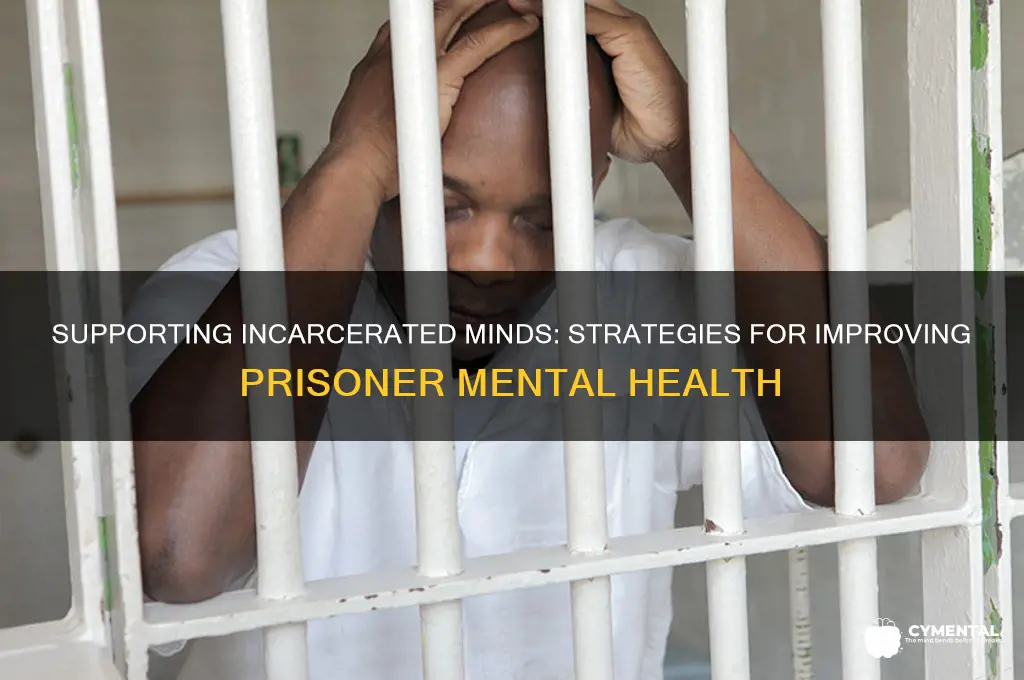
Addressing the mental health needs of prisoners is a critical yet often overlooked aspect of the criminal justice system. With a disproportionately high prevalence of mental health issues among incarcerated individuals, providing effective support and treatment is essential for their well-being and successful reintegration into society. Many prisoners enter the system with pre-existing conditions, while others develop mental health challenges due to the stresses of confinement, isolation, and trauma. To help these individuals, a multifaceted approach is necessary, including early screening and assessment, access to qualified mental health professionals, evidence-based therapies, and comprehensive reentry programs. By prioritizing mental health care within correctional facilities, we can reduce recidivism, improve public safety, and uphold the dignity and human rights of those behind bars.
Explore related products


What You'll Learn
- Early Screening & Assessment: Implement routine mental health evaluations upon intake to identify needs promptly
- Trauma-Informed Care: Train staff to address trauma and create safe, supportive environments for healing
- Access to Therapy: Provide regular counseling, group therapy, and evidence-based treatments like CBT
- Medication Management: Ensure consistent access to psychiatric medications and monitoring by professionals
- Reentry Support: Offer mental health resources and transitional programs to reduce recidivism and promote stability

Early Screening & Assessment: Implement routine mental health evaluations upon intake to identify needs promptly
Prisoners often enter the correctional system with undiagnosed or untreated mental health conditions, exacerbating their vulnerability and hindering rehabilitation. Early screening and assessment upon intake can serve as a critical intervention point, identifying needs before they escalate into crises. This proactive approach not only benefits the individual but also enhances facility safety and reduces recidivism rates. By integrating routine mental health evaluations into the intake process, correctional systems can lay the groundwork for targeted, effective care.
Consider the logistics of implementation: upon arrival, inmates should undergo a standardized mental health screening administered by trained professionals. This assessment should include validated tools such as the Brief Jail Mental Health Screen (BJMHS) or the Mental Health Screening Form-II (MHSF-II), which are designed to detect symptoms of depression, anxiety, psychosis, and suicidality. The process should take no longer than 15–20 minutes but must be thorough enough to capture nuanced indicators of distress. For example, questions about sleep patterns, appetite changes, and recent traumatic experiences can reveal underlying issues that might otherwise go unnoticed.
However, screening is only the first step. Immediate follow-up is essential. Inmates flagged as high-risk should be referred to a mental health professional within 24–48 hours for a comprehensive assessment. This secondary evaluation should delve deeper into the individual’s history, including prior diagnoses, medication use, and coping mechanisms. For instance, a prisoner with a history of bipolar disorder may require a medication review and stabilization plan, while someone exhibiting signs of PTSD might benefit from trauma-informed therapy. Tailoring interventions based on these assessments ensures resources are allocated efficiently and effectively.
One common challenge is the stigma surrounding mental health in correctional settings. To address this, facilities should adopt a compassionate, nonjudgmental approach during screenings. Staff training should emphasize empathy and confidentiality, encouraging inmates to disclose their struggles without fear of retribution or ridicule. Additionally, incorporating peer support programs can foster trust and reduce barriers to participation. For example, pairing newly admitted inmates with trained peers who have successfully navigated mental health challenges can provide immediate reassurance and guidance.
Ultimately, early screening and assessment are not just administrative tasks but lifelines for vulnerable individuals. By identifying mental health needs promptly, correctional systems can intervene before conditions worsen, offering inmates a chance at recovery and reintegration. This approach requires investment in training, resources, and a cultural shift toward prioritizing mental health, but the long-term benefits—reduced self-harm, improved facility safety, and lower recidivism rates—make it a cornerstone of effective prisoner care.
Empathetic Ways to Support Loved Ones Struggling with Mental Health
You may want to see also
Explore related products


Trauma-Informed Care: Train staff to address trauma and create safe, supportive environments for healing
Prisons are often ill-equipped to handle the complex mental health needs of their populations, with trauma being a pervasive yet overlooked factor. Many inmates carry deep emotional wounds from past experiences, which, if left unaddressed, can exacerbate behavioral issues and hinder rehabilitation. Trauma-informed care (TIC) offers a transformative approach by training staff to recognize and respond to trauma, fostering environments that promote healing rather than retraumatization. This method shifts the focus from punitive measures to empathetic, supportive interventions, acknowledging that trauma often underlies problematic behaviors.
Implementing TIC begins with comprehensive staff training that goes beyond theoretical knowledge. Correctional officers, healthcare providers, and administrative personnel must learn to identify trauma triggers, such as loud noises or physical restraint, which can evoke distressing memories. Practical strategies include using calm, non-confrontational communication, avoiding power struggles, and offering choices whenever possible to empower inmates. For instance, instead of demanding compliance, staff might say, "We need to search your cell—would you prefer to step outside or stay in the hallway while we do this?" Such small adjustments can reduce anxiety and build trust.
Creating a safe, supportive environment extends to the physical and emotional spaces within the prison. Facilities should minimize sensory triggers by incorporating quiet rooms, soft lighting, and access to nature, where feasible. Additionally, group therapy sessions led by trauma-trained professionals can provide inmates with tools to process their experiences, such as mindfulness techniques or journaling. One effective model is the Seeking Safety program, a present-focused therapy designed to help individuals affected by trauma, which has shown promising results in correctional settings.
However, adopting TIC is not without challenges. Staff may resist changing long-standing practices or feel ill-prepared to handle emotionally charged situations. To address this, facilities should provide ongoing support, including regular debriefings and access to mental health resources for employees. Leadership must also model trauma-informed principles, ensuring policies prioritize compassion over control. For example, solitary confinement, a common disciplinary measure, should be reevaluated as it often retraumatizes individuals, worsening mental health outcomes.
Ultimately, trauma-informed care represents a paradigm shift in correctional philosophy, viewing inmates as individuals deserving of healing rather than mere recipients of punishment. By equipping staff with the skills to address trauma and designing environments that foster safety, prisons can become places of recovery, reducing recidivism and improving outcomes for both inmates and society. This approach requires investment and commitment but offers a more humane and effective path forward in addressing the mental health crisis behind bars.
Navigating Fame and Mental Health: Strategies for Ethical Visibility
You may want to see also
Explore related products




Access to Therapy: Provide regular counseling, group therapy, and evidence-based treatments like CBT
Prisoners with mental health issues often face a stark reality: their conditions can deteriorate without consistent, structured support. Access to therapy—specifically regular counseling, group therapy, and evidence-based treatments like Cognitive Behavioral Therapy (CBT)—is not just a luxury but a necessity. These interventions address the root causes of mental distress, reduce recidivism, and improve overall well-being. Without them, prisons risk becoming warehouses for untreated mental illness, exacerbating both individual suffering and societal costs.
Consider the implementation process: regular counseling sessions should occur at least biweekly, tailored to the severity of the prisoner’s condition. For mild to moderate cases, 45-minute individual sessions can provide a safe space to explore triggers and coping mechanisms. Group therapy, on the other hand, fosters peer support and reduces stigma. Facilitated by trained professionals, these sessions should cap at 10–12 participants to ensure meaningful engagement. Evidence-based treatments like CBT, proven effective for conditions such as depression and anxiety, should follow structured protocols, typically delivered in 12–16 weekly sessions. Prisons must invest in training staff or partnering with mental health organizations to ensure these therapies are administered correctly.
A comparative analysis reveals the transformative potential of these interventions. In a 2018 study, prisoners who received regular CBT reported a 30% reduction in symptoms of anxiety and depression compared to those in standard care. Group therapy programs, particularly those focused on trauma, have shown to decrease aggressive incidents by 25% within correctional facilities. These outcomes underscore the dual benefit of therapy: it not only alleviates mental suffering but also contributes to a safer prison environment. However, success hinges on consistency and accessibility, requiring prisons to prioritize mental health budgets and staffing.
Practical challenges cannot be ignored. Overcrowded facilities, limited resources, and staff shortages often hinder therapy access. To overcome these barriers, prisons can adopt a tiered approach: high-risk individuals receive intensive therapy, while others participate in group sessions or self-guided CBT modules. Teletherapy, leveraging video conferencing, can bridge gaps in rural or understaffed facilities. Additionally, training correctional officers in basic mental health first aid ensures prisoners receive immediate support between sessions. These strategies, while not perfect, make therapy more feasible within the constraints of the prison system.
Ultimately, providing regular counseling, group therapy, and evidence-based treatments like CBT is a moral and practical imperative. It transforms prisons from places of punishment into environments of rehabilitation, offering prisoners a chance to heal and reintegrate into society successfully. The investment required is significant, but the returns—reduced recidivism, improved public safety, and restored lives—are immeasurable. Prisons must act now, not just to comply with ethical standards, but to fulfill their role as agents of meaningful change.
Self-Care Strategies for Managing Mental Health Without Therapy
You may want to see also
Explore related products





Medication Management: Ensure consistent access to psychiatric medications and monitoring by professionals
Prisoners with mental health issues often face disruptions in their psychiatric medication regimens due to transfers, staffing shortages, or administrative errors. These interruptions can exacerbate symptoms, leading to self-harm, aggression, or decompensation. Ensuring consistent access to prescribed medications is not just a medical necessity—it’s a matter of safety for both the individual and the facility. A 2021 study found that 60% of incarcerated individuals with severe mental illness experienced medication lapses during their sentence, highlighting the urgency of this issue.
To implement effective medication management, correctional facilities must establish clear protocols. Start by maintaining an up-to-date, centralized record of each prisoner’s psychiatric medications, including dosage, frequency, and potential side effects. For example, a prisoner prescribed 20 mg of fluoxetine daily for depression should have this documented alongside notes on their response to the medication. Cross-train medical and correctional staff to recognize withdrawal symptoms or adverse reactions, such as akathisia from antipsychotics or serotonin syndrome from SSRIs. This ensures timely intervention, even during shifts when mental health professionals are unavailable.
Monitoring adherence is equally critical. Use pill counts, observed ingestion, or long-acting injectable formulations for high-risk individuals. For instance, a prisoner on 10 mg of olanzapine nightly might benefit from a monthly injection of olanzapine pamoate to eliminate daily compliance concerns. However, balance oversight with dignity—forced medication should only occur under court order and strict medical supervision. Regular follow-ups with psychiatrists or nurse practitioners are essential to assess efficacy and adjust dosages, particularly for younger prisoners (ages 18–25) whose brain development may influence medication response.
Challenges will arise, from supply chain delays to prisoners refusing medication. Address refusals by engaging in non-coercive dialogue to understand their concerns—fear of side effects, stigma, or mistrust of staff are common barriers. For systemic issues, advocate for partnerships with local pharmacies or telehealth platforms to streamline refills and consultations. Facilities in rural areas, for example, could utilize telepsychiatry to ensure weekly check-ins for prisoners on complex regimens, such as lithium with its narrow therapeutic window (0.8–1.2 mEq/L).
Ultimately, medication management in prisons requires a blend of rigor and compassion. By treating it as a non-negotiable pillar of care, facilities can reduce crises, improve outcomes, and uphold the human rights of incarcerated individuals. A prisoner stabilized on consistent medication is more likely to engage in rehabilitation programs, reducing recidivism and fostering a safer environment for all. This isn’t just healthcare—it’s harm reduction at its most practical.
Social Media's Dark Side: Uncovering Its Impact on Mental Health
You may want to see also
Explore related products



Reentry Support: Offer mental health resources and transitional programs to reduce recidivism and promote stability
Prisoners with mental health issues face a daunting challenge upon release: navigating a world that often lacks the structured support they’ve grown accustomed to. Without targeted reentry programs, they are at heightened risk of recidivism, homelessness, and mental health crises. To break this cycle, reentry support must prioritize mental health resources and transitional programs tailored to their unique needs. This approach not only stabilizes individuals but also strengthens communities by reducing the likelihood of reoffending.
Consider the following steps to implement effective reentry support. First, establish partnerships between correctional facilities and community mental health providers to ensure seamless continuity of care. For example, prisoners should receive a comprehensive mental health assessment 90 days before release, followed by a personalized treatment plan that includes medication management, therapy, and crisis intervention strategies. Second, create transitional housing programs that offer a stable environment for the first 6–12 months post-release. These facilities should integrate mental health services, such as weekly counseling sessions and peer support groups, to address the emotional challenges of reintegration.
A comparative analysis reveals that reentry programs incorporating mental health support yield significantly better outcomes. For instance, a study by the Urban Institute found that participants in such programs had a 24% lower recidivism rate compared to those without access to similar resources. This underscores the importance of investing in evidence-based practices. However, it’s crucial to avoid one-size-fits-all solutions. Programs must be culturally competent and adaptable to individual needs, such as offering trauma-informed care for those with PTSD or substance use disorders.
Finally, sustain long-term stability by fostering employment opportunities and social connections. Vocational training programs, coupled with mental health support, can help individuals secure stable jobs, while mentorship initiatives provide a sense of belonging. For example, pairing formerly incarcerated individuals with mentors who have successfully reintegrated can offer practical advice and emotional encouragement. By addressing mental health holistically and providing structured transitional support, reentry programs can transform the lives of those leaving incarceration, paving the way for a more stable and productive future.
Supporting Children’s Mental Health: Practical Strategies for Parents and Caregivers
You may want to see also
Frequently asked questions
Regular mental health screenings, training correctional staff to recognize signs of distress, and encouraging self-reporting through confidential channels are effective methods to identify mental health issues in prisoners.
Improving mental health services involves hiring more qualified mental health professionals, providing evidence-based therapies, and ensuring consistent access to medication and counseling for prisoners.
Staff training is crucial as it equips correctional officers with the skills to de-escalate crises, recognize mental health symptoms, and respond empathetically, reducing the risk of harm and improving outcomes for prisoners.
Reintegration programs should include access to community mental health services, housing assistance, employment support, and peer mentoring to help individuals manage their mental health and transition successfully back into society.