Harper Lewis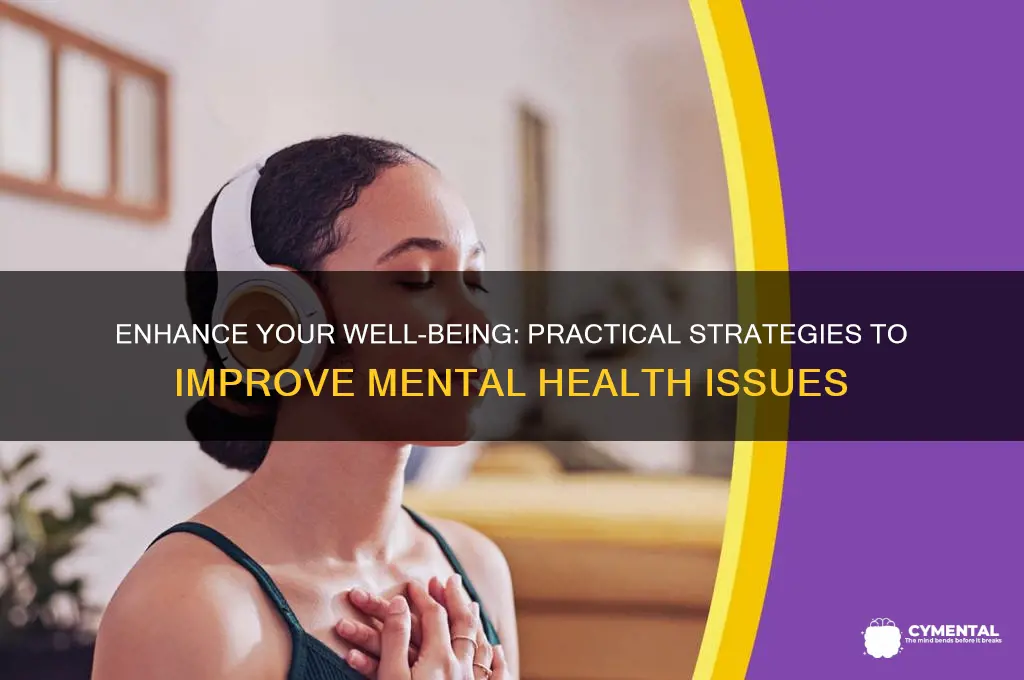
Improving mental health issues is a multifaceted process that involves a combination of self-care, professional support, and lifestyle adjustments. It begins with acknowledging the importance of mental well-being and seeking help without stigma. Strategies such as regular exercise, a balanced diet, adequate sleep, and mindfulness practices can significantly enhance emotional resilience. Building a strong support network, whether through friends, family, or support groups, is crucial for emotional stability. Additionally, professional interventions like therapy, counseling, or medication, when prescribed by a healthcare provider, play a vital role in managing and overcoming mental health challenges. Prioritizing self-compassion and setting realistic goals are also essential steps toward fostering long-term mental health improvement.
Explore related products


What You'll Learn
- Mindfulness Practices: Incorporate meditation, deep breathing, and present-moment awareness to reduce stress and anxiety
- Physical Activity: Regular exercise boosts mood, reduces symptoms of depression, and improves overall mental well-being
- Healthy Sleep Habits: Prioritize consistent sleep schedules and create a restful environment for better mental health
- Social Connections: Build and maintain supportive relationships to combat loneliness and foster emotional resilience
- Professional Support: Seek therapy, counseling, or psychiatric help for tailored strategies and effective treatment

Mindfulness Practices: Incorporate meditation, deep breathing, and present-moment awareness to reduce stress and anxiety
Stress and anxiety often stem from the mind’s tendency to dwell on the past or worry about the future. Mindfulness practices, such as meditation, deep breathing, and present-moment awareness, directly counter this by anchoring the mind in the here and now. Research shows that consistent mindfulness practice can reduce cortisol levels, the body's primary stress hormone, by up to 14% over an 8-week period. This physiological change translates to a calmer mind and a more resilient response to life’s challenges.
To begin incorporating mindfulness, start with a simple meditation practice. Set aside 5–10 minutes daily in a quiet space. Sit comfortably, close your eyes, and focus on your breath. When thoughts wander (which they will), gently bring your attention back to the sensation of air entering and leaving your nostrils. For beginners, guided meditation apps like Headspace or Calm can provide structure. Over time, aim to increase your practice to 20 minutes daily for deeper benefits. Consistency is key—think of it as mental hygiene, as essential as brushing your teeth.
Deep breathing exercises are another powerful tool, particularly in moments of acute stress. The 4-7-8 technique is highly effective: inhale for 4 seconds, hold for 7 seconds, and exhale for 8 seconds. This pattern activates the parasympathetic nervous system, promoting relaxation. Practice this technique 3–4 times a day, especially during stressful situations, to quickly reset your body’s stress response. Pairing deep breathing with physical cues, like placing a hand on your chest to feel the rise and fall, can enhance its grounding effect.
Present-moment awareness extends mindfulness beyond formal practice into daily life. Engage your senses to anchor yourself in the now: notice the texture of your coffee mug, the sound of leaves rustling, or the warmth of sunlight on your skin. This practice is particularly useful for breaking the cycle of rumination. For instance, during a tense conversation, focus on the sensation of your feet touching the ground to stay centered. Over time, this habit rewires the brain to default to presence rather than worry.
While mindfulness is accessible to all ages, its application varies. Children benefit from playful practices like mindful coloring or guided visualizations, while older adults may find seated meditation or gentle yoga more suitable. Caution should be taken for individuals with trauma or severe anxiety, as mindfulness can sometimes amplify distressing emotions. In such cases, consult a mental health professional to tailor practices safely. Ultimately, mindfulness is not about eliminating stress but cultivating a healthier relationship with it—one breath, one moment at a time.
Understanding Mental Health: Effective Ways to Describe Your Inner Struggles
You may want to see also
Explore related products




Physical Activity: Regular exercise boosts mood, reduces symptoms of depression, and improves overall mental well-being
Engaging in regular physical activity is one of the most effective, evidence-backed strategies for improving mental health. Studies consistently show that exercise triggers the release of endorphins, often referred to as "feel-good" hormones, which directly combat stress and elevate mood. For instance, a 2018 meta-analysis published in *JAMA Psychiatry* found that 1.5 hours of moderate exercise (like brisk walking) or 75 minutes of vigorous activity (like running) per week significantly reduces symptoms of depression. These findings underscore the profound impact of movement on mental well-being, making it a cornerstone of self-care for individuals of all ages.
To harness these benefits, start by incorporating small, manageable doses of physical activity into your routine. For adults, the World Health Organization recommends at least 150 minutes of moderate-intensity aerobic exercise or 75 minutes of vigorous activity weekly, paired with muscle-strengthening exercises twice a week. For children and adolescents, the goal is 60 minutes of moderate-to-vigorous activity daily, which can include play, sports, or structured workouts. Practical tips include breaking sessions into 10-minute increments, choosing activities you enjoy (like dancing, swimming, or cycling), and leveraging social connections by exercising with friends or family. Consistency is key—aim to make physical activity a non-negotiable part of your schedule, much like brushing your teeth.
While the mental health benefits of exercise are clear, it’s important to approach this strategy with caution, especially if you’re new to physical activity or have underlying health conditions. Overexertion can lead to burnout or injury, which may exacerbate stress or anxiety. Begin with low-impact activities like yoga, walking, or stretching, gradually increasing intensity as your fitness level improves. If you’re managing chronic mental health issues, consult a healthcare provider to tailor an exercise plan that complements your treatment. Remember, the goal isn’t to achieve peak athletic performance but to use movement as a tool for emotional resilience and stability.
Comparing exercise to other mental health interventions highlights its unique advantages. Unlike medication or therapy, which often require time to take effect or financial resources, physical activity is accessible, affordable, and yields immediate results. For example, a single 30-minute walk can provide an instant mood boost, while long-term adherence fosters sustained mental well-being. Additionally, exercise addresses both mental and physical health simultaneously, reducing the risk of comorbid conditions like obesity or cardiovascular disease, which often accompany depression or anxiety. This dual benefit makes it a particularly powerful intervention for holistic health.
Incorporating physical activity into your mental health toolkit doesn’t require drastic lifestyle changes. Start small, stay consistent, and prioritize enjoyment over intensity. Whether it’s a morning jog, an evening yoga session, or a weekend hike, the cumulative effect of regular movement can transform your mental landscape. By viewing exercise as a form of self-care rather than a chore, you’ll not only improve your mood and reduce symptoms of depression but also cultivate a deeper sense of well-being that extends beyond the gym or trail. The body and mind are inextricably linked—nurture one, and you’ll inevitably uplift the other.
Navigating Mental Health Diagnosis: A Guide for Families in Need
You may want to see also
Explore related products


$7.84 $14.99


Healthy Sleep Habits: Prioritize consistent sleep schedules and create a restful environment for better mental health
Sleep is the cornerstone of mental health, yet it’s often the first sacrifice in our overbooked lives. Research shows that 90% of individuals with depression experience sleep disturbances, while chronic insomnia doubles the risk of developing anxiety disorders. This isn’t a one-way street—poor mental health disrupts sleep, and disrupted sleep exacerbates mental health issues, creating a vicious cycle. Breaking this cycle begins with treating sleep as a non-negotiable pillar of self-care, not a luxury.
Step 1: Anchor Your Internal Clock
Consistency is key. Go to bed and wake up at the same time every day, even on weekends. This regulates your circadian rhythm, the body’s internal timekeeper. For adults, aim for 7–9 hours of sleep nightly. Teens need 8–10 hours, while children under 12 require up to 12 hours. Use a sleep calculator to determine your ideal bedtime based on your wake-up time. For example, if you need to wake at 7 AM, set a 10 PM bedtime to ensure sufficient rest.
Step 2: Engineer a Restorative Environment
Your bedroom should signal to your brain that it’s time to wind down. Keep the room cool (60–67°F), dark (use blackout curtains or an eye mask), and quiet (earplugs or white noise machines can help). Remove distractions like TVs, laptops, and smartphones—blue light from screens suppresses melatonin, the sleep hormone. Instead, incorporate calming elements: lavender essential oil (shown to improve sleep quality in studies), a weighted blanket (reduces restlessness), or a sound machine with nature sounds.
Caution: Avoid Common Pitfalls
While caffeine is an obvious culprit, even a cup after 2 PM can disrupt sleep for sensitive individuals. Alcohol may help you fall asleep faster but fragments REM sleep, leaving you tired. Nicotine is another stimulant that interferes with sleep continuity. Additionally, vigorous exercise within 2 hours of bedtime can elevate adrenaline, making it harder to relax. Opt for gentle activities like yoga or stretching in the evening.
Takeaway: Small Changes, Big Impact
Prioritizing sleep isn’t about perfection—it’s about progress. Start with one change, like dimming lights an hour before bed or setting a consistent wake-up time. Track your sleep using a journal or app to identify patterns. Over time, these habits compound, improving not just sleep but mood, focus, and resilience. Remember, better sleep isn’t a luxury—it’s a biological necessity for mental well-being. Treat it as such, and your mind will thank you.
Taking the First Step: A Guide to Mental Health Screening
You may want to see also
Explore related products



Social Connections: Build and maintain supportive relationships to combat loneliness and foster emotional resilience
Human beings are inherently social creatures, and our mental health thrives on meaningful connections. Loneliness, often described as a silent epidemic, can exacerbate existing mental health issues and create a vicious cycle of isolation. Building and maintaining supportive relationships acts as a powerful antidote, fostering emotional resilience and providing a safety net during difficult times.
Research consistently shows that individuals with strong social connections experience lower rates of depression, anxiety, and stress. These relationships offer a sense of belonging, validation, and emotional support, all crucial for navigating life's challenges.
Cultivating these connections requires intentional effort. Start by identifying individuals who uplift and support you. This could be family members, friends, colleagues, or even online communities sharing similar interests. Prioritize quality over quantity; a few deep, meaningful relationships are more beneficial than numerous superficial ones. Make time for regular interactions, whether it's meeting for coffee, engaging in shared activities, or simply checking in via phone or video call.
Active listening is paramount. Show genuine interest in others' lives, ask questions, and offer empathy and understanding. Be vulnerable and share your own experiences, fostering a sense of reciprocity and trust. Remember, relationships are a two-way street; be willing to give as much as you receive.
Building a supportive network doesn't happen overnight. It requires patience, consistency, and a willingness to step outside your comfort zone. Join clubs, volunteer groups, or online forums aligned with your interests. Attend social events, even if it feels daunting initially. Remember, everyone feels nervous in new social situations; it's a shared human experience.
Technology can be a valuable tool for maintaining connections, especially for those with limited mobility or living in remote areas. Video calls, social media platforms, and online support groups can bridge geographical distances and provide a sense of community. However, be mindful of the potential downsides of excessive screen time and prioritize in-person interactions whenever possible.
Nurturing social connections is an investment in your mental well-being. By actively building and maintaining supportive relationships, you create a vital buffer against loneliness, strengthen your emotional resilience, and cultivate a sense of belonging that is essential for a fulfilling life.
Mastering Mental Health Advocacy: A Guide to Public Speaking
You may want to see also
Explore related products
$10.99 $18.99


Professional Support: Seek therapy, counseling, or psychiatric help for tailored strategies and effective treatment
Mental health struggles often require more than self-help strategies. While lifestyle changes are valuable, they may not be enough to address complex or persistent issues. This is where professional support becomes crucial. Therapists, counselors, and psychiatrists are trained to diagnose, understand, and treat mental health conditions using evidence-based methods tailored to individual needs.
Unlike generic advice found online, these professionals provide personalized guidance, helping individuals navigate their unique challenges. For instance, cognitive-behavioral therapy (CBT) can rewire negative thought patterns, while dialectical behavior therapy (DBT) equips individuals with emotional regulation skills. Psychiatrists, as medical doctors, can prescribe medications when necessary, such as selective serotonin reuptake inhibitors (SSRIs) for depression or anxiety, often starting at low doses (e.g., 10mg of escitalopram) and adjusting based on response and side effects.
The process begins with an assessment, where the professional evaluates symptoms, history, and goals. This is followed by a collaborative treatment plan, which may include weekly therapy sessions, medication management, or a combination of both. For example, a person with severe anxiety might start with 50mg of sertraline daily, paired with biweekly CBT sessions to address underlying triggers. Progress is monitored regularly, with adjustments made as needed. This structured approach ensures that treatment remains effective and aligned with the individual’s evolving needs.
One common misconception is that seeking professional help is a sign of weakness or failure. In reality, it is a proactive step toward recovery. Just as one would consult a doctor for a physical ailment, mental health deserves the same level of attention. For adolescents and young adults, early intervention can prevent issues from escalating, while older adults may benefit from therapies addressing age-related challenges, such as grief or retirement adjustment.
Practical tips for accessing professional support include researching providers who specialize in your specific concerns, checking insurance coverage, and preparing questions for the first appointment. Online therapy platforms offer flexibility for those with busy schedules or limited access to in-person services. Remember, the goal is not to “fix” yourself but to work with a professional who can provide the tools and support needed for long-term improvement. By investing in professional help, individuals can address the root causes of their struggles and build a foundation for lasting mental well-being.
Supporting Your Spouse: Navigating Mental Health Challenges Together with Compassion
You may want to see also
Frequently asked questions
Practicing mindfulness, deep breathing exercises, regular physical activity, maintaining a balanced diet, and seeking support from friends, family, or a therapist can help manage stress and anxiety effectively.
Engaging in regular exercise, getting enough sleep, spending time outdoors, practicing gratitude, and setting small, achievable goals can significantly improve mood and reduce depressive symptoms.
Social connection is crucial for mental health. Building and maintaining relationships, joining support groups, or participating in community activities can reduce feelings of loneliness and provide emotional support.
Yes, adopting a consistent sleep schedule, limiting alcohol and caffeine intake, practicing self-care, and engaging in hobbies or creative activities can all contribute to better mental health.