Noah Parker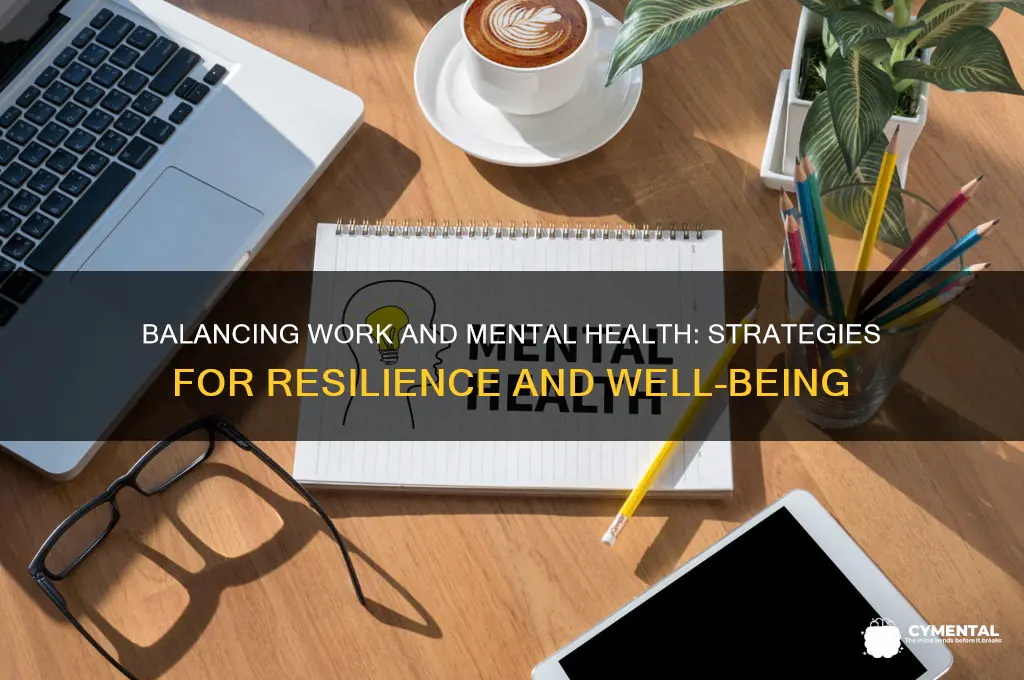
Navigating work while dealing with mental health issues can be an overwhelming challenge, as it requires balancing professional responsibilities with personal well-being. Employees often face the pressure of maintaining productivity while managing symptoms such as anxiety, depression, or burnout, which can impact focus, energy, and motivation. Open communication with employers, setting realistic boundaries, and prioritizing self-care are essential strategies to create a sustainable work environment. Accessing workplace resources, such as Employee Assistance Programs (EAPs) or flexible schedules, can provide much-needed support, while seeking professional help and building a strong support network outside of work can also alleviate the burden. By fostering a culture of understanding and empathy, both individuals and organizations can work together to ensure mental health challenges do not hinder career growth or personal fulfillment.
Explore related products
$10.99 $18.99



What You'll Learn
- Setting boundaries - Learn to say no, prioritize self-care, and manage workload effectively
- Seeking support - Find allies, access resources, and communicate needs openly with colleagues
- Managing stress - Use mindfulness, breaks, and time management to reduce workplace anxiety
- Adjusting workload - Discuss flexible hours, task delegation, or reduced responsibilities with your manager
- Practicing self-compassion - Avoid self-judgment, celebrate small wins, and focus on progress, not perfection

Setting boundaries - Learn to say no, prioritize self-care, and manage workload effectively
Saying yes to every request at work can feel like a professional virtue, but it often leads to burnout, especially when mental health is already a concern. The first step in setting boundaries is recognizing your limits. Start by assessing your current workload and identifying tasks that drain your energy disproportionately. Use a simple tracking method—a journal or digital tool—to log how you feel after completing different tasks. This data will help you pinpoint which responsibilities are sustainable and which are not. Once you have this clarity, practice declining additional tasks politely but firmly. A phrase like, "I’m currently focused on completing my priorities to ensure quality, but I’d be happy to discuss how this fits into my schedule next week" communicates professionalism while asserting your boundaries.
Prioritizing self-care isn’t selfish; it’s strategic. Allocate specific times in your workday for activities that recharge you, such as a 10-minute walk, deep breathing exercises, or a short meditation session. Research shows that even brief breaks can improve focus and reduce stress. For instance, a study published in the *Journal of Environmental Psychology* found that employees who took short walks during the workday reported higher levels of creativity and job satisfaction. Additionally, set a firm end time for your workday. If you work remotely, physically leave your workspace or shut down your devices to create a mental separation between work and personal time. Consistency in these practices reinforces boundaries and signals to colleagues that your time is structured and non-negotiable.
Effective workload management requires more than just saying no; it involves strategic planning and communication. Break large projects into smaller, manageable tasks and assign realistic deadlines. Tools like the Eisenhower Matrix (categorizing tasks by urgency and importance) can help you focus on what truly matters. Communicate your plan to your supervisor or team to align expectations. For example, if you’re working on a high-stakes project, propose a timeline that accounts for your mental health needs, such as built-in buffer days for rest. This proactive approach demonstrates accountability while safeguarding your well-being. Remember, managing your workload isn’t about doing less—it’s about doing what you can sustainably, without compromising your mental health.
Finally, setting boundaries is an ongoing process that requires self-awareness and adaptability. Regularly check in with yourself to assess how your current boundaries are serving you. Are you still feeling overwhelmed? Do you need to adjust your workload or self-care practices? Be open to refining your approach as circumstances change. For instance, if a new project demands more energy, temporarily reduce non-essential tasks or delegate where possible. Equally important is advocating for systemic change. Share your experiences with trusted colleagues or HR to foster a workplace culture that values mental health and respects boundaries. By modeling healthy practices, you not only protect your own well-being but also inspire others to do the same.
Supporting Children: Navigating Bio Parent's Mental Health Challenges with Care
You may want to see also
Explore related products





Seeking support - Find allies, access resources, and communicate needs openly with colleagues
Navigating work while managing mental health issues can feel isolating, but it doesn’t have to be. One of the most effective strategies is to seek support by identifying allies, accessing available resources, and openly communicating your needs with colleagues. Allies—whether they’re trusted coworkers, supervisors, or mentors—can provide emotional backing, practical assistance, or simply a listening ear. Resources, such as Employee Assistance Programs (EAPs), mental health apps, or company-sponsored wellness initiatives, offer structured support tailored to professional environments. Open communication, meanwhile, fosters understanding and reduces stigma, creating a workplace culture that prioritizes mental well-being.
Consider this scenario: a software developer named Alex begins to feel overwhelmed by tight deadlines and constant meetings. Instead of suffering in silence, Alex confides in a trusted team lead, who not only adjusts their workload but also connects them with the company’s EAP for counseling sessions. This example illustrates the power of allies and resources in alleviating stress. To replicate this, start by identifying potential allies—perhaps a colleague who’s shared similar struggles or a manager known for empathy. When approaching them, be specific about what you need, whether it’s flexibility in deadlines, reduced meeting participation, or simply someone to check in on you.
Accessing resources requires knowing what’s available. Many companies offer EAPs that provide free, confidential counseling sessions, often up to 6–8 per year. Mental health apps like Headspace or Calm, sometimes subsidized by employers, can help manage stress and anxiety during work hours. Additionally, check if your company has a wellness program that includes mental health workshops or peer support groups. If you’re unsure where to start, HR departments typically have information on these resources. Pro tip: keep a list of these tools handy, so you’re not scrambling to find them when you’re already feeling overwhelmed.
Open communication is the linchpin of this strategy, but it requires careful execution. Begin by framing the conversation around your commitment to your role and team, then explain how certain adjustments could help you perform better. For instance, instead of saying, “I’m struggling,” try, “I’m focused on delivering high-quality work, and I’ve found that breaking tasks into smaller chunks helps me stay productive.” Be mindful of your audience—while close colleagues might appreciate more detail, supervisors may prefer a solution-oriented approach. Remember, you’re not asking for special treatment but advocating for what you need to thrive in your role.
Finally, seeking support isn’t just about addressing immediate challenges; it’s about building a sustainable approach to work and mental health. Allies can become long-term advocates, resources can provide ongoing tools for resilience, and open communication can shift workplace norms for the better. For example, one study found that employees who felt supported by their managers were 70% less likely to report burnout. By taking these steps, you’re not only safeguarding your own well-being but contributing to a healthier, more empathetic workplace culture. Start small, be consistent, and remember: asking for help isn’t a sign of weakness—it’s a strategy for success.
Understanding Mental Health Challenges in Tennessee: Prevalence and Insights
You may want to see also
Explore related products
$6.79 $14.99


$12.99 $22.99


Managing stress - Use mindfulness, breaks, and time management to reduce workplace anxiety
Workplace anxiety often stems from feeling overwhelmed by tasks, deadlines, or interpersonal dynamics. To regain control, start by breaking your day into manageable chunks. Allocate specific time slots for tasks using the Pomodoro Technique—25 minutes of focused work followed by a 5-minute break. This method not only enhances productivity but also prevents mental fatigue by ensuring regular pauses. Pair this with a prioritized to-do list, tackling high-impact tasks first to reduce the stress of looming responsibilities. For example, if you have a report due in three days, dedicate the first hour of your morning to it, when your energy levels are highest.
Mindfulness isn’t just a buzzword—it’s a scientifically backed tool to interrupt the cycle of anxiety. Incorporate micro-mindfulness practices throughout your day without disrupting your workflow. For instance, take 30 seconds to focus on your breath before responding to a stressful email. Apps like Headspace or Calm offer guided one-minute meditations tailored for workplace stress. Research shows that even brief mindfulness exercises can lower cortisol levels, the hormone associated with stress. Make it a habit to pause and observe your thoughts without judgment, especially during high-pressure moments.
Breaks are not a luxury; they’re a necessity for mental clarity and sustained performance. Schedule them as non-negotiables in your calendar, just like meetings. Stepping away from your desk for a 10-minute walk or stretching session can reset your focus and reduce tension. If physical movement isn’t possible, use your break to engage in a calming activity, such as doodling or listening to a short podcast. Avoid scrolling through social media, as it often increases stress by triggering comparisons or information overload. Instead, use breaks to disconnect from work entirely, even if only for a few minutes.
Effective time management is the backbone of stress reduction. Start by identifying your peak productivity hours and align challenging tasks with those periods. For example, if you’re a morning person, reserve that time for complex projects. Use tools like Trello or Asana to visualize your workload and avoid overcommitting. Learn to say no when necessary—taking on more than you can handle is a direct path to burnout. Finally, end your day with a 10-minute review of what you accomplished and what’s left for tomorrow. This ritual provides closure and prevents work-related thoughts from invading your personal time.
Combining mindfulness, strategic breaks, and time management creates a robust framework for managing workplace anxiety. These practices aren’t about eliminating stress entirely but about building resilience and maintaining balance. Start small—implement one technique at a time and gradually integrate them into your routine. Over time, you’ll notice a shift in how you approach work: less reactivity, more intentionality. Remember, managing stress is an ongoing process, not a one-time fix. By prioritizing your mental health, you’ll not only survive but thrive in your professional environment.
Stigma Behind Bars: Society's Perception of Inmates with Mental Illness
You may want to see also
Explore related products

$13.29 $16.99



Adjusting workload - Discuss flexible hours, task delegation, or reduced responsibilities with your manager
Mental health challenges can make a standard 9-to-5 schedule feel insurmountable. Adjusting your workload through flexible hours, task delegation, or reduced responsibilities isn’t just a luxury—it’s a strategic move to sustain productivity while prioritizing well-being. Start by assessing your peak energy periods and discussing a schedule shift with your manager. For instance, if mornings are overwhelming, propose starting at 10 a.m. and ending later, or suggest a compressed workweek (e.g., four 10-hour days instead of five 8-hour days). Flexibility doesn’t mean less work; it means aligning tasks with your mental capacity for better output.
Task delegation is another powerful tool, but it requires honesty and clarity. Identify tasks that drain you disproportionately and propose reassigning them temporarily. For example, if client-facing roles exacerbate anxiety, ask if a colleague can take the lead while you focus on behind-the-scenes projects. Be specific about what you need and why—managers can’t read minds, but they can work with concrete requests. Tools like shared calendars or project management software (e.g., Asana, Trello) can help track reassigned tasks without micromanaging.
Reducing responsibilities isn’t about lowering standards; it’s about recalibrating expectations to match your current capacity. If you’re managing depression, for instance, propose removing non-essential tasks or extending deadlines. A phased approach works well here: start by cutting 20% of your workload and reassess after two weeks. Document your progress to show you’re not slacking—you’re strategizing. Employers often respond positively when they see a plan that balances health and productivity.
Caution: Avoid framing these adjustments as permanent solutions. Mental health is dynamic, and what works today might need tweaking tomorrow. Regular check-ins with your manager (biweekly or monthly) ensure the arrangement remains mutually beneficial. Also, be mindful of workplace culture—if your team thrives on rigid structures, frame flexibility as a trial rather than a demand. Finally, leverage legal protections like the Americans with Disabilities Act (ADA) or local equivalents if resistance arises, but use them as a last resort to avoid straining relationships.
The takeaway? Adjusting your workload isn’t about stepping back—it’s about stepping forward sustainably. Flexible hours, delegation, and reduced responsibilities are tools, not crutches. By communicating openly, planning strategically, and staying adaptable, you can navigate work demands while safeguarding your mental health. Remember, a temporary shift in workload can prevent long-term burnout, benefiting both you and your employer.
Understanding the Prevalence of Mental Health Issues in Society
You may want to see also
Explore related products


Practicing self-compassion - Avoid self-judgment, celebrate small wins, and focus on progress, not perfection
Self-judgment can be a silent saboteur in the workplace, especially when mental health challenges are already weighing you down. Every missed deadline, forgotten task, or unreturned email becomes a personal failure, amplifying feelings of inadequacy. This internal criticism not only erodes self-esteem but also fuels anxiety and depression, creating a vicious cycle that hinders productivity. To break free, start by recognizing self-judgment as a habit, not a truth. When that critical voice arises, ask yourself: *Would I speak to a colleague this way?* If the answer is no, extend the same kindness to yourself.
Celebrating small wins is a powerful antidote to the overwhelm of mental health struggles. Completing a single task, attending a meeting despite anxiety, or simply showing up on a difficult day—these are victories worth acknowledging. Keep a "wins journal" where you jot down daily achievements, no matter how minor. Research shows that tracking progress, even in small increments, rewires the brain to focus on positivity rather than deficits. For instance, if you struggle with focus, celebrate 15 minutes of uninterrupted work. Over time, these small wins build momentum and foster a sense of capability.
Perfectionism often masquerades as ambition but is, in reality, a trap that paralyzes action. When dealing with mental health issues, the pressure to be flawless can exacerbate stress and lead to burnout. Instead, adopt a "progress over perfection" mindset. Set realistic, incremental goals and measure success by effort, not outcome. For example, if you’re working on a project, break it into manageable steps and focus on completing one phase at a time. Remember, progress is nonlinear—some days will be more productive than others, and that’s okay.
Practicing self-compassion requires intentionality. Start by setting daily affirmations that counter self-critical thoughts, such as *“I am doing my best, and that is enough.”* Incorporate mindfulness techniques, like deep breathing or a 5-minute meditation, to ground yourself when self-judgment arises. Additionally, create a "compassion toolkit" with items that bring you comfort—a favorite tea, a soothing playlist, or a motivational quote. Use these tools when you feel overwhelmed to remind yourself that you deserve kindness, especially in moments of struggle.
Ultimately, self-compassion is not about lowering standards but about approaching work—and yourself—with empathy and understanding. By avoiding self-judgment, celebrating small wins, and focusing on progress, you create a sustainable foundation for navigating work while managing mental health. This approach doesn’t eliminate challenges but equips you with the resilience to face them without self-recrimination. As you cultivate self-compassion, you’ll find that your relationship with work—and yourself—becomes more balanced, compassionate, and forgiving.
Supporting Your Parent: Strategies for Navigating Mental Health Challenges
You may want to see also
Frequently asked questions
Prioritize tasks based on urgency and importance, break larger tasks into smaller steps, and communicate openly with your supervisor about deadlines or adjustments needed. Use tools like to-do lists or time-blocking to stay organized and avoid burnout.
It depends on your comfort level and workplace culture. If you feel safe and believe it could lead to accommodations or support, consider sharing with HR or a trusted supervisor. You can also seek advice from a mental health professional to guide your decision.
Practice self-care, such as taking regular breaks, staying hydrated, and maintaining a healthy sleep schedule. Use mindfulness or grounding techniques to manage stress, and set realistic goals to avoid feeling overwhelmed. Seeking support from a therapist or counselor can also provide additional tools to cope.