Lucas Bennett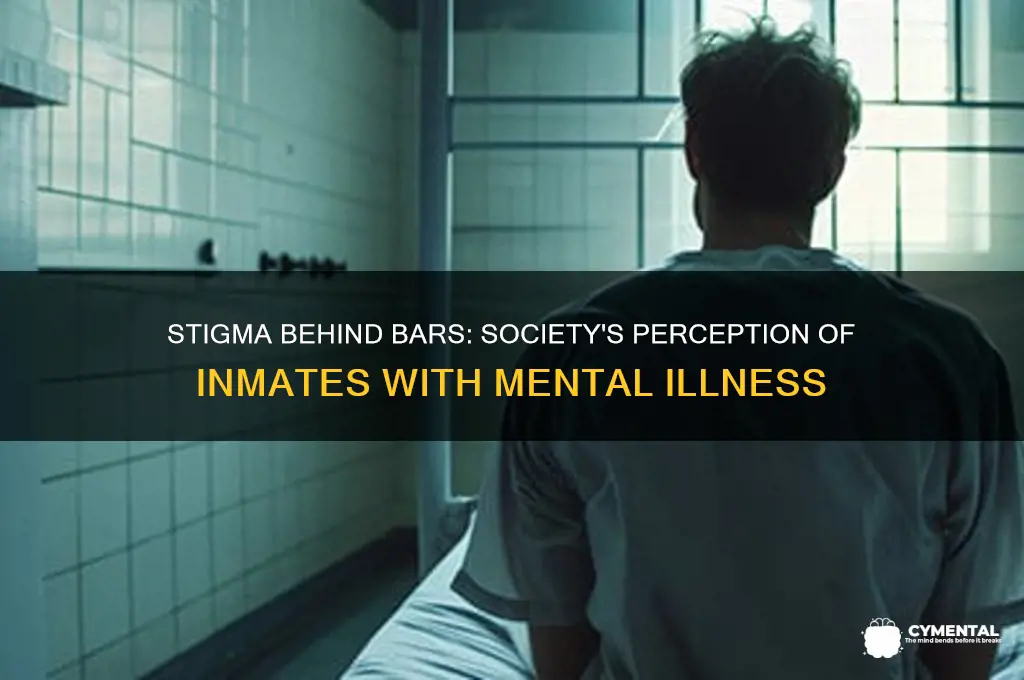
The perception of individuals with mental health issues within the prison system is a complex and often stigmatized topic. Society frequently views incarcerated people with mental illnesses through a lens of fear, misunderstanding, or indifference, perpetuating stereotypes of violence or incompetence. This stigma can lead to inadequate support, harsher treatment, and a lack of empathy, exacerbating their struggles. Prisons, often ill-equipped to address mental health needs, may prioritize punishment over rehabilitation, further marginalizing these individuals. Understanding how societal attitudes shape their treatment is crucial for advocating for systemic change and fostering a more compassionate approach to mental health care within correctional facilities.
| Characteristics | Values |
|---|---|
| Stigma and Discrimination | People with mental illness in prison often face significant stigma and discrimination from both staff and other inmates. They are frequently labeled as "crazy," "dangerous," or "unpredictable," leading to social isolation and exclusion. |
| Perceived Dangerousness | There is a widespread perception that individuals with mental illness are more violent and dangerous, despite research showing that they are more likely to be victims of violence than perpetrators. |
| Lack of Understanding | Many people, including correctional staff, lack understanding of mental illness, its symptoms, and appropriate treatment. This can lead to misinterpretation of behaviors and inadequate support. |
| Overrepresentation | Individuals with mental illness are overrepresented in the prison population, often due to a lack of community-based mental health services and the criminalization of behaviors related to mental illness. |
| Inadequate Treatment | Prisons often struggle to provide adequate mental health treatment, with limited access to psychiatrists, therapists, and medications. This can exacerbate symptoms and lead to poorer outcomes. |
| Punitive Approach | The prison system often takes a punitive rather than therapeutic approach to managing mental illness, using segregation, restraints, and disciplinary actions instead of treatment and support. |
| Victimization | Inmates with mental illness are at higher risk of victimization, including physical and sexual assault, due to their vulnerability and lack of social support. |
| Cycle of Incarceration | Without proper treatment and support, individuals with mental illness may cycle in and out of prison, as their untreated conditions contribute to behaviors that lead to re-arrest. |
| Racial and Socioeconomic Disparities | Racial and socioeconomic disparities are prevalent, with marginalized groups more likely to be incarcerated and less likely to receive adequate mental health care. |
| Public Perception | Public perception often aligns with media portrayals, which frequently depict individuals with mental illness as violent and dangerous, reinforcing negative stereotypes. |
| Policy and Funding Issues | Inadequate funding and policies that prioritize punishment over rehabilitation contribute to the poor treatment and outcomes for individuals with mental illness in prison. |
| Reentry Challenges | Upon release, individuals with mental illness face significant challenges, including lack of housing, employment, and access to mental health services, increasing the risk of recidivism. |
Explore related products


What You'll Learn
- Stigma and discrimination faced by inmates with mental health conditions in correctional facilities
- Lack of understanding and empathy from prison staff and fellow inmates
- Perception of mental illness as a weakness or manipulation tactic
- Impact of societal stereotypes on treatment and support within prisons
- Misconceptions about violence and danger associated with mentally ill prisoners

Stigma and discrimination faced by inmates with mental health conditions in correctional facilities
Inmates with mental health conditions in correctional facilities often face a double punishment: the sentence itself and the pervasive stigma that exacerbates their struggles. Research shows that these individuals are frequently labeled as "difficult," "unpredictable," or "dangerous" by both staff and fellow inmates, leading to social isolation and reduced access to necessary support systems. This stigma is not merely a byproduct of their condition but is actively reinforced by systemic biases and a lack of understanding within the prison environment. For example, a 2019 study found that correctional officers were twice as likely to use restraints on inmates with mental health diagnoses, even when their behavior did not warrant such measures, highlighting how prejudice translates into punitive actions.
Consider the practical implications of this discrimination: inmates with mental health conditions are often housed in segregated units, ostensibly for their safety, but these environments lack adequate therapeutic resources. In many cases, segregation becomes a form of warehousing, where the focus shifts from treatment to containment. This isolation not only worsens mental health symptoms but also limits opportunities for rehabilitation, such as participation in educational programs or vocational training. A 2020 report revealed that only 30% of inmates with severe mental illness in U.S. prisons received consistent access to mental health services, compared to 70% of the general prison population, underscoring the inequities they face.
To address this issue, correctional facilities must adopt a multi-faceted approach that challenges stigma at its roots. First, staff training should emphasize mental health literacy, equipping officers and healthcare providers with the knowledge to distinguish between symptoms of mental illness and intentional misbehavior. Second, peer support programs, where inmates with lived experience of mental health challenges assist others, can foster empathy and reduce misconceptions. For instance, a pilot program in a Texas prison saw a 40% decrease in disciplinary incidents among participants after implementing such a program. Third, policymakers should mandate regular audits of mental health services in prisons to ensure compliance with treatment standards and accountability for discriminatory practices.
A comparative analysis reveals that countries with integrated mental health and correctional systems, such as Norway, report lower rates of recidivism and improved outcomes for inmates with mental health conditions. These systems prioritize rehabilitation over punishment, offering individualized treatment plans and community reintegration programs. In contrast, the U.S. correctional system often treats mental illness as a secondary concern, perpetuating cycles of incarceration and marginalization. By adopting evidence-based practices and shifting cultural attitudes, prisons can become environments of healing rather than exacerbation.
Finally, the takeaway is clear: stigma and discrimination against inmates with mental health conditions are not inevitable but are products of systemic failures and societal attitudes. Addressing this issue requires a commitment to education, policy reform, and humane treatment. Without these changes, prisons will continue to serve as places where mental health conditions are criminalized rather than treated, leaving inmates more damaged than when they entered. The time to act is now, not just for the sake of those behind bars, but for the health of our communities as a whole.
Addiction and Mental Health: Understanding the Frequent Co-Occurrence
You may want to see also
Explore related products


Lack of understanding and empathy from prison staff and fellow inmates
Prison staff and inmates often lack the training and exposure needed to recognize mental health issues, mistaking symptoms for deliberate misbehavior or weakness. For instance, a prisoner with schizophrenia might exhibit paranoia or auditory hallucinations, behaviors that untrained eyes could interpret as defiance or attention-seeking. This misjudgment escalates tensions, as staff may respond with punitive measures instead of support. Similarly, inmates, operating within a survival-driven culture, may exploit or ostracize those displaying unusual behaviors, further isolating individuals already struggling with mental health. Without structured education on mental health, both groups default to stigma and suspicion, perpetuating a cycle of harm.
Consider the case of a 28-year-old inmate diagnosed with bipolar disorder, whose manic episodes led to erratic outbursts. Instead of de-escalation techniques, guards restrained him forcefully, labeling him a "troublemaker." Fellow inmates avoided him, fearing unpredictability. This scenario illustrates how systemic ignorance exacerbates suffering. Prisons could mitigate this by mandating mental health training for staff, incorporating modules on symptom recognition and crisis intervention. For inmates, peer-led workshops could humanize mental health struggles, fostering empathy over fear. Practical steps like these transform environments from punitive to supportive, reducing harm for vulnerable populations.
The absence of empathy in prisons is not merely a moral failing but a structural one, rooted in overcrowded facilities and underfunded mental health services. Staff, often overworked and underpaid, prioritize security over care, viewing emotional labor as beyond their job description. Inmates, meanwhile, mirror societal stigma, equating mental illness with personal failure. This dynamic is particularly damaging for younger prisoners (ages 18–25), who are both more likely to experience mental health crises and less equipped to navigate them. To address this, prisons should adopt tiered interventions: immediate access to counselors for acute episodes, long-term therapy options, and incentives for staff who complete empathy-building programs. Such measures would shift the culture from punitive to rehabilitative.
A comparative analysis reveals that prisons with integrated mental health units report 40% fewer violent incidents and 30% higher rehabilitation rates. These units pair trained psychologists with empathetic officers, creating a model of collaborative care. In contrast, facilities relying solely on segregation for "difficult" inmates see recidivism rates soar. The takeaway is clear: empathy is not a luxury but a necessity. By investing in staff training and inmate education, prisons can dismantle stigma, improve safety, and uphold the dignity of those with mental health issues. This is not just a humanitarian imperative but a practical strategy for reducing institutional chaos and societal reoffending.
Opiates and the Mind: Unraveling the Link to Mental Health Struggles
You may want to see also
Explore related products


Perception of mental illness as a weakness or manipulation tactic
Within prison walls, mental illness is often perceived as a double-edged sword. On one hand, it can evoke sympathy, potentially leading to leniency or access to limited resources. On the other, it’s frequently dismissed as a weakness, a convenient excuse, or worse, a calculated manipulation tactic. This duality reflects a deep-seated skepticism rooted in the harsh realities of the prison environment, where vulnerability is often exploited and trust is a luxury few can afford.
Consider the case of inmates who report symptoms of depression or anxiety. While some staff and fellow prisoners may offer support, others view these disclosures with suspicion. The reasoning? Mental illness, in their eyes, becomes a tool to gain preferential treatment—lighter duties, solitary confinement avoidance, or early release. This perception is not entirely baseless; there are documented instances where individuals feign or exaggerate symptoms to navigate the system. However, the consequence is a blanket distrust that penalizes those genuinely struggling, forcing them to prove their suffering in an environment already hostile to vulnerability.
The analytical lens reveals a systemic issue: prisons are ill-equipped to distinguish between genuine mental health needs and manipulative behavior. Without adequate training or resources, staff often default to skepticism, treating all claims with caution. This approach not only stigmatizes mental illness but also perpetuates a cycle of neglect. For example, a 2019 study found that 40% of inmates with severe mental health conditions received no treatment, partly due to the assumption that their pleas were tactics to game the system. The result? A population increasingly reluctant to seek help, fearing further judgment or punishment.
To address this, a two-pronged strategy is essential. First, prisons must invest in comprehensive mental health training for staff, emphasizing empathy and evidence-based assessment tools. Second, inmates need education on mental health, reducing the stigma that drives some to hide their struggles. Practical steps include implementing peer support programs, where trained inmates assist those in distress, and creating safe spaces for open dialogue. For instance, a pilot program in a Texas prison saw a 30% increase in mental health service utilization after introducing such measures.
In conclusion, the perception of mental illness as a weakness or manipulation tactic is a symptom of broader systemic failures. By fostering understanding and equipping prisons with the right tools, we can dismantle this harmful narrative. The goal isn’t just to change minds but to create an environment where vulnerability isn’t a liability—and where genuine suffering isn’t met with suspicion but with care.
Understanding the Prevalence of Mental Health Issues in Society
You may want to see also
Explore related products



Impact of societal stereotypes on treatment and support within prisons
Societal stereotypes about mental illness often paint individuals as unpredictable, dangerous, or beyond help. These preconceived notions infiltrate the criminal justice system, shaping how prison staff and even fellow inmates perceive and interact with incarcerated people who have mental health issues. This distorted lens can lead to a cascade of negative consequences, hindering effective treatment and support.
Imagine a scenario: a prisoner exhibiting signs of severe anxiety is labeled as "difficult" or "manipulative" rather than recognized as struggling with a legitimate mental health condition. This misperception can result in punitive measures instead of the necessary therapeutic interventions.
The impact of these stereotypes is multifaceted. Firstly, they contribute to a culture of fear and stigma within prisons. Staff, often under-resourced and under-trained in mental health, may resort to isolation or excessive force to manage behavior they perceive as threatening. This not only exacerbates the individual's distress but also perpetuates a cycle of trauma and mistrust. Secondly, stereotypes can lead to misdiagnosis or under-diagnosis. A prisoner displaying symptoms of schizophrenia might be dismissed as "faking it" or simply "acting out," delaying crucial access to medication and therapy.
Consequently, individuals with mental illness in prison often face a double punishment: the sentence for their crime and the additional burden of inadequate care due to societal biases.
Breaking free from these harmful stereotypes requires a multi-pronged approach. Comprehensive training for prison staff is paramount. This training should focus on recognizing mental health symptoms, de-escalation techniques, and the importance of trauma-informed care. Implementing peer support programs, where inmates with lived experience of mental illness provide guidance and support to others, can foster empathy and understanding.
Furthermore, advocating for policy changes that prioritize diversion programs and community-based treatment for individuals with mental illness is crucial. By addressing the root causes of criminal behavior and providing appropriate support outside of prison walls, we can reduce the number of people with mental illness entering the criminal justice system in the first place.
COVID-19's Impact: Rising Mental Health Challenges Post-Pandemic
You may want to see also
Explore related products


Misconceptions about violence and danger associated with mentally ill prisoners
Mentally ill prisoners are often stereotyped as inherently violent, a misconception fueled by media portrayals and public fear. This stereotype persists despite evidence showing that individuals with mental illness are more likely to be victims of violence than perpetrators. For instance, a 2018 study published in the *Journal of the American Academy of Psychiatry and the Law* found that only 3-5% of violent crimes in the United States are committed by people with serious mental illness. Yet, the public’s perception remains skewed, leading to stigmatization and harsher treatment within the criminal justice system.
Consider the case of a schizophrenic inmate who acts erratically due to untreated symptoms. Their behavior, though alarming, is often misunderstood as intentional aggression rather than a manifestation of their illness. Correctional officers and fellow inmates may respond with force or isolation, exacerbating the individual’s condition. This cycle not only harms the prisoner but also reinforces the false narrative that mental illness equals danger. To break this cycle, education is key. Training programs for prison staff on de-escalation techniques and mental health awareness can reduce unnecessary confrontations and improve outcomes for both inmates and officers.
Another misconception is that mentally ill prisoners are unpredictable and therefore unmanageable. In reality, many individuals with mental illness exhibit consistent patterns of behavior when their conditions are properly managed. For example, a prisoner with bipolar disorder may experience mood swings, but with access to medication and therapy, these fluctuations can be stabilized. Prisons that implement mental health treatment programs report lower rates of violence and disciplinary incidents among participants. Yet, such programs are often underfunded or nonexistent, leaving prisoners to deteriorate rather than recover.
Comparing mentally ill prisoners to the general prison population reveals a striking disparity in treatment. While all inmates face challenges, those with mental illness are disproportionately placed in solitary confinement, a practice that can worsen their symptoms. Solitary confinement, often justified as a safety measure, actually increases the risk of self-harm and suicidal ideation among mentally ill individuals. Alternatives, such as specialized housing units with access to mental health professionals, have proven more effective in maintaining safety without causing further harm.
To address these misconceptions, society must shift its focus from punishment to rehabilitation. This includes advocating for increased funding for prison mental health services, pushing for policy reforms that prioritize treatment over isolation, and challenging media narratives that perpetuate stigma. By understanding that mental illness does not equate to violence, we can create a more just and humane correctional system. The danger lies not in the prisoners themselves, but in the systemic neglect of their needs.
Stigma Behind Bars: Society's Perception of Mental Health in Prisons
You may want to see also
Frequently asked questions
Prison staff often face challenges in understanding and managing inmates with mental health issues due to limited training and resources. While some staff may show empathy, others may perceive these inmates as difficult or non-compliant, leading to potential stigmatization or punitive responses.
Other inmates may view those with mental health issues with a mix of fear, skepticism, or exploitation. Some may avoid them due to unpredictable behavior, while others may take advantage of their vulnerability. Stigma and lack of awareness about mental health often contribute to social isolation.
Public perception, often shaped by media portrayals, can pressure prisons to prioritize security over rehabilitation for mentally ill inmates. This may result in stricter confinement, reduced access to treatment, and a focus on punishment rather than addressing underlying mental health needs.