Harper Lewis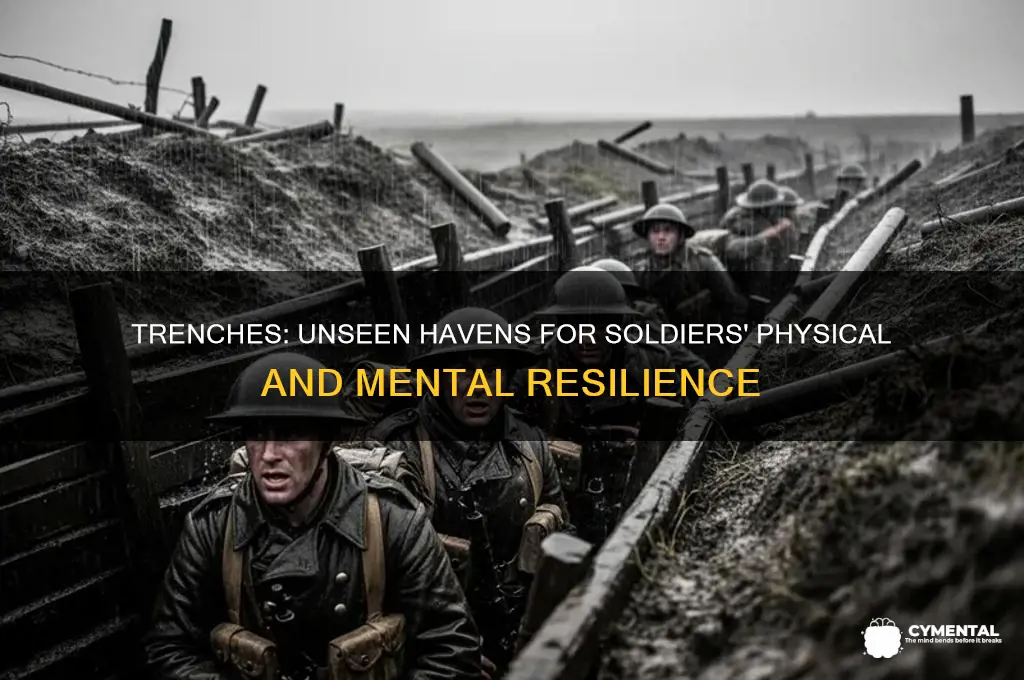
Trenches, a defining feature of World War I, played a complex role in both supporting and challenging the physical and mental health of soldiers. While they provided crucial shelter from enemy fire, reducing casualties from artillery and gunfire, the harsh living conditions within the trenches took a significant toll. Constant exposure to dampness, mud, and unsanitary environments led to widespread illnesses such as trench foot, dysentery, and lice infestations, severely impacting physical well-being. Mentally, the confined, claustrophobic spaces and relentless stress of impending attacks fostered anxiety, shell shock (now recognized as PTSD), and a pervasive sense of hopelessness. Despite these hardships, trenches also offered a sense of camaraderie and routine, which, for some soldiers, provided psychological stability amidst the chaos of war. Thus, while trenches were essential for survival, they were a double-edged sword, simultaneously protecting and endangering the health of those who served in them.
| Characteristics | Values |
|---|---|
| Physical Protection | Provided shelter from enemy fire, shrapnel, and harsh weather conditions, reducing direct casualties. |
| Strategic Positioning | Allowed soldiers to maintain defensive positions, monitor enemy movements, and launch counterattacks effectively. |
| Rest and Recovery | Offered temporary respite from active combat, enabling soldiers to rest, eat, and tend to minor injuries. |
| Medical Aid Stations | Trenches often housed rudimentary medical facilities for immediate treatment of wounded soldiers. |
| Mental Exhaustion | Prolonged confinement in cramped, dirty, and dangerous conditions led to extreme stress and fatigue. |
| Psychological Trauma | Constant exposure to death, injury, and the horrors of war caused shell shock (early term for PTSD) and other mental health issues. |
| Social Isolation | Limited interaction with the outside world and prolonged separation from loved ones exacerbated feelings of loneliness and despair. |
| Poor Hygiene | Overcrowding, lack of sanitation, and infestations of lice and rats led to physical illnesses and mental distress. |
| Fear and Uncertainty | The constant threat of enemy attacks, sniper fire, and artillery bombardment created a pervasive sense of fear and helplessness. |
| Monotony and Boredom | Long periods of inactivity between battles led to boredom, which could contribute to mental deterioration. |
Explore related products


What You'll Learn
- Shelter from Enemy Fire: Trenches provided crucial protection, reducing physical injuries and fatalities from direct combat
- Routine and Structure: Daily schedules in trenches offered mental stability amidst chaos and uncertainty
- Camaraderie and Support: Close quarters fostered brotherhood, easing loneliness and boosting morale among soldiers
- Basic Medical Care: Trenches housed first-aid stations, enabling quicker treatment for physical wounds
- Psychological Coping Mechanisms: Humor, letters, and small comforts helped soldiers manage mental stress

Shelter from Enemy Fire: Trenches provided crucial protection, reducing physical injuries and fatalities from direct combat
In the brutal theater of World War I, trenches were more than just ditches in the earth—they were lifelines. Positioned strategically across No Man's Land, these zigzagging fortifications served as the first line of defense against the relentless onslaught of enemy fire. Constructed with sandbags, wooden planks, and whatever materials were at hand, trenches offered a critical barrier between soldiers and the hail of bullets, shrapnel, and artillery that defined the Western Front. This physical shelter was not just a matter of comfort; it was a decisive factor in reducing casualties and providing a psychological anchor in the chaos of war.
Consider the numbers: during the Battle of the Somme, soldiers exposed in No Man's Land faced a mortality rate of up to 70% within the first hour of an assault. In contrast, those who reached the relative safety of trenches had a significantly higher chance of survival. The design of trenches—with their deep walls, overhead cover, and staggered layout—minimized the impact of direct fire. For instance, a well-built trench could deflect shrapnel from exploding shells, reducing the severity of injuries. This protection was not absolute, but it was enough to turn a fatal wound into a treatable one, or to spare a soldier entirely.
However, the effectiveness of trenches as shelters varied widely depending on their construction and maintenance. A poorly dug trench, prone to collapse or flooding, could become a death trap. Soldiers were instructed to dig trenches in a zigzag pattern to prevent enemy fire from sweeping the entire length if breached. Additionally, the incorporation of duckboards—wooden slats laid across the muddy floor—helped mitigate the physical toll of trench foot, a painful condition caused by prolonged exposure to damp conditions. These practical measures highlight the ingenuity required to maximize the protective benefits of trenches.
The psychological impact of this shelter cannot be overstated. Knowing there was a place to retreat from enemy fire provided soldiers with a sense of security, however fragile. This mental respite, even if brief, allowed them to regroup, tend to wounds, and prepare for the next wave of combat. For many, the trench became a symbol of survival—a tangible barrier between life and death. This psychological buffer, while not a cure for the horrors of war, offered a crucial moment of calm in an otherwise unrelenting storm of violence.
In practice, commanders emphasized the importance of trench discipline to ensure their protective function. Soldiers were trained to keep their heads down, move only when necessary, and maintain the structural integrity of the trench. These protocols, though restrictive, were essential for survival. For example, during a barrage, soldiers were instructed to crouch against the trench wall farthest from the enemy, a simple yet effective tactic to avoid shrapnel. Such measures underscore the dual role of trenches: not just as physical barriers, but as structured environments that demanded discipline and cooperation to function effectively.
In conclusion, trenches were far more than mere holes in the ground—they were engineered sanctuaries that significantly reduced physical injuries and fatalities from direct combat. Their design, maintenance, and strategic use played a pivotal role in shaping the experience of soldiers on the front lines. While they could not eliminate the dangers of war, trenches provided a critical layer of protection that saved countless lives and offered a fleeting sense of safety in an otherwise unforgiving landscape.
Finding Mental Health Support in Woodstock, GA: A Comprehensive Guide
You may want to see also
Explore related products

$7.96 $15.99


Routine and Structure: Daily schedules in trenches offered mental stability amidst chaos and uncertainty
In the trenches of World War I, where chaos and uncertainty reigned, daily routines emerged as a lifeline for soldiers' mental health. These structured schedules, though rigid and often grueling, provided a sense of predictability in an environment defined by unpredictability. From reveille at dawn to lights out at night, each activity was meticulously planned, offering soldiers a framework to cling to amidst the horrors of war. This routine wasn’t just about efficiency; it was a psychological anchor, a way to compartmentalize fear and maintain a semblance of normalcy.
Consider the morning routine: a wake-up call, followed by physical exercises, breakfast, and weapon maintenance. These tasks, though mundane, served a dual purpose. Physically, they kept soldiers fit and prepared for combat. Mentally, they provided a sense of purpose and control. For a soldier, knowing what came next—even if it was just cleaning a rifle or standing in formation—could mean the difference between spiraling into despair and holding onto hope. The act of following a schedule became a form of mental discipline, a way to push back against the encroaching chaos of war.
However, the benefits of routine weren’t without their challenges. The monotony of trench life could itself become a source of mental strain. Soldiers often faced long periods of inactivity punctuated by sudden, intense bursts of violence. To counteract this, commanders introduced structured leisure activities, such as letter-writing, group games, and even educational programs. These activities not only broke the monotony but also fostered camaraderie, a critical component of mental resilience. For instance, a soldier teaching a fellow comrade to read or engaging in a game of chess could momentarily forget the war, finding solace in shared humanity.
The psychological impact of routine extended beyond the individual to the collective. A well-structured daily schedule reinforced unit cohesion, as soldiers relied on one another to fulfill their roles. This interdependence created a sense of belonging and purpose, vital for maintaining morale. For example, the nightly ritual of sentry duty required trust and coordination, reminding soldiers that they were part of something larger than themselves. Such routines didn’t eliminate fear, but they provided a framework to manage it, transforming it from paralyzing terror into a manageable emotion.
In practical terms, implementing routine in modern high-stress environments—whether military, medical, or corporate—can draw lessons from the trenches. Key takeaways include the importance of balancing structure with flexibility, incorporating meaningful activities, and fostering social connections. For instance, a daily schedule that includes time for physical activity, reflection, and social interaction can mitigate stress and improve mental health. Just as trench routines offered soldiers stability, structured schedules today can provide individuals with a sense of control and purpose, even in the face of uncertainty.
Can Psychologists Accurately Diagnose Mental Illness? Expert Insights Revealed
You may want to see also
Explore related products


Camaraderie and Support: Close quarters fostered brotherhood, easing loneliness and boosting morale among soldiers
In the confined and often brutal environment of the trenches, soldiers found solace in the unbreakable bonds forged with their comrades. The physical proximity forced upon them by the narrow, mud-filled spaces became a catalyst for deep, enduring relationships. These connections were not merely incidental but essential, serving as a psychological lifeline in the face of constant danger and uncertainty. The shared experience of fear, exhaustion, and monotony created a unique sense of brotherhood, where each man relied on the others not just for survival but for emotional sustenance.
Consider the daily routine in the trenches: men slept, ate, and fought side by side, often in conditions that stripped away privacy and personal space. This forced intimacy bred a peculiar kind of trust. Soldiers learned to anticipate each other’s needs, whether it was sharing a ration of food, offering a dry corner of a blanket, or simply listening to fears whispered in the dark. Such acts of kindness, though small, were monumental in a place where humanity often seemed absent. For example, letters from the front frequently mention the comfort derived from a comrade’s presence during artillery barrages, where the mere sound of a familiar voice could steady frayed nerves.
The mental health benefits of this camaraderie cannot be overstated. Studies of wartime psychology highlight that social support is a critical buffer against trauma. In the trenches, where soldiers faced relentless stress and isolation from the outside world, the sense of belonging to a group mitigated feelings of loneliness and despair. Morale, a fragile commodity in such environments, was often sustained through shared humor, songs, and stories. These collective activities not only distracted from the horrors of war but reinforced the idea that no one faced the ordeal alone.
However, fostering such bonds required effort and intentionality. Officers and non-commissioned officers played a pivotal role in nurturing unit cohesion, organizing activities like card games, makeshift sports, or group singing. Practical tips for modern contexts, such as team-building in high-stress environments, can draw from these practices: encourage shared activities, promote open communication, and create opportunities for individuals to contribute uniquely to the group’s well-being.
In conclusion, the trenches, despite their harshness, became crucibles of camaraderie. The physical closeness of soldiers transformed into emotional support systems, proving that even in the most dire circumstances, human connection can thrive. This brotherhood was not just a byproduct of war but a deliberate, life-sustaining force that eased the mental burden and fortified the spirit of those who endured it.
Deleting Social Media: A Path to Improved Mental Well-being?
You may want to see also
Explore related products




Basic Medical Care: Trenches housed first-aid stations, enabling quicker treatment for physical wounds
In the chaos of World War I, trenches were more than just shelters—they were lifelines for immediate medical intervention. Positioned directly at the front lines, first-aid stations within trenches drastically reduced the time between injury and treatment. For instance, a soldier hit by shrapnel could receive basic wound care within minutes, compared to hours if transported to a rear field hospital. This rapid response was critical, as the first hour after injury—often called the "golden hour"—determines survival rates and long-term outcomes. By housing these stations in trenches, commanders leveraged proximity to mitigate the deadliest effects of battlefield trauma.
Consider the practical mechanics of trench-based first aid. Stations were typically staffed by a combination of trained medics and soldiers with basic medical knowledge, equipped with supplies like bandages, antiseptics, and morphine. A standard protocol might involve: (1) assessing the wound for severity, (2) applying direct pressure to control bleeding, (3) cleaning the area with iodine solution (at a concentration of 2-4% for disinfection), and (4) administering morphine sulfate (typically 5-10 mg intramuscularly) for pain management. These steps, though rudimentary by modern standards, were revolutionary for the time, transforming trenches into triage hubs that stabilized soldiers before evacuation.
However, the system was not without limitations. Overcrowding and unsanitary conditions often turned trenches into breeding grounds for infection, undermining their medical benefits. For example, a wound treated promptly but in a mud-soaked environment might still fester with tetanus or gangrene. Medics frequently improvised, using boiled water and torn uniforms as makeshift sterilizers and dressings. Despite these challenges, the trench first-aid model demonstrated the life-saving potential of decentralized, front-line medical care—a principle that would evolve into modern combat casualty care protocols.
The psychological impact of trench-based medical care should not be overlooked. Knowing help was nearby provided soldiers with a measure of reassurance in an otherwise hopeless environment. A study of wartime letters reveals that men often expressed relief at the presence of medics, even if they themselves were uninjured. This sense of security, however fragile, contributed to morale—a critical factor in maintaining combat effectiveness. By integrating medical care into the very architecture of warfare, trenches became both physical and psychological fortresses, offering a glimmer of order amidst chaos.
Recharge and Thrive: The Mental Benefits of Embracing Free Time
You may want to see also
Explore related products





Psychological Coping Mechanisms: Humor, letters, and small comforts helped soldiers manage mental stress
Life in the trenches during World War I was a relentless assault on both body and mind. Soldiers faced not only physical dangers like shelling and disease but also the constant, grinding stress of uncertainty, isolation, and witnessing unimaginable horrors. To survive this psychological crucible, they developed coping mechanisms that, while seemingly simple, were profoundly effective. Humor, letters, and small comforts became lifelines, offering moments of respite and connection in the midst of chaos.
Humor, often dark and irreverent, served as a shield against the absurdity of war. Soldiers joked about their dire circumstances, creating a shared language of gallows humor that fostered camaraderie and defused tension. For example, trench newspapers, crudely printed and circulated among the troops, were filled with satirical cartoons and witty commentary that mocked the enemy, the military bureaucracy, and even their own plight. This collective laughter wasn’t just a distraction—it was a form of emotional armor, helping soldiers process trauma and maintain a sense of humanity in dehumanizing conditions.
Letters from home were another vital coping mechanism, providing a tangible link to the world beyond the trenches. Receiving a letter could momentarily transport a soldier back to a time and place where war didn’t exist, offering a glimpse of normalcy and hope. Writing letters, in turn, allowed soldiers to express their fears, longings, and experiences, even if they censored their words to spare loved ones the full horror. The act of correspondence itself was therapeutic, a way to organize thoughts and emotions in the face of overwhelming chaos. For families, these letters were often the only connection to their sons, husbands, and fathers, making them precious artifacts of love and resilience.
Small comforts, though seemingly insignificant, played an outsized role in sustaining morale. A tin of jam, a packet of cigarettes, or a handmade gift from home could provide a fleeting sense of pleasure and comfort in an environment devoid of both. Soldiers often carried personal mementos—a photograph, a lucky coin, or a piece of jewelry—that served as reminders of their identities outside the war. These items weren’t just physical objects; they were symbols of hope, anchors to a life worth fighting for. Even the simple act of sharing rations or brewing tea in a makeshift tin could create moments of normalcy and solidarity, reinforcing the bonds between comrades.
While these coping mechanisms didn’t erase the horrors of trench warfare, they were essential tools for survival. Humor, letters, and small comforts allowed soldiers to carve out moments of humanity in a dehumanizing world, offering psychological refuge from the relentless stress of war. Their resilience reminds us of the enduring power of connection, creativity, and hope, even in the darkest of times.
Supporting Loved Ones: Effective Ways to Aid Severe Mental Health Struggles
You may want to see also
Frequently asked questions
Trenches offered soldiers a degree of physical protection from enemy fire, artillery, and machine guns. The deep, narrow design allowed soldiers to take cover, reducing casualties from direct attacks.
Trench life led to severe physical health issues, including trench foot (caused by prolonged exposure to damp, cold conditions), lice infestations, and diseases like cholera and dysentery due to poor sanitation and contaminated water.
Trench warfare caused significant mental health issues, such as shell shock (now recognized as PTSD), due to constant stress, fear of death, and the horrors of combat. The isolation, monotony, and relentless danger also led to anxiety, depression, and emotional exhaustion.