Lucas Bennett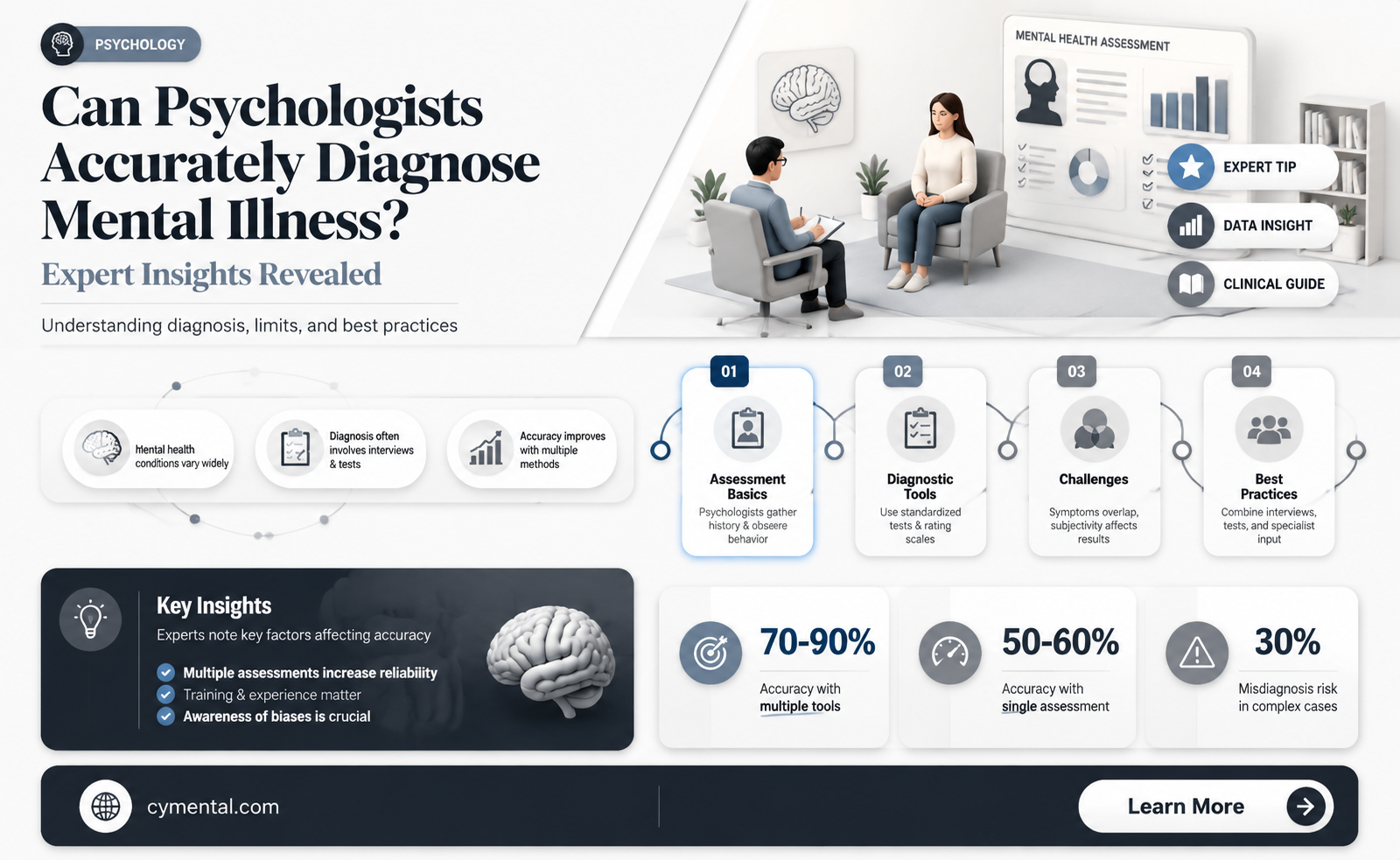
Psychologists play a crucial role in diagnosing mental illness, utilizing their expertise in psychological assessment, clinical interviews, and evidence-based tools to identify and differentiate various mental health conditions. Trained in understanding human behavior, emotions, and thought patterns, psychologists employ standardized assessments, such as questionnaires and diagnostic criteria from the DSM-5 or ICD-11, to evaluate symptoms and determine appropriate diagnoses. While they cannot prescribe medication, psychologists collaborate with psychiatrists and other healthcare professionals to develop comprehensive treatment plans, offering therapeutic interventions like cognitive-behavioral therapy (CBT) or psychotherapy to address the underlying causes of mental health issues. Their holistic approach ensures accurate diagnosis and tailored support, making them invaluable in the early detection and management of mental illnesses.
| Characteristics | Values |
|---|---|
| Role in Diagnosis | Psychologists are qualified to diagnose mental illnesses through clinical interviews, psychological assessments, and standardized testing tools. |
| Licensure | In most regions, licensed psychologists (e.g., PhD, PsyD) are authorized to diagnose mental health conditions. |
| Assessment Tools | Use evidence-based tools like the MMPI (Minnesota Multiphasic Personality Inventory), SCID (Structured Clinical Interview for DSM-5), and cognitive/behavioral assessments. |
| Collaboration | Often work with psychiatrists, primary care physicians, and other healthcare providers for comprehensive care. |
| Treatment Planning | Diagnoses inform tailored treatment plans, including therapy modalities (e.g., CBT, DBT) and referrals for medication if needed. |
| Limitations | Cannot prescribe medication (except in a few U.S. states with specialized training); refer to psychiatrists for pharmacological interventions. |
| Ethical Guidelines | Adhere to ethical standards (e.g., APA guidelines) ensuring accurate, unbiased, and confidential diagnoses. |
| Specializations | Some psychologists specialize in specific areas (e.g., child psychology, forensic psychology) for targeted diagnoses. |
| Cultural Competence | Trained to consider cultural, social, and environmental factors in diagnosis to avoid misdiagnosis. |
| Follow-Up | Provide ongoing monitoring and adjustments to diagnoses based on client progress and new information. |
Explore related products


What You'll Learn

Role of Psychologists in Diagnosis
Psychologists play a pivotal role in diagnosing mental illness, serving as the bridge between subjective experience and clinical understanding. Unlike medical doctors, who often rely on biological markers, psychologists specialize in deciphering the complexities of human behavior, thoughts, and emotions. Through structured interviews, standardized assessments, and observational techniques, they gather nuanced data that forms the foundation of an accurate diagnosis. For instance, a psychologist might use the *Diagnostic and Statistical Manual of Mental Disorders (DSM-5)* to identify symptoms of depression, such as persistent sadness or loss of interest, while also exploring contextual factors like trauma or stress. This holistic approach ensures that the diagnosis reflects not just the symptoms but also the individual’s unique circumstances.
Consider the process of diagnosing anxiety disorders, where psychologists employ tools like the *Generalized Anxiety Disorder 7-item (GAD-7)* scale to quantify symptom severity. A score of 10 or higher often indicates moderate to severe anxiety, but a psychologist doesn’t stop there. They delve into the patient’s history, examining triggers like workplace stress or familial conflicts, and assess coping mechanisms. This layered analysis distinguishes their role from that of a general practitioner, who might prescribe medication based on surface-level symptoms. By integrating psychological, social, and environmental factors, psychologists provide a diagnosis that informs tailored treatment plans, such as cognitive-behavioral therapy (CBT) or mindfulness-based interventions.
One of the most critical aspects of a psychologist’s diagnostic role is their ability to differentiate between overlapping conditions. For example, symptoms of ADHD (attention deficit hyperactivity disorder) in adults can mimic those of anxiety or bipolar disorder. A psychologist might administer the *Conners Adult ADHD Rating Scale* alongside structured interviews to clarify the diagnosis. This precision is crucial because misdiagnosis can lead to ineffective treatments, such as prescribing stimulants for someone with undiagnosed bipolar disorder, which could exacerbate manic episodes. Psychologists’ expertise in behavioral analysis and their reliance on evidence-based tools make them uniquely qualified to navigate these complexities.
Practical tips for engaging with a psychologist during diagnosis include being open and honest about symptoms, even if they seem insignificant, and keeping a symptom journal to track patterns over time. For parents seeking a diagnosis for their child, psychologists often recommend behavioral observations from teachers or caregivers to supplement clinical assessments. Additionally, psychologists frequently collaborate with other healthcare providers, ensuring a multidisciplinary approach. For instance, a psychologist diagnosing schizophrenia might work with a psychiatrist to rule out medical conditions like thyroid disorders that can mimic psychotic symptoms.
In conclusion, psychologists are indispensable in diagnosing mental illness, offering a depth of understanding that goes beyond symptom checklists. Their methods, grounded in psychological science, ensure diagnoses are accurate, contextually rich, and actionable. Whether distinguishing between co-occurring disorders or crafting personalized treatment plans, their role is both art and science, requiring empathy, expertise, and a commitment to improving mental health outcomes. For anyone navigating the complexities of mental illness, a psychologist’s diagnostic insight can be the first step toward healing and recovery.
Sleep's Role in Boosting Mental Health and Emotional Well-Being
You may want to see also
Explore related products


Assessment Tools and Techniques
Psychologists employ a variety of assessment tools and techniques to diagnose mental illness, each tailored to uncover specific aspects of a person’s psychological functioning. One cornerstone of this process is structured clinical interviews, such as the *Mini-International Neuropsychiatric Interview (MINI)* or the *Structured Clinical Interview for DSM-5 (SCID-5)*. These interviews follow a standardized format, ensuring consistency in questioning and reducing subjective bias. For instance, the SCID-5 is designed to assess disorders across 10 modules, including mood, anxiety, and psychotic disorders, making it a comprehensive tool for clinicians. While these interviews are time-consuming—often taking 60–90 minutes—they provide a detailed framework for diagnosing complex conditions like major depressive disorder or schizophrenia.
Another critical tool is psychological testing, which includes standardized assessments like the *Beck Depression Inventory (BDI)* or the *MMPI-3 (Minnesota Multiphasic Personality Inventory)*. These tests quantify symptoms and personality traits, offering objective data to complement clinical observations. For example, the BDI, a 21-question self-report inventory, measures the severity of depression on a scale of 0–63, with scores above 20 indicating moderate to severe depression. Such tools are particularly useful for tracking symptom progression over time or evaluating treatment efficacy. However, they must be administered by trained professionals to ensure accuracy, as misinterpretation can lead to misdiagnosis.
Behavioral observation plays a subtle yet vital role in assessment, especially in cases where self-reporting may be unreliable, such as with children or individuals with cognitive impairments. Psychologists may use structured tasks or naturalistic settings to observe behaviors indicative of mental illness. For instance, a child’s inability to maintain eye contact or their repetitive actions during a play therapy session could suggest autism spectrum disorder. This technique requires a keen eye and often complements other assessment methods, providing a holistic view of the individual’s functioning.
Emerging technologies are also reshaping assessment techniques. Digital phenotyping, which involves analyzing data from smartphones or wearable devices, offers insights into behavioral patterns like sleep disturbances or social withdrawal, often precursors to mental health issues. While still in its infancy, this approach holds promise for early detection and continuous monitoring. However, ethical considerations, such as data privacy, must be carefully addressed to ensure patient trust and compliance.
In conclusion, the arsenal of assessment tools and techniques available to psychologists is both diverse and sophisticated, each serving a unique purpose in diagnosing mental illness. From structured interviews to digital phenotyping, these methods collectively provide a multidimensional understanding of a person’s mental health. By leveraging these tools judiciously, psychologists can deliver accurate diagnoses and tailored interventions, ultimately improving patient outcomes.
Can Faith and Divine Intervention Aid Mental Health Struggles?
You may want to see also
Explore related products





Differential Diagnosis Process
Psychologists play a crucial role in diagnosing mental illness, but their approach often involves a nuanced process known as differential diagnosis. This method is essential because many mental health conditions share overlapping symptoms, making it challenging to pinpoint the exact disorder. For instance, anxiety, depression, and bipolar disorder can all present with mood disturbances, yet each requires a distinct treatment plan. Differential diagnosis systematically eliminates possibilities to arrive at the most accurate conclusion.
The process begins with a comprehensive assessment, which includes a detailed clinical interview, psychological testing, and sometimes collaboration with other healthcare providers. Psychologists gather information about the individual’s symptoms, duration, severity, and impact on daily functioning. For example, a patient reporting persistent sadness might be screened for major depressive disorder, but the psychologist will also explore symptoms like sleep disturbances, appetite changes, and suicidal ideation to differentiate it from conditions like dysthymia or adjustment disorder. This step is critical because misdiagnosis can lead to ineffective treatment, such as prescribing antidepressants for someone with bipolar disorder, which could exacerbate manic episodes.
Once data is collected, psychologists compare the patient’s symptoms against diagnostic criteria outlined in resources like the *Diagnostic and Statistical Manual of Mental Disorders* (DSM-5). They consider alternative explanations, including medical conditions, substance use, or environmental factors, that might mimic mental illness. For instance, thyroid dysfunction can cause symptoms similar to depression, so psychologists often recommend medical tests to rule out such possibilities. This analytical approach ensures that the diagnosis is not based on surface-level observations but on a thorough evaluation of all contributing factors.
A key aspect of differential diagnosis is the iterative nature of the process. Psychologists may revise their hypotheses as new information emerges. For example, a patient initially presenting with anxiety symptoms might later reveal a history of manic episodes, shifting the focus toward bipolar disorder. This flexibility is vital because mental health is dynamic, and symptoms can evolve over time. Psychologists also consider cultural and contextual factors, as certain behaviors may be misinterpreted without understanding the individual’s background.
In practice, differential diagnosis requires expertise, patience, and collaboration. Psychologists must stay updated on the latest research and diagnostic tools to refine their assessments. For instance, emerging technologies like neuroimaging or genetic testing may provide additional insights in the future. Ultimately, the goal is not just to label a condition but to understand the individual’s unique experience, paving the way for personalized and effective treatment. By mastering this process, psychologists ensure that their diagnoses are accurate, compassionate, and actionable.
Do Mental Hospitals Help: Exploring Effectiveness and Patient Outcomes
You may want to see also
Explore related products


$108.12


Collaboration with Other Professionals
Psychologists often serve as the first point of contact for individuals seeking mental health support, but their role in diagnosing mental illness is most effective when integrated with a multidisciplinary approach. Collaboration with other professionals—such as psychiatrists, primary care physicians, social workers, and occupational therapists—ensures a comprehensive assessment that accounts for biological, psychological, and social factors. For instance, while a psychologist may identify symptoms of depression through clinical interviews and psychological testing, a psychiatrist can evaluate whether medication is necessary, and a primary care physician can rule out underlying medical conditions like thyroid dysfunction that mimic mental health symptoms. This teamwork not only enhances diagnostic accuracy but also streamlines treatment planning, ensuring the individual receives holistic care tailored to their needs.
Consider the case of a 28-year-old patient presenting with anxiety and insomnia. A psychologist might administer tools like the Beck Anxiety Inventory or conduct cognitive-behavioral assessments to gauge the severity of symptoms. However, without collaboration, the psychologist might overlook the patient’s recent diagnosis of sleep apnea, a condition that exacerbates anxiety and is best managed by a sleep specialist. By consulting with a pulmonologist or sleep physician, the psychologist can ensure the patient’s treatment plan addresses both psychological and physiological contributors to their distress. This interdisciplinary approach prevents fragmented care and fosters a more nuanced understanding of the patient’s condition.
Effective collaboration also involves clear communication and shared decision-making. Psychologists must document findings in a way that is accessible to other professionals, using standardized diagnostic criteria (e.g., DSM-5 or ICD-11) to ensure consistency. For example, when working with a child exhibiting ADHD symptoms, a psychologist might share psychoeducational test results with a pediatrician, who can then consider factors like diet, sleep, and developmental milestones before prescribing stimulant medication. Similarly, when treating older adults with dementia, psychologists often collaborate with geriatricians and neurologists to differentiate between cognitive decline and treatable conditions like vitamin B12 deficiency. This shared responsibility minimizes errors and maximizes the effectiveness of interventions.
One practical tip for fostering collaboration is to establish formal referral networks or care coordination protocols within healthcare systems. For instance, integrated care models in primary care settings allow psychologists to co-locate with physicians, enabling real-time consultations. In community mental health teams, psychologists work alongside social workers to address housing instability or substance use disorders that complicate mental health diagnoses. By embedding collaboration into the workflow, professionals can avoid delays in care and provide seamless support to patients.
Ultimately, the value of collaboration lies in its ability to bridge gaps in knowledge and expertise. While psychologists are trained to diagnose and treat mental health conditions through therapeutic interventions, they rely on other professionals to address the complex interplay of factors influencing mental health. For example, a psychologist treating a teenager with eating disorder symptoms might collaborate with a dietitian to develop a nutrition plan and a pediatrician to monitor physical health, while also involving a family therapist to address relational dynamics. This collective effort not only improves diagnostic precision but also empowers patients by connecting them to a network of support tailored to their unique challenges. In this way, collaboration is not just a best practice—it’s a cornerstone of effective mental health care.
Can Dogs Provide Emotional Support for Mental Health Struggles?
You may want to see also
Explore related products


$9.39 $17.99



Limitations of Psychological Diagnosis
Psychologists play a crucial role in diagnosing mental illness, but their assessments are not without limitations. One significant constraint lies in the subjective nature of psychological evaluation. Unlike medical diagnoses, which often rely on measurable biological markers, mental health diagnoses depend heavily on self-reported symptoms, behavioral observations, and clinical judgment. This subjectivity can lead to variability in diagnoses, even among highly trained professionals. For instance, two psychologists might interpret the same set of symptoms differently, resulting in distinct diagnoses for the same individual. Such discrepancies highlight the inherent challenges in achieving diagnostic consistency in mental health.
Another limitation arises from the reliance on diagnostic manuals like the *Diagnostic and Statistical Manual of Mental Disorders* (DSM) or the *International Classification of Diseases* (ICD). While these tools provide standardized criteria, they are not infallible. The DSM, for example, has been criticized for its categorical approach, which fails to capture the complexity and overlap of many mental health conditions. A person may exhibit symptoms that straddle multiple diagnoses, making it difficult to assign a single, accurate label. Additionally, cultural biases in these manuals can lead to misdiagnosis, particularly for individuals from diverse backgrounds whose expressions of distress may not align with Western norms.
Practical constraints also hinder the diagnostic process. Time limitations in clinical settings often restrict the depth of assessment, forcing psychologists to rely on brief interviews or standardized questionnaires. This can result in oversimplified diagnoses that overlook nuanced aspects of a person’s experience. Furthermore, access to comprehensive diagnostic tools, such as neuropsychological testing or collateral information from family members, may be limited due to resource constraints. Without a full picture, psychologists risk missing critical details that could refine their diagnosis.
Finally, the dynamic nature of mental health poses a unique challenge. Symptoms can fluctuate over time, and individuals may present differently depending on their environment or current circumstances. A diagnosis made during a period of acute distress may not accurately reflect a person’s long-term condition. For example, a patient experiencing situational anxiety due to a recent job loss might be misdiagnosed with generalized anxiety disorder if the context is not thoroughly explored. This underscores the need for ongoing assessment and flexibility in psychological diagnosis.
In conclusion, while psychologists are invaluable in diagnosing mental illness, their work is constrained by subjectivity, diagnostic frameworks, practical limitations, and the fluidity of mental health itself. Awareness of these limitations can guide both practitioners and clients in approaching diagnosis as a collaborative, evolving process rather than a definitive endpoint. By acknowledging these challenges, psychologists can strive for more accurate, culturally sensitive, and holistic assessments that better serve their clients.
Empowering Actions: Simple Ways to Make a Positive Impact Today
You may want to see also
Frequently asked questions
Yes, licensed psychologists are trained to assess, diagnose, and treat mental health conditions using standardized tools and clinical interviews.
Psychologists use diagnostic criteria from resources like the DSM-5 (Diagnostic and Statistical Manual of Mental Disorders), clinical interviews, psychological tests, and observation to make a diagnosis.
No, psychologists cannot prescribe medication. Only psychiatrists or other medical doctors (e.g., primary care physicians) have prescribing authority.
Psychologists can diagnose a wide range of mental health conditions, including depression, anxiety disorders, PTSD, bipolar disorder, ADHD, and personality disorders.
It depends on your needs. See a psychologist for talk therapy and diagnosis, or a psychiatrist if you believe medication is necessary. Both can work together for comprehensive care.