Ava Ramirez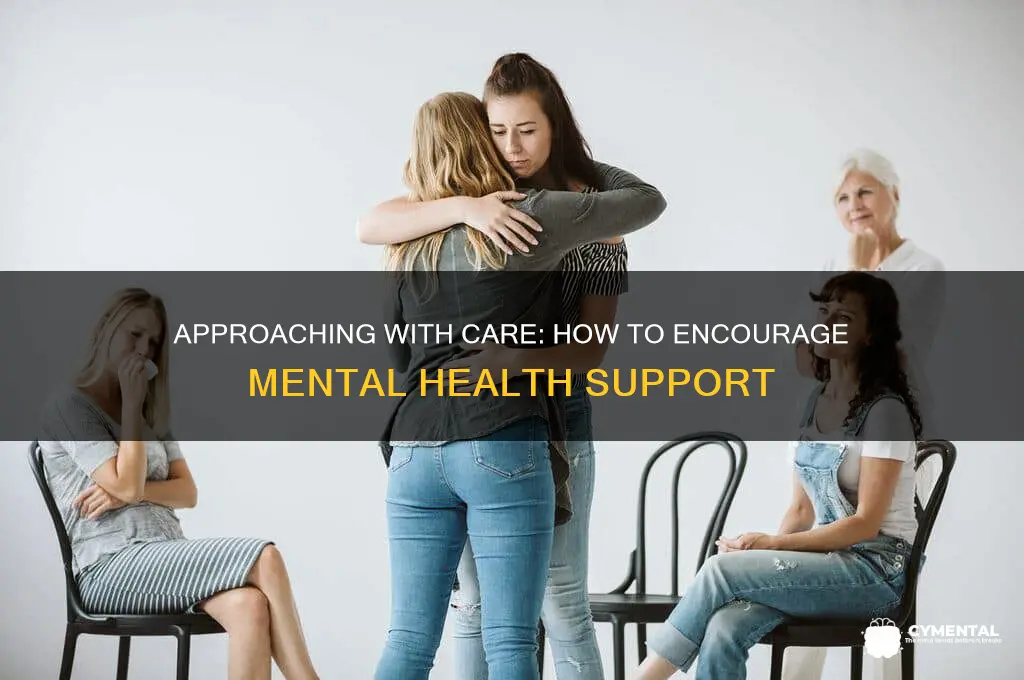
Approaching the topic of mental health with someone can be delicate but crucial for their well-being. It’s important to approach the conversation with empathy, respect, and genuine concern, avoiding judgment or blame. Start by expressing your care for the person and specific observations that have led you to suggest seeking help, such as changes in behavior or mood. Use I statements to share your perspective without sounding accusatory, and emphasize that seeking mental health support is a sign of strength, not weakness. Offer to help them find resources or accompany them to an appointment if they’re open to it, and reassure them that they’re not alone. Timing and privacy are key—choose a quiet, comfortable setting where they feel safe to discuss their feelings. Ultimately, the goal is to encourage them to take steps toward healing while respecting their autonomy and decisions.
Explore related products


What You'll Learn
- Recognizing Warning Signs: Notice severe mood swings, withdrawal, or self-harm behaviors that indicate mental distress
- Approaching with Empathy: Use gentle, non-judgmental language to express concern and offer support
- Suggesting Professional Help: Recommend therapy, counseling, or psychiatric evaluation as a positive step
- Offering Resources: Provide contact details for mental health hotlines, therapists, or support groups
- Following Up: Check in regularly to show ongoing support and encourage continued care

Recognizing Warning Signs: Notice severe mood swings, withdrawal, or self-harm behaviors that indicate mental distress
Severe mood swings, sudden withdrawal from social activities, and self-harm behaviors are red flags that scream for attention. These signs often indicate a person is struggling with mental distress, and ignoring them can lead to worsening conditions. For instance, a friend who once thrived in social settings now avoids gatherings, or a colleague who shifts from euphoria to deep sadness within hours. Recognizing these patterns early can be the difference between timely intervention and a crisis.
Analyzing these warning signs requires a balance of empathy and objectivity. Mood swings, for example, aren’t just about occasional irritability—they’re extreme, unpredictable shifts that disrupt daily functioning. Withdrawal isn’t merely needing alone time; it’s a persistent isolation that cuts off meaningful connections. Self-harm behaviors, such as cutting or burning, are often hidden but leave physical or emotional clues. Understanding these distinctions helps differentiate between typical stress and a cry for help.
To address these signs effectively, start by creating a safe, non-judgmental space for conversation. Use "I" statements to express concern without sounding accusatory, such as, "I’ve noticed you’ve been pulling away lately, and I’m worried about you." Offer specific examples of behaviors you’ve observed to show you’re paying attention. For self-harm, avoid panic; instead, calmly express concern and suggest professional resources like therapists or helplines. Remember, your role isn’t to diagnose but to encourage seeking help.
Comparing these warning signs to physical health emergencies can clarify their urgency. Just as chest pain warrants a trip to the ER, severe mood swings or self-harm demand immediate attention. Mental health crises are equally life-threatening, yet stigma often delays intervention. Treat these signs with the same seriousness you’d give to a broken bone or high fever. Early action can prevent long-term damage and save lives.
Practically, keep a list of local mental health resources handy, such as crisis hotlines (e.g., 988 in the U.S.) or affordable therapy options. If the person resists help, don’t force it but remain supportive. Small gestures, like checking in regularly or inviting them to low-pressure activities, can keep the door open for future conversations. Above all, prioritize your own well-being while helping others—you can’t pour from an empty cup. Recognizing these warning signs is the first step; taking action is the lifeline.
Social Media's Impact: Breaking Mental Health Stigma or Amplifying Struggles?
You may want to see also
Explore related products


Approaching with Empathy: Use gentle, non-judgmental language to express concern and offer support
Words carry weight, especially when discussing mental health. A well-intentioned but blunt "You need help" can feel accusatory, pushing someone further away. Instead, imagine a hand reaching out, not grabbing, but offering a gentle pull towards support. This is the essence of approaching with empathy.
Framing your concern as an observation rather than a judgment creates a safe space for dialogue. Instead of "You're acting strange," try "I've noticed you seem quieter lately, and I'm wondering how you're doing." This phrasing acknowledges the change without assigning blame or labeling it as abnormal.
Think of it as a dance, leading with sensitivity. Start with open-ended questions that invite conversation: "How have you been feeling lately?" or "Is there something on your mind?" Listen actively, without interrupting or offering quick fixes. Reflect back what you hear to show understanding: "It sounds like you've been carrying a lot of stress." This validates their experience and encourages them to share more.
Remember, empathy isn't about fixing, it's about connecting. Avoid phrases like "Just cheer up" or "You'll be fine." These minimize their struggles and can make them feel dismissed. Instead, express your support concretely: "I'm here for you, no matter what. Would it help to talk more about this?" or "I know a great therapist who helped a friend of mine. Would you like their information?"
The key is to meet them where they are, acknowledging their reality without judgment. By using gentle language, active listening, and concrete offers of support, you create a bridge, not a barrier, towards seeking help.
Ice Baths and Mental Health: Uncovering the Mind-Body Connection
You may want to see also
Explore related products





Suggesting Professional Help: Recommend therapy, counseling, or psychiatric evaluation as a positive step
Recognizing when someone might benefit from professional mental health support is a delicate but crucial skill. Often, the first step is noticing persistent changes in behavior, mood, or functioning that seem beyond the scope of typical stress or sadness. For instance, if a friend withdraws from social activities for weeks, expresses persistent hopelessness, or struggles with daily tasks like eating or sleeping, these could be indicators of a deeper issue. However, suggesting therapy, counseling, or a psychiatric evaluation requires tact and empathy to avoid alienating the person.
Approaching the conversation with a focus on positivity and encouragement can make a significant difference. Frame professional help as a proactive, empowering choice rather than a last resort. For example, instead of saying, "You need help," try, "I’ve noticed you’ve been struggling, and I think talking to a therapist could give you some new tools to feel better." Highlight the benefits of therapy, such as gaining insight, learning coping strategies, or having a safe space to process emotions. This shifts the narrative from one of deficiency to one of growth and self-care.
It’s also helpful to normalize mental health care by sharing personal experiences or general observations. For instance, you could say, "I started seeing a counselor last year, and it’s been really helpful for managing stress," or, "A lot of people find therapy useful, even if they’re not dealing with a crisis." This reduces stigma and shows that seeking help is a common, healthy practice. If you’re unsure how to phrase your suggestion, consider offering to help them find a therapist or accompany them to the first appointment, which can ease anxiety about the process.
While suggesting professional help, be mindful of potential barriers the person might face, such as cost, accessibility, or fear of judgment. Offer practical solutions, like recommending sliding-scale clinics, online therapy platforms, or employee assistance programs. For psychiatric evaluations, emphasize that they are diagnostic tools to identify underlying issues and tailor treatment, not a sign of severity or failure. By addressing concerns and providing resources, you make the suggestion more actionable and less overwhelming.
Ultimately, the goal is to convey that seeking professional help is a sign of strength, not weakness. Use language that reinforces this idea, such as, "Taking care of your mental health is just as important as your physical health," or, "You deserve support to feel your best." Remember, your role is to encourage, not convince. If the person is resistant, respect their autonomy while leaving the door open for future conversations. Over time, your thoughtful approach may plant the seed for them to take that positive step toward healing.
Counseling for Anxiety: Effective Strategies to Manage and Overcome Fear
You may want to see also
Explore related products

$14.15 $20

$12.14 $19.99

$10.21 $18.95


Offering Resources: Provide contact details for mental health hotlines, therapists, or support groups
Directly offering resources can transform a well-intentioned but vague suggestion into actionable support. Instead of saying, “You should talk to someone,” hand over a list of local therapists, crisis hotlines, or online support groups. This removes barriers like the effort of searching and the paralysis of not knowing where to start. For instance, the Crisis Text Line (text HOME to 741741) offers immediate, anonymous support for anyone in distress, while Psychology Today’s “Find a Therapist” tool filters providers by specialty, insurance, and location. Specificity makes the next step clear, increasing the likelihood the person will act.
However, not all resources are created equal. A 20-year-old struggling with anxiety might prefer a peer-led group like Anxiety and Depression Association of America’s online forums, while a 45-year-old with PTSD may benefit from a trauma-informed therapist. Age, cultural background, and the nature of the struggle matter. For example, the Trevor Project (1-866-488-7386) caters to LGBTQ+ youth, while the National Alliance on Mental Illness (NAMI) offers family support groups for caregivers. Tailoring resources shows you’ve considered their unique needs, making the offer more personal and effective.
One caution: avoid overwhelming the person with too many options. Three to five carefully selected resources strike a balance between choice and clarity. Include a mix of immediate support (hotlines, crisis text lines) and long-term solutions (therapists, support groups). For example, pair the Substance Abuse and Mental Health Services Administration’s helpline (1-800-662-HELP) with a local therapist referral and a weekly anxiety management group. This tiered approach addresses both urgent and ongoing needs, increasing the chances they’ll find a fit.
Finally, the way you present resources matters as much as the resources themselves. Instead of saying, “Here’s a list of places to call,” try, “I found a few options that might help—this therapist specializes in what you’re going through, and this hotline is available 24/7 if you need to talk tonight.” Framing it as collaborative (“I found”) rather than prescriptive (“You should”) reduces defensiveness. Adding a personal touch, like offering to help schedule an appointment or sit with them while they call, can further ease the transition from suggestion to action.
Reflexology and Mental Health: Unlocking Natural Stress Relief and Wellness
You may want to see also
Explore related products


Following Up: Check in regularly to show ongoing support and encourage continued care
Regular check-ins after suggesting mental health support are not just polite follow-ups—they’re a lifeline. Research shows that consistent social connection significantly improves treatment adherence and recovery outcomes. A 2021 study in *Psychiatry Research* found that individuals with regular support networks were 40% more likely to continue therapy. These interactions signal to the person that their well-being matters, reducing the stigma often tied to seeking help. Without follow-ups, your initial suggestion might feel like a one-time judgment rather than genuine care.
Steps to Effective Follow-Ups:
- Set a Schedule: Aim for weekly check-ins initially, then adjust based on their response. For example, a text every Monday (“How’s your week shaping up?”) or a brief call every other Friday.
- Ask Open-Ended Questions: Instead of “Are you better?”, try “How’s the process going for you?” or “What’s been helpful so far?” This invites honest dialogue without pressure.
- Offer Specific Help: If they’re struggling to find a therapist, share resources like Psychology Today’s “Find a Therapist” tool or offer to accompany them to the first appointment.
Cautions to Keep in Mind:
Avoid overstepping boundaries. If they respond with “I’m fine” repeatedly, respect their space but leave the door open: “I’m here if you ever want to talk.” Also, don’t assume your role is to “fix” them. Your goal is to show solidarity, not become their therapist. Lastly, be mindful of your own mental health—if the conversations become emotionally draining, seek support for yourself.
Comparative Perspective:
Think of follow-ups as tending a garden, not pulling a weed. Just as plants need consistent water and sunlight, mental health support requires ongoing nurturing. A single conversation is like planting a seed—it’s the regular care afterward that helps it grow. For instance, a friend who checks in monthly after a crisis is more impactful than one who disappears after the initial suggestion.
Practical Tips for Impact:
- Use Technology: Set reminders on your phone to check in, or use apps like Marco Polo for quick, low-pressure video messages.
- Normalize Vulnerability: Share your own experiences with self-care or therapy to create a safe space for openness.
- Celebrate Progress: Acknowledge small wins, like “I noticed you seemed more at ease this week—that’s huge!” to reinforce positive steps.
By embedding follow-ups into your approach, you transform a potentially awkward conversation into a sustained partnership. It’s not about pushing someone into care but walking alongside them as they navigate their journey. Consistency, empathy, and practicality are your tools—use them wisely.
Cell Phones: Unlocking Mental Health Support and Wellness Tools
You may want to see also
Frequently asked questions
Use a calm, non-judgmental tone and express concern for their well-being. Start with "I’ve noticed…" statements, focus on specific behaviors, and suggest resources gently, like, "I think talking to a professional might help."
Acknowledge their feelings and avoid arguing. Let them know you’re there to support them, and suggest it’s okay to seek help even if they’re unsure. For example, "It’s okay to feel that way, but I’m here if you ever want to explore options."
Frame it as a suggestion rather than a demand. Share how therapy or counseling has helped others or offer to help them find a professional. Respect their autonomy while emphasizing your support.
In urgent situations, prioritize safety. Contact a mental health professional, crisis hotline, or emergency services if necessary. Let the person know you’re acting out of concern for their well-being.