Noah Parker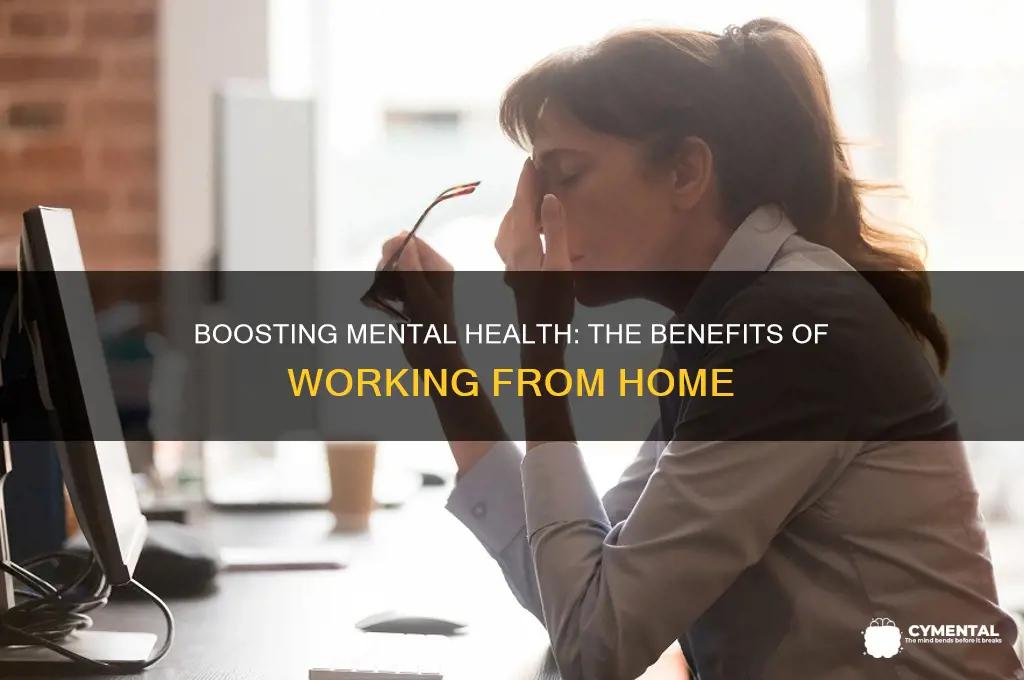
Working from home has emerged as a transformative shift in modern work culture, offering significant benefits for mental health. By eliminating daily commutes, rigid schedules, and office-related stressors, remote work fosters a more balanced and personalized environment. Employees often experience reduced anxiety and burnout, as they gain greater control over their time and workspace. The flexibility to create a routine that aligns with individual needs, such as incorporating breaks or managing personal responsibilities, contributes to improved well-being. Additionally, the absence of office distractions allows for increased focus and productivity, boosting self-esteem and job satisfaction. For many, working from home provides a sense of autonomy and comfort, ultimately promoting mental clarity and emotional resilience in both professional and personal spheres.
| Characteristics | Values |
|---|---|
| Reduced Commute Stress | Eliminates time-consuming and often stressful daily commutes, leading to lower anxiety and improved mood. |
| Increased Flexibility | Allows for better work-life balance, accommodating personal needs, family responsibilities, and self-care activities. |
| Personalized Environment | Enables customization of workspace to suit individual preferences, reducing sensory overload and enhancing comfort. |
| Fewer Workplace Distractions | Minimizes interruptions from colleagues, meetings, and office noise, improving focus and reducing stress. |
| Improved Sleep Patterns | Flexible schedules often allow for better alignment with natural sleep cycles, promoting mental well-being. |
| Reduced Social Anxiety | Benefits individuals with social anxiety by limiting face-to-face interactions and providing a safe, controlled environment. |
| Healthier Lifestyle Choices | Easier access to home-cooked meals, exercise, and breaks, contributing to physical and mental health improvements. |
| Cost Savings | Reduces expenses related to commuting, work attire, and eating out, alleviating financial stress. |
| Enhanced Autonomy | Greater control over work tasks and schedules fosters a sense of independence and job satisfaction. |
| Fewer Office Politics | Minimizes exposure to workplace conflicts and interpersonal tensions, reducing emotional strain. |
| Improved Productivity | Many individuals report higher productivity in a home setting, boosting self-esteem and mental health. |
| Accessibility for Mental Health Needs | Easier access to therapy, medication, or mental health resources without the constraints of a traditional office. |
| Reduced Exposure to Illness | Lower risk of contracting illnesses, reducing stress related to health concerns. |
| Environmental Comfort | Ability to control temperature, lighting, and noise levels, creating a more soothing work environment. |
| Time Efficiency | Saves time on commuting, allowing for more leisure or self-care activities, which positively impacts mental health. |
Explore related products




What You'll Learn
- Reduced commute stress improves overall mood and daily satisfaction
- Flexible schedules enhance work-life balance and personal well-being
- Quieter environments minimize distractions, boosting focus and productivity
- Comfortable settings reduce anxiety and increase feelings of security
- Avoiding office politics fosters a calmer, less stressful mindset

Reduced commute stress improves overall mood and daily satisfaction
The average American spends 270 hours per year commuting, according to the U.S. Census Bureau. That’s 11 full days stuck in transit, often marked by traffic jams, crowded trains, or unpredictable delays. Eliminating or reducing this daily grind through remote work directly slashes stress levels, freeing up mental bandwidth for more meaningful activities. Studies show that even a 20-minute reduction in daily commute time can lead to a 19% increase in job satisfaction, as reported by the University of the West of England. This isn’t just about saving time—it’s about reclaiming mental space.
Consider the physiological impact. Commuting triggers the body’s stress response, releasing cortisol, a hormone linked to anxiety and fatigue. A study published in *Environment and Planning A* found that commuters experience higher stress levels than non-commuters, with long-distance travelers reporting symptoms akin to chronic stress disorders. By working from home, individuals bypass this daily cortisol spike, fostering a calmer baseline mood. For those with pre-existing anxiety or sensory sensitivities, avoiding crowded public transit or noisy highways can be transformative. Practical tip: Use the time saved from commuting to engage in a 10-minute mindfulness practice or a short walk, further amplifying the stress-reducing benefits.
The psychological toll of commuting extends beyond the commute itself. The *Journal of Happiness Studies* highlights that individuals with longer commutes report lower life satisfaction, even when controlling for income and job quality. This dissatisfaction often spills into personal relationships and leisure time, creating a ripple effect of negativity. Remote work disrupts this cycle by integrating work and home life more seamlessly. For parents, the absence of a commute means more time for family meals or bedtime routines, enhancing daily satisfaction. For younger professionals, aged 25–34, who often face longer commutes, this shift can mean the difference between burnout and balance.
Critics argue that remote work can blur boundaries, leading to longer working hours. However, data from Stanford’s *Work-Life Balance Study* shows that remote workers are 13% more productive and less likely to feel overworked when they control their schedules. The key is intentionality: treat the time saved from commuting as a non-negotiable buffer for self-care or leisure. For instance, allocate 30 minutes of the reclaimed time to a hobby or exercise, and the remaining time to easing into the workday without the rush. This structured approach ensures that reduced commute stress translates into tangible improvements in mood and satisfaction.
In essence, cutting out the commute isn’t just a logistical perk—it’s a mental health intervention. By eliminating a major source of daily stress, remote work creates space for calmer mornings, more present evenings, and a greater sense of control over one’s day. For employers, encouraging remote or hybrid models isn’t just about cost savings; it’s an investment in employee well-being. For individuals, it’s a chance to redesign their days around what truly matters, not around traffic schedules or train timetables. The takeaway? Less time in transit equals more time for living.
Does Trump Require Mental Health Intervention? A Critical Analysis
You may want to see also
Explore related products


Flexible schedules enhance work-life balance and personal well-being
Flexible schedules, a hallmark of remote work, empower individuals to align their professional commitments with personal priorities, fostering a healthier work-life balance. This autonomy allows employees to structure their days around peak productivity times, personal obligations, and self-care activities. For instance, a parent might choose to work during early mornings and late evenings, freeing up afternoons to spend with children. Similarly, someone managing a chronic illness could schedule breaks for medical appointments or rest periods without the stress of requesting time off. This tailored approach reduces the conflict between work and personal life, diminishing feelings of overwhelm and burnout.
Consider the psychological benefits of such flexibility. Research shows that employees with control over their schedules report lower stress levels and higher job satisfaction. A study by the American Psychological Association found that flexible work arrangements significantly reduce work-family conflict, a major contributor to mental health issues like anxiety and depression. By eliminating rigid 9-to-5 constraints, individuals can better manage their energy levels, focusing on tasks when they feel most alert and taking breaks when needed. This not only enhances productivity but also promotes a sense of agency and well-being.
However, implementing flexible schedules requires careful planning to avoid pitfalls. Without clear boundaries, work can encroach on personal time, leading to longer hours and increased stress. To prevent this, set specific start and end times for work, even if they fall outside traditional hours. Use time-blocking techniques to allocate dedicated slots for tasks, breaks, and personal activities. Tools like calendars and task management apps can help maintain structure. Additionally, communicate your schedule with colleagues and family to manage expectations and minimize interruptions.
For maximum benefit, combine flexible scheduling with intentional self-care practices. Incorporate activities that recharge you, such as exercise, meditation, or hobbies, into your daily routine. For example, a 30-minute morning workout can boost energy and focus, while a 15-minute mindfulness session during lunch can reduce stress. Tailor these activities to your preferences and schedule them as non-negotiables. Over time, this integration of work and self-care creates a sustainable rhythm that supports both professional success and personal well-being.
In conclusion, flexible schedules are a powerful tool for enhancing work-life balance and mental health in remote work settings. By personalizing work hours, setting boundaries, and prioritizing self-care, individuals can reduce stress, increase productivity, and cultivate a fulfilling life. While it requires discipline and planning, the payoff is a healthier, more balanced existence where work complements life rather than dominates it.
Marijuana and Mental Health: Exploring Potential Benefits and Risks
You may want to see also
Explore related products


Quieter environments minimize distractions, boosting focus and productivity
One of the most immediate benefits of working from home is the ability to control your environment, particularly noise levels. Quieter surroundings are not just a luxury; they are a proven catalyst for enhanced focus and productivity. Research shows that even low-level background noise, such as office chatter or humming machinery, can reduce cognitive performance by up to 66%. By eliminating these distractions, remote workers can maintain a deeper level of concentration, completing tasks more efficiently and with fewer errors. For instance, a study published in the *Journal of Environmental Psychology* found that employees in quieter spaces completed tasks 15% faster than those in noisier environments.
To maximize this benefit, consider creating a dedicated workspace free from household noise. Use noise-canceling headphones or white noise machines to further reduce distractions. If complete silence feels too stark, opt for instrumental music or nature sounds, which have been shown to improve focus without overwhelming the brain. For those with children or roommates, setting clear boundaries—like designated quiet hours—can help maintain a productive atmosphere. Even small adjustments, such as closing a door or using a fan for background noise, can make a significant difference.
Comparatively, traditional office environments often struggle to provide this level of control. Open-plan offices, in particular, are notorious for their high noise levels, which can lead to stress, fatigue, and decreased job satisfaction. A Harvard Business Review study revealed that employees in open offices were 15% less productive than their remote counterparts, largely due to constant interruptions and noise-related distractions. Working from home, however, allows individuals to tailor their environment to their specific needs, fostering a sense of autonomy and control that directly benefits mental health.
For those who thrive in quieter settings, the shift to remote work can be transformative. A survey by FlexJobs found that 75% of respondents reported lower stress levels when working from home, with reduced noise being a key factor. This decrease in stress not only improves mental well-being but also enhances overall job performance. Employers can support this by encouraging employees to create quiet, distraction-free workspaces and providing resources like ergonomic furniture or noise-reducing tools.
In conclusion, quieter environments are a cornerstone of effective remote work, directly linking to improved mental health and productivity. By minimizing distractions, individuals can achieve a state of flow—a psychological state where they are fully immersed in a task—more frequently and for longer periods. This not only boosts efficiency but also reduces feelings of overwhelm and burnout. For anyone struggling with focus or stress in a traditional office, working from home offers a practical solution: the power to silence the noise and amplify productivity.
Empowering Minds: Effective Strategies to Support Mental Health Disorders
You may want to see also
Explore related products




Comfortable settings reduce anxiety and increase feelings of security
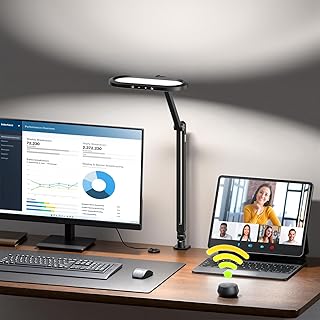
The physical environment significantly impacts mental well-being, and this is particularly evident when examining the effects of working from home. A comfortable setting, tailored to individual preferences, can act as a powerful tool in reducing anxiety and fostering a sense of security. This is not merely about aesthetics; it's about creating a space that promotes psychological safety and comfort.
The Science Behind Comfort and Security
Research in environmental psychology suggests that our surroundings can influence our emotional state and cognitive performance. A study published in the *Journal of Environmental Psychology* found that employees who had control over their workspace design reported higher levels of job satisfaction and lower stress levels. This sense of control and personalization contributes to a feeling of security, allowing individuals to focus better and manage anxiety more effectively. For instance, something as simple as adjusting the lighting to a warmer tone or adding a houseplant can make a significant difference. These small changes can lead to a 15% increase in productivity and a notable decrease in stress hormones, according to a 2020 study by the American Psychological Association.
Creating a Secure Home Office
To harness these benefits, consider the following steps when setting up your home office:
- Personalize Your Space: Add items that hold personal significance, such as family photos, artwork, or souvenirs. These visual cues can provide a sense of comfort and security, reminding you of your support network.
- Optimize Lighting: Natural light is ideal, but if that's not possible, opt for warm, soft lighting. Avoid harsh fluorescent lights, which have been linked to increased stress and anxiety.
- Incorporate Comfortable Furniture: Invest in an ergonomic chair and ensure your desk is at the right height. Physical comfort is essential for maintaining focus and reducing muscle tension, which can contribute to overall anxiety.
A Comparative Perspective
Contrast the typical office environment with a well-designed home workspace. In a traditional office, employees often have little control over their surroundings, from the layout to the noise levels. This lack of control can lead to increased stress and a sense of powerlessness. On the other hand, a home office allows for customization, enabling individuals to create an environment that suits their unique needs. For example, an introverted person might prefer a quiet, secluded corner, while someone who thrives in a more stimulating environment could set up near a window with a view.
Practical Tips for Maximum Benefit
- Experiment with Scents: Aromatherapy is a powerful tool. Lavender, for instance, is known for its calming properties and can be used in essential oil diffusers or scented candles.
- Sound Management: Control the acoustic environment by using noise-canceling headphones or playing soothing background music at a low volume.
- Regularly Declutter: A tidy space contributes to a tidy mind. Dedicate 10 minutes at the end of each workday to organizing your desk, ensuring a fresh start the next day.
By understanding the impact of our surroundings on mental health, we can strategically design our home offices to become sanctuaries of productivity and well-being. This approach not only reduces anxiety but also empowers individuals to take control of their work environment, ultimately enhancing overall job satisfaction.
Taking the First Step: A Guide to Seeking Mental Health Support
You may want to see also
Explore related products


Avoiding office politics fosters a calmer, less stressful mindset
Office politics can be a significant source of stress, often leading to anxiety, frustration, and even burnout. When working from home, employees are physically removed from the watercooler gossip, passive-aggressive emails, and power struggles that permeate many office environments. This distance creates a natural barrier, allowing individuals to focus on their tasks without the constant mental strain of navigating complex interpersonal dynamics. By eliminating this source of stress, remote work fosters a calmer mindset, enabling employees to channel their energy into productive activities rather than self-preservation.
Consider the typical office scenario: a colleague’s subtle remark during a meeting, a manager’s favoritism, or a team member’s territorial behavior. These situations demand emotional labor, forcing employees to expend mental resources on managing perceptions and relationships. At home, such interactions are minimized. Communication becomes more task-oriented, often conducted through structured channels like email or project management tools. This shift reduces the ambiguity and subjectivity that fuel office politics, creating a more straightforward and less emotionally taxing work environment.
To maximize the mental health benefits of avoiding office politics, remote workers should establish clear boundaries. Designate specific times for checking emails or attending virtual meetings to prevent constant interruptions. Use tools like Slack’s “Do Not Disturb” mode or email scheduling to manage communication flow. Additionally, cultivate a workspace that promotes focus and tranquility—whether it’s a quiet room, noise-canceling headphones, or a desk setup that minimizes distractions. These practices reinforce the separation from office stressors, allowing individuals to maintain a calmer, more balanced mindset.
A comparative analysis highlights the stark difference: in an office, employees often feel compelled to participate in political games to advance their careers or protect their interests. At home, the absence of these pressures allows for a more authentic and purpose-driven approach to work. For instance, a study by Stanford University found that remote workers reported higher job satisfaction and lower stress levels, partly due to reduced exposure to office politics. This data underscores the importance of removing such distractions to improve mental well-being.
In conclusion, avoiding office politics through remote work is a powerful way to cultivate a calmer, less stressful mindset. By creating physical and emotional distance from interpersonal conflicts, employees can focus on their tasks with greater clarity and peace. Practical steps, such as setting boundaries and optimizing the home workspace, further enhance these benefits. For those struggling with workplace stress, transitioning to remote work could be a transformative step toward better mental health.
Nurturing Your Mind: Essential Strategies for Mental Health Support
You may want to see also
Frequently asked questions
Working from home eliminates daily commutes, which are often a significant source of stress. It also allows for a more flexible schedule, reducing the pressure of rigid timelines and providing time for self-care activities like exercise or meditation.
Yes, working from home can improve work-life balance by allowing individuals to better integrate personal and professional responsibilities. The flexibility to manage household tasks or spend time with family during breaks can reduce feelings of being overwhelmed.
Working from home can alleviate anxiety by providing a comfortable, familiar environment and reducing exposure to office-related stressors like interpersonal conflicts or micromanagement. It also allows for more control over one’s workspace and pace, which can prevent burnout.
Introverts often thrive in quieter, less stimulating environments, which working from home provides. It reduces the mental exhaustion that can come from constant social interaction in an office, allowing introverts to recharge and focus more effectively.