Noah Parker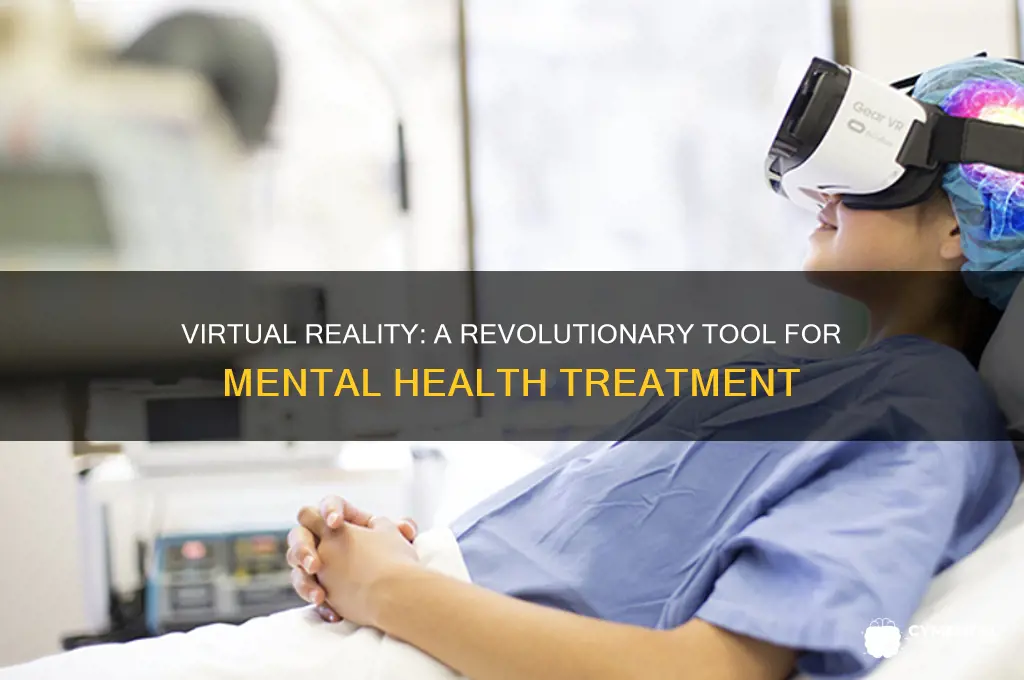
Virtual reality (VR) is emerging as a transformative tool in mental health treatment, offering immersive and controlled environments to address a range of psychological conditions. By simulating real-life scenarios, VR allows therapists to safely expose patients to triggers for anxiety, phobias, or PTSD, facilitating gradual desensitization and coping skill development. Beyond exposure therapy, VR is also being used to create calming, therapeutic spaces for stress reduction and mindfulness practices. Its interactive nature engages users in ways traditional therapy cannot, making it particularly effective for treating conditions like depression, social anxiety, and even schizophrenia. As technology advances, VR’s potential to revolutionize mental health care by providing personalized, accessible, and evidence-based interventions continues to grow.
Explore related products


What You'll Learn
- Exposure Therapy for Phobias: VR creates safe environments to confront fears gradually, reducing anxiety effectively
- PTSD Treatment: Simulated scenarios help patients process trauma in a controlled, therapeutic setting
- Social Skills Training: VR provides practice for social interactions, aiding those with anxiety or autism
- Pain Management: Immersive experiences distract from chronic pain, reducing reliance on medication
- Mindfulness and Relaxation: VR environments promote calmness, aiding stress reduction and mental well-being

Exposure Therapy for Phobias: VR creates safe environments to confront fears gradually, reducing anxiety effectively
Virtual reality (VR) has emerged as a transformative tool in exposure therapy for phobias, offering a controlled, immersive environment to confront fears without real-world risks. Unlike traditional methods, VR allows therapists to tailor scenarios precisely to a patient’s anxiety triggers, such as heights, spiders, or flying, while ensuring physical safety. This gradual exposure, known as systematic desensitization, retrains the brain’s fear response by repeatedly presenting the feared stimulus in a manageable way. Studies show that VR exposure therapy can reduce phobia symptoms by up to 70% after just 8–12 sessions, making it a highly effective and efficient treatment option.
To implement VR exposure therapy, therapists begin by assessing the patient’s specific phobia and anxiety levels, often using standardized scales like the Fear Questionnaire. Next, they design a customized VR program that starts with low-intensity scenarios and progressively increases difficulty. For example, a patient with acrophobia (fear of heights) might begin by standing on a virtual balcony, then advance to crossing a narrow bridge or climbing a skyscraper. Each session typically lasts 30–60 minutes, with the therapist guiding the patient through relaxation techniques to manage anxiety. Over time, this repeated exposure helps reduce the fear response, as the brain learns the feared object or situation is not an actual threat.
One of the key advantages of VR exposure therapy is its ability to simulate scenarios that are impractical, costly, or dangerous to recreate in real life. For instance, a patient with aviophobia (fear of flying) can experience a full flight simulation, from boarding the plane to turbulence, without leaving the therapist’s office. This accessibility extends treatment to individuals who might otherwise avoid therapy due to logistical barriers. Additionally, VR allows for precise control over variables like intensity and duration, enabling therapists to fine-tune the experience for maximum therapeutic benefit. Practical tips for patients include wearing comfortable clothing, staying hydrated, and practicing deep breathing exercises before and during sessions to enhance relaxation.
Despite its effectiveness, VR exposure therapy is not without limitations. Some patients may experience cybersickness, a form of motion sickness caused by VR headsets, which can disrupt treatment. Therapists should monitor for this and adjust session lengths or provide breaks as needed. Cost is another consideration, as high-quality VR equipment and software can be expensive, though prices are decreasing as the technology becomes more widespread. For best results, VR exposure therapy should be part of a comprehensive treatment plan that includes cognitive-behavioral techniques and, if necessary, medication. When used correctly, VR offers a powerful, evidence-based approach to overcoming phobias and improving mental health.
Supporting Your Partner: Strategies to Ease Her Mental Load
You may want to see also
Explore related products


$39.99 $59.99



PTSD Treatment: Simulated scenarios help patients process trauma in a controlled, therapeutic setting
Virtual reality (VR) is revolutionizing PTSD treatment by immersing patients in simulated scenarios that mirror their traumatic experiences. Unlike traditional exposure therapy, which relies on imagination or real-world triggers, VR provides a controlled, customizable environment. Therapists can adjust the intensity of stimuli—such as sounds, visuals, or interactions—to match the patient’s readiness, ensuring a safe and gradual reprocessing of trauma. For instance, a veteran with combat-related PTSD might begin with distant gunfire and gradually progress to more complex scenes, all while monitored by a clinician. This precision makes VR particularly effective for individuals who struggle with traditional methods due to overwhelming anxiety or avoidance behaviors.
The process typically involves 8–12 sessions, each lasting 45–60 minutes, during which patients wear a VR headset and engage with the simulated environment. Therapists use a control panel to modify elements like the time of day, crowd density, or even the presence of specific objects that trigger distress. For example, a survivor of a car accident might first encounter a quiet road before gradually introducing traffic or the sound of screeching tires. This systematic desensitization helps patients build resilience and regain control over their emotional responses. Studies show that VR exposure therapy can reduce PTSD symptoms by up to 50% in adults aged 18–65, with effects lasting beyond the treatment period.
One of the key advantages of VR is its ability to address trauma in a way that feels both real and manageable. Patients can pause or exit the simulation at any time, reducing the risk of retraumatization. Additionally, VR allows for scenarios that would be impossible or unethical to recreate in real life, such as revisiting a war zone or a natural disaster. This flexibility enables therapists to tailor the experience to the patient’s specific trauma, enhancing the relevance and effectiveness of the treatment. For adolescents and young adults, VR can be particularly engaging, as it leverages technology they are often familiar with, making therapy less intimidating.
However, implementing VR in PTSD treatment requires careful consideration. Clinicians must ensure patients are psychologically stable enough to begin exposure therapy, as premature immersion could exacerbate symptoms. It’s also crucial to integrate VR sessions with other therapeutic modalities, such as cognitive-behavioral therapy, to help patients process their emotions and develop coping strategies. Patients should be briefed on what to expect and given tools to manage distress, such as grounding techniques or breathing exercises. While VR is not a standalone cure, it is a powerful adjunct that can accelerate healing when used thoughtfully.
In conclusion, VR-simulated scenarios offer a groundbreaking approach to PTSD treatment by providing a safe, controlled space for patients to confront and process their trauma. With its customizable nature and proven efficacy, VR is poised to become a cornerstone of mental health care, particularly for those who have not responded to conventional therapies. As technology advances and accessibility improves, more individuals could benefit from this innovative method, transforming the way we approach trauma recovery.
Supporting NJ Residents: Mental Health Disability Assistance and Resources
You may want to see also
Explore related products


Social Skills Training: VR provides practice for social interactions, aiding those with anxiety or autism
Virtual reality (VR) offers a controlled, consequence-free environment where individuals can practice social interactions, making it an invaluable tool for those with social anxiety or autism spectrum disorder (ASD). Unlike real-world scenarios, VR allows users to rehearse conversations, interpret facial expressions, and navigate social cues without the fear of judgment or failure. This repetitive, low-stakes practice builds confidence and competence, translating to improved real-life interactions. For instance, a study published in the *Journal of Autism and Developmental Disorders* found that adolescents with ASD who underwent VR social skills training showed significant improvements in eye contact and conversational turn-taking after just eight sessions.
To implement VR social skills training effectively, start with short, structured scenarios tailored to the user’s needs. For children with autism, this might involve practicing introductions or responding to peer invitations in a virtual classroom. For adults with social anxiety, scenarios could include ordering coffee at a café or participating in a workplace meeting. Each session should last 20–30 minutes, with a focus on gradual exposure to more complex interactions. Incorporate real-time feedback, such as visual cues for appropriate responses or post-session debriefs with a therapist, to reinforce learning. Consistency is key—aim for 2–3 sessions per week over 6–8 weeks to see measurable progress.
One of the most compelling advantages of VR in this context is its ability to simulate high-stress social situations safely. For example, a person with anxiety can practice public speaking in front of a virtual audience, adjusting the crowd size or reaction intensity as they build resilience. Similarly, individuals with ASD can rehearse job interviews, learning to manage sensory overload and maintain composure. These simulations are not just about repetition but also about emotional regulation—users can pause, rewind, or reset the scenario if they feel overwhelmed, a luxury not available in real life.
However, VR social skills training is not without its limitations. The technology’s effectiveness depends heavily on the quality of the content and the user’s engagement. Poorly designed scenarios can feel unrealistic or fail to address specific challenges, undermining the training’s impact. Additionally, VR should complement, not replace, traditional therapy. A therapist’s guidance is essential to tailor the experience, interpret progress, and bridge the gap between virtual practice and real-world application. For optimal results, combine VR sessions with role-playing exercises or group therapy to reinforce skills in a social context.
In conclusion, VR social skills training is a powerful, evidence-based intervention for individuals with anxiety or autism, offering a safe space to learn and grow. By leveraging its immersive capabilities and incorporating structured, personalized scenarios, it empowers users to navigate social interactions with greater ease. While it’s not a standalone solution, when integrated thoughtfully into a broader treatment plan, VR can be a game-changer for those seeking to improve their social confidence and competence.
Sleep's Healing Power: Boosting Mental Health and Emotional Well-Being
You may want to see also
Explore related products

$81.61 $89.97


$80.37 $89.97

$81.19 $89.97


Pain Management: Immersive experiences distract from chronic pain, reducing reliance on medication
Chronic pain affects over 20% of adults globally, often leading to dependency on opioids and other medications with significant side effects. Virtual reality (VR) offers a non-pharmacological alternative by immersing patients in engaging, distracting environments. Studies show that VR can reduce pain intensity by up to 30% during sessions, as the brain prioritizes processing the immersive experience over pain signals. For instance, burn patients undergoing wound care reported lower pain levels when using VR compared to traditional methods, decreasing their need for morphine by 50% during procedures.
Implementing VR for pain management requires careful consideration of the patient’s condition and the type of immersive experience. For chronic back pain, calming nature scenes or guided meditation in VR can reduce stress and pain perception. For acute pain, such as post-surgical recovery, interactive games or virtual tours can divert attention more effectively. Sessions typically last 20–30 minutes, with frequency depending on the severity of pain. Clinicians should start with short trials to assess tolerance, especially in older adults or those with motion sensitivity.
While VR shows promise, it’s not a one-size-fits-all solution. Patients with severe anxiety or claustrophobia may find headsets uncomfortable, and prolonged use can cause eye strain or headaches. Cost remains a barrier, as high-quality VR systems range from $300 to $1,000, though rental programs are emerging in some healthcare settings. Combining VR with cognitive-behavioral therapy (CBT) enhances outcomes, as patients learn pain coping strategies alongside distraction techniques. For example, a 12-week program integrating VR and CBT reduced chronic pain symptoms by 40% in participants aged 40–65.
Adopting VR for pain management involves collaboration between patients, healthcare providers, and technologists. Start by selecting VR content tailored to the patient’s pain type and preferences. Monitor usage to avoid overstimulation, and educate patients on balancing VR with physical activity and relaxation techniques. As research advances, VR could become a standard tool in pain clinics, offering a safer, more engaging alternative to medication for millions. Its potential lies not just in distraction, but in empowering patients to reclaim control over their pain.
Supporting Loved Ones: Effective Ways to Aid Severe Mental Health Struggles
You may want to see also
Explore related products



Mindfulness and Relaxation: VR environments promote calmness, aiding stress reduction and mental well-being
Virtual reality (VR) offers a unique avenue for mindfulness and relaxation by immersing users in serene, controlled environments designed to reduce stress and enhance mental well-being. Unlike traditional methods, VR can transport individuals to tranquil settings—such as a beach at sunset, a forest canopy, or a meditative garden—instantly and without physical travel. This immediacy allows users to access calming experiences on demand, making it a practical tool for managing acute stress or anxiety. Studies show that even brief sessions, as short as 10–15 minutes, can significantly lower cortisol levels, the hormone associated with stress.
Consider the process of using VR for relaxation: users don a headset and are guided through mindfulness exercises, such as deep breathing or body scans, while surrounded by soothing visuals and sounds. For example, a VR program might place users in a virtual mountain retreat, where they follow a narrator’s instructions to focus on their breath while listening to the gentle rustle of leaves and distant bird calls. This multisensory approach enhances engagement, making mindfulness practices more accessible for those who struggle with traditional meditation. Research indicates that VR-based mindfulness can be particularly effective for younger adults (ages 18–35) who are comfortable with technology and seek dynamic ways to manage stress.
However, it’s essential to approach VR mindfulness with caution. Prolonged use of VR headsets can cause discomfort, such as eye strain or headaches, so sessions should be limited to 20–30 minutes at a time. Additionally, not all VR environments are created equal; poorly designed programs may lack the therapeutic elements needed to induce relaxation. Users should prioritize applications developed in collaboration with mental health professionals, ensuring the content is evidence-based and tailored to specific needs. For instance, programs like *Nature Treks VR* or *Guided Meditation VR* are widely recognized for their effectiveness in promoting calmness.
A comparative analysis reveals that VR mindfulness holds distinct advantages over traditional relaxation methods. While apps or audio guides rely solely on auditory cues, VR engages multiple senses, creating a more immersive and distracting-free experience. This is particularly beneficial for individuals with racing thoughts or those who find it challenging to focus in noisy environments. Moreover, VR can simulate scenarios that are difficult to replicate in real life, such as floating in space or walking through a virtual Zen garden, offering novel ways to achieve relaxation.
In conclusion, VR environments are a powerful tool for fostering mindfulness and relaxation, providing an accessible and engaging way to combat stress. By combining immersive technology with evidence-based practices, VR offers a modern solution for improving mental well-being. Practical tips include starting with short sessions, choosing professionally vetted programs, and ensuring a comfortable physical setup to maximize benefits. As the field evolves, VR mindfulness is poised to become an integral part of mental health treatment, offering a calming escape for those in need.
Mental Health Attitudes: Impact on Help-Seeking Behavior and Service Utilization
You may want to see also
Frequently asked questions
VR can create immersive, controlled environments to simulate real-life scenarios, helping patients confront and manage fears, anxieties, or traumas in a safe and therapeutic setting.
VR therapy has shown promise in treating conditions like anxiety disorders (e.g., phobias, PTSD), depression, addiction, and even eating disorders by providing exposure therapy, relaxation techniques, and cognitive-behavioral interventions.
Studies suggest VR therapy can be as effective as traditional methods for certain conditions, particularly when combined with professional guidance. Its immersive nature often enhances engagement and accelerates progress.
Some users may experience motion sickness, discomfort, or temporary disorientation. Additionally, VR should be used under professional supervision to avoid unintended psychological distress or over-reliance on technology.
While VR technology is becoming more affordable, access remains limited by cost, availability of specialized equipment, and the need for trained therapists. However, its use is growing in clinical and research settings.