Harper Lewis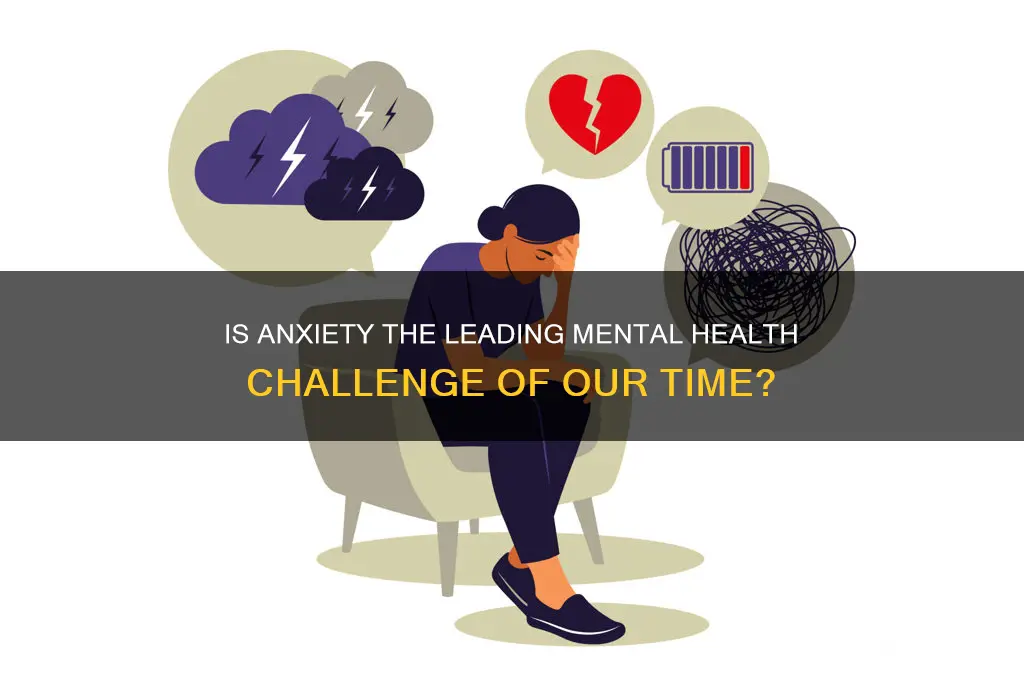
Anxiety has emerged as one of the most prevalent mental health issues globally, with its impact extending across age groups, cultures, and socioeconomic backgrounds. Often referred to as the silent epidemic, anxiety disorders affect millions of individuals, manifesting in symptoms such as excessive worry, panic attacks, and debilitating fear. While depression and other conditions are also significant, anxiety’s widespread reach and its role as a gateway to other mental health challenges have sparked debates about whether it should be considered the number one mental health issue. Factors such as increased societal pressures, technological overload, and the uncertainties of modern life have contributed to its rise, making it a critical focus for researchers, healthcare providers, and policymakers alike. Understanding its prevalence, causes, and treatment options is essential to addressing this growing concern and improving overall mental well-being.
| Characteristics | Values |
|---|---|
| Prevalence | Anxiety disorders are the most common mental health disorders globally, affecting approximately 284 million people (4% of the population) as of 2021 (WHO). |
| Age of Onset | Often begins in childhood, adolescence, or early adulthood, with median onset around 11 years old. |
| Gender Disparity | More prevalent in females (6.8%) compared to males (3.6%) globally. |
| Types | Includes generalized anxiety disorder (GAD), panic disorder, social anxiety disorder, specific phobias, and others. |
| Comorbidity | Frequently co-occurs with other mental health issues like depression, substance abuse, and sleep disorders. |
| Impact | Significantly affects quality of life, productivity, and physical health; associated with increased risk of chronic illnesses. |
| Treatment Gap | Only about 36.9% of individuals with anxiety disorders receive treatment, highlighting a significant gap in care. |
| Economic Burden | Estimated global economic cost of anxiety disorders exceeds $1 trillion annually in lost productivity and healthcare expenses. |
| Risk Factors | Genetic predisposition, environmental stressors, trauma, and neurobiological factors contribute to development. |
| Prevention | Early intervention, stress management, and psychoeducation can reduce the risk and severity of anxiety disorders. |
Explore related products


$6.79 $14.99


What You'll Learn

Prevalence of Anxiety Disorders
Anxiety disorders affect approximately 284 million people globally, making them the most prevalent mental health conditions worldwide. According to the World Health Organization (WHO), one in every 13 people experiences anxiety, with women being twice as likely as men to be diagnosed. These disorders encompass a range of conditions, including generalized anxiety disorder (GAD), panic disorder, social anxiety disorder, and specific phobias, each with distinct symptoms but a shared foundation of excessive fear and worry.
Consider the workplace, where anxiety disorders often manifest subtly but impact productivity significantly. A study by the Anxiety and Depression Association of America (ADAA) found that employees with untreated anxiety disorders cost employers an estimated $1,660 annually in lost productivity per person. Symptoms like difficulty concentrating, irritability, and fatigue can hinder performance, yet only 37% of affected employees seek treatment. Employers can mitigate this by offering mental health resources, such as Employee Assistance Programs (EAPs) or flexible work arrangements, which have been shown to reduce absenteeism by up to 27%.
Among adolescents, anxiety disorders are particularly concerning, with 31.9% of teens aged 13–18 experiencing an anxiety disorder annually. The pressures of academic performance, social media, and uncertain futures contribute to this rise. Early intervention is critical; cognitive-behavioral therapy (CBT) has a success rate of 50–75% in treating adolescent anxiety, often within 12–16 sessions. Parents and educators can support teens by fostering open communication, encouraging mindfulness practices, and limiting screen time to less than two hours daily, as excessive social media use correlates with higher anxiety levels.
Globally, the prevalence of anxiety disorders varies by region, with North America reporting the highest rates (8% of the population) compared to regions like Asia (3%). However, underreporting in low-income countries due to stigma and lack of access to mental health services skews these statistics. For instance, in sub-Saharan Africa, only 10% of individuals with mental health conditions receive treatment. Increasing access to affordable, culturally sensitive mental health care is essential to addressing this disparity. Teletherapy platforms, which have seen a 65% increase in usage since 2020, offer a promising solution by bridging geographical and cultural gaps.
Finally, the COVID-19 pandemic exacerbated anxiety disorders, with global prevalence increasing by 25% in the first year alone. Lockdowns, economic instability, and health fears created a perfect storm for heightened anxiety. However, this crisis also accelerated mental health awareness and innovation. Virtual therapy sessions became the norm, and apps like Calm and Headspace saw a 30% surge in users. Moving forward, integrating these digital tools into long-term mental health strategies could help sustain the progress made in reducing stigma and improving access to care.
Supporting Employee Mental Health: Strategies for Compassionate Workplace Management
You may want to see also
Explore related products



Impact on Daily Functioning
Anxiety disorders affect approximately 40 million adults in the United States alone, making them the most common mental health issue. Yet, their impact extends far beyond mere statistics. For those grappling with anxiety, daily functioning can become a minefield of challenges, where even mundane tasks require Herculean effort. Consider the simple act of leaving the house: what should take minutes can stretch into hours as intrusive thoughts and physical symptoms—like rapid heartbeat or dizziness—create barriers. This disruption isn’t occasional; it’s chronic, eroding productivity, relationships, and overall quality of life.
Take, for instance, a 32-year-old professional who experiences generalized anxiety disorder. Despite excelling in their field, they spend nights rehearsing conversations and mornings battling nausea before work. Their performance suffers not from lack of skill, but from the invisible weight of anxiety. This example illustrates how anxiety doesn’t discriminate—it infiltrates every aspect of life, from career to personal routines. Even self-care practices, like exercise or meal preparation, can become daunting when anxiety dictates energy levels and focus.
To mitigate these effects, practical strategies are essential. Cognitive-behavioral therapy (CBT) is a proven method, often recommended in 12–20 sessions, to reframe negative thought patterns. Pairing CBT with mindfulness techniques, such as 10-minute daily meditation, can further reduce symptoms. For immediate relief, grounding exercises—like naming five things you see, four you touch, and so on—can halt spiraling anxiety in real-time. However, caution is necessary: over-reliance on avoidance behaviors (e.g., skipping social events) can exacerbate isolation.
Comparatively, while depression often manifests as withdrawal, anxiety’s impact is more insidious. It doesn’t just pull individuals inward; it creates a constant state of hypervigilance that drains resources. Unlike stress, which is situational and temporary, anxiety persists, often without clear triggers. This distinction is critical for understanding why anxiety’s toll on daily functioning is uniquely debilitating—it’s not just about feeling overwhelmed; it’s about living in a perpetual state of fight-or-flight.
In conclusion, anxiety’s grip on daily functioning is both profound and pervasive. It transforms the ordinary into obstacles, demanding tailored strategies for management. By recognizing its specific challenges and adopting evidence-based tools, individuals can reclaim control, turning the tide against this pervasive mental health issue.
Navigating the Path to Mental Health Diagnosis: A Comprehensive Guide
You may want to see also
Explore related products



Comparison to Other Mental Health Issues
Anxiety disorders affect approximately 40 million adults in the United States alone, making them the most prevalent mental health issue. However, prevalence doesn’t equate to severity or complexity. Depression, for instance, often co-occurs with anxiety but carries a higher risk of suicide, with over 700,000 people dying globally each year due to depressive disorders. While anxiety may be more widespread, its impact on daily functioning varies widely—some individuals manage symptoms effectively, while others experience debilitating panic attacks or agoraphobia. This contrast highlights the need to compare anxiety not just in numbers, but in depth and consequence.
Consider bipolar disorder, a condition marked by extreme mood swings that affect roughly 45 million people worldwide. Unlike anxiety, which often manifests as persistent worry or fear, bipolar disorder involves episodes of mania and depression that can last weeks or months. Treatment for bipolar disorder typically requires mood stabilizers like lithium (dosage: 900–1,800 mg/day) or antipsychotics, whereas anxiety is often managed with SSRIs (e.g., sertraline 50–200 mg/day) or therapy. The episodic nature of bipolar disorder and its potential for psychosis differentiate it from anxiety, which tends to be chronic but less acutely disruptive in most cases.
Schizophrenia, affecting about 20 million people globally, presents another stark comparison. This severe disorder involves hallucinations, delusions, and cognitive disorganization, often requiring lifelong antipsychotic medication (e.g., olanzapine 10–20 mg/day). Anxiety, while distressing, rarely involves such profound detachment from reality. However, both conditions can lead to social isolation—schizophrenia due to symptoms, anxiety due to avoidance behaviors. This overlap underscores the importance of tailored interventions: cognitive-behavioral therapy (CBT) for anxiety, and a combination of medication and social skills training for schizophrenia.
Eating disorders, such as anorexia nervosa and bulimia, offer a different lens for comparison. These conditions affect approximately 9% of the global population and have the highest mortality rate of any mental illness, often due to medical complications from malnutrition. Anxiety, while commonly comorbid with eating disorders, does not typically pose a direct physical threat. However, both conditions share a perfectionist tendency and fear-based thinking. Treatment for eating disorders involves nutritional rehabilitation alongside psychotherapy, whereas anxiety treatment focuses on exposure and response prevention. This distinction emphasizes the need to address the unique core drivers of each disorder.
In practical terms, understanding these comparisons helps clinicians and individuals prioritize care. For example, a 25-year-old with generalized anxiety disorder might benefit from mindfulness techniques and SSRIs, while a peer with early-onset schizophrenia requires immediate antipsychotic intervention and family education. Similarly, a teenager with anxiety-related school refusal can improve through gradual exposure therapy, whereas anorexia demands urgent nutritional intervention. By recognizing the distinct features and treatments of each condition, we can move beyond prevalence statistics to address the nuanced realities of mental health.
Loving Through Challenges: Supporting Partners with Mental Health Issues
You may want to see also
Explore related products


$16.95 $19.99


Causes and Risk Factors
Anxiety disorders affect over 40 million adults in the United States alone, making them the most prevalent mental health issue. Understanding the causes and risk factors is crucial for prevention and early intervention. Genetic predisposition plays a significant role, as individuals with a family history of anxiety disorders are 2 to 6 times more likely to develop one themselves. This hereditary link underscores the importance of genetic screening and family medical history in assessing risk.
Environmental stressors act as catalysts, often triggering anxiety in those already genetically predisposed. Chronic stress, whether from work, relationships, or financial instability, can overwhelm the body’s stress response system, leading to persistent anxiety. For instance, employees in high-pressure jobs are 80% more likely to report anxiety symptoms compared to those in low-stress roles. Practical tips for mitigating this include setting boundaries, practicing mindfulness, and incorporating stress-reduction techniques like deep breathing exercises or progressive muscle relaxation.
Developmental factors, particularly in childhood and adolescence, contribute significantly to anxiety risk. Traumatic experiences, such as abuse or neglect, can alter brain chemistry and increase vulnerability. Children who experience trauma are 3 times more likely to develop anxiety disorders later in life. Early intervention, such as trauma-focused cognitive behavioral therapy (TF-CBT), has proven effective in reducing long-term risk. Parents and caregivers should remain vigilant for signs of anxiety in children, such as excessive worry, sleep disturbances, or avoidance behaviors, and seek professional help promptly.
Lifestyle choices also play a critical role in anxiety development. Poor sleep hygiene, excessive caffeine intake, and sedentary behavior are known contributors. For example, consuming more than 400 mg of caffeine daily (equivalent to 4-5 cups of coffee) can exacerbate anxiety symptoms. Adopting healthier habits, such as maintaining a consistent sleep schedule, limiting caffeine, and engaging in regular physical activity, can significantly reduce anxiety risk. Even moderate exercise, like 30 minutes of brisk walking 5 days a week, has been shown to lower anxiety levels by up to 20%.
Finally, underlying medical conditions and substance use can complicate anxiety risk. Chronic illnesses like thyroid disorders or cardiovascular disease often co-occur with anxiety, while substance abuse, particularly alcohol and benzodiazepines, can both mask and worsen symptoms. Individuals with co-occurring conditions should work closely with healthcare providers to manage both physical and mental health. For those struggling with substance use, evidence-based treatments like cognitive behavioral therapy (CBT) and medication-assisted therapy offer effective pathways to recovery and anxiety reduction.
Supporting Mental Health: Compassionate Responses to Help and Empower Others
You may want to see also
Explore related products


$20.22


Treatment and Management Strategies
Anxiety disorders affect approximately 40 million adults in the United States alone, making them the most prevalent mental health issue. Yet, despite their widespread impact, effective treatment and management strategies remain underutilized. Addressing anxiety requires a multifaceted approach that combines evidence-based therapies, lifestyle adjustments, and, in some cases, medication. The goal is not merely symptom reduction but empowering individuals to regain control over their lives.
Therapy as the Cornerstone: Cognitive Behavioral Therapy (CBT) stands out as the gold standard for anxiety treatment. This structured, goal-oriented approach typically spans 12–20 sessions, focusing on identifying and challenging negative thought patterns. For example, a patient with generalized anxiety might learn to reframe catastrophic thinking ("I’ll fail this exam") into more realistic self-talk ("I’ve prepared well, and I can handle the outcome"). Dialectical Behavior Therapy (DBT) and Acceptance and Commitment Therapy (ACT) are also effective, particularly for individuals struggling with emotional regulation or avoidance behaviors. Group therapy can complement individual sessions, offering peer support and skill-building in a social context.
Medication: A Tool, Not a Panacea: For moderate to severe anxiety, medication can provide essential relief, often in conjunction with therapy. Selective Serotonin Reuptake Inhibitors (SSRIs) like sertraline (Zoloft) or escitalopram (Lexapro) are commonly prescribed, starting at low doses (e.g., 25 mg/day) and adjusted based on response. Benzodiazepines, such as alprazolam (Xanax), offer rapid symptom relief but carry risks of dependence and are typically recommended for short-term use. It’s critical for patients to discuss potential side effects and long-term implications with their healthcare provider, ensuring informed decision-making.
Lifestyle Modifications: Daily habits play a pivotal role in managing anxiety. Regular physical activity, such as 30 minutes of moderate exercise five times a week, has been shown to reduce anxiety symptoms by promoting endorphin release and improving sleep quality. Mindfulness practices, including meditation and deep-breathing exercises, can be integrated into routines—for instance, a 10-minute guided meditation each morning or progressive muscle relaxation before bed. Dietary choices matter too; reducing caffeine and sugar intake while increasing omega-3 fatty acids (found in fish, flaxseeds, and walnuts) can stabilize mood and energy levels.
Practical Tips for Immediate Relief: During acute anxiety episodes, grounding techniques can provide instant relief. The "5-4-3-2-1" method, which involves identifying five things you can see, four you can touch, three you can hear, two you can smell, and one you can taste, helps redirect focus away from distressing thoughts. Keeping a journal to track anxiety triggers and responses can also foster self-awareness and inform long-term strategies. For parents managing anxious children, establishing predictable routines and validating emotions without reinforcing avoidance behaviors are key.
The Role of Technology and Community: Digital tools, such as mobile apps (e.g., Calm, Headspace) and telehealth platforms, have democratized access to anxiety management resources. These can be particularly beneficial for individuals in remote areas or with scheduling constraints. Community support, whether through local support groups or online forums, reinforces the message that no one has to face anxiety alone. Combining these resources with professional treatment creates a robust support network, enhancing resilience and recovery.
By integrating therapy, medication, lifestyle changes, and practical tools, individuals can effectively manage anxiety and reclaim their lives. The key lies in personalization—tailoring strategies to fit unique needs and circumstances. With the right approach, anxiety need not be a defining limitation but a challenge that can be navigated successfully.
Silent Struggles: Mental Health Challenges in America's Shadow
You may want to see also
Frequently asked questions
Anxiety disorders are among the most prevalent mental health issues worldwide, affecting millions of people. While they are a leading concern, other conditions like depression and substance use disorders also rank highly, so it’s not definitively the "number one" issue but certainly a top priority.
Anxiety is widespread, often chronic, and can severely impact daily functioning, relationships, and overall quality of life. It frequently co-occurs with other mental health conditions, making it a critical focus for treatment and prevention efforts.
Anxiety disorders are slightly more prevalent than depression globally, but the two often overlap. Depression is still a major concern, and the distinction between the two can sometimes blur, as they share symptoms and risk factors.
While anxiety disorders have genetic and environmental factors that can increase risk, prevention strategies like stress management, healthy lifestyle choices, and early intervention can reduce the likelihood of developing severe anxiety. It’s not inevitable for everyone.