Madison Cole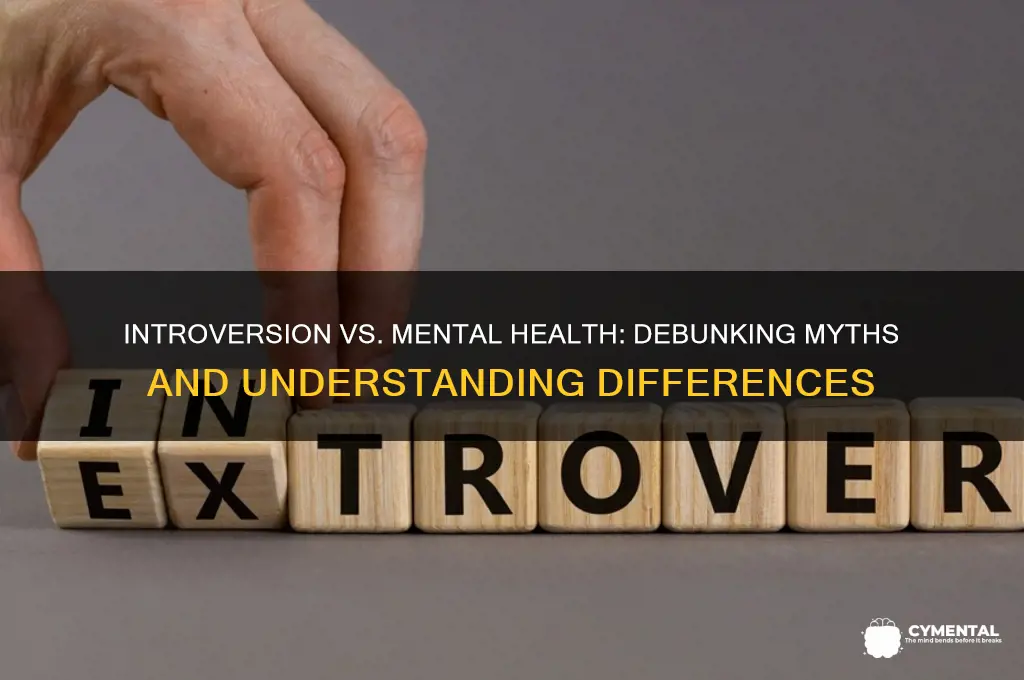
Being an introvert is often misunderstood as a mental health issue, but it is, in fact, a personality trait characterized by a preference for solitary or minimally stimulating environments. Introverts tend to focus inward, drawing energy from quiet reflection and introspection, rather than from social interactions. Unlike mental health conditions, which involve distress or impairment in functioning, introversion is a natural variation in how individuals engage with the world. While introverts may face challenges in highly social settings, this does not equate to a psychological disorder. Understanding the distinction between personality traits and mental health issues is crucial to fostering empathy and dispelling misconceptions about introversion.
| Characteristics | Values |
|---|---|
| Definition of Introversion | A personality trait characterized by a focus on internal feelings rather than external sources of stimulation. Introverts often prefer solitary activities or small groups and may feel drained after social interactions. |
| Introversion vs. Mental Health Issue | Introversion is not a mental health issue. It is a normal personality type recognized by psychologists, such as Carl Jung, and is distinct from conditions like social anxiety disorder or depression. |
| Common Misconceptions | Introversion is often mistakenly associated with shyness, social anxiety, or being antisocial. However, introverts can be socially skilled and enjoy social interactions in moderation. |
| Mental Health Implications | While introversion itself is not a mental health issue, introverts may be more prone to certain conditions like anxiety or depression if they feel pressured to conform to extroverted norms or experience social isolation. |
| Strengths of Introversion | Introverts often possess strong listening skills, empathy, creativity, and the ability to focus deeply on tasks. They may excel in roles requiring introspection and independent work. |
| Social Needs | Introverts typically require less social stimulation than extroverts but still need meaningful connections. Quality over quantity is key for their social interactions. |
| Energy Management | Introverts recharge by spending time alone or in quiet environments, whereas extroverts gain energy from social activities. |
| Cultural Perception | In some cultures, introversion may be undervalued or misunderstood, leading to pressure to be more extroverted. This can impact mental well-being if introverts feel they must suppress their natural tendencies. |
| Support for Introverts | Encouraging self-acceptance, setting boundaries, and creating environments that respect introverted needs can support mental health and well-being. |
| Professional Guidance | If an introvert experiences persistent feelings of sadness, anxiety, or difficulty functioning, consulting a mental health professional is recommended, as these symptoms may indicate an underlying condition unrelated to introversion. |
Explore related products


What You'll Learn

Introversion vs. Social Anxiety
Introversion and social anxiety are often conflated, yet they represent distinct experiences with different implications for mental health. Introversion, a personality trait characterized by a preference for solitary or minimally stimulating environments, is not inherently problematic. It is a natural variation in how individuals recharge and engage with the world. Social anxiety, however, is a mental health disorder marked by intense fear or avoidance of social situations due to worries about judgment or embarrassment. Understanding this difference is crucial for accurate self-assessment and appropriate intervention.
Consider a scenario: an introvert declines a large party invitation, opting for a quiet evening at home. This choice stems from a need for solitude, not fear. In contrast, someone with social anxiety might avoid the same party due to overwhelming dread of negative evaluation, even if they desire social connection. The introvert’s behavior is a preference; the socially anxious individual’s is a response to distress. This distinction highlights why introversion is not a mental health issue, while social anxiety requires attention and often treatment.
To differentiate the two, examine the underlying motivations and outcomes. Introverts may feel energized after alone time but can still engage socially without distress. Social anxiety, however, often leads to avoidance that disrupts daily life. Practical steps include self-reflection: ask whether avoidance is driven by preference or fear. If fear dominates, consult a mental health professional. Cognitive-behavioral therapy (CBT) and exposure therapy are evidence-based treatments for social anxiety, with studies showing significant improvement in 75% of cases after 12–16 sessions.
Persuasively, it’s essential to destigmatize introversion while addressing social anxiety. Introverts should not be pressured to conform to extroverted norms, as this can lead to unnecessary stress. Conversely, dismissing social anxiety as mere shyness delays treatment. For instance, a teenager who avoids school events due to anxiety may fall behind socially and academically, while an introverted peer thrives in smaller, more controlled interactions. Recognizing these differences fosters empathy and targeted support.
In conclusion, introversion and social anxiety are not interchangeable. Introversion is a personality trait that shapes how individuals interact with the world, while social anxiety is a treatable condition that impairs functioning. By understanding this distinction, individuals can better navigate their own experiences and support others. Practical tips include setting boundaries for introverts and seeking therapy for social anxiety. Clarity in this area promotes mental well-being and reduces misconceptions, ensuring that introversion is celebrated, not pathologized, while social anxiety is addressed with compassion and expertise.
Understanding Mental Health Challenges in Tennessee: Prevalence and Insights
You may want to see also
Explore related products

$13.99 $13.99


Misconceptions About Introverts
Introversion is often misunderstood as a mental health issue, yet it is simply a personality trait characterized by a preference for solitary or small-group interactions. One pervasive misconception is that introverts are inherently shy or lack social skills. Shyness involves anxiety in social situations, whereas introversion is about energy levels—introverts recharge through alone time, not because they fear social interaction. For instance, an introverted public speaker may excel on stage but need solitude afterward to recover. This distinction is crucial: introversion is not a deficit but a different way of engaging with the world.
Another common myth is that introverts are antisocial or dislike people. In reality, introverts value deep, meaningful connections over superficial small talk. They may have fewer friends but cultivate stronger, more intimate relationships. Consider the example of a book club: an introvert might prefer a small, focused discussion over a large, noisy gathering. This preference does not stem from a dislike of people but from a desire for quality over quantity. Labeling introverts as antisocial overlooks the richness of their social interactions.
A third misconception is that introversion is a flaw that needs fixing. Parents and educators often pressure introverted children to be more outgoing, fearing they will miss out on opportunities. However, forcing introverts into extroverted behaviors can lead to burnout and stress. Instead, fostering self-awareness and providing environments that suit their needs—such as quiet spaces or one-on-one activities—can help introverts thrive. For example, a teacher might allow an introverted student to present a project in writing rather than orally, honoring their strengths without labeling them as deficient.
Finally, introversion is sometimes conflated with depression or anxiety, though they are distinct. While introverts may enjoy solitude, they do not experience the persistent sadness or fear associated with these disorders. A practical tip for distinguishing the two: observe whether the person feels refreshed after alone time (introversion) or remains withdrawn due to overwhelming negative emotions (potential mental health issue). Misidentifying introversion as a mental health problem can lead to unnecessary stigma and prevent individuals from embracing their natural temperament. Understanding these misconceptions is key to appreciating introversion as a valid and valuable way of being.
Understanding Mental Health: Effective Strategies to Assess and Address Issues
You may want to see also
Explore related products


Introversion and Self-Esteem
Introversion is not a mental health issue, yet it often intertwines with self-esteem in ways that demand attention. Introverts, who draw energy from solitude and introspection, may face societal pressures that label their natural tendencies as deficiencies. This mismatch between their temperament and extrovert-idealized norms can erode self-worth over time. For instance, being told to "come out of your shell" or "speak up more" implies that their reserved nature is something to fix, fostering internalized criticism. Understanding this dynamic is the first step in rebuilding self-esteem grounded in self-acceptance.
Consider the workplace, a common arena where introverts might feel their self-esteem challenged. While extroverts thrive in open-plan offices and frequent meetings, introverts may feel drained and undervalued in such environments. A practical tip here is to advocate for work conditions that align with your energy levels—requesting focused work hours, written communication over constant meetings, or even remote work options. By structuring your environment to suit your needs, you reinforce the idea that your introversion is not a flaw but a unique strength. This proactive approach shifts the narrative from "fitting in" to "standing out" on your own terms.
Comparatively, extroverts often receive validation for their outgoing nature, while introverts may feel overlooked or misunderstood. This disparity can lead introverts to question their value, especially in social settings. However, self-esteem for introverts can be cultivated by reframing their contributions. For example, introverts often excel in deep, one-on-one conversations, offering thoughtful insights that foster meaningful connections. Recognizing and celebrating these qualities can counteract the societal bias toward extroversion. It’s about redefining success and worth in a way that honors your innate traits.
A cautionary note: introverts may fall into the trap of comparing themselves to extroverts, leading to feelings of inadequacy. This comparison is inherently flawed, as both temperaments have distinct strengths. Instead, focus on personal growth within your own framework. Journaling can be a powerful tool here—reflect on moments when your introverted nature served you well, whether in problem-solving, creativity, or emotional depth. Over time, this practice reinforces a positive self-image, anchoring your self-esteem in your authentic self rather than external expectations.
In conclusion, introversion and self-esteem are deeply interconnected, but the relationship can be nurtured through intentional actions. By reshaping environments, reframing contributions, and avoiding harmful comparisons, introverts can build self-esteem that thrives on self-acceptance. Remember, being an introvert is not a problem to solve—it’s a lens through which to view and embrace your unique value.
Is Anger a Disorder? Understanding Its Mental Health Implications
You may want to see also
Explore related products


Mental Health Stigma in Introverts
Introversion is often misunderstood as a mental health issue, but it’s a personality trait characterized by a focus on internal thoughts and energy conservation in social settings. Despite this, introverts frequently face stigma that conflates their reserved nature with anxiety, depression, or social phobia. This misconception stems from societal norms that valorize extroversion, leaving introverts feeling pressured to conform or risk being labeled as "antisocial" or "abnormal." Such labeling can lead to unnecessary self-doubt and, in some cases, unwarranted mental health interventions. The first step in addressing this stigma is recognizing that introversion is not a disorder but a natural variation in human behavior.
Consider the workplace, where extroverted traits like assertiveness and sociability are often rewarded. Introverts, who may prefer solitary tasks or small group interactions, can be unfairly perceived as disengaged or lacking leadership potential. This bias not only limits their career opportunities but also contributes to feelings of inadequacy. For example, an introverted employee might be passed over for a promotion because they don’t "stand out" in meetings, despite their strong performance in individual tasks. To combat this, organizations should implement policies that value diverse working styles, such as allowing remote work or providing quiet spaces for focused work. Introverts thrive in environments that respect their need for introspection and minimal social stimulation.
The stigma extends beyond professional settings into personal relationships, where introverts may be pressured to "come out of their shell" or accused of being aloof. This can lead to internalized shame, as introverts may question whether their natural tendencies are flawed. A practical tip for introverts is to set clear boundaries with friends and family, explaining that their need for alone time is not a reflection of disinterest but a way to recharge. Similarly, extroverts can educate themselves about introversion to foster understanding and reduce judgment. Open communication is key to dismantling the assumption that introversion is synonymous with mental health struggles.
Comparatively, while introversion itself is not a mental health issue, introverts may be more susceptible to certain challenges due to societal pressures. For instance, constant efforts to "act extroverted" can lead to emotional exhaustion, a condition often overlooked because it’s mistaken for shyness or lack of effort. Unlike extroverts, who gain energy from social interactions, introverts expend it, making recovery time essential. A cautionary note: introverts should avoid self-diagnosing mental health issues based on their personality traits. If feelings of sadness, anxiety, or isolation persist, consulting a mental health professional is crucial to differentiate between introversion and underlying conditions.
In conclusion, the stigma surrounding introversion as a mental health issue is rooted in societal misconceptions and extrovert-centric norms. By redefining success and social acceptability to include introverted traits, we can create a more inclusive environment. Practical steps include workplace accommodations, open dialogue, and self-awareness. Introverts are not broken extroverts; they are individuals with a unique way of engaging with the world. Embracing this diversity fosters mental well-being for all.
Supporting Student Mental Health: Strategies for Schools to Foster Well-being
You may want to see also
Explore related products

$20 $8.99


Introversion as a Personality Trait
Introversion is not a mental health issue but a fundamental aspect of personality, rooted in how individuals respond to social stimulation and manage their energy levels. Unlike extroverts, who gain energy from social interactions, introverts expend energy in such settings and recharge through solitude. This trait is part of the broader spectrum of human personality, not a disorder or deficiency. Recognizing introversion as a natural variation in human behavior is crucial for dispelling misconceptions and fostering self-acceptance.
To understand introversion, consider the role of neurobiology. Research suggests that introverts have a more sensitive dopamine reward system, making them more reactive to external stimuli. This heightened sensitivity means introverts may feel overwhelmed in highly social environments, not because they dislike people, but because their brains process social information differently. For example, an introvert might find a large party draining, while an extrovert thrives in the same setting. This difference is not pathological but a reflection of distinct neural wiring.
Practical strategies can help introverts navigate a world often designed for extroverted preferences. First, prioritize alone time to recharge, even if it’s just 15–30 minutes daily. Second, set boundaries in social situations; for instance, attend events for a limited time or choose smaller gatherings. Third, communicate your needs openly; colleagues or friends may not realize that your preference for solitude is not a rejection but a necessity. These steps empower introverts to thrive without feeling pressured to conform to extroverted norms.
Comparing introversion to mental health issues highlights the importance of accurate self-perception. Conditions like social anxiety disorder involve fear and avoidance of social situations due to distress, whereas introversion involves a preference for quieter environments without inherent anxiety. Misidentifying introversion as a problem can lead to unnecessary self-criticism or misguided treatment. Instead, embracing introversion as a strength allows individuals to leverage their traits, such as deep focus, empathy, and thoughtful decision-making, in both personal and professional contexts.
Finally, societal attitudes toward introversion are evolving, but stigma persists. Educators, employers, and policymakers must create inclusive environments that value diverse personality types. For instance, workplaces can offer quiet spaces or flexible collaboration options, while schools can incorporate independent learning opportunities. By normalizing introversion, we reduce the pressure on introverts to "fix" themselves and instead celebrate the richness they bring to human diversity. Introversion is not a problem to solve—it’s a perspective to honor.
Healing Minds: Practical Steps to Overcome Mental Health Challenges
You may want to see also
Frequently asked questions
No, being an introvert is not a mental health issue. It is a personality trait characterized by a preference for quieter, less stimulating environments and a tendency to feel more energized through solitary activities or small group interactions.
Yes, introversion can sometimes be mistaken for social anxiety or depression because introverts may avoid large social gatherings or need alone time. However, introversion is a natural personality type, while social anxiety and depression are mental health conditions that involve distress or impairment.
There is no evidence to suggest that introverts struggle with mental health more than extroverts. Mental health challenges can affect individuals of any personality type, and being an introvert does not inherently increase the risk of mental health issues.
No, introverts should not seek therapy to change their personality type. Therapy is beneficial for addressing specific mental health concerns or personal challenges, but being an introvert is not something that needs to be "fixed." Embracing one's introverted nature is healthy and empowering.
Introversion can influence how individuals approach relationships and careers, but it is not a barrier to success. Introverts often thrive in roles that allow for focused, independent work and can build deep, meaningful relationships by prioritizing quality over quantity of social interactions.