Harper Lewis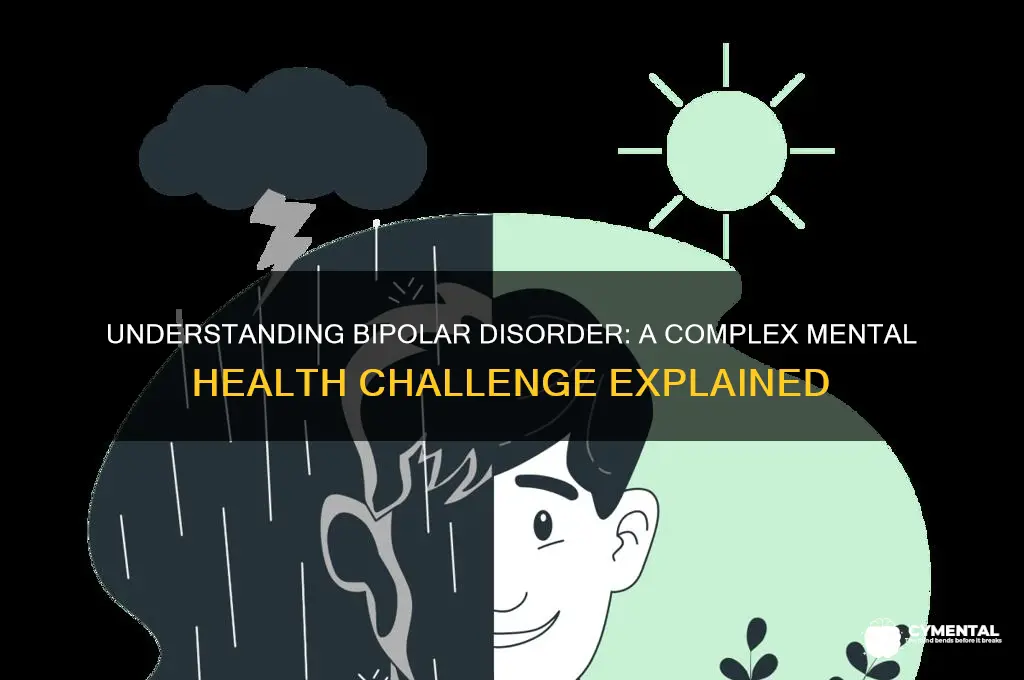
Bipolar disorder is a complex and often misunderstood mental health condition characterized by extreme mood swings that include emotional highs (mania or hypomania) and lows (depression). These shifts can significantly impact daily functioning, relationships, and overall quality of life. While it is classified as a mental health issue, bipolar disorder is more than just mood fluctuations; it involves biological, genetic, and environmental factors that contribute to its development. Recognizing it as a legitimate mental health concern is crucial for reducing stigma, promoting early diagnosis, and ensuring access to effective treatment options such as medication, therapy, and lifestyle adjustments. Understanding bipolar disorder as a mental health issue is the first step toward fostering empathy and support for those affected.
| Characteristics | Values |
|---|---|
| Definition | Bipolar disorder is a mental health condition characterized by extreme mood swings that include emotional highs (mania or hypomania) and lows (depression). |
| Classification | Recognized as a mental health disorder in the Diagnostic and Statistical Manual of Mental Disorders (DSM-5) and International Classification of Diseases (ICD-11). |
| Types | Bipolar I Disorder, Bipolar II Disorder, Cyclothymic Disorder, and Other Specified and Unspecified Bipolar and Related Disorders. |
| Symptoms (Mania) | Elevated mood, increased energy, irritability, racing thoughts, decreased need for sleep, risky behavior, and grandiosity. |
| Symptoms (Depression) | Persistent sadness, loss of interest, fatigue, difficulty concentrating, changes in appetite or sleep, and thoughts of death or suicide. |
| Prevalence | Approximately 1-2% of the global population, with similar rates across cultures and ethnicities. |
| Causes | Genetic, environmental, and neurobiological factors, including imbalances in brain chemicals and structural brain changes. |
| Diagnosis | Clinical assessment by a mental health professional, often involving mood charting and ruling out other conditions. |
| Treatment | Medication (mood stabilizers, antipsychotics, antidepressants), psychotherapy (CBT, family-focused therapy), and lifestyle changes. |
| Prognosis | Manageable with proper treatment, but requires lifelong management to prevent relapse and improve quality of life. |
| Comorbidities | Often co-occurs with anxiety disorders, substance abuse, ADHD, and personality disorders. |
| Impact | Affects personal relationships, work, and daily functioning if untreated; increases risk of suicide. |
| Research | Ongoing studies focus on genetic markers, neurobiology, and personalized treatment approaches. |
Explore related products


What You'll Learn
- Bipolar Disorder Definition: Understanding bipolar as a mood disorder with extreme emotional highs and lows
- Symptoms and Diagnosis: Identifying manic, hypomanic, and depressive episodes for accurate bipolar diagnosis
- Causes and Risk Factors: Exploring genetic, environmental, and neurological contributors to bipolar disorder development
- Treatment Options: Medication, therapy, and lifestyle changes to manage bipolar symptoms effectively
- Impact on Daily Life: How bipolar affects relationships, work, and overall quality of life

Bipolar Disorder Definition: Understanding bipolar as a mood disorder with extreme emotional highs and lows
Bipolar disorder, a complex mental health condition, is characterized by dramatic shifts in mood, energy, and activity levels. These fluctuations are far more severe than the typical ups and downs most people experience. Imagine a pendulum swinging wildly between two extremes: euphoric mania and crushing depression. This is the reality for individuals living with bipolar disorder.
At its core, bipolar disorder is a mood disorder, but its impact extends far beyond fleeting emotions. During manic episodes, individuals may feel invincible, talk rapidly, and engage in risky behaviors, often with little regard for consequences. Conversely, depressive episodes bring profound sadness, fatigue, and a loss of interest in activities once enjoyed. These episodes can last for days, weeks, or even months, significantly disrupting daily life.
Understanding the distinct phases of bipolar disorder is crucial. Manic episodes are not merely periods of happiness; they are intense, often irrational states. Individuals may experience inflated self-esteem, decreased need for sleep, and racing thoughts. They might embark on impulsive spending sprees, engage in reckless driving, or make hasty decisions with long-term repercussions. In contrast, depressive episodes are marked by deep despair, hopelessness, and a lack of energy. Concentration becomes difficult, and even simple tasks can feel overwhelming. Suicidal thoughts are a serious concern during these lows.
The severity and frequency of these episodes vary widely. Some individuals experience several cycles a year, while others have fewer but more prolonged episodes. Proper diagnosis is essential, as bipolar disorder can be mistaken for other conditions like major depressive disorder or attention-deficit/hyperactivity disorder (ADHD). A thorough psychiatric evaluation, including a detailed medical history and mood charting, is necessary for accurate diagnosis.
While there is no cure for bipolar disorder, effective treatment options exist. Medication, such as mood stabilizers and antipsychotics, plays a crucial role in managing symptoms. Lithium, a classic mood stabilizer, has been a cornerstone of treatment for decades, often prescribed at doses ranging from 600 to 1200 mg daily, carefully monitored through blood tests. Psychotherapy, particularly cognitive-behavioral therapy (CBT), helps individuals recognize triggers, develop coping mechanisms, and manage stress. Maintaining a regular sleep schedule, exercising regularly, and avoiding alcohol and recreational drugs are also vital components of self-care for those with bipolar disorder.
Understanding Autism: Mental Health Perspective and Common Misconceptions
You may want to see also
Explore related products


$23.89 $27


Symptoms and Diagnosis: Identifying manic, hypomanic, and depressive episodes for accurate bipolar diagnosis
Bipolar disorder is characterized by extreme mood swings that include emotional highs (mania or hypomania) and lows (depression). Accurately identifying these episodes is critical for diagnosis and treatment, yet the symptoms can mimic other conditions, complicating the process. For instance, a manic episode might be mistaken for high productivity or creativity, while a depressive episode could be dismissed as temporary sadness. Understanding the distinct features of each phase is essential for clinicians and individuals alike.
Manic episodes are the most recognizable but often misunderstood. During mania, an individual may experience an elevated or irritable mood lasting at least one week, accompanied by symptoms like increased energy, reduced need for sleep, rapid speech, and impulsive behavior. For example, a 30-year-old professional might work 18-hour days, spend recklessly, and engage in risky investments, believing they are invincible. Clinicians diagnose mania when these symptoms cause significant impairment, such as job loss or hospitalization. A key caution: hypomania, a less severe form, may go unnoticed because individuals often function well, though it still requires attention to prevent progression to full mania.
Hypomanic episodes share similarities with mania but are shorter (at least four days) and less severe. A person in a hypomanic state might feel euphoric, highly productive, and socially engaging, yet their behavior can still disrupt relationships or work. For instance, a college student might pull all-nighters to complete multiple projects, skip meals, and exhibit heightened irritability when questioned. While hypomania may seem positive, it often precedes depressive episodes, making early identification crucial. Practical tip: tracking mood changes daily using apps like Daylio can help individuals and clinicians spot patterns indicative of hypomania.
Depressive episodes in bipolar disorder mirror major depression, with symptoms like persistent sadness, fatigue, and loss of interest in activities. However, bipolar depression often includes irritability, psychotic features, or unpredictable mood shifts, differentiating it from unipolar depression. For example, a 45-year-old teacher might isolate themselves, miss work, and express feelings of worthlessness, yet also display sudden bursts of anger. Diagnosis requires ruling out other causes, such as thyroid disorders or medication side effects. Caution: antidepressants prescribed for depression can trigger mania in bipolar patients, emphasizing the need for mood stabilizers like lithium (typical dosage: 900–1,200 mg/day) or valproate.
Accurate diagnosis hinges on a comprehensive assessment of episode duration, severity, and impact on functioning. Clinicians use tools like the Mood Disorder Questionnaire (MDQ) to screen for bipolar symptoms, but self-reporting is equally vital. For instance, a patient recounting a period of sleeplessness, excessive spending, and grandiosity followed by deep despair provides critical clues. Takeaway: recognizing the unique interplay of manic, hypomanic, and depressive episodes is the cornerstone of effective bipolar management, enabling tailored treatment plans that stabilize moods and improve quality of life.
Is Autism a Mental Health Issue? Understanding the Classification Debate
You may want to see also
Explore related products


$15.02 $22.95




Causes and Risk Factors: Exploring genetic, environmental, and neurological contributors to bipolar disorder development
Bipolar disorder, a complex mental health condition characterized by extreme mood swings, affects approximately 2.8% of adults in the United States. Understanding its causes and risk factors is crucial for early intervention and effective management. While the exact origins remain elusive, research points to a multifaceted interplay of genetic, environmental, and neurological contributors.
Genetic Predisposition: Unraveling the Hereditary Thread
Bipolar disorder has a strong genetic component, with studies indicating that individuals with a first-degree relative (parent or sibling) affected by the condition are 4 to 6 times more likely to develop it themselves. Twin studies further underscore this link, showing a concordance rate of 40–70% in identical twins compared to 5–10% in fraternal twins. Specific genes associated with neurotransmitter regulation, circadian rhythms, and stress response are under scrutiny, though no single gene has been identified as the sole culprit. For families with a history of bipolar disorder, genetic counseling can provide insights into risk assessment and preventive strategies, such as monitoring for early symptoms in adolescents and young adults.
Environmental Triggers: The Role of Stress and Lifestyle
While genetics lay the foundation, environmental factors often act as catalysts for bipolar disorder onset. Chronic stress, traumatic life events, and significant disruptions in daily routines (e.g., sleep deprivation) can precipitate manic or depressive episodes. Substance abuse, particularly stimulants like cocaine or amphetamines, is another critical risk factor, with studies showing that up to 60% of individuals with bipolar disorder have a history of substance misuse. Practical steps to mitigate these risks include maintaining a stable sleep schedule, avoiding recreational drugs, and adopting stress-reduction techniques like mindfulness or cognitive-behavioral therapy. For those aged 18–25, a high-risk demographic, regular mental health screenings can help identify vulnerabilities early.
Neurological Underpinnings: Brain Structure and Function
Neuroimaging studies reveal distinct structural and functional differences in the brains of individuals with bipolar disorder. Reduced gray matter volume in the prefrontal cortex, responsible for decision-making and emotional regulation, is a common finding. Additionally, abnormalities in the amygdala and hippocampus, regions involved in mood and memory, have been observed. Neurotransmitter imbalances, particularly in dopamine, serotonin, and norepinephrine, further contribute to the disorder’s cyclical nature. Emerging treatments, such as transcranial magnetic stimulation (TMS), target these neurological pathways to alleviate symptoms. For individuals experiencing treatment-resistant bipolar disorder, consulting a neurologist or psychiatrist specializing in brain stimulation therapies may offer new avenues for relief.
The Interplay of Factors: A Holistic Perspective
Bipolar disorder’s development is not solely attributable to genetics, environment, or neurology in isolation; rather, it is the dynamic interaction of these elements that shapes its course. For instance, a genetically predisposed individual exposed to prolonged stress may experience an earlier onset or more severe symptoms. Similarly, neurological vulnerabilities can be exacerbated by environmental triggers like substance use. This holistic understanding emphasizes the importance of personalized treatment plans that address biological, psychological, and social factors. Caregivers and individuals alike should prioritize a multidisciplinary approach, incorporating medication, therapy, and lifestyle modifications to manage the disorder effectively.
By dissecting the genetic, environmental, and neurological contributors to bipolar disorder, we gain a clearer picture of its complexity and the need for tailored interventions. Whether through genetic counseling, stress management, or advanced neurological treatments, addressing these factors can significantly improve outcomes for those affected by this challenging yet manageable condition.
Supporting Students' Mental Health: Strategies for Educators and Schools
You may want to see also
Explore related products






Treatment Options: Medication, therapy, and lifestyle changes to manage bipolar symptoms effectively
Bipolar disorder, characterized by extreme mood swings, is undeniably a mental health issue that requires comprehensive management. Effective treatment hinges on a multifaceted approach, combining medication, therapy, and lifestyle adjustments to stabilize symptoms and improve quality of life. Each component plays a distinct role, and their synergy is key to long-term success.
Medication serves as the cornerstone of bipolar treatment, addressing the disorder’s biological underpinnings. Mood stabilizers like lithium (typically 900–1,200 mg daily for adults) are often prescribed to prevent manic and depressive episodes. Antipsychotics, such as olanzapine or quetiapine, may be added during acute manic phases, while antidepressants are used cautiously to avoid triggering mania. Adherence to prescribed dosages is critical, as is regular monitoring for side effects, such as weight gain or kidney function changes with lithium. For children and adolescents, medication choices are more limited, with lithium and aripiprazole being among the few FDA-approved options for bipolar disorder in this age group.
Therapy complements medication by equipping individuals with coping strategies and emotional resilience. Cognitive-behavioral therapy (CBT) helps identify and reframe negative thought patterns, while family-focused therapy improves communication and support within households. Psychoeducation is particularly valuable, as understanding the disorder’s triggers and warning signs empowers individuals to take proactive steps. For instance, tracking mood changes in a journal can help predict episodes and guide treatment adjustments. Group therapy also fosters a sense of community, reducing the isolation often experienced by those with bipolar disorder.
Lifestyle changes form the third pillar of treatment, addressing environmental factors that influence mood stability. Consistent sleep patterns are paramount, as sleep deprivation can precipitate manic episodes. Aiming for 7–9 hours of sleep per night, coupled with a regular bedtime routine, can mitigate this risk. Dietary choices matter too; a balanced diet rich in omega-3 fatty acids, found in fish and flaxseeds, may support brain health. Regular physical activity, such as 30 minutes of moderate exercise daily, has been shown to reduce depressive symptoms and improve overall well-being. Limiting caffeine and avoiding alcohol and recreational drugs are equally important, as these substances can exacerbate mood instability.
Integrating these treatment modalities requires careful coordination and personalization. A psychiatrist often oversees medication management, while a therapist provides psychological support. Patients must actively participate in their care, communicating openly about symptoms and side effects. For example, a 35-year-old professional might combine lithium with CBT sessions and a structured exercise regimen to manage their bipolar I disorder effectively. Conversely, a teenager with bipolar II disorder may benefit from a combination of aripiprazole, family therapy, and a sleep hygiene plan tailored to their school schedule.
In conclusion, managing bipolar disorder demands a holistic approach that leverages medication, therapy, and lifestyle changes. By addressing the biological, psychological, and environmental facets of the disorder, individuals can achieve greater stability and lead fulfilling lives. The key lies in consistency, collaboration, and a willingness to adapt strategies as needed.
Supporting Friends: A Guide to Reporting Mental Health Concerns Responsibly
You may want to see also
Explore related products


$12.36 $20.95


Impact on Daily Life: How bipolar affects relationships, work, and overall quality of life
Bipolar disorder, characterized by extreme mood swings that include emotional highs (mania or hypomania) and lows (depression), significantly disrupts daily life. Its impact extends beyond the individual, affecting relationships, work, and overall quality of life in profound ways. Understanding these effects is crucial for both those living with the condition and their support networks.
Consider the strain bipolar disorder places on relationships. During manic episodes, individuals may exhibit irritability, impulsivity, and heightened aggression, leading to conflicts with partners, family, or friends. For instance, a person in a manic phase might make reckless financial decisions, such as overspending on gifts or investments, causing tension in a marriage. Conversely, depressive episodes can lead to withdrawal and emotional unavailability, leaving loved ones feeling neglected or confused. A practical tip for partners is to establish clear communication boundaries during stable periods, such as agreeing on a "signal word" to indicate when a mood shift is occurring, allowing for proactive support rather than reactive conflict.
In the workplace, bipolar disorder presents unique challenges. Manic phases might initially appear as increased productivity, but they often lead to poor decision-making, such as taking on unmanageable workloads or disregarding deadlines. For example, a software developer in a hypomanic state might commit to delivering a complex project in half the usual time, only to crash into a depressive episode midway, leaving the task incomplete. Employers can support employees by offering flexible work arrangements, such as adjusted hours during depressive episodes or remote work options to minimize stress. Employees, meanwhile, should prioritize self-awareness, tracking mood patterns to anticipate shifts and communicate needs effectively.
The cumulative effect of these disruptions often results in a diminished quality of life. Bipolar disorder can lead to social isolation, as individuals may avoid social situations due to fear of judgment or unpredictability. For instance, a person might skip a friend’s wedding during a depressive episode, straining the friendship. Additionally, the disorder increases the risk of comorbid conditions like anxiety or substance abuse, further complicating daily functioning. A practical strategy for improving quality of life is to incorporate structured routines, such as maintaining a consistent sleep schedule, engaging in regular physical activity, and practicing mindfulness techniques like meditation. These habits can help stabilize mood and reduce the severity of episodes.
Ultimately, managing bipolar disorder’s impact on daily life requires a multifaceted approach. Relationships benefit from education and open dialogue, workplaces from accommodations and understanding, and overall quality of life from consistent self-care practices. By addressing these areas, individuals with bipolar disorder can cultivate resilience and lead fulfilling lives, despite the challenges posed by the condition.
Empowering Compassion: Practical Ways to Support Mental Health Struggles
You may want to see also
Frequently asked questions
Yes, bipolar disorder is classified as a mental health issue. It is a chronic condition characterized by extreme mood swings, including manic highs and depressive lows, which affect a person’s emotions, behavior, and functioning.
Bipolar disorder is distinct because it involves both manic and depressive episodes, whereas conditions like depression or anxiety typically involve only one type of mood disturbance. The severity and cyclical nature of bipolar symptoms also set it apart.
Yes, bipolar disorder often coexists with other mental health conditions, such as anxiety disorders, substance use disorders, or ADHD. This is known as comorbidity and can complicate diagnosis and treatment.
Yes, bipolar disorder is typically a lifelong condition, but with proper treatment—including medication, therapy, and lifestyle adjustments—many individuals can manage their symptoms effectively and lead fulfilling lives.
Bipolar disorder cannot be cured, but it can be managed. Treatment focuses on stabilizing mood, preventing episodes, and reducing the impact of symptoms on daily life. Early intervention and consistent care are key to long-term management.