Noah Parker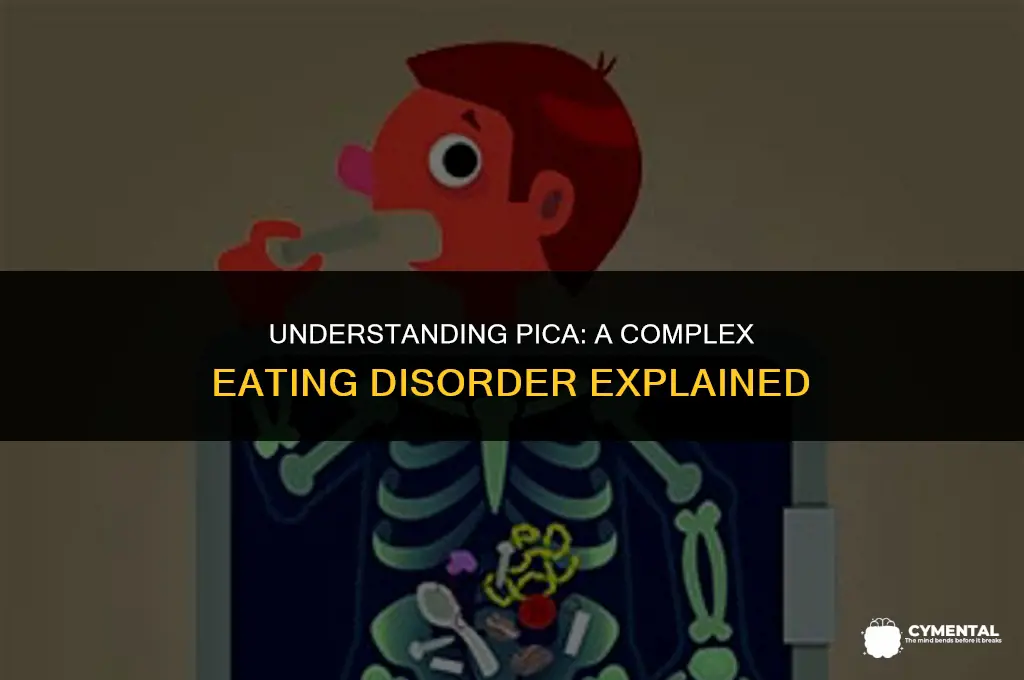
Pica is a condition characterized by the persistent urge to eat non-food items, such as soil, chalk, or paint chips. While it is often associated with mental health disorders, particularly in children, it is not classified as a mental disorder in and of itself. Instead, pica is considered a symptom that can occur in various contexts, including nutritional deficiencies, developmental disorders, and certain medical conditions. Understanding the underlying causes of pica is crucial for effective treatment and management, as it can lead to serious health complications if left untreated.
| Characteristics | Values |
|---|---|
| Disorder Name | Pica |
| Classification | Mental disorder |
| Diagnostic Code | F98.1 (ICD-10) |
| Prevalence | 1 in 1000 to 1 in 3000 individuals |
| Age of Onset | Typically in childhood or adolescence |
| Symptoms | Persistent eating of non-food items for at least one month |
| Causes | Nutritional deficiencies, psychological factors, developmental issues |
| Risk Factors | Iron deficiency, other nutrient deficiencies, stress, anxiety |
| Complications | Gastrointestinal problems, nutritional deficiencies, dental issues |
| Treatment | Address underlying nutritional deficiencies, behavioral therapy, medication in some cases |
| Prognosis | Generally good with appropriate treatment, but can be chronic |
| Differential Diagnosis | Consider other eating disorders, gastrointestinal conditions, and developmental disorders |
| Cultural Considerations | Prevalence and presentation may vary across different cultures |
| Historical Context | Recognized in medical literature since the 16th century |
| Research Gaps | Limited research on long-term outcomes and treatment efficacy |
| Public Awareness | Relatively low compared to other eating disorders |
Explore related products


What You'll Learn

Definition and Diagnosis
Pica is defined as a compulsive eating disorder characterized by the consumption of non-food items that have no nutritional value. This condition is often associated with mental health issues and can lead to serious physical complications if left untreated. The diagnosis of pica typically involves a thorough medical and psychological evaluation to rule out other potential causes of the behavior.
The diagnostic process for pica may include a physical examination, blood tests, and imaging studies to assess for any underlying medical conditions that could be contributing to the behavior. A mental health professional will also conduct a psychological evaluation, which may involve interviews, questionnaires, and behavioral observations. The criteria for diagnosing pica include the persistent consumption of non-food items, the absence of any nutritional deficiencies, and the presence of associated psychological distress or impairment in social, occupational, or other areas of functioning.
It is important to note that pica can occur in individuals of all ages, but it is most commonly seen in children, pregnant women, and individuals with intellectual disabilities. The condition can be caused by a variety of factors, including nutritional deficiencies, psychological stress, and cultural or social influences. Treatment for pica typically involves a multidisciplinary approach, including nutritional counseling, behavioral therapy, and medication management.
In some cases, pica may be a symptom of an underlying mental health condition, such as obsessive-compulsive disorder or schizophrenia. In these cases, treatment for the underlying condition is essential in managing the pica behavior. It is also important to address any potential physical complications of pica, such as gastrointestinal problems or toxic effects from consuming harmful substances.
Overall, the diagnosis and treatment of pica require a comprehensive approach that addresses both the physical and psychological aspects of the condition. By working with a team of healthcare professionals, individuals with pica can receive the necessary support and treatment to manage their symptoms and improve their overall quality of life.
Unraveling the Psyche: Joe Goldberg's Mental Health Struggles
You may want to see also
Explore related products


Symptoms and Behaviors
Pica is characterized by the persistent and compulsive urge to consume non-food items that have no nutritional value. This behavior is often accompanied by a range of physical and psychological symptoms. Individuals with pica may experience gastrointestinal issues such as nausea, vomiting, abdominal pain, and constipation due to the ingestion of indigestible materials. They may also suffer from dental problems, including tooth decay and gum damage, as a result of chewing on hard or abrasive substances.
Psychologically, pica can be associated with anxiety, depression, and obsessive-compulsive disorder (OCD). The compulsive nature of pica can lead to significant distress and impairment in daily functioning. Individuals may feel a strong sense of shame or embarrassment about their behavior, which can further exacerbate their psychological symptoms.
In addition to these symptoms, pica can also be indicative of underlying nutritional deficiencies or medical conditions. For example, iron deficiency anemia has been linked to pica, as individuals may crave and consume non-food items in an attempt to alleviate their symptoms. Similarly, pica can be a symptom of other medical conditions such as celiac disease or Crohn's disease, where malabsorption of nutrients may lead to cravings for non-food items.
It is important to note that pica can occur across different age groups and cultures. In some cultures, pica is more common during pregnancy, where it may be associated with cravings for specific non-food items. In children, pica can be a sign of developmental delays or autism spectrum disorder.
Diagnosis of pica typically involves a thorough medical and psychological evaluation. Healthcare providers may use diagnostic criteria outlined in the Diagnostic and Statistical Manual of Mental Disorders (DSM-5) to determine if an individual meets the criteria for pica. Treatment for pica often involves a multidisciplinary approach, including behavioral therapy, nutritional counseling, and medical management of any underlying conditions.
In conclusion, pica is a complex disorder characterized by the compulsive consumption of non-food items, which can lead to a range of physical and psychological symptoms. Understanding the underlying causes and associated behaviors of pica is crucial for effective diagnosis and treatment.
Exploring the Complex Psyche: Norman Bates' Mental Health
You may want to see also
Explore related products

$23.94 $32.95


![Mental Health and Mental Disorders: An Encyclopedia of Conditions, Treatments, and Well-Being [3 volumes]](https://m.media-amazon.com/images/I/81Rp9ZjDRZL._AC_UY218_.jpg)


Causes and Risk Factors
Pica, a disorder characterized by the persistent craving and consumption of non-food items, has a complex etiology that involves multiple factors. One of the primary causes is believed to be nutritional deficiencies, particularly iron deficiency anemia. Research suggests that individuals with pica often have lower levels of iron and other essential nutrients in their blood, which may trigger the urge to consume non-food items in an attempt to alleviate these deficiencies.
Another significant risk factor for pica is pregnancy. Pregnant women, especially those in their first trimester, are more likely to develop pica due to the increased demand for nutrients and the changes in hormone levels. The consumption of non-food items during pregnancy can be particularly dangerous, as it may lead to complications such as preterm delivery, low birth weight, and even maternal mortality.
Environmental factors also play a role in the development of pica. Individuals living in areas with poor access to nutritious food, clean water, and healthcare are at a higher risk of developing the disorder. Additionally, cultural and social factors may contribute to pica, as certain communities may have traditional practices or beliefs that encourage the consumption of non-food items.
Psychological factors, such as stress, anxiety, and depression, can also contribute to the development of pica. Individuals experiencing these mental health conditions may turn to non-food items as a form of self-soothing or coping mechanism. Furthermore, pica has been associated with other mental health disorders, such as obsessive-compulsive disorder (OCD) and attention deficit hyperactivity disorder (ADHD), suggesting a potential link between these conditions and the development of pica.
In conclusion, pica is a multifaceted disorder with a range of causes and risk factors. Addressing these underlying factors is crucial in the treatment and prevention of pica, and a comprehensive approach that includes nutritional supplementation, psychological support, and environmental interventions is necessary to effectively manage this condition.
Understanding Epilepsy: Dispelling Myths About Its Classification
You may want to see also
Explore related products


$11.99


Treatment and Management
Pica, characterized by the persistent craving and consumption of non-food items, requires a multifaceted approach to treatment and management. The first step involves a thorough medical evaluation to identify and address any underlying nutritional deficiencies or health conditions that may be contributing to the disorder. This often includes blood tests to check for iron, zinc, and other essential nutrients, as deficiencies in these areas are commonly associated with pica.
Once any medical causes have been ruled out or addressed, the focus shifts to behavioral and psychological interventions. Cognitive-behavioral therapy (CBT) has shown promise in treating pica, as it helps individuals identify and challenge the thought patterns and behaviors that contribute to the disorder. Therapists may also employ aversion therapy, where the individual is exposed to the non-food item in a controlled setting to reduce its appeal.
In addition to individual therapy, family therapy can be beneficial, particularly for children and adolescents with pica. This approach helps educate family members about the disorder and teaches them strategies to support their loved one in managing symptoms. For example, parents may be advised to keep non-food items out of reach or to provide alternative, safe items for their child to chew on.
Medication may also be used as part of the treatment plan, although there is no single medication specifically approved for pica. In some cases, medications used to treat related conditions, such as iron supplements for iron deficiency anemia, may be prescribed. Other medications, such as selective serotonin reuptake inhibitors (SSRIs), may be used off-label to help manage symptoms, although more research is needed to determine their effectiveness.
It's important to note that the treatment and management of pica can be complex and may require a team of healthcare professionals, including psychiatrists, psychologists, nutritionists, and primary care physicians. Regular follow-up appointments are crucial to monitor progress and adjust the treatment plan as needed. With the right combination of medical, behavioral, and supportive interventions, individuals with pica can learn to manage their symptoms and improve their overall quality of life.
Unraveling the Complexity: Phobias and Their Place in Mental Health
You may want to see also
Explore related products


Prognosis and Complications
Pica, characterized by the persistent craving and consumption of non-food items, presents a complex clinical picture with varied prognoses and potential complications. While some individuals may experience spontaneous remission, particularly in childhood cases, others may face a more chronic and debilitating course. The prognosis is often influenced by the underlying cause of pica, the individual's age, and the presence of co-occurring mental health conditions.
One significant complication of pica is the risk of ingesting harmful substances, which can lead to serious medical issues such as lead poisoning, zinc toxicity, or gastrointestinal blockages. The long-term consumption of non-food items can also result in nutritional deficiencies, dental problems, and gastrointestinal disturbances. Furthermore, individuals with pica may experience social and occupational impairments due to the stigma and misunderstanding surrounding the condition.
Treatment for pica typically involves a multidisciplinary approach, combining behavioral interventions, nutritional counseling, and medical management. Cognitive-behavioral therapy (CBT) has shown promise in reducing the frequency and intensity of pica episodes, while medications such as selective serotonin reuptake inhibitors (SSRIs) may be beneficial in some cases. It is crucial for healthcare providers to address the underlying causes of pica and to monitor for potential complications, particularly in vulnerable populations such as children and individuals with intellectual disabilities.
In conclusion, while pica can be a challenging condition to manage, early intervention and comprehensive treatment can significantly improve outcomes and reduce the risk of complications. Further research is needed to better understand the etiology and pathophysiology of pica, as well as to develop more effective treatment strategies for this complex disorder.
Understanding Mental Health Assessments: A Guide to Getting Tested
You may want to see also
Frequently asked questions
Yes, pica is classified as a mental disorder. It is an eating disorder characterized by the persistent consumption of non-food items that are not nutritionally beneficial.
Individuals with pica may consume a variety of non-food items, including but not limited to: dirt, clay, paint chips, hair, paper, cardboard, metal, and even feces.
Pica can affect individuals of all ages, but it is most commonly observed in children, pregnant women, and individuals with certain developmental disabilities or psychiatric conditions.
Pica is typically diagnosed through a combination of medical history, physical examination, and laboratory tests to rule out other potential causes. Treatment may involve behavioral therapy, nutritional counseling, and in some cases, medication to address underlying conditions or symptoms.