Madison Cole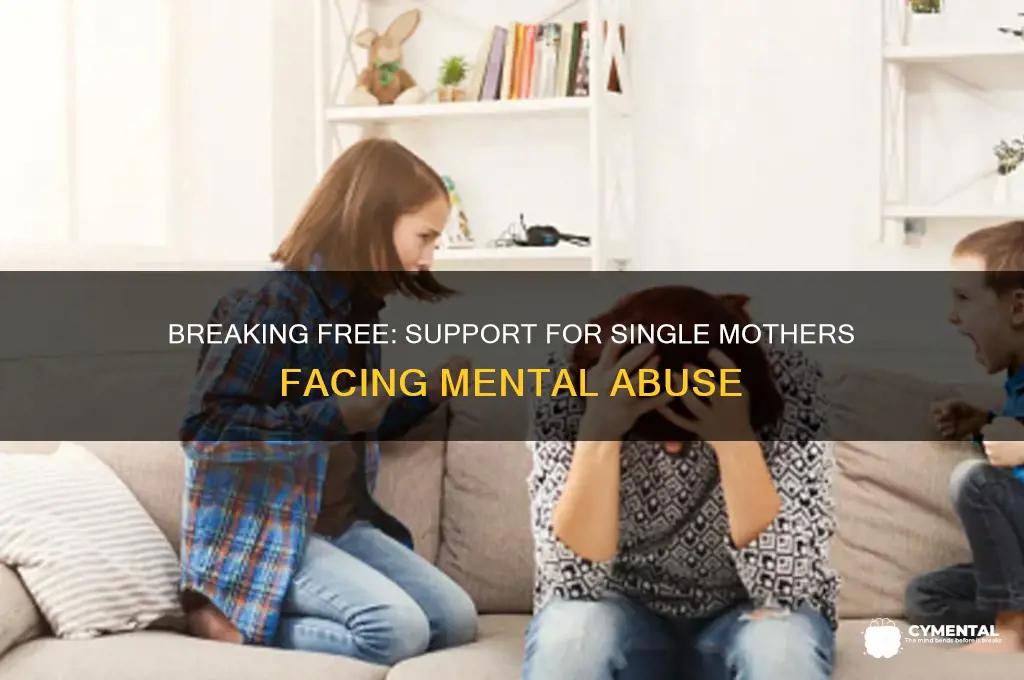
Single mothers facing mental abuse often find themselves in a uniquely vulnerable position, juggling the demands of parenthood while enduring emotional, psychological, or verbal harm from a partner, family member, or even societal pressures. The isolation, financial strain, and fear of judgment can make it difficult for them to seek help, leaving them trapped in a cycle of suffering. However, there are resources and support systems available, including counseling services, support groups, legal aid, and community organizations, designed to provide guidance, protection, and empowerment. Recognizing the signs of mental abuse and understanding that it is not their fault is the first step toward healing and reclaiming their lives for themselves and their children.
| Characteristics | Values |
|---|---|
| Definition of Mental Abuse | Persistent emotional, psychological, or verbal harm inflicted on a single mother. |
| Common Forms of Abuse | Gaslighting, belittling, manipulation, threats, isolation, blame-shifting. |
| Impact on Single Mothers | Anxiety, depression, low self-esteem, PTSD, difficulty parenting, financial instability. |
| Available Support Services | Hotlines (e.g., National Domestic Violence Hotline), counseling, support groups, legal aid. |
| Legal Protections | Restraining orders, custody assistance, housing support, financial aid programs. |
| Community Resources | Shelters, non-profits (e.g., Single Mothers Outreach), local churches, food banks. |
| Mental Health Resources | Therapy, trauma-informed care, mindfulness programs, online mental health platforms. |
| Financial Assistance | TANF, SNAP, WIC, child support enforcement, job training programs. |
| Educational Resources | Parenting classes, financial literacy workshops, legal rights education. |
| Online Support | Forums, social media groups, telehealth services, crisis chat platforms. |
| Child Support | Legal assistance for child support claims, mediation services, enforcement agencies. |
| Housing Assistance | Section 8 vouchers, transitional housing, emergency shelters. |
| Workplace Support | Flexible work hours, parental leave, employee assistance programs (EAPs). |
| Cultural Sensitivity | Services tailored to diverse cultural backgrounds, multilingual support. |
| Prevention Programs | Awareness campaigns, school-based education, community outreach initiatives. |
| Long-Term Recovery | Empowerment programs, skill-building workshops, long-term counseling. |
Explore related products


What You'll Learn

Recognizing mental abuse signs
Mental abuse often leaves no visible scars, making it insidious and difficult to identify. Unlike physical abuse, it operates in the shadows, eroding self-esteem and autonomy through subtle, repeated behaviors. For single mothers, the stakes are higher: the abuser may exploit their vulnerability, using children as leverage or isolating them from support networks. Recognizing the signs early is crucial, as prolonged exposure can lead to severe psychological damage, affecting both the mother and her children.
One of the first indicators of mental abuse is a pattern of belittling or demeaning comments. These may seem minor at first—a sarcastic remark about parenting skills, a dismissive tone during conversations, or constant criticism disguised as "constructive feedback." Over time, these comments chip away at self-worth, making the victim question their abilities and decisions. For single mothers, this can manifest as doubt in their parenting, even when they are doing their best. A practical tip: keep a journal to document these interactions. Patterns become clearer on paper, providing evidence of abuse and a tool for seeking help.
Isolation is another red flag. Abusers often seek to control their victims by cutting them off from friends, family, and community resources. For single mothers, this isolation can be particularly devastating, as they may already face limited time and energy for social connections. The abuser might discourage participation in parenting groups, church activities, or even casual outings with friends, claiming it’s unnecessary or selfish. To counteract this, single mothers should prioritize maintaining at least one trusted relationship outside the home. A weekly phone call or monthly meetup can provide emotional support and a reality check when abuse clouds judgment.
Gaslighting—manipulating someone into questioning their own reality—is a hallmark of mental abuse. For instance, an abuser might deny saying hurtful things, accuse the mother of overreacting, or twist her words to make her feel guilty. This tactic is especially harmful for single mothers, who may already carry the weight of sole responsibility for their children. To combat gaslighting, single mothers should practice self-affirmation and seek validation from external sources. For example, if an abuser claims she’s a "bad mother," she can reflect on specific moments where she’s shown love, patience, and care for her children.
Finally, recognizing mental abuse requires understanding the difference between occasional conflict and a systemic pattern of control. Healthy relationships involve disagreements, but mental abuse involves a consistent effort to dominate and demean. Single mothers should ask themselves: Does this person make me feel smaller after interactions? Do I feel like I’m walking on eggshells to avoid their anger? If the answer is yes, it’s time to seek help. Organizations like the National Domestic Violence Hotline offer resources tailored to single mothers, including safety planning and counseling. Taking that first step can be daunting, but it’s the beginning of reclaiming autonomy and protecting both mother and child.
Therapy's Impact: Unlocking Mental Health Healing and Personal Growth
You may want to see also
Explore related products


Accessing local support services
Single mothers facing mental abuse often feel isolated, but local support services can provide a lifeline. These resources, tailored to community needs, offer immediate assistance and long-term strategies for healing. Identifying and accessing them is the first step toward reclaiming stability and safety.
Steps to Locate Local Support Services:
- Contact Local Hotlines or Helplines: Many regions have dedicated domestic violence or mental health hotlines (e.g., the National Domestic Violence Hotline in the U.S.). These services often provide referrals to nearby shelters, counseling, and legal aid.
- Visit Community Centers or Libraries: These hubs frequently display information on local resources, including support groups, parenting workshops, and financial assistance programs.
- Reach Out to Healthcare Providers: Doctors, nurses, or mental health professionals can connect you with specialized services, such as trauma-informed therapy or subsidized childcare.
- Use Online Directories: Websites like 211.org (U.S.) or local government portals list community services by category, making it easier to find relevant support.
Cautions When Accessing Services:
While local resources are invaluable, safety must remain a priority. Avoid using shared devices or accounts when searching for help, as abusers may monitor activity. Instead, use a trusted friend’s phone or a public computer at a library. Additionally, verify the legitimacy of any service before sharing personal details, especially if contacted via unsolicited messages or calls.
Empowering Change: Simple Ways You Can Make a Difference Today
You may want to see also
Explore related products


Building a safety plan
Single mothers facing mental abuse often feel trapped, isolated, and unsure of how to protect themselves and their children. Building a safety plan is a critical first step toward reclaiming control and ensuring well-being. It’s not just about escaping immediate danger; it’s about creating a sustainable strategy for long-term safety and emotional recovery.
Step 1: Identify Safe Zones and Contacts
Start by pinpointing safe places you can go in an emergency—a trusted friend’s home, a nearby shelter, or a public space like a library. Compile a list of emergency contacts, including local domestic violence hotlines (e.g., the National Domestic Violence Hotline at 1-800-799-SAFE), mental health professionals, and supportive family members. Keep this list hidden in a secure digital location or memorized to avoid detection.
Step 2: Document Evidence and Plan Finances
Mental abuse often leaves no physical scars, making it harder to prove. Keep a private journal detailing incidents, including dates, times, and descriptions of abusive behavior. If possible, save threatening messages or emails. Financially, open a separate bank account in your name only and start setting aside small amounts of money regularly. Even $20 a week can add up and provide a financial cushion when you need to leave quickly.
Step 3: Prepare an Emergency Kit
Assemble a portable kit with essentials like identification documents (birth certificates, passports), medication, a change of clothes for you and your children, and important phone numbers. Store this kit in a discreet, easily accessible location. If you have pets, include supplies for them as well.
Step 4: Teach Children a Safety Routine
Involve your children in the safety plan without overwhelming them. Teach them a code word or phrase to signal when it’s time to leave quickly. Ensure they know how to call 911 or a trusted contact. Reassure them that the plan is to keep everyone safe, not to abandon anyone.
Step 5: Prioritize Self-Care and Legal Advice
Mental abuse erodes self-esteem, so prioritize self-care to rebuild emotional strength. This could include therapy, support groups, or even short daily practices like deep breathing or journaling. Consult a legal professional to understand your rights and options, such as filing a restraining order or seeking custody arrangements that protect you and your children.
Supporting High-Functioning Intellectual Disabilities: Finding the Right Help
You may want to see also
Explore related products


$14.49 $21.99

$21.99 $21.99


Legal resources for protection
Single mothers facing mental abuse have legal avenues to protect themselves and their children, but navigating these resources requires clarity and action. Restraining orders, also known as protection orders, are a primary tool. These court-issued mandates prohibit the abuser from contacting or approaching the victim, often extending to shared children. To obtain one, document instances of abuse—texts, emails, voices messages, or witness statements—and file a petition at your local courthouse. Many jurisdictions offer free legal aid for this process, ensuring even those with limited resources can access protection.
Beyond restraining orders, family law attorneys specialize in cases involving domestic abuse, custody disputes, and child support. They can help single mothers secure sole custody or supervised visitation for the abuser, prioritizing the child’s safety. Pro bono services or sliding-scale fees are available through organizations like Legal Aid Society or local bar associations, making legal representation accessible. Additionally, attorneys can assist in modifying existing custody agreements if abuse escalates or persists.
Criminal charges are another recourse, particularly if the mental abuse crosses into harassment, stalking, or emotional distress under state laws. Reporting incidents to law enforcement creates an official record, which strengthens future legal actions. Some states also have mandatory arrest policies for domestic violence, ensuring immediate protection. However, pressing charges requires cooperation with prosecutors, who may need evidence like medical records or therapy notes to build a case.
For long-term safety, housing assistance programs like Section 8 or transitional housing shelters provide single mothers with a secure living environment away from the abuser. These programs often prioritize victims of domestic violence, including mental abuse, and offer resources like counseling and job training. Applying early is crucial, as waitlists can be lengthy. Pairing this with a safety plan—developed with a domestic violence advocate—ensures immediate steps are taken during emergencies, such as pre-packed bags, trusted contacts, and memorized emergency numbers.
Finally, therapeutic support complements legal action by providing emotional resilience and documentation. Therapists can testify in court about the psychological impact of abuse, bolstering legal cases. Many therapists offer sliding-scale fees or accept Medicaid, making this resource feasible. Combining legal protection with emotional healing empowers single mothers to break free from abuse and rebuild their lives.
Strengthening Community Bonds: Strategies to Prevent Mental Illness Together
You may want to see also
Explore related products


$23.25 $24.95


Emotional healing strategies
Single mothers facing mental abuse often carry invisible scars that affect their emotional well-being and ability to parent effectively. Emotional healing is not a linear process, but it begins with acknowledging the pain and seeking strategies to reclaim inner peace. One powerful starting point is journaling—a private space to express emotions without judgment. Writing down thoughts, fears, and experiences helps externalize the abuse, making it easier to identify patterns and triggers. Aim for 10–15 minutes daily, focusing on raw emotions rather than structured narratives. Over time, this practice fosters self-awareness and reduces the emotional burden.
Another critical strategy is building a support network, even if it feels daunting. Isolation is a common tactic of abusers, but breaking free requires connection. Start small: join a local support group for single mothers or seek online communities where anonymity provides safety. Sharing experiences with others who understand can normalize feelings of shame or guilt. Additionally, consider therapy—specifically cognitive-behavioral therapy (CBT)—which has proven effective in reframing negative thought patterns. A trained therapist can guide the process, offering tools to challenge self-doubt and rebuild self-esteem.
Self-care is not a luxury but a necessity for emotional healing. Single mothers often prioritize their children’s needs above their own, but neglecting personal well-being hinders recovery. Incorporate small, consistent acts of self-care into daily routines: a 10-minute meditation, a short walk, or a warm bath. Mindfulness practices, such as deep breathing exercises (inhale for 4 seconds, hold for 4, exhale for 6), can ground emotions during moments of stress. Remember, healing requires patience—celebrate progress, no matter how small, and avoid self-criticism.
Finally, setting boundaries is essential for long-term emotional recovery. Mental abuse thrives on blurred lines and manipulation. Start by identifying personal limits and communicating them assertively, even if it feels uncomfortable. For example, if an abuser uses guilt to control, practice saying, “I understand you feel that way, but I need to prioritize my well-being.” Reinforce boundaries consistently, and distance yourself from toxic interactions when necessary. This act of self-preservation is not selfish—it’s a vital step toward reclaiming autonomy and fostering emotional resilience.
Supporting Severely Mentally Ill Homeless Individuals: Effective Strategies and Resources
You may want to see also
Frequently asked questions
There are several resources available, including domestic violence hotlines (e.g., National Domestic Violence Hotline), local women’s shelters, counseling services, and support groups. Additionally, organizations like the YWCA and Legal Aid can provide legal and financial assistance.
She can create a safety plan, document abusive incidents, seek legal protection (e.g., restraining orders), and involve trusted friends or family for support. Teaching children about emotional safety and accessing therapy can also help.
Yes, mental abuse is a form of domestic violence and can be grounds for legal action. A single mother can seek help from family law attorneys, legal aid services, or domestic violence advocates to navigate custody battles and ensure her and her children’s safety.