Ava Ramirez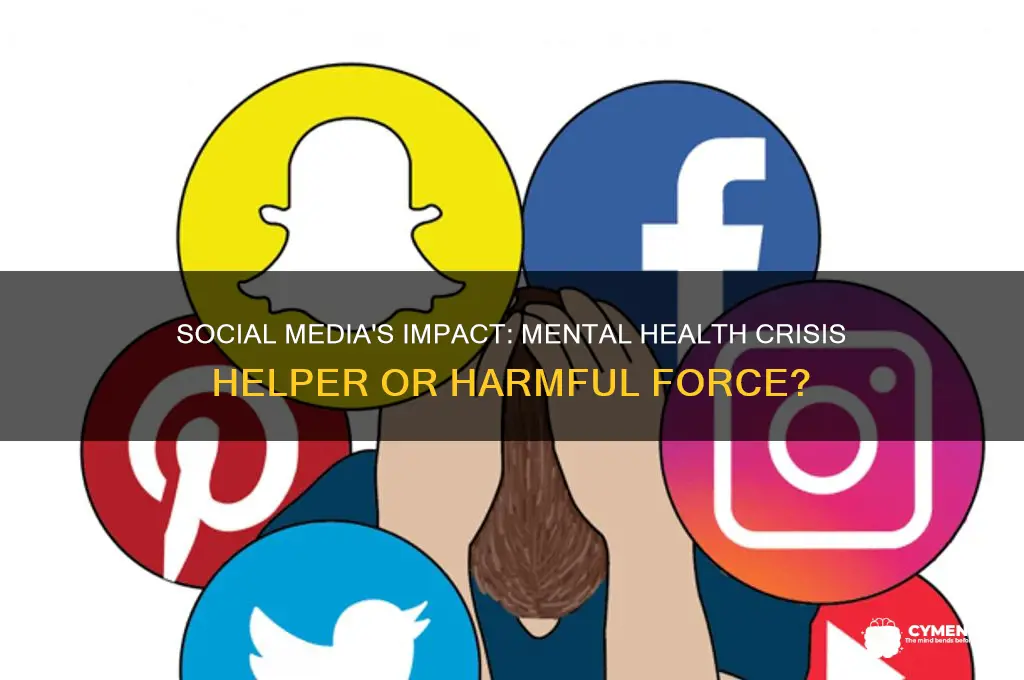
Social media's impact on mental health has become a pressing concern in today's digital age, sparking a heated debate about whether it is a helpful tool or a harmful contributor to the growing mental health crisis. On one hand, platforms like Instagram, Facebook, and Twitter offer unprecedented opportunities for connection, self-expression, and access to mental health resources, potentially reducing feelings of isolation and stigma. On the other hand, excessive use, cyberbullying, unrealistic comparisons, and the curated nature of online personas have been linked to increased anxiety, depression, and low self-esteem, particularly among younger users. As the line between virtual and real-life interactions blurs, understanding the complex relationship between social media and mental health is crucial to addressing this multifaceted issue.
Explore related products


What You'll Learn

Social media's impact on self-esteem and body image
Social media platforms are saturated with curated images and highlights of users' lives, often presenting an unrealistic and idealized version of reality. This constant exposure to seemingly perfect bodies, faces, and lifestyles can significantly impact individuals' self-esteem and body image, especially among younger users. A study by the Royal Society for Public Health found that Instagram and Snapchat, platforms heavily focused on visual content, were rated as having the most negative impact on young people's mental health, with body image concerns being a key factor.
The Comparison Trap
Imagine scrolling through your feed and seeing influencer after influencer showcasing their toned physiques, flawless skin, and picture-perfect lives. It's easy to fall into the comparison trap, where you measure your worth based on how you stack up against these curated images. For teenagers, who are still developing their sense of self, this can be particularly damaging. Research suggests that adolescent girls who spend more than 2.5 hours per day on social media are more likely to report concerns about their body weight and shape. To mitigate this, consider implementing a "social media detox" for 1-2 hours daily, focusing on activities that promote self-acceptance and body positivity, such as journaling or practicing mindfulness.
The Algorithmic Effect
Social media algorithms prioritize content that generates engagement, often amplifying posts featuring idealized body types and lifestyles. This creates a feedback loop, where users are repeatedly exposed to content that reinforces narrow beauty standards. For instance, a study published in the Journal of Social and Clinical Psychology found that young women who were exposed to appearance-focused social media content experienced increased body dissatisfaction and decreased self-esteem. To counteract this, diversify your feed by following body-positive influencers, activists, and accounts that promote diverse representations of beauty. Aim to follow at least 5-10 accounts that challenge conventional beauty standards and celebrate individuality.
Practical Strategies for Building Resilience
To foster a healthier relationship with social media and improve self-esteem, try implementing the following strategies:
- Limit daily social media use to 30-60 minutes, focusing on meaningful interactions rather than passive scrolling.
- Engage in regular physical activity, such as yoga or dancing, to promote body positivity and self-acceptance.
- Practice media literacy by critically evaluating the content you consume, recognizing that many images are edited or curated.
- Surround yourself with supportive peers who encourage and uplift you, both online and offline.
- Seek professional help if you're struggling with body image concerns or low self-esteem, such as consulting a therapist or counselor who specializes in these issues.
The Power of Representation
Brands and influencers who prioritize diversity and inclusivity can play a significant role in reshaping beauty standards and promoting positive body image. For example, the body-positive movement has gained momentum on social media, with influencers like Ashley Graham and Tess Holliday using their platforms to celebrate diverse body types. By supporting and engaging with these accounts, users can help amplify messages of self-acceptance and challenge narrow beauty ideals. As a consumer, you can also advocate for more inclusive representation by supporting brands that feature diverse models and promoting campaigns that prioritize authenticity over perfection.
Nami's Impact: Empowering Mental Health Support and Recovery
You may want to see also
Explore related products


Cyberbullying and its mental health consequences
Cyberbullying, a pervasive issue in the digital age, has become a significant contributor to the mental health crisis among adolescents and young adults. Unlike traditional bullying, cyberbullying transcends physical boundaries, allowing perpetrators to target victims 24/7 through social media, messaging apps, and online forums. The anonymity and reach of these platforms amplify the harm, making it harder for victims to escape the harassment. Studies show that nearly 37% of young people have experienced cyberbullying, with long-lasting psychological effects that often go unnoticed until they escalate into severe mental health issues.
The mental health consequences of cyberbullying are profound and multifaceted. Victims frequently report symptoms of anxiety, depression, and low self-esteem, often exacerbated by the public nature of online attacks. For instance, a single hurtful comment or shared rumor can go viral, exposing the victim to widespread humiliation and judgment. Research indicates that cyberbullying victims are twice as likely to experience suicidal ideation compared to their peers. The constant fear of being targeted creates a hypervigilant state, disrupting sleep patterns and academic performance, and fostering a sense of isolation even in crowded digital spaces.
Addressing cyberbullying requires a multi-pronged approach. Parents and educators must stay informed about the platforms young people use and teach digital literacy skills to recognize and respond to online threats. Encouraging open communication is crucial; victims often suffer in silence due to shame or fear of losing access to their devices. Schools should implement anti-cyberbullying policies and provide counseling services tailored to digital harassment. For victims, practical steps include documenting evidence, blocking perpetrators, and seeking support from trusted adults or helplines like the Cyberbullying Research Center.
While social media can foster connection and support, its role in enabling cyberbullying highlights the darker side of digital interaction. The mental health consequences are not inevitable, however, and proactive measures can mitigate risks. By fostering empathy, promoting responsible online behavior, and creating safe spaces for victims, society can work toward reducing the harm caused by cyberbullying. Ultimately, the goal is to transform digital platforms into tools for empowerment rather than weapons of harm, ensuring that mental health is prioritized in the online world.
Cardio and Mental Health: Unlocking the Mind-Body Connection
You may want to see also
Explore related products


Social comparison and feelings of inadequacy
Social media platforms are designed to showcase the highlights of users' lives, creating a breeding ground for social comparison. As users scroll through their feeds, they are constantly exposed to carefully curated images and updates that present an idealized version of reality. This phenomenon is particularly pronounced among adolescents and young adults, who spend an average of 3 hours per day on social media, according to a 2021 survey by Common Sense Media. The constant exposure to these idealized representations can lead to feelings of inadequacy, as individuals compare their own lives, appearances, and achievements to those of others.
Consider the following scenario: a teenager spends hours scrolling through Instagram, seeing images of their peers on exotic vacations, achieving academic success, or showcasing their seemingly perfect relationships. This constant exposure to others' highlights can create a distorted perception of reality, making the teenager feel as though they are falling short in comparison. A study published in the Journal of Social and Clinical Psychology found that limiting social media usage to 30 minutes per day resulted in significant reductions in loneliness and depression, highlighting the impact of social comparison on mental health. To mitigate these effects, it's essential to establish a healthy relationship with social media, setting boundaries such as designating specific times for usage and unfollowing accounts that trigger negative emotions.
From a psychological perspective, social comparison theory suggests that individuals have an innate tendency to evaluate themselves in relation to others. On social media, this tendency is amplified, as users are presented with a vast array of comparison points. The problem arises when individuals compare themselves to others who are perceived as superior, leading to feelings of inadequacy and low self-esteem. A 2018 study by the Royal Society for Public Health found that social media platforms like Instagram and Snapchat have a negative impact on body image, particularly among young women. To counteract these effects, it's crucial to practice self-compassion and focus on personal growth, rather than comparing oneself to others. One practical tip is to engage in activities that promote self-reflection and self-acceptance, such as journaling or mindfulness exercises.
The impact of social comparison on mental health is not limited to adolescents and young adults; it can affect individuals of all ages. However, certain age groups may be more susceptible to these effects. For example, a study published in the Journal of Adolescent Health found that social media use is associated with increased symptoms of anxiety and depression in young adults aged 18-25. To address this issue, it's essential to promote media literacy and critical thinking skills, encouraging individuals to question the authenticity and realism of the content they consume. Additionally, social media platforms can play a role in mitigating these effects by implementing features that promote authenticity and reduce the emphasis on likes, comments, and follower counts. By taking a proactive approach, individuals can reduce the negative impact of social comparison and cultivate a healthier relationship with social media.
In conclusion, while social media can offer numerous benefits, its role in exacerbating feelings of inadequacy through social comparison cannot be ignored. By understanding the psychological mechanisms underlying social comparison and implementing practical strategies to mitigate its effects, individuals can develop a healthier relationship with social media. This may involve setting boundaries, practicing self-compassion, and promoting media literacy. As a society, we must also advocate for social media platforms to prioritize user well-being and implement features that reduce the emphasis on comparison and promote authenticity. By working together, we can create a digital environment that supports mental health and fosters positive self-image, rather than perpetuating feelings of inadequacy.
Seeking Mental Health Support: Does Therapy and Treatment Truly Work?
You may want to see also
Explore related products




Addiction to platforms and reduced real-life interactions
Social media platforms are designed to be addictive, leveraging principles of behavioral psychology to keep users engaged. Features like infinite scrolling, notifications, and personalized content create a feedback loop that stimulates the brain’s reward system, releasing dopamine with every like, comment, or share. This mechanism mirrors the addictive nature of gambling or substance use, making it increasingly difficult for individuals to disconnect. For instance, studies show that the average person spends over 2.5 hours daily on social media, with teenagers often exceeding 4 hours. This compulsive usage can lead to a phenomenon known as "doomscrolling," where users consume negative content for extended periods, exacerbating feelings of anxiety and depression.
The more time individuals spend on social media, the less they engage in real-life interactions, which are crucial for mental well-being. Face-to-face communication fosters empathy, emotional regulation, and a sense of belonging—elements that are often diluted in digital exchanges. For example, a 2021 study published in *JAMA Pediatrics* found that adolescents who spent more than three hours a day on social media were more likely to report feelings of social isolation and loneliness. This reduction in real-life interactions creates a vicious cycle: as people withdraw from physical social settings, they become more dependent on online validation, further deepening their addiction to platforms.
To mitigate the harmful effects of this addiction, practical steps can be taken. First, set strict time limits for social media use, utilizing built-in features like screen time trackers or third-party apps like Freedom or Cold Turkey. For instance, limiting usage to 30 minutes in the morning and 30 minutes in the evening can significantly reduce compulsive behavior. Second, designate "tech-free zones" in your home, such as the dining area or bedroom, to encourage real-life interactions and improve sleep quality. Third, replace screen time with activities that promote face-to-face engagement, such as joining a local club, volunteering, or scheduling regular meetups with friends. These steps not only break the cycle of addiction but also rebuild the social skills eroded by excessive platform use.
While social media addiction and reduced real-life interactions are significant contributors to the mental health crisis, they are not insurmountable challenges. By understanding the mechanisms driving this behavior and implementing targeted strategies, individuals can regain control over their digital habits. The key lies in recognizing the value of offline connections and prioritizing them over the fleeting satisfaction of online engagement. As one psychologist aptly noted, "The quality of our relationships, not the quantity of our followers, determines our mental health." This perspective underscores the importance of balancing digital and real-life interactions to foster a healthier, more fulfilling existence.
After School Programs: Boosting Mental Health and Well-Being in Youth
You may want to see also
Explore related products


$14.15 $20


Positive mental health support communities online
Online communities dedicated to mental health support are flourishing, offering a unique blend of accessibility, anonymity, and shared understanding. Platforms like Reddit's r/depression and 7 Cups provide safe spaces for individuals to connect with others facing similar struggles. These communities foster a sense of belonging, allowing members to share experiences, offer encouragement, and exchange coping strategies. A study published in the Journal of Medical Internet Research found that online peer support significantly reduced symptoms of depression and anxiety, highlighting the tangible benefits of these digital safe havens.
Unlike traditional therapy, which can be costly and time-consuming, online support communities are often free and available 24/7. This accessibility is particularly crucial for individuals in remote areas or those facing financial barriers to professional help.
However, navigating these communities requires caution. While many members offer genuine support, online interactions lack the nuance of face-to-face communication, making it difficult to gauge intent. It's essential to be mindful of potential triggers and avoid sharing overly personal information. Look for communities with clear guidelines and active moderation to ensure a safe and supportive environment.
Additionally, online support should complement, not replace, professional treatment. These communities are invaluable for peer connection and emotional support, but they cannot provide the personalized diagnosis and treatment plans offered by qualified mental health professionals.
To maximize the benefits of online mental health communities, consider these practical tips:
- Choose wisely: Research different platforms and read reviews to find communities aligned with your specific needs and preferences.
- Start as a lurker: Observe discussions before actively participating to get a feel for the community's tone and culture.
- Set boundaries: Determine how much personal information you're comfortable sharing and stick to those limits.
- Be respectful: Remember that everyone is fighting their own battles. Treat others with kindness and empathy.
- Seek professional help when needed: If you're experiencing severe symptoms or suicidal thoughts, reach out to a crisis hotline or mental health professional immediately.
Online mental health support communities, when used responsibly, can be powerful tools for connection, healing, and growth. They offer a sense of belonging and understanding that can be transformative for individuals struggling with mental health challenges. By approaching these communities with awareness and caution, individuals can harness their potential for positive change.
Fasting for Focus: Enhancing Mental Clarity Through Intermittent Fasting
You may want to see also
Frequently asked questions
Social media is not the sole cause of the mental health crisis, but it plays a significant role in exacerbating issues like anxiety, depression, and low self-esteem. Factors such as cyberbullying, comparison culture, and excessive screen time contribute to its negative impact.
Yes, social media can foster connection, provide support networks, and raise awareness about mental health issues. Platforms can be beneficial when used mindfully and for positive engagement, such as joining communities or accessing mental health resources.
Individuals can mitigate harm by setting boundaries (e.g., limiting screen time), curating feeds to avoid negative content, and prioritizing real-life interactions. Practicing digital detoxes and seeking professional help when needed are also effective strategies.