Harper Lewis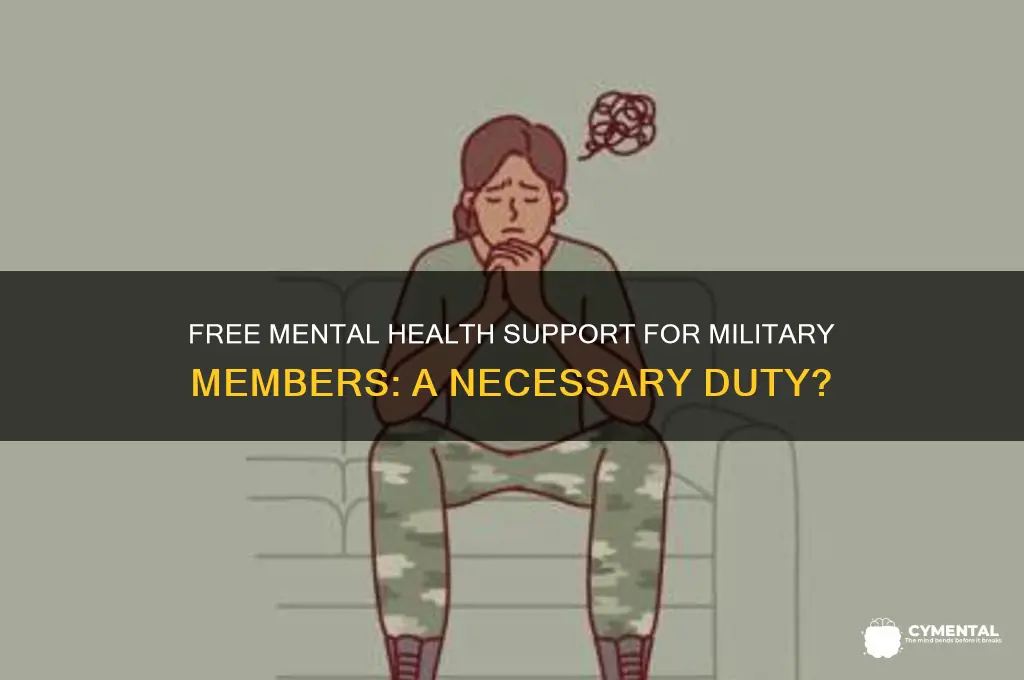
The question of whether there should be free mental health services for military members is a critical and timely issue, given the unique and often intense challenges they face during and after their service. Military personnel are exposed to high-stress environments, trauma, and life-threatening situations, which can lead to significant mental health issues such as PTSD, depression, and anxiety. Despite their sacrifices, many veterans and active-duty members struggle to access affordable and timely mental health care, often due to stigma, lack of resources, or bureaucratic hurdles. Providing free mental health support not only acknowledges their service and sacrifices but also ensures they receive the care they need to reintegrate into civilian life and maintain overall well-being. This approach could also reduce long-term societal costs associated with untreated mental health issues, making it a morally and economically sound investment.
| Characteristics | Values |
|---|---|
| Prevalence of Mental Health Issues | High rates of PTSD, depression, anxiety, and suicide among military members and veterans. Studies show up to 20% of veterans experience PTSD, and suicide rates are 1.5 times higher than civilian rates. |
| Barriers to Access | Stigma surrounding mental health, lack of providers, long wait times, and financial costs prevent many military members from seeking help. |
| Cost-Effectiveness | Providing free mental health care can reduce long-term healthcare costs associated with untreated mental illness, improve productivity, and decrease disability claims. |
| Moral Obligation | Society has a moral duty to care for those who serve and sacrifice for the country, including addressing the invisible wounds of war. |
| Improved Readiness | Addressing mental health issues improves overall military readiness by ensuring service members are mentally fit and resilient. |
| Family Impact | Mental health issues in military members can have significant effects on families, leading to relationship strain, financial hardship, and intergenerational trauma. |
| Existing Programs | While programs like TRICARE and VA healthcare exist, gaps in coverage, limited resources, and bureaucratic hurdles persist. |
| Public Support | Polls consistently show strong public support for expanding mental health services for veterans and active-duty military. |
| Long-Term Benefits | Free mental health care can lead to better long-term outcomes, including reduced homelessness, improved employment rates, and enhanced quality of life for veterans. |
| Global Precedents | Many countries, including Canada and the UK, offer comprehensive mental health services for their military personnel, setting a precedent for the U.S. |
Explore related products


What You'll Learn
- Accessibility: Ensuring all military members can easily access mental health services without barriers
- Stigma Reduction: Addressing societal and military stigma around seeking mental health support
- Funding Sources: Identifying sustainable funding models for free mental health programs in the military
- Quality of Care: Maintaining high standards of mental health treatment for military personnel
- Long-Term Benefits: Evaluating the impact of free mental health care on veterans' well-being

Accessibility: Ensuring all military members can easily access mental health services without barriers
Military members face unique challenges that can profoundly impact their mental health, from combat exposure to prolonged separations from family. Yet, accessing mental health services often feels like navigating a minefield of barriers—stigma, logistical hurdles, and limited resources. Ensuring accessibility means dismantling these obstacles so every service member can seek help without hesitation.
Consider the logistical challenges first. Deployments, remote postings, and irregular schedules make traditional in-person therapy impractical for many. Telehealth services, such as video counseling or secure messaging platforms, can bridge this gap. For instance, the U.S. Department of Veterans Affairs’ Veterans Crisis Line offers 24/7 support via phone, text, and chat, proving that technology can overcome geographic barriers. However, not all military members have reliable internet access, particularly in overseas locations. Solutions like satellite-based telehealth or mobile clinics could address this, ensuring care reaches even the most isolated personnel.
Stigma remains a silent barrier, often more formidable than physical distance. Fear of being perceived as weak or jeopardizing one’s career deters many from seeking help. Normalizing mental health care starts with leadership modeling vulnerability and integrating mental fitness into routine training. For example, the U.K.’s Defence People Mental Health and Wellbeing Strategy includes mandatory mental health education for all ranks, framing it as essential to operational readiness rather than a sign of weakness. Such initiatives shift cultural norms, making it clear that seeking help is a strength, not a flaw.
Financial barriers, though less discussed, also hinder access. While active-duty members often have health coverage, copays, limited provider networks, and gaps in family coverage can deter timely care. Eliminating these costs entirely—as some countries, like Canada, do for veterans—removes a critical hurdle. Free services send a powerful message: mental health is a non-negotiable priority, not a privilege.
Finally, accessibility must account for diversity within the military population. Women, LGBTQ+ service members, and racial minorities often face compounded stigma and unique stressors. Tailored programs, such as gender-specific therapy groups or culturally competent counselors, ensure these groups feel seen and supported. For example, the U.S. military’s inclusion of female engagement teams in mental health initiatives acknowledges the distinct challenges women face in combat roles.
In conclusion, accessibility is not a one-size-fits-all solution but a multifaceted approach that addresses logistical, cultural, financial, and demographic barriers. By leveraging technology, reshaping culture, eliminating costs, and embracing diversity, we can ensure every military member has a clear path to mental health support. The question isn’t whether they deserve it—it’s how quickly we can make it a reality.
Accessing Kaiser Mental Health Support: A Step-by-Step Guide
You may want to see also
Explore related products


Stigma Reduction: Addressing societal and military stigma around seeking mental health support
Military culture often glorifies resilience and self-reliance, traits that, while valuable in combat, can inadvertently discourage service members from seeking mental health support. This internalized stigma is compounded by societal misconceptions that equate mental health struggles with weakness or incompetence. To dismantle these barriers, organizations must first acknowledge the root causes: fear of career repercussions, peer judgment, and a lack of awareness about available resources. Without addressing these underlying issues, even the most comprehensive mental health programs will fall short of their potential impact.
One effective strategy for stigma reduction is the normalization of mental health conversations within military ranks. This can be achieved through mandatory training programs that reframe mental wellness as a critical component of operational readiness, not a personal failing. For instance, the U.S. Army’s "Ready and Resilient" campaign integrates psychological resilience training into standard soldier development, emphasizing that seeking help is a sign of strength. Pairing such initiatives with testimonials from high-ranking officials or respected peers who have benefited from mental health services can further destigmatize the act of reaching out.
Societal stigma, however, requires a different approach. Public awareness campaigns can play a pivotal role in reshaping perceptions. For example, initiatives like the UK’s "Time to Change" have successfully reduced mental health discrimination by sharing stories of recovery and resilience. Military families and veterans can be enlisted as advocates, leveraging their experiences to humanize the struggles faced by service members. Simultaneously, media outlets should be encouraged to portray mental health issues with accuracy and empathy, avoiding sensationalism that perpetuates harmful stereotypes.
Practical steps at the institutional level are equally crucial. Anonymity and confidentiality must be guaranteed in mental health services to alleviate fears of career impact. Offering teletherapy options or embedding mental health professionals within units can reduce the perceived "otherness" of seeking help. Additionally, commanders should be trained to recognize signs of distress and respond with compassion rather than discipline. These measures not only foster trust but also signal that mental wellness is a collective responsibility, not an individual burden.
Ultimately, stigma reduction is not a one-time effort but an ongoing commitment. Metrics such as increased help-seeking behavior, improved unit cohesion, and reduced suicide rates can serve as indicators of progress. By weaving mental health support into the fabric of military and civilian life, we can create an environment where service members feel empowered to seek help without fear of judgment or reprisal. The goal is not just to provide free mental health services but to ensure they are accessible, acceptable, and utilized—a transformation that begins with dismantling stigma at every level.
Nutritional Supplements: Potential Benefits for Mentally Retarded Children Explored
You may want to see also
Explore related products


Funding Sources: Identifying sustainable funding models for free mental health programs in the military
Military budgets are already strained, yet the need for mental health support among service members is undeniable. Securing sustainable funding for free mental health programs requires creativity and a multi-pronged approach.
One promising avenue is reallocating existing resources within defense budgets. A 2022 RAND Corporation study found that the U.S. Department of Defense spends billions annually on healthcare, with a significant portion going towards treating physical injuries. Shifting a fraction of this funding towards preventative mental health initiatives could yield long-term cost savings by reducing disability claims, improving readiness, and preventing more costly interventions down the line.
Public-private partnerships offer another viable funding stream. Corporations with a vested interest in national security, veteran welfare, or corporate social responsibility could be incentivized to contribute. Imagine a program where companies receive tax breaks or positive brand association in exchange for funding mental health apps, peer support networks, or specialized training for mental health professionals within the military.
Impact investing presents a third option. Social impact bonds, for instance, allow private investors to fund preventative programs, with the government repaying the investment only if predetermined outcomes are achieved, such as reduced suicide rates or increased treatment engagement. This model aligns incentives, ensuring funds are used effectively and delivering measurable results.
While these models show promise, sustainability requires careful consideration. Relying solely on reallocation risks neglecting other critical areas within the defense budget. Public-private partnerships must be structured to avoid conflicts of interest and ensure program integrity. Impact investing, though innovative, requires rigorous evaluation metrics and a clear understanding of return on investment. Ultimately, a combination of these funding sources, coupled with ongoing advocacy and a commitment to data-driven decision-making, is essential to securing the long-term financial health of free mental health programs for our military members.
Helping Others, Hurting Yourself: The Mental Health Toll of Caregiving
You may want to see also
Explore related products






Quality of Care: Maintaining high standards of mental health treatment for military personnel
Military personnel face unique mental health challenges, from combat-related trauma to prolonged separation from family. Ensuring they receive high-quality care isn’t just a moral obligation—it’s a strategic imperative for maintaining operational readiness. Yet, "free" access alone doesn’t guarantee effective treatment. Quality of care hinges on evidence-based practices, specialized training for providers, and consistent follow-up. For instance, cognitive behavioral therapy (CBT) has proven effective for PTSD, with studies showing a 50-60% reduction in symptoms after 12-16 sessions. However, without certified practitioners or standardized protocols, even free services risk falling short.
To maintain high standards, start by mandating providers undergo military cultural competency training. Veterans and active-duty members often hesitate to seek help due to stigma or fear of career repercussions. Clinicians who understand military jargon, rank dynamics, and deployment stressors can build trust faster. Pair this with measurable outcomes: track symptom reduction rates, treatment adherence, and patient satisfaction scores. For example, the Veterans Affairs’ STAR program uses a 0-10 scale to monitor PTSD symptoms monthly, ensuring care remains tailored and effective.
Another critical step is integrating technology to bridge gaps in access and continuity. Telehealth platforms, like the DoD’s Military OneSource, offer real-time counseling but must be paired with secure data systems to protect privacy. Apps like PTSD Coach provide self-management tools, yet their effectiveness depends on clinician oversight. A hybrid model—combining in-person therapy with digital resources—can enhance engagement, especially for younger service members accustomed to tech-driven solutions.
Finally, accountability is non-negotiable. Regular audits of mental health programs should compare outcomes against national benchmarks, such as the 70% recovery rate for depression in civilian populations. Underperforming providers or facilities must face consequences, whether retraining or resource reallocation. Equally, success stories—like the Army’s Resilience Oversight Council, which reduced stigma by 20% in two years—should be replicated across branches. Free care is a starting point; ensuring it’s consistently excellent is the true measure of commitment to those who serve.
School Nurses: Prepared to Address Student Mental Health Challenges?
You may want to see also
Explore related products




Long-Term Benefits: Evaluating the impact of free mental health care on veterans' well-being
Veterans face unique mental health challenges, often stemming from trauma, stress, and the transition to civilian life. Providing free mental health care could mitigate these issues, but its long-term impact on veterans’ well-being requires careful evaluation. Studies show that consistent access to therapy, medication, and support groups can reduce symptoms of PTSD, depression, and anxiety over time. For instance, a 2020 VA study found that veterans who engaged in regular therapy sessions reported a 40% decrease in PTSD symptoms after two years. This data underscores the potential for free mental health care to foster resilience and improve quality of life.
To assess the long-term benefits, consider a multi-phase evaluation framework. First, track veterans’ mental health metrics annually, including depression scores, anxiety levels, and social functioning. Second, measure their engagement in employment, education, and community activities, as these are indicators of recovery. Third, analyze healthcare cost savings by comparing veterans who receive free care to those who do not. For example, a 2019 RAND Corporation report estimated that untreated mental health issues cost the U.S. economy $100 billion annually in lost productivity and medical expenses. Free care could significantly reduce this burden.
Critics argue that free mental health care might strain resources or lead to overutilization. However, evidence suggests that early intervention prevents more costly treatments later. For instance, veterans who receive timely therapy are 30% less likely to require hospitalization for mental health crises. Additionally, group therapy and peer support programs can be cost-effective while fostering camaraderie. Implementing a tiered care model—where veterans access low-intensity interventions first and escalate as needed—could balance demand and resources.
Practical steps to maximize long-term benefits include tailoring care to individual needs. Veterans aged 18–30 might benefit from digital therapy platforms, while older veterans may prefer in-person sessions. Incorporate family therapy to address relational strains caused by mental health issues. Encourage participation in vocational training programs linked to mental health services, as stable employment is a key predictor of well-being. Finally, ensure continuity of care by integrating military and civilian healthcare systems, reducing gaps in treatment during transitions.
In conclusion, free mental health care for veterans has the potential to yield profound long-term benefits, from reduced symptom severity to enhanced societal reintegration. By adopting a structured evaluation approach, addressing resource concerns, and personalizing care, this initiative can transform veterans’ lives while yielding broader economic and social returns. The investment in their mental health is not just a moral imperative but a strategic one, ensuring a healthier, more resilient veteran population.
Supporting Your Friend: A Guide to Accessing Mental Health Assistance
You may want to see also
Frequently asked questions
Military members face unique stressors, including combat exposure, trauma, and prolonged separation from family, which can lead to mental health issues like PTSD, depression, and anxiety. Free mental health services ensure they receive timely and accessible care without financial barriers, promoting their well-being and readiness.
While active-duty members have access to some mental health services through military healthcare, barriers like stigma, limited resources, and inadequate coverage for specialized treatments persist. Free, comprehensive mental health care would address these gaps and extend support to veterans and reservists who may not qualify for existing programs.
Funding could come from reallocating portions of the defense budget, increasing mental health allocations, or establishing public-private partnerships. Investing in mental health care for military members is cost-effective in the long run, reducing healthcare costs, improving productivity, and preventing long-term societal impacts of untreated mental health issues.