Noah Parker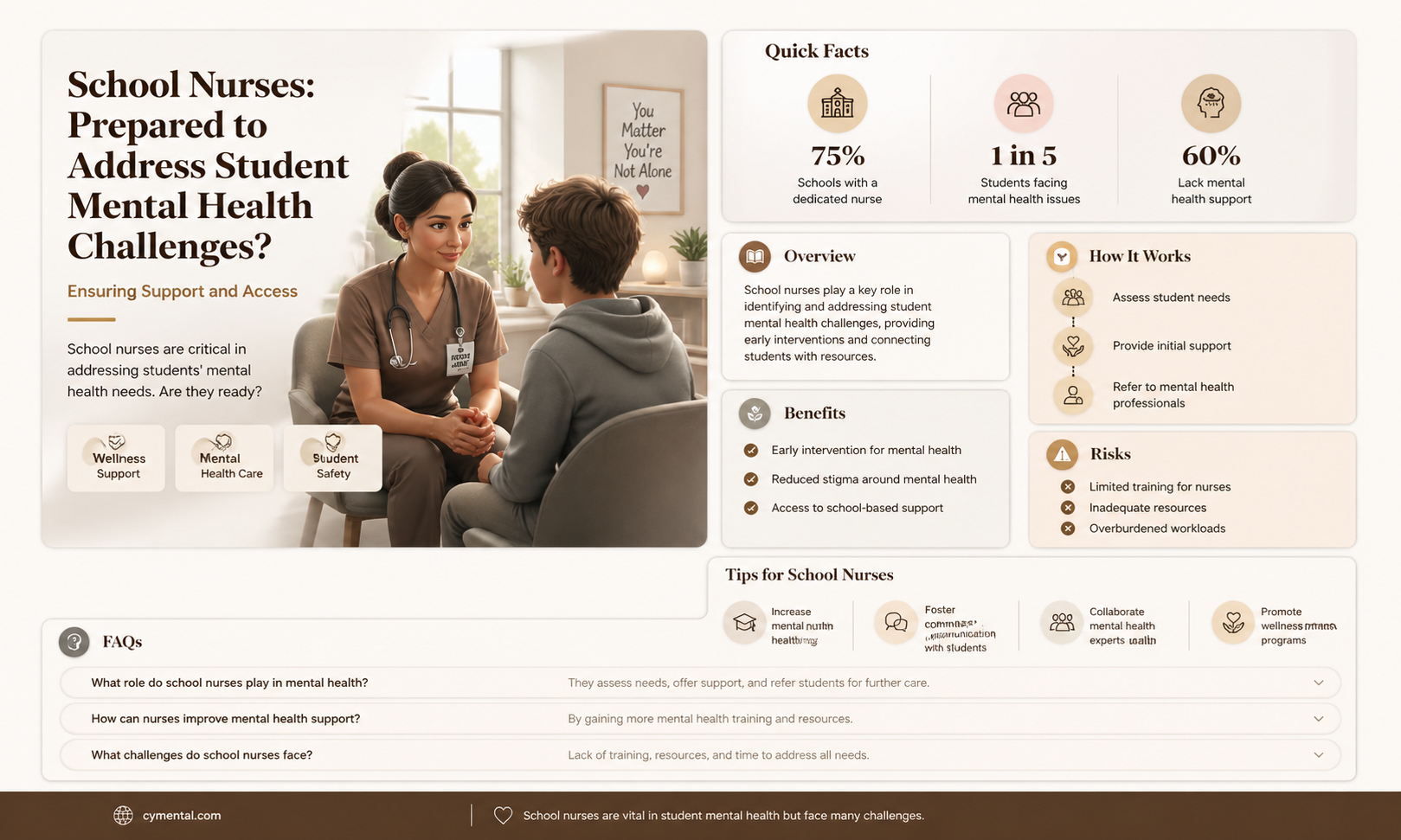
School nurses play a crucial role in supporting students' overall well-being, but the question arises whether they are adequately equipped to address the growing mental health challenges faced by young people today. With mental health issues becoming increasingly prevalent among students, school nurses are often the first point of contact for those seeking help. However, their ability to provide effective support depends on various factors, including their training, resources, and the scope of their role within the educational system. As mental health concerns continue to rise, it is essential to examine the preparedness of school nurses in identifying, managing, and referring students with mental health needs, ensuring they receive the appropriate care and support to thrive academically and personally.
| Characteristics | Values |
|---|---|
| Role of School Nurses | School nurses are increasingly recognized as vital in addressing student mental health, often serving as the first point of contact for students in distress. |
| Training in Mental Health | Many school nurses receive training in mental health first aid, crisis intervention, and basic counseling techniques, though the extent varies by region and funding. |
| Scope of Practice | Their scope typically includes identifying mental health concerns, providing immediate support, and referring students to specialized care, but they are not licensed therapists. |
| Resource Limitations | School nurses often face challenges due to limited time, staffing shortages, and inadequate funding, which can hinder their ability to address mental health needs comprehensively. |
| Collaboration with Professionals | They frequently collaborate with school counselors, psychologists, and external mental health providers to ensure students receive appropriate care. |
| Prevention and Education | School nurses play a key role in mental health education, promoting awareness, and implementing preventive programs within schools. |
| Confidentiality and Trust | Students often trust school nurses due to their approachable nature and confidentiality, making them a safe resource for mental health concerns. |
| Policy and Advocacy | School nurses advocate for policies that support mental health services in schools and push for increased resources and training. |
| Impact of COVID-19 | The pandemic has heightened mental health issues among students, increasing the demand for school nurses' mental health services and highlighting the need for expanded training and support. |
| Regional Disparities | The level of preparedness and resources available to school nurses varies significantly across regions, with rural and underfunded areas often facing greater challenges. |
Explore related products




What You'll Learn

Training in mental health first aid for school nurses
School nurses are often the first point of contact for students experiencing mental health challenges, yet their training in this area varies widely. While many are equipped to handle physical ailments, mental health first aid (MHFA) remains a critical gap in their skill set. Implementing standardized MHFA training for school nurses could transform their ability to recognize, respond to, and refer students in crisis, bridging the divide between physical and emotional care.
Consider the following steps to integrate MHFA training into school nursing practice. First, identify certified MHFA instructors who specialize in youth mental health. Courses typically span 8 hours and cover topics like identifying warning signs of depression, anxiety, and self-harm, as well as de-escalation techniques. Second, tailor training to the school environment by incorporating case studies relevant to adolescent populations, such as cyberbullying or exam-related stress. Third, pair theoretical knowledge with practical simulations, allowing nurses to practice conversations with "students" exhibiting mental health symptoms.
Cautions must accompany this initiative. MHFA training is not a substitute for professional therapy, and nurses should be clear about their role as first responders, not counselors. Overstepping boundaries can lead to unintended harm or legal complications. Additionally, schools must allocate resources for ongoing training and supervision to ensure nurses feel supported in applying their skills. Without systemic backing, even the most skilled nurse may struggle to make a lasting impact.
The benefits of MHFA-trained school nurses extend beyond individual interventions. By fostering a culture of awareness, they can educate staff and students on mental health literacy, reducing stigma and encouraging early help-seeking behaviors. For instance, a nurse trained in MHFA might collaborate with teachers to identify at-risk students or advocate for policy changes that prioritize mental well-being. This proactive approach aligns with the broader goal of creating a holistic school health system.
In conclusion, equipping school nurses with MHFA training is a practical, evidence-based strategy to address the growing mental health needs of students. While challenges exist, the potential to improve early intervention and support makes this investment invaluable. Schools that prioritize this training not only empower their nurses but also send a powerful message: mental health matters, and we are here to help.
Nurturing Mental Well-Being: Essential Strategies for a Healthier Mind
You may want to see also
Explore related products


Access to mental health resources and tools
School nurses often serve as the first point of contact for students experiencing mental health challenges, yet their ability to provide effective support hinges on access to adequate resources and tools. Without evidence-based screening instruments, such as the Patient Health Questionnaire-9 (PHQ-9) for depression or Generalized Anxiety Disorder-7 (GAD-7) for anxiety, nurses may struggle to identify at-risk students early. Equipping them with these validated tools, alongside training in their administration and interpretation, is critical for timely intervention. For instance, a nurse using the PHQ-9 can score a student’s responses within minutes, flagging scores of 10 or higher as indicative of moderate to severe depression, prompting immediate referral.
Access to digital platforms and telehealth services further amplifies a school nurse’s capacity to address mental health needs. Apps like Calm or Headspace can be recommended for stress reduction, while platforms such as TeenCounseling provide discreet, professional support for students hesitant to seek in-person help. However, nurses must ensure these tools are age-appropriate and culturally sensitive. For younger students (ages 6–12), interactive apps like GoZen! use gamified techniques to teach coping skills, while teens (ages 13–18) may benefit from peer-moderated forums like 7 Cups. Nurses should also advocate for school-wide subscriptions to these platforms, removing financial barriers for low-income families.
Collaboration with external mental health providers is another essential resource for school nurses. Establishing partnerships with local clinics or telehealth providers enables seamless referrals for students needing specialized care. For example, a nurse identifying a student with suicidal ideation (a PHQ-9 score of 3 or higher on question 9) can immediately connect them to a crisis hotline like 988 or arrange an urgent appointment with a child psychologist. Protocols for such scenarios should be clearly defined, with contact information readily accessible in the nurse’s office. Regular communication with providers ensures continuity of care, such as sharing progress notes or attending joint meetings with parents and counselors.
Finally, access to educational materials and training programs empowers school nurses to build their competency in mental health. Workshops on Cognitive Behavioral Therapy (CBT) techniques, for instance, equip nurses with practical strategies to teach students, such as thought challenging or behavioral activation. Similarly, certifications in Youth Mental Health First Aid provide a structured framework for responding to crises. Schools should allocate professional development budgets for such training, ensuring nurses stay updated on best practices. By investing in their skills, schools not only enhance nurses’ effectiveness but also foster a culture of mental health awareness throughout the community.
Supporting Through Crisis: Texting Tips for Mental Breakdown Assistance
You may want to see also
Explore related products




Collaboration with external mental health professionals
School nurses often serve as the first point of contact for students experiencing mental health challenges, but their role is inherently limited by scope, training, and time constraints. To bridge this gap, collaboration with external mental health professionals is not just beneficial—it’s essential. By partnering with psychologists, counselors, and social workers, school nurses can ensure students receive comprehensive care that extends beyond the school walls. This collaborative approach leverages the strengths of both parties: nurses provide immediate, on-site support, while external professionals offer specialized interventions and long-term strategies.
Consider the steps to establish effective collaboration. First, identify local mental health resources, such as community clinics or private practitioners, and formalize partnerships through memorandums of understanding. Second, create a referral system that outlines criteria for when a student should be directed to external care. For instance, a student exhibiting persistent anxiety or suicidal ideation may require immediate intervention from a licensed therapist. Third, schedule regular case conferences to discuss student progress and align treatment plans. For example, a school nurse might monitor a student’s daily functioning while a therapist addresses underlying trauma in weekly sessions.
Cautions must be taken to ensure collaboration does not overwhelm school nurses or external professionals. Clearly define roles to avoid duplication of efforts; nurses should focus on health education, crisis de-escalation, and monitoring, while external providers handle diagnosis and therapy. Additionally, address privacy concerns by adhering to HIPAA and FERPA guidelines when sharing student information. A practical tip: use secure communication platforms like encrypted email or telehealth portals to maintain confidentiality.
The takeaway is clear: collaboration maximizes the impact of both school nurses and external mental health professionals. For instance, a study in *The Journal of School Nursing* found that schools with integrated mental health services saw a 30% reduction in student absenteeism and improved academic performance. By working together, these professionals create a safety net that catches students before they fall through the cracks, ensuring no child’s mental health needs go unaddressed.
Finding Support: Where to Get Help for Depression and Healing
You may want to see also
Explore related products





Time allocation for mental health support in schools
School nurses often find themselves at the intersection of physical and mental health care, yet their time allocation for mental health support remains a critical yet under-examined issue. On average, a school nurse spends only 20-30% of their day addressing mental health concerns, despite these issues comprising nearly 50% of student health-related challenges. This disparity highlights a systemic gap: while nurses are trained to triage physical ailments, mental health demands a different, often more time-intensive approach. For instance, a 15-minute check-in for a physical injury contrasts sharply with the 45-60 minutes needed to assess and de-escalate a student in emotional crisis. Without dedicated time blocks, nurses risk superficial interventions that fail to address root causes.
To effectively allocate time, schools must adopt a tiered support model. Tier 1 could involve brief daily check-ins (5-10 minutes) for at-risk students, ensuring consistent monitoring without overwhelming the nurse’s schedule. Tier 2 might include weekly 30-minute sessions for students with moderate needs, focusing on coping strategies and progress tracking. Tier 3, reserved for acute cases, would require 60-90 minute interventions, potentially involving collaboration with counselors or external mental health professionals. This structure ensures scalability while prioritizing severity. For example, a nurse at a high school in Oregon implemented a similar model, reducing emergency referrals by 30% within six months by proactively managing milder cases.
However, time allocation alone is insufficient without addressing workload constraints. A 2022 study found that 65% of school nurses report managing over 1,000 students, leaving minimal time for individual mental health support. Schools must cap nurse-to-student ratios at 1:750, as recommended by the National Association of School Nurses, to ensure feasibility. Additionally, integrating digital tools—such as mental health screening apps or telehealth platforms—can streamline initial assessments, freeing up time for in-depth interventions. For instance, a pilot program in Texas used AI-driven screening tools to flag at-risk students, allowing nurses to focus on high-priority cases.
Critics argue that increasing time for mental health may neglect physical health duties, but this is a false dichotomy. Mental and physical health are intertwined; untreated anxiety or depression often manifests as somatic symptoms like headaches or fatigue. By dedicating time to mental health, nurses can reduce overall health-related absences. For example, a Chicago school district reported a 25% decrease in sick days after nurses spent 40% of their time on mental health initiatives. This approach not only benefits students but also enhances the nurse’s role as a holistic health advocate.
Ultimately, time allocation for mental health support requires intentionality, creativity, and systemic change. Schools must reframe the nurse’s role to include dedicated mental health hours, provide training in evidence-based interventions, and leverage technology to maximize efficiency. Without these steps, nurses will remain ill-equipped to address the growing mental health crisis in schools. The question is not whether they *can* help, but whether we will *allow* them to—by giving them the time they need.
Empowering Self-Care: Practical Strategies to Help Yourself Thrive Daily
You may want to see also
Explore related products


Stigma reduction and awareness campaigns in schools
School nurses are often the first point of contact for students experiencing mental health issues, yet their role in stigma reduction and awareness campaigns is frequently overlooked. By integrating these initiatives into their practice, nurses can create a supportive environment that encourages students to seek help without fear of judgment. For instance, campaigns that use peer-to-peer storytelling can humanize mental health struggles, making them relatable and less intimidating. A study by the National Association of School Nurses highlights that schools with active stigma reduction programs see a 30% increase in students self-reporting mental health concerns, demonstrating the tangible impact of such efforts.
To effectively implement stigma reduction campaigns, school nurses should follow a structured approach. Start by assessing the school’s current climate through anonymous surveys or focus groups to identify prevalent misconceptions about mental health. Next, collaborate with teachers, counselors, and student leaders to design age-appropriate materials, such as posters, videos, or workshops. For younger students (ages 10–13), use simple language and visual aids, while for high schoolers (ages 14–18), incorporate interactive activities like role-playing scenarios or social media challenges. Ensure all materials are culturally sensitive and inclusive, addressing diverse experiences and perspectives.
One cautionary note: stigma reduction campaigns must avoid tokenism or superficial messaging. Simply posting slogans like “It’s okay to not be okay” without actionable resources can undermine trust. Instead, pair awareness efforts with practical tools, such as a list of local mental health services, self-care strategies, or a confidential dropbox for students to submit questions. School nurses should also receive training in stigma-reducing communication techniques, such as using person-first language and avoiding labels like “problem student” or “depressed kid.”
A comparative analysis of successful campaigns reveals that those involving students in the planning process yield the best results. For example, a high school in Oregon saw a 40% increase in counseling appointments after students led a week-long mental health awareness event featuring personal testimonials and a resource fair. In contrast, top-down campaigns often fail to resonate with students, who may perceive them as disingenuous. By empowering students to drive the narrative, school nurses can foster a sense of ownership and authenticity that strengthens the campaign’s impact.
Finally, measuring the success of stigma reduction efforts requires both qualitative and quantitative data. Track changes in student attitudes through pre- and post-campaign surveys, and monitor increases in mental health service utilization. Anecdotal feedback from students and staff can also provide valuable insights into what resonates and what falls flat. Over time, refine the campaign based on this data, ensuring it remains relevant and effective. By treating stigma reduction as an ongoing process rather than a one-time event, school nurses can play a pivotal role in creating a culture where mental health is prioritized and destigmatized.
Music's Power: Boosting Middle Schoolers' Mental Health and Well-Being
You may want to see also
Frequently asked questions
Yes, many school nurses receive training in mental health first aid, crisis intervention, and basic counseling techniques to support students with mental health concerns.
No, school nurses are not qualified to diagnose mental health disorders. They can identify signs of distress, provide initial support, and refer students to appropriate mental health professionals.
Yes, school nurses often work with counselors, psychologists, and external mental health providers to ensure students receive comprehensive care and follow-up support.
School nurses play a key role in promoting mental health awareness, educating students and staff about mental wellness, and implementing preventive programs to reduce stigma and encourage early intervention.