Lucas Bennett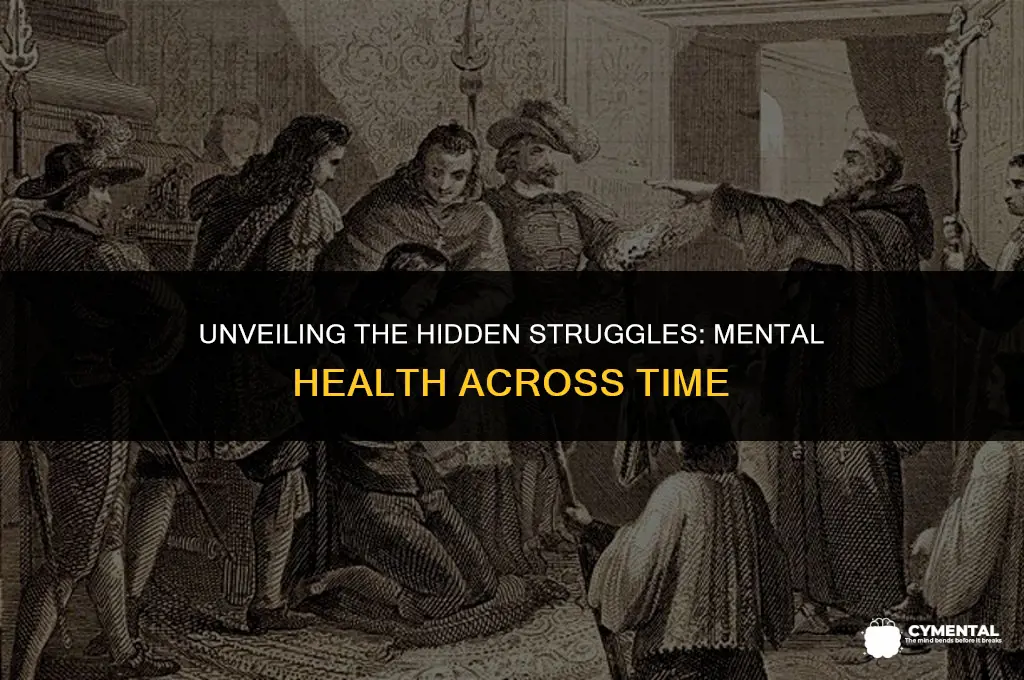
Mental health has been a significant issue throughout history, though our understanding and approach to it have evolved considerably over time. In the past, mental health concerns were often misunderstood, stigmatized, or attributed to supernatural causes. However, as medical knowledge and societal perspectives have advanced, we've come to recognize mental health as a crucial aspect of overall well-being. This shift has led to the development of more compassionate and effective treatments, as well as increased awareness and advocacy for mental health issues.
Explore related products


What You'll Learn

Historical stigma surrounding mental illness
Throughout history, mental illness has been shrouded in stigma and misunderstanding. In ancient times, mental disorders were often attributed to supernatural forces, such as demonic possession or the wrath of the gods. This led to fear and ostracization of those suffering from mental health issues, who were often subjected to brutal and ineffective treatments.
During the Middle Ages, the concept of mental illness began to take shape, but it was still largely misunderstood. People with mental health issues were often confined to asylums or dungeons, where they were subjected to harsh conditions and little to no medical care. The stigma surrounding mental illness was so pervasive that even those who sought help were often met with suspicion and ridicule.
In the 18th and 19th centuries, the field of psychiatry began to emerge, and with it came a greater understanding of mental illness. However, this understanding was still limited, and treatments were often barbaric by modern standards. Electroconvulsive therapy, for example, was introduced in the 1930s and was used extensively, often without proper anesthesia or consent.
It wasn't until the mid-20th century that the stigma surrounding mental illness began to slowly dissipate. The introduction of new medications and therapies, such as cognitive behavioral therapy, led to a greater understanding of mental health issues and more effective treatments. However, even today, there is still a significant stigma surrounding mental illness, particularly in certain cultures and communities.
One of the most damaging aspects of the historical stigma surrounding mental illness is the way it has prevented people from seeking help. Fear of being labeled "crazy" or "insane" has led many to suffer in silence, often exacerbating their symptoms and leading to further complications. This stigma has also had a profound impact on families and communities, who may feel ashamed or embarrassed by a loved one's mental health struggles.
In conclusion, the historical stigma surrounding mental illness has had a lasting impact on society's understanding and treatment of mental health issues. While progress has been made in recent decades, there is still much work to be done to combat the stigma and ensure that those suffering from mental illness receive the care and support they need.
Police Response to Mental Health Crises: Frequency and Challenges
You may want to see also
Explore related products


Evolution of psychiatric treatments
The evolution of psychiatric treatments has been a long and complex journey, marked by significant advancements and, at times, controversial practices. In the early days of psychiatry, treatments were often based on superstition and pseudoscience, with little understanding of the underlying causes of mental illness. One of the earliest recorded treatments for mental disorders was trepanation, a surgical procedure where a hole was drilled into the skull to release "evil spirits." This practice, which dates back to the Neolithic era, was based on the belief that mental illness was caused by demonic possession.
As our understanding of mental health evolved, so too did the treatments. In the 18th and 19th centuries, the focus shifted to moral treatment, which emphasized the importance of a supportive and nurturing environment for patients. This approach was a significant improvement over earlier methods, as it recognized the humanity of individuals with mental illness and sought to provide them with care and compassion. However, moral treatment was often limited by the lack of specialized facilities and trained professionals.
The 20th century saw the rise of psychoanalysis, a therapeutic approach developed by Sigmund Freud that focused on exploring the unconscious mind. Psychoanalysis was a groundbreaking treatment that helped to shed light on the complex psychological processes underlying mental illness. However, it was often criticized for being too lengthy and expensive, and for its lack of empirical evidence.
In the latter half of the 20th century, the development of psychotropic medications revolutionized the treatment of mental illness. Drugs like chlorpromazine and lithium were found to be effective in treating symptoms of schizophrenia and bipolar disorder, respectively. These medications allowed for the management of severe mental illness in a way that was previously impossible, and they paved the way for the modern era of psychiatric treatment.
Today, psychiatric treatments continue to evolve, with a growing emphasis on evidence-based practices and personalized care. Cognitive-behavioral therapy (CBT), a form of psychotherapy that focuses on changing negative thought patterns and behaviors, has become a widely used and effective treatment for a variety of mental health conditions. Additionally, advances in technology have led to the development of new treatments, such as transcranial magnetic stimulation (TMS) and ketamine therapy, which offer hope for individuals with treatment-resistant mental illness.
Despite these advancements, there is still much work to be done in the field of psychiatry. Stigma surrounding mental illness remains a significant barrier to treatment, and access to care is often limited by socioeconomic factors. Furthermore, the complex nature of mental health means that there is no one-size-fits-all approach to treatment, and individuals may require a combination of therapies and medications to achieve optimal outcomes. As we continue to learn more about the brain and the nature of mental illness, it is likely that psychiatric treatments will continue to evolve and improve, offering hope and healing to those who need it most.
Is IBS a Mental Health Issue? Unraveling the Gut-Brain Connection
You may want to see also
Explore related products


$14.15 $20

$12.14 $19.99


Mental health in ancient civilizations
In ancient civilizations, mental health was recognized and addressed in various ways, often intertwined with spiritual and physical well-being. The Egyptians, for instance, had a sophisticated understanding of mental health, as evidenced by the Edwin Smith Papyrus, which dates back to around 1600 BCE. This document describes symptoms and treatments for mental disorders, including depression and anxiety, and suggests that mental health was considered a legitimate medical concern.
The Greeks and Romans also acknowledged the importance of mental health. In Greek mythology, the god Dionysus was associated with madness and ecstasy, while the Romans had a deity named Februus who was linked to mental disorders. Both cultures developed theories about the causes of mental illness, with the Greeks attributing it to an imbalance of the four humors (blood, phlegm, yellow bile, and black bile) and the Romans believing it was caused by supernatural forces or moral failings.
In ancient China, mental health was viewed as a reflection of one's spiritual state. The Chinese believed that mental disorders were caused by an imbalance of yin and yang, and that they could be treated through practices such as acupuncture, herbal medicine, and meditation. The Yellow Emperor's Inner Canon, a foundational text of traditional Chinese medicine, includes detailed descriptions of mental health conditions and their treatments.
The ancient Indians also had a complex understanding of mental health. In Ayurvedic medicine, mental disorders were seen as a result of imbalances in the three doshas (vata, pitta, and kapha). Treatments included herbal remedies, dietary changes, and practices such as yoga and meditation. The Bhagavad Gita, a Hindu scripture, discusses the importance of mental control and the cultivation of a peaceful mind.
While these ancient civilizations had different approaches to mental health, they all recognized its importance and developed various methods for addressing mental disorders. This historical perspective highlights the universality of mental health concerns and the enduring quest for understanding and treating the mind.
Mental Health as Disability: Understanding Rights, Support, and Inclusion
You may want to see also
Explore related products

$9.29 $14.99


Impact of wars on soldiers' mental well-being
Wars have long been recognized as a significant source of stress and trauma for soldiers, with profound impacts on their mental well-being. The intense and prolonged exposure to life-threatening situations, violence, and loss can lead to a range of psychological issues, including post-traumatic stress disorder (PTSD), anxiety, depression, and substance abuse. These conditions can persist long after the conflict has ended, affecting not only the soldiers themselves but also their families and communities.
Historically, the mental health of soldiers was often overlooked or stigmatized, with many veterans suffering in silence. However, in recent years, there has been a growing awareness of the importance of addressing the psychological needs of military personnel. This shift in perspective has led to the development of specialized mental health services and support programs aimed at helping soldiers cope with the emotional toll of war.
One of the key challenges in addressing the mental health of soldiers is the stigma associated with seeking help. Many soldiers may feel that admitting to psychological struggles is a sign of weakness or that it could negatively impact their careers. To combat this stigma, military organizations have implemented initiatives to promote mental health awareness and encourage soldiers to seek support when needed. These efforts include education campaigns, peer support programs, and the integration of mental health services into primary care settings.
Another critical aspect of supporting soldiers' mental well-being is providing them with the necessary tools and resources to manage their stress and trauma. This can include evidence-based therapies such as cognitive-behavioral therapy (CBT) and eye movement desensitization and reprocessing (EMDR), as well as complementary approaches like mindfulness meditation and yoga. Additionally, social support networks, both within the military and in the broader community, can play a vital role in helping soldiers reintegrate into civilian life and find a sense of purpose and belonging.
In conclusion, the impact of wars on soldiers' mental well-being is a complex and multifaceted issue that requires a comprehensive and compassionate approach. By acknowledging the psychological toll of conflict and providing soldiers with the support and resources they need, we can help mitigate the long-term effects of war and promote the overall health and resilience of our military personnel.
Identifying Mental Health Challenges in Veterans: A Comprehensive Guide
You may want to see also
Explore related products


Development of modern mental health awareness
The development of modern mental health awareness represents a significant shift in societal attitudes towards psychological well-being. Historically, mental health issues were often stigmatized, misunderstood, or ignored, leading to inadequate support and treatment for those affected. However, in recent decades, there has been a growing recognition of the importance of mental health, driven by advances in research, changes in public policy, and increased advocacy efforts.
One key factor in the development of modern mental health awareness has been the work of mental health professionals and organizations. These groups have played a crucial role in educating the public about mental health issues, promoting evidence-based treatments, and advocating for policy changes that support mental health care. For example, the American Psychiatric Association (APA) and the National Alliance on Mental Illness (NAMI) have been instrumental in raising awareness about mental health conditions and promoting access to care.
Another important factor has been the increasing visibility of mental health issues in popular culture. Celebrities, athletes, and other public figures have spoken openly about their struggles with mental health, helping to normalize the conversation and reduce stigma. Social media has also played a role, with platforms like Twitter and Instagram providing a space for people to share their experiences and connect with others who are facing similar challenges.
In addition to these factors, there has been a growing recognition of the impact of mental health issues on overall well-being and productivity. Employers, educators, and policymakers have begun to understand the importance of addressing mental health concerns in order to promote overall health and well-being. This has led to the development of programs and initiatives aimed at supporting mental health in the workplace, schools, and communities.
Despite these advances, there is still much work to be done in terms of promoting mental health awareness and addressing the needs of those affected by mental health issues. Stigma and discrimination continue to be significant barriers to care, and access to mental health services remains limited in many parts of the world. However, the progress that has been made in recent years provides a foundation for continued efforts to improve mental health care and support.
Epilepsy and Mental Health: Unraveling the Complex Connection
You may want to see also
Frequently asked questions
Yes, mental health has been an issue throughout history, though it has been perceived and treated differently across various cultures and time periods.
Ancient civilizations, such as the Greeks and Romans, often viewed mental health issues as a result of an imbalance in bodily fluids or as a punishment from the gods. Treatments included practices like bloodletting and exorcisms.
During the Middle Ages, mental health issues were frequently associated with witchcraft or demonic possession. People suffering from mental health problems were often isolated, imprisoned, or subjected to exorcism rituals.
The modern understanding of mental health began to develop during the 18th and 19th centuries, with the emergence of psychiatric medicine. Physicians like Philippe Pinel and Emil Kraepelin contributed to the classification and treatment of mental disorders.
The treatment of mental health issues has evolved significantly over time, from ancient practices like bloodletting and exorcisms to modern approaches such as psychotherapy, medication, and cognitive-behavioral therapy. Today, there is a greater emphasis on understanding the underlying causes of mental health issues and providing compassionate care.