Caleb Wright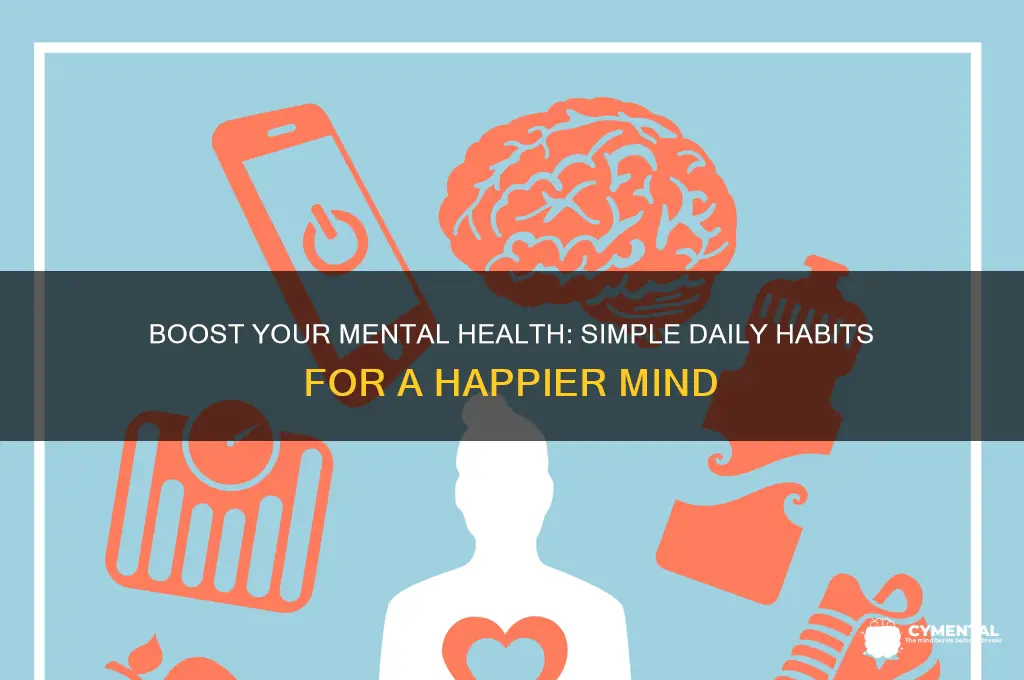
Improving mental health is a multifaceted process that involves adopting behaviors and habits that promote emotional well-being, resilience, and overall psychological balance. Engaging in regular physical activity, such as exercise or yoga, can reduce stress and boost mood by releasing endorphins. Prioritizing adequate sleep and maintaining a consistent sleep schedule helps regulate emotions and cognitive function. Mindfulness practices, like meditation or deep breathing, encourage present-moment awareness and reduce anxiety. Building and nurturing strong social connections through meaningful relationships provides emotional support and a sense of belonging. Additionally, setting boundaries, practicing gratitude, and seeking professional help when needed are essential behaviors that contribute to long-term mental health improvement.
Explore related products


What You'll Learn
- Regular physical exercise boosts mood and reduces stress, enhancing overall mental well-being effectively
- Mindfulness and meditation practices promote calmness and improve focus and emotional balance
- Adequate sleep supports brain function, emotional regulation, and reduces anxiety and depression risks
- Healthy eating habits provide essential nutrients, stabilizing mood and improving cognitive function significantly
- Social connections foster support, reduce loneliness, and enhance resilience against mental health challenges

Regular physical exercise boosts mood and reduces stress, enhancing overall mental well-being effectively
Physical activity isn't just about building muscle or losing weight. It's a powerful tool for reshaping your mental landscape. Research consistently shows that regular exercise acts as a natural antidepressant and anxiety reliever. Studies suggest that even moderate exercise, like brisk walking for 30 minutes most days, can significantly reduce symptoms of depression and anxiety. This effect is thought to be linked to the release of endorphins, our body's natural "feel-good" chemicals, which promote a sense of well-being and euphoria.
Imagine feeling a sense of accomplishment after a workout, the sun on your skin during a run, or the camaraderie of a team sport. These experiences, coupled with the biochemical changes, contribute to a more positive and resilient mindset.
But how much exercise is enough? The good news is, you don't need to become a marathon runner. The American Psychological Association recommends at least 150 minutes of moderate-intensity aerobic exercise per week, or 75 minutes of vigorous exercise. This could be broken down into 30 minutes of brisk walking five times a week, or three 25-minute jogs. Even shorter bursts of activity throughout the day can be beneficial. Taking the stairs instead of the elevator, going for a short walk during lunch breaks, or doing some jumping jacks during commercial breaks all add up.
Consistency is key. Aim to make physical activity a regular part of your routine, something you enjoy and look forward to.
Not all exercise is created equal when it comes to mental health benefits. Activities that combine physical challenge with social interaction or mindfulness can be particularly potent. Team sports like basketball or soccer offer the added benefit of social connection, which is crucial for mental well-being. Yoga, with its focus on breathwork and body awareness, can reduce stress and improve mood. Even dancing, with its combination of physical activity and creative expression, can be a powerful mood booster. Experiment with different activities to find what resonates with you and fits your lifestyle.
Remember, the goal isn't to achieve peak physical performance, but to nurture your mental health. Listen to your body, start slowly if needed, and celebrate your progress, no matter how small.
Qualifying for Mental Health Support: A Step-by-Step Guide to Accessing Care
You may want to see also
Explore related products


Mindfulness and meditation practices promote calmness and improve focus and emotional balance
Mindfulness and meditation are not just buzzwords but powerful tools backed by science to enhance mental well-being. Studies show that regular practice can reduce symptoms of anxiety and depression by up to 30%, rivaling the effectiveness of some medications. These practices work by rewiring the brain’s stress response, fostering a state of calm and clarity. For instance, a 2018 study in *JAMA Internal Medicine* found that mindfulness meditation significantly lowered stress levels in participants after just eight weeks of consistent practice. This isn’t about achieving a zen-like state overnight but about building a habit that gradually shifts your mental baseline toward resilience and balance.
To integrate mindfulness and meditation into your routine, start small. Dedicate 5–10 minutes daily to a simple practice, such as focusing on your breath or body sensations. Apps like Headspace or Calm offer guided sessions tailored to beginners, making it easier to stay consistent. For those with busy schedules, even micro-practices—like mindful walking or a one-minute breathing exercise—can yield benefits. The key is regularity; practicing daily, even for short periods, is more effective than longer, sporadic sessions. Think of it as mental hygiene—just as you brush your teeth daily, your mind needs consistent care.
One common misconception is that meditation requires emptying your mind of thoughts. In reality, it’s about observing thoughts without judgment. When your mind wanders (which it will), gently bring your focus back to the present. This process strengthens your attention muscles, improving focus in daily life. For emotional balance, mindfulness encourages acknowledging feelings without reacting impulsively. For example, if you feel overwhelmed, pause, take a few deep breaths, and label the emotion (“I’m feeling anxious”). This simple act creates distance between you and the emotion, reducing its grip.
While mindfulness and meditation are accessible to all ages, their application can vary. For children, playful practices like mindful coloring or guided visualizations can make the concept engaging. Teens might benefit from stress-reduction techniques during exams, while adults can use mindfulness to manage work-related pressures. Older adults often find these practices helpful for improving sleep and reducing age-related anxiety. Regardless of age, the goal remains the same: cultivating a present-moment awareness that fosters calmness and emotional stability.
Finally, combining mindfulness with other mental health strategies amplifies its impact. Pair it with physical activity, like yoga, to enhance both mental and physical well-being. Incorporate gratitude journaling to deepen emotional balance. And remember, mindfulness isn’t a cure-all but a complementary tool. If you’re dealing with severe mental health issues, consult a professional while using these practices as part of a holistic approach. By weaving mindfulness into your life, you’re not just reacting to stress—you’re proactively shaping a calmer, more focused, and emotionally balanced version of yourself.
Empowering Support: Strategies to Aid and Uplift the Mentally Ill
You may want to see also
Explore related products


Adequate sleep supports brain function, emotional regulation, and reduces anxiety and depression risks
Sleep is the cornerstone of mental resilience, yet it’s often sacrificed in the name of productivity or leisure. Adults require 7–9 hours of sleep nightly to allow the brain to consolidate memories, clear toxins, and restore neural pathways. Without this, cognitive functions like decision-making and problem-solving deteriorate, leaving you mentally foggy and emotionally brittle. Think of sleep as your brain’s nightly maintenance window—skip it, and the system malfunctions.
Emotional regulation hinges on sleep quality more than you might realize. During deep sleep, the amygdala (the brain’s emotional center) calms down, while the prefrontal cortex (responsible for rational thinking) strengthens its connections. This balance is disrupted with insufficient sleep, leading to heightened irritability, mood swings, and an exaggerated response to stressors. Studies show that even one night of poor sleep can increase emotional reactivity by up to 60%. Practically, this means a minor inconvenience—like a spilled coffee—could feel like a catastrophe.
Anxiety and depression often lurk in the shadows of sleep deprivation. Chronic sleep loss alters neurotransmitter levels, particularly serotonin, which regulates mood and anxiety. Research indicates that individuals sleeping less than 6 hours a night are 2.5 times more likely to report symptoms of depression. Similarly, insomnia is both a symptom and a predictor of anxiety disorders, creating a vicious cycle. Breaking this cycle starts with prioritizing sleep—not as a luxury, but as a non-negotiable pillar of mental health.
To harness sleep’s protective effects, adopt a sleep hygiene routine tailored to your needs. Aim for consistency: go to bed and wake up at the same time daily, even on weekends. Create a sleep-conducive environment by keeping the room cool (60–67°F), dark, and quiet. Limit exposure to screens at least an hour before bed, as blue light suppresses melatonin production. Incorporate relaxation techniques like deep breathing or progressive muscle relaxation to signal to your body that it’s time to wind down. Small changes, like these, compound into significant mental health benefits over time.
Finally, recognize that sleep is not a passive activity but an active investment in your mental well-being. Just as you schedule workouts or meals, schedule sleep. Track your sleep patterns using a journal or app to identify disruptions and adjust accordingly. If you consistently struggle with sleep despite these measures, consult a healthcare professional—underlying issues like sleep apnea or circadian rhythm disorders may require targeted intervention. Adequate sleep isn’t just about feeling rested; it’s about fortifying your mind against the challenges of daily life.
Supporting Asian American Mental Health: Strategies for Cultural Sensitivity and Care
You may want to see also
Explore related products


Healthy eating habits provide essential nutrients, stabilizing mood and improving cognitive function significantly
The food we consume directly impacts our brain's structure and function, influencing everything from our mood to our memory. A diet rich in essential nutrients acts as a foundation for mental well-being, providing the building blocks for neurotransmitters, the brain's chemical messengers. For instance, omega-3 fatty acids, found abundantly in fatty fish like salmon and walnuts, are crucial for brain development and function. Studies suggest that omega-3 deficiency is linked to increased risk of depression and cognitive decline, highlighting the importance of incorporating these healthy fats into our diets.
Aiming for a daily intake of at least 250-500 mg of combined EPA and DHA, the active forms of omega-3, is recommended for optimal brain health.
Consider the Mediterranean diet, often hailed as a blueprint for healthy eating. This diet emphasizes fruits, vegetables, whole grains, legumes, and healthy fats like olive oil, while limiting processed foods and red meat. Research consistently shows that adhering to a Mediterranean-style diet is associated with reduced risk of depression and anxiety, improved cognitive function in older adults, and even a lower risk of developing Alzheimer's disease. This isn't just about individual nutrients; it's about the synergistic effect of a balanced diet, providing a spectrum of vitamins, minerals, and antioxidants that work together to support brain health.
Imagine your plate as a canvas, painting it with vibrant colors from fruits and vegetables, opting for whole grains over refined carbohydrates, and choosing lean protein sources like fish and beans.
While the benefits of healthy eating are clear, it's important to acknowledge that dietary changes alone may not be a cure-all for mental health issues. However, they can be a powerful tool in conjunction with other therapies and lifestyle modifications. Think of it as fueling your body and mind for the work of healing and growth. Consulting with a registered dietitian can provide personalized guidance, ensuring your dietary choices align with your specific needs and preferences. Remember, small, sustainable changes are key. Start by incorporating one or two brain-boosting foods into your daily routine and gradually build upon them, creating a sustainable and nourishing approach to both physical and mental well-being.
Deleting Social Media: A Path to Improved Mental Well-being?
You may want to see also
Explore related products


Social connections foster support, reduce loneliness, and enhance resilience against mental health challenges
Human beings are inherently social creatures, and our connections with others play a pivotal role in shaping our mental well-being. Research consistently highlights that social support is a powerful buffer against mental health issues, acting as a protective factor that fosters resilience and promotes recovery. A study published in the *Journal of Health and Social Behavior* found that individuals with strong social ties have a 50% increased likelihood of longevity, a benefit that extends beyond the mere absence of illness to encompass overall mental and emotional health.
Consider the mechanism at play: when we engage in meaningful social interactions, our brains release oxytocin, often referred to as the "love hormone," which reduces stress and anxiety. Conversely, loneliness triggers the release of cortisol, a stress hormone linked to depression and anxiety disorders. A practical takeaway is to prioritize face-to-face interactions, even in small doses. For instance, dedicating 30 minutes daily to a conversation with a friend or family member can significantly reduce feelings of isolation. For older adults, who are particularly vulnerable to loneliness, community groups or volunteer activities can provide structured opportunities for connection.
However, not all social interactions are created equal. Quality trumps quantity. A 2019 study in *The Lancet* revealed that individuals who reported having 3-5 close relationships experienced greater mental health benefits than those with larger but less intimate social networks. To cultivate such relationships, focus on active listening, vulnerability, and shared activities. For example, joining a hobby-based group (e.g., a book club or hiking group) can foster deeper connections through shared interests and experiences.
A cautionary note: in the digital age, social media often masquerades as genuine connection but can exacerbate feelings of inadequacy and isolation. A study in *JAMA Psychiatry* found that limiting social media use to 30 minutes per day can reduce symptoms of depression and loneliness. Instead, leverage technology to strengthen real-world relationships—schedule video calls with distant loved ones or use apps like Meetup to find local community events.
In conclusion, social connections are not merely a luxury but a necessity for mental health. By prioritizing meaningful interactions, limiting digital distractions, and engaging in shared activities, individuals can build a robust support system that reduces loneliness and enhances resilience. Start small: reach out to one person today, whether through a call, message, or in-person meeting. Over time, these micro-actions accumulate into a powerful defense against mental health challenges.
Supporting Your Daughter's Mental Health: A Guide for Concerned Parents
You may want to see also
Frequently asked questions
Engaging in regular physical exercise, practicing mindfulness or meditation, maintaining a balanced diet, and ensuring adequate sleep are all daily habits that can significantly improve mental well-being.
Building and maintaining strong social connections can provide emotional support, reduce feelings of loneliness, and offer a sense of belonging. Social interactions stimulate positive emotions and can act as a buffer against stress and anxiety.
Yes, spending time in natural environments has been linked to reduced stress, improved mood, and increased relaxation. Activities like walking in a park, hiking, or simply sitting outdoors can provide a sense of calm and enhance overall mental clarity.
Setting healthy boundaries is crucial for mental health as it helps manage stress, prevent burnout, and foster self-respect. Learning to say no, prioritizing personal needs, and establishing limits in relationships can lead to a more balanced and fulfilling life.




![Nekteck Shiatsu Foot Massager with Heat [2026 Upgraded], Valentines Day Gifts for Him Her Relaxation Tools, FSA Eligible Deep Kneading Therapy Air Compression, HSA Feet Massage for Plantar Fasciitis](https://m.media-amazon.com/images/I/81lu0+xiXEL._AC_UL320_.jpg)