Lucas Bennett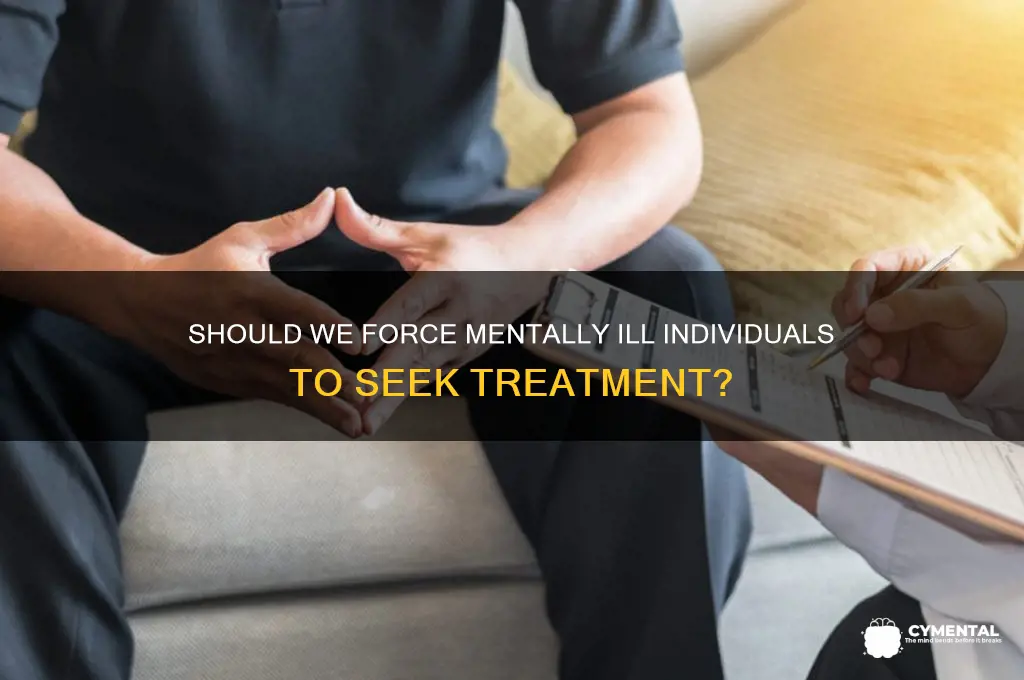
The question of whether individuals with severe mental illness should be compelled to seek treatment is a complex and ethically charged issue. On one hand, untreated mental illness can lead to significant harm, not only to the individual but also to those around them, raising concerns about public safety and well-being. Proponents of mandatory treatment argue that it can prevent deterioration, reduce suffering, and potentially save lives, especially in cases where the person lacks insight into their condition. However, critics emphasize the importance of autonomy and the potential for coercion to erode trust in the mental health system, highlighting the need for a balanced approach that respects individual rights while ensuring access to care. This debate underscores the challenges of addressing mental health in a society that values both personal freedom and collective responsibility.
Explore related products


What You'll Learn
- Legal and Ethical Boundaries: Balancing individual rights with societal responsibility in mandating mental health treatment
- Effectiveness of Forced Treatment: Assessing if coerced therapy yields long-term positive outcomes for patients
- Stigma and Resistance: How forced intervention may worsen stigma and patient reluctance to seek help
- Alternatives to Coercion: Exploring voluntary, supportive approaches to encourage mental health care access
- Crisis Intervention Limits: Determining when forced treatment is necessary in life-threatening situations

Legal and Ethical Boundaries: Balancing individual rights with societal responsibility in mandating mental health treatment
The question of whether to mandate mental health treatment for severely ill individuals pits personal autonomy against public safety, a tension embodied in laws like the Lanterman-Petris-Short (LPS) Act in California. This legislation allows involuntary commitment if a person is deemed “gravely disabled” or a danger to themselves or others. However, the threshold for intervention is high, requiring clear evidence of imminent harm. For instance, a person with untreated schizophrenia who exhibits violent behavior may qualify, but someone experiencing severe depression without suicidal intent might not. This legal framework underscores the challenge: how to act responsibly without infringing on individual rights.
Consider the ethical dilemma through the lens of beneficence versus respect for autonomy. Mental health professionals often face the paradox of patients who lack insight into their condition, a phenomenon known as anosognosia. For example, a 28-year-old with bipolar disorder in a manic episode may refuse medication, believing they are invincible. Here, involuntary treatment could prevent self-harm or harm to others, but it also risks eroding trust in the therapeutic relationship. Ethical guidelines, such as those from the American Psychological Association, emphasize the least restrictive intervention, prioritizing voluntary engagement whenever possible.
Practical implementation of mandated treatment requires a nuanced approach. Outpatient commitment programs, available in states like New York and Texas, order individuals to adhere to treatment plans while living in the community. These programs often include court-supervised medication management, therapy, and regular check-ins. For instance, a 45-year-old with chronic psychosis might receive monthly long-acting injectable antipsychotics (e.g., 40 mg of aripiprazole lauroxil) to stabilize symptoms. While such programs have shown reduced hospitalization rates, they demand significant resources and oversight, raising questions about scalability and fairness.
Critics argue that forced treatment perpetuates stigma and undermines the mental health system’s credibility. A comparative analysis of countries like Sweden, which emphasizes voluntary care, reveals lower rates of coercion but higher reliance on social support networks. In contrast, the U.S. system often defaults to crisis intervention, leaving gaps in early intervention. To balance rights and responsibility, policymakers could invest in preventive measures, such as school-based mental health services or peer support programs, reducing the need for involuntary measures.
Ultimately, the debate hinges on proportionality: does the benefit of mandated treatment outweigh the cost to individual liberty? A middle ground might involve tiered interventions, starting with voluntary outreach and escalating only when necessary. For example, a 32-year-old with severe anxiety might first receive access to teletherapy and self-help apps, with involuntary measures reserved as a last resort. By prioritizing empathy, evidence, and flexibility, society can uphold both the rights of individuals and its duty to protect the vulnerable.
Empowering Change: Simple Ways You Can Make a Difference Today
You may want to see also
Explore related products


Effectiveness of Forced Treatment: Assessing if coerced therapy yields long-term positive outcomes for patients
The debate over forced treatment for the severely mentally ill hinges on a critical question: does coercion foster recovery or deepen resistance? Proponents argue that individuals in psychotic states lack insight into their condition, making involuntary intervention a necessary lifeline. A 2014 meta-analysis in *Psychiatric Services* found that mandated outpatient treatment reduced hospitalization rates by 26% and improved medication adherence in patients with schizophrenia. However, these gains often dissipate once coercion ends, raising doubts about long-term efficacy. Critics counter that forced treatment erodes trust, stigmatizes patients, and violates autonomy, potentially worsening outcomes. For instance, a 2019 study in *The Lancet Psychiatry* showed that patients subjected to involuntary hospitalization reported higher levels of trauma and lower engagement in voluntary care afterward.
Consider the case of assisted outpatient treatment (AOT) programs, which mandate court-ordered therapy and medication for high-risk individuals. In New York State, AOT participants saw a 55% reduction in psychiatric hospitalizations, according to a 2020 report by the Treatment Advocacy Center. Yet, these programs require stringent criteria: patients must have a history of non-adherence, multiple hospitalizations, or dangerous behavior. Even then, success depends on individualized treatment plans, consistent monitoring, and a clear exit strategy. Without these elements, AOT risks becoming a punitive measure rather than a therapeutic one. For example, a 32-year-old man with treatment-resistant bipolar disorder might stabilize under AOT but relapse post-discharge due to inadequate aftercare planning.
From a practical standpoint, forced treatment is not a one-size-fits-all solution. For adolescents with early-onset psychosis, family-based interventions like the NAVIGATE program yield better outcomes than coercion. This model pairs medication with psychoeducation and skills training, reducing relapse rates by 40% over two years. In contrast, older adults with chronic conditions may require more structured approaches, such as long-acting injectable antipsychotics (e.g., 40 mg of aripiprazole lauroxil monthly) to ensure adherence. However, even here, coercion should be a last resort, preceded by exhaustive attempts at voluntary engagement. A 55-year-old woman with paranoid schizophrenia, for instance, might respond better to a peer support specialist than to a court order.
The ethical dilemma persists: how do we balance individual rights with public safety and health? One solution lies in advance directives, legal documents allowing patients to specify treatment preferences during lucid periods. These tools empower individuals while providing a framework for intervention when capacity is compromised. For example, a 28-year-old man with schizoaffective disorder could stipulate his willingness to accept clozapine (starting at 12.5 mg daily, titrated to 300–450 mg) during acute episodes, avoiding forced treatment. Such measures require widespread education and legal support but offer a middle ground between autonomy and protection.
Ultimately, the effectiveness of forced treatment depends on its implementation. Coercion without compassion, continuity, or consent risks perpetuating harm. Programs must prioritize patient dignity, involve families where appropriate, and integrate coerced phases with voluntary care pathways. For instance, a 42-year-old woman with severe depression might transition from involuntary ECT (3–6 sessions) to voluntary talk therapy and medication management. By framing forced treatment as a temporary bridge to autonomy, clinicians can maximize its benefits while minimizing its drawbacks. The goal is not control but connection—guiding patients toward a future where help is sought, not imposed.
Family Doctors: Your First Line in Mental Health Support?
You may want to see also
Explore related products


Stigma and Resistance: How forced intervention may worsen stigma and patient reluctance to seek help
Forced intervention in mental health care, while often well-intentioned, can inadvertently deepen the stigma surrounding mental illness. When individuals are compelled to seek treatment against their will, it reinforces the societal narrative that they are dangerous, incapable, or lacking autonomy. This perception can lead to further marginalization, making it less likely for others to voluntarily seek help for fear of being labeled or controlled. For instance, involuntary commitment or court-mandated therapy may be seen as punitive rather than supportive, perpetuating the idea that mental illness is a flaw to be corrected rather than a condition to be managed with empathy.
Consider the psychological impact of coercion on the individual. Being forced into treatment can erode trust in healthcare systems and professionals, fostering resentment rather than collaboration. A study published in the *Journal of Mental Health* found that patients who felt coerced into treatment were 50% less likely to engage in follow-up care compared to those who sought help voluntarily. This resistance is not merely defiance but a response to feeling disempowered. For example, a 32-year-old with severe depression might avoid therapy altogether after an involuntary hospitalization, fearing loss of control over their own recovery journey.
The stigma exacerbated by forced intervention also extends to communities and families. When mental health crises are met with police involvement or legal mandates, it creates a spectacle that associates mental illness with crisis management rather than proactive care. This can deter individuals from disclosing symptoms early, as they may fear triggering similar interventions. A practical tip for families is to prioritize open dialogue and early intervention strategies, such as peer support groups or outpatient counseling, which foster trust and reduce the need for coercive measures.
To mitigate these effects, healthcare systems must shift focus from control to collaboration. Voluntary, patient-centered approaches, such as Assisted Outpatient Treatment (AOT) programs, have shown promise in reducing hospitalization rates by 50% among participants. These programs pair treatment with community support, allowing individuals to maintain autonomy while receiving care. Additionally, public campaigns that humanize mental illness and emphasize recovery stories can counteract stigma, encouraging more people to seek help without fear of coercion.
In conclusion, while forced intervention may seem necessary in extreme cases, its broader implications for stigma and patient reluctance cannot be ignored. By prioritizing empathy, autonomy, and community-based solutions, we can create a mental health care system that heals rather than harms, inviting individuals to seek help on their own terms.
Exercise and Mental Health: Boosting Mood, Focus, and Resilience Naturally
You may want to see also
Explore related products



Alternatives to Coercion: Exploring voluntary, supportive approaches to encourage mental health care access
The question of whether to force individuals with severe mental illness into treatment is complex, often pitting autonomy against safety. However, coercion can erode trust, exacerbate stigma, and lead to long-term disengagement from care. Voluntary, supportive approaches offer a more ethical and effective alternative, fostering collaboration and empowering individuals to take ownership of their recovery.
Consider the Open Dialogue model, pioneered in Finland, which emphasizes early intervention and family involvement. When a person experiences a mental health crisis, a team of professionals, family members, and social supports convene to discuss the situation openly. This non-confrontational approach reduces the need for involuntary hospitalization by addressing concerns collectively and offering immediate, flexible support. Studies show that Open Dialogue participants are less likely to require coercion and more likely to remain engaged in treatment long-term.
Another promising strategy is Assertive Community Treatment (ACT), a team-based approach for individuals with severe mental illness who struggle to access care. ACT teams provide comprehensive services—medication management, therapy, housing support, and vocational training—directly in the community. By building trust and meeting individuals where they are, ACT reduces the reliance on forced treatment. For example, a 2018 study found that ACT participants had 40% fewer involuntary hospitalizations compared to those receiving standard care.
Peer support programs also play a critical role in encouraging voluntary engagement. Peer specialists, individuals with lived experience of mental illness, offer empathy, guidance, and practical advice. Their unique perspective helps reduce stigma and inspires hope, making mental health care feel less intimidating. A meta-analysis published in *Psychiatric Services* found that peer support significantly improves treatment adherence and recovery outcomes, particularly among those hesitant to seek help.
Finally, advance directives empower individuals to plan their care preferences during periods of stability. These legal documents outline treatment choices, preferred providers, and crisis management strategies, ensuring that care aligns with the individual’s wishes even if they become unable to make decisions. For instance, someone might specify that they prefer outpatient therapy over hospitalization or request a specific medication. This proactive approach reduces the need for coercion by honoring autonomy while safeguarding well-being.
While these alternatives require investment in resources and training, they offer a more humane and sustainable solution to the challenges of severe mental illness. By prioritizing collaboration, trust, and individual agency, we can create a mental health system that encourages voluntary engagement and supports long-term recovery.
Supporting Teen Mental Health: A Guide to Seeking Professional Help
You may want to see also
Explore related products


$20.49 $36.99

$18.08 $32.99


Crisis Intervention Limits: Determining when forced treatment is necessary in life-threatening situations
In life-threatening mental health crises, the decision to initiate forced treatment hinges on a delicate balance between autonomy and the duty to prevent imminent harm. Legal frameworks like the *Tarasoff v. Regents of the University of California* case highlight the ethical obligation to intervene when a person poses a serious risk to themselves or others. Clinicians must assess the severity of the situation using structured tools, such as the Columbia-Suicide Severity Rating Scale, to determine if the individual meets criteria for involuntary commitment or treatment. This process requires clear documentation of suicidal or homicidal intent, coupled with an inability to care for oneself, to justify overriding personal freedoms.
Consider a 28-year-old with untreated schizophrenia who has stopped taking prescribed antipsychotics (e.g., olanzapine 10 mg daily) and is now experiencing command hallucinations instructing self-harm. Despite their refusal of help, the presence of active suicidal ideation with a specific plan (e.g., jumping from a bridge) triggers the threshold for intervention. In such cases, emergency hospitalization under a 72-hour psychiatric hold allows for immediate stabilization, including the reintroduction of medication under medical supervision. The goal is not to punish but to restore decision-making capacity through temporary, targeted interventions.
However, forced treatment is not without risks. Overreliance on coercion can erode trust and exacerbate long-term engagement issues. A 2019 study in *The Lancet Psychiatry* found that individuals subjected to involuntary treatment reported higher levels of trauma and lower satisfaction with care compared to those treated voluntarily. To mitigate this, clinicians should prioritize de-escalation techniques, such as verbal crisis negotiation or the involvement of trusted family members, before resorting to restraint. Additionally, post-crisis follow-up, including access to peer support programs or long-acting injectable antipsychotics (e.g., aripiprazole lauroxil 441 mg every 4–6 weeks), can reduce the need for future involuntary measures.
Ultimately, the decision to force treatment must be a last resort, guided by clinical judgment and legal standards. It requires a multidisciplinary approach involving psychiatrists, social workers, and legal advocates to ensure fairness and efficacy. By focusing on immediate safety while respecting dignity, crisis intervention can serve as a bridge to voluntary, sustainable care rather than a punitive measure. This nuanced approach acknowledges the complexity of severe mental illness while upholding the principle of "least restrictive alternative" in practice.
Mental Health Treatment: Easing Gender Dysphoria and Fostering Well-being
You may want to see also
Frequently asked questions
Forcing someone to seek help should be a last resort, considered only when the person poses an immediate danger to themselves or others. It’s important to approach the situation with empathy, involve mental health professionals, and explore voluntary options first.
Ethical considerations vary, but mandated treatment is generally justified only when the individual lacks the capacity to make informed decisions and is at risk of harm. It must be done within legal frameworks and with the goal of restoring autonomy.
Forcing treatment can damage trust, worsen the individual’s mental state, and lead to feelings of resentment or trauma. It may also reinforce stigma around mental health care.
Use open, non-judgmental communication, express concern, and offer support. Involve trusted individuals or professionals, and provide resources while respecting their autonomy.
Legal grounds for forced treatment vary by jurisdiction but typically require evidence of severe impairment, danger to self or others, and a court order. It’s a complex process involving mental health professionals and legal authorities.