Lucas Bennett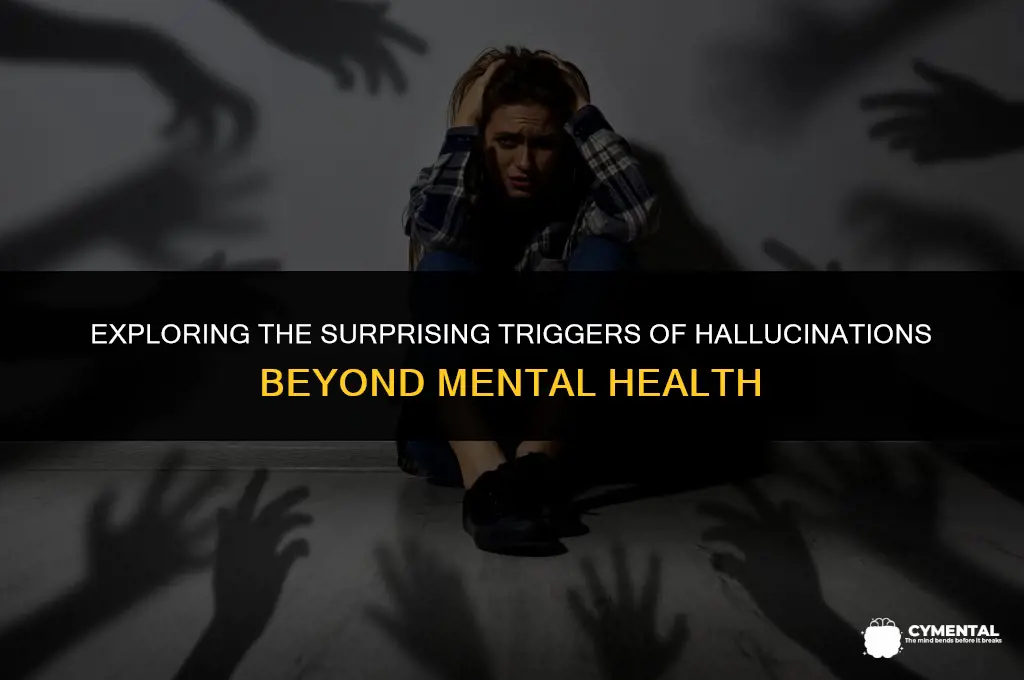
Hallucinations are often associated with mental health conditions such as schizophrenia or bipolar disorder, but they can also be triggered by a variety of other factors. These include sensory deprivation, where a lack of sensory input can lead to the brain creating its own perceptions, and substance use, particularly with hallucinogenic drugs like LSD or psilocybin mushrooms. Certain physical conditions, such as migraines, epilepsy, or sleep disorders, can also cause hallucinations. Additionally, intense emotional states, like grief or stress, can sometimes lead to hallucinatory experiences. Understanding these diverse causes is crucial for accurate diagnosis and treatment, as it highlights that hallucinations are not solely indicative of a mental health issue.
Explore related products


What You'll Learn
- Sleep Deprivation: Lack of sleep can cause hallucinations due to reduced brain function and increased stress levels
- Sensory Overload: Intense sensory experiences, such as loud noises or bright lights, can overwhelm the brain and lead to hallucinations
- Medications: Certain medications, including some antibiotics and painkillers, can cause hallucinations as a side effect
- Substance Abuse: Hallucinogens like LSD, mushrooms, and DMT can induce hallucinations, while withdrawal from substances like alcohol can also cause them
- Medical Conditions: Conditions such as migraines, epilepsy, and Charles Bonnet syndrome can cause visual or auditory hallucinations

Sleep Deprivation: Lack of sleep can cause hallucinations due to reduced brain function and increased stress levels
Chronic sleep deprivation can significantly impact brain function, leading to a variety of cognitive impairments. One of the more severe consequences is the potential for hallucinations. When the brain is not given adequate time to rest and recover, it can become overwhelmed, resulting in reduced cognitive performance and increased stress levels. This state of heightened stress can cause the brain to misprocess sensory information, leading to hallucinations.
Hallucinations due to sleep deprivation can manifest in various forms, including visual, auditory, and tactile experiences. For instance, individuals may see things that are not there, hear voices or sounds that do not exist, or feel sensations on their skin that have no external source. These hallucinations can be distressing and disorienting, further exacerbating the stress and anxiety experienced by the individual.
The exact mechanisms by which sleep deprivation leads to hallucinations are not fully understood, but research suggests that it may be related to changes in brain chemistry and neural activity. Lack of sleep can disrupt the balance of neurotransmitters in the brain, such as dopamine and serotonin, which play a crucial role in regulating mood and perception. Additionally, sleep deprivation can lead to increased activity in certain areas of the brain, such as the amygdala, which is involved in processing emotions and fear responses.
It is important to note that sleep deprivation-induced hallucinations are typically temporary and resolve once adequate sleep is restored. However, chronic sleep deprivation can lead to more persistent and severe symptoms, potentially mimicking or exacerbating mental health conditions such as schizophrenia or bipolar disorder. Therefore, it is crucial to address sleep deprivation as a potential underlying cause of hallucinations, especially in individuals who are not responding well to traditional mental health treatments.
In conclusion, sleep deprivation is a significant and often overlooked cause of hallucinations. By understanding the relationship between lack of sleep and cognitive impairments, we can better address and treat individuals experiencing these distressing symptoms. Prioritizing sleep hygiene and seeking professional help when necessary can go a long way in preventing and managing sleep deprivation-related hallucinations.
Exploring Mental Health Statistics in Michigan: A Comprehensive Overview
You may want to see also
Explore related products



Sensory Overload: Intense sensory experiences, such as loud noises or bright lights, can overwhelm the brain and lead to hallucinations
Intense sensory experiences, such as loud noises or bright lights, can overwhelm the brain and lead to hallucinations. This phenomenon, known as sensory overload, occurs when the brain is unable to process the vast amount of sensory information it receives, causing it to malfunction and produce hallucinations. For example, a person exposed to extremely loud music at a concert may experience auditory hallucinations, such as hearing voices or sounds that are not present. Similarly, exposure to bright flashing lights can cause visual hallucinations, including seeing patterns, shapes, or even people that are not there.
Sensory overload can be particularly problematic for individuals with sensory processing disorders, such as autism spectrum disorder, who may have difficulty filtering out irrelevant sensory information. In these cases, even everyday sensory experiences, such as the sound of a vacuum cleaner or the feel of certain fabrics, can trigger hallucinations. It is important to note that sensory overload-induced hallucinations are not a result of mental health issues, but rather a physiological response to excessive sensory stimulation.
To prevent sensory overload, it is essential to create a sensory-friendly environment. This can be achieved by reducing the intensity of sensory stimuli, such as lowering the volume of music or dimming bright lights. Additionally, individuals can use sensory filtering tools, such as noise-cancelling headphones or sunglasses, to help manage their sensory input. In cases where sensory overload is unavoidable, it may be helpful to practice relaxation techniques, such as deep breathing or meditation, to help the brain cope with the overwhelming sensory information.
In conclusion, sensory overload is a significant cause of hallucinations that is often overlooked. By understanding the mechanisms behind sensory overload and taking steps to create a sensory-friendly environment, individuals can reduce their risk of experiencing hallucinations and improve their overall well-being.
Election 2020: Mental Health Policies and Presidential Priorities
You may want to see also
Explore related products


Medications: Certain medications, including some antibiotics and painkillers, can cause hallucinations as a side effect
Medications can sometimes have unexpected side effects, and hallucinations are one such adverse reaction that can occur with certain drugs. Antibiotics, for instance, are known to cause hallucinations in some individuals. This can happen due to the disruption of the gut microbiome, which plays a crucial role in brain function and mental health. Specific antibiotics like ciprofloxacin and levofloxacin have been reported to cause hallucinations, particularly in older adults.
Painkillers, especially opioids, are another class of medications that can lead to hallucinations. These drugs affect the brain's chemistry by binding to opioid receptors, which can alter perception and lead to hallucinations. Additionally, the withdrawal from opioids can also cause hallucinations as the brain adjusts to the absence of the drug.
Hallucinations caused by medications are typically temporary and resolve once the drug is discontinued or the dosage is adjusted. However, it's essential for individuals experiencing these side effects to consult with their healthcare provider to ensure proper management and to rule out any underlying conditions that could be contributing to the hallucinations.
In some cases, medications may interact with each other or with other substances, such as alcohol or recreational drugs, to increase the risk of hallucinations. It's crucial for individuals to be aware of potential drug interactions and to discuss any concerns with their healthcare provider or pharmacist.
To minimize the risk of medication-induced hallucinations, it's important to follow the prescribed dosage and administration instructions carefully. Additionally, maintaining a healthy lifestyle, including a balanced diet, regular exercise, and adequate sleep, can help support overall brain health and reduce the likelihood of experiencing hallucinations as a side effect of medications.
Understanding Mental Health: Recognizing Common Issues and Challenges
You may want to see also
Explore related products


Substance Abuse: Hallucinogens like LSD, mushrooms, and DMT can induce hallucinations, while withdrawal from substances like alcohol can also cause them
Substance abuse is a significant factor that can lead to hallucinations, distinct from mental health issues. Hallucinogens such as LSD, mushrooms, and DMT are known for their ability to induce vivid hallucinations. These substances alter the brain's chemistry, particularly affecting the neurotransmitter serotonin, which plays a crucial role in regulating mood, perception, and behavior. The hallucinations experienced can vary widely in intensity and content, ranging from mild distortions of reality to profound, life-altering visions.
LSD, or lysergic acid diethylamide, is one of the most well-known hallucinogens. It is typically ingested orally and can produce hallucinations within 30 minutes to an hour. The effects can last for several hours, during which users may experience altered perceptions of time and space, as well as intense emotional shifts. Psilocybin mushrooms, another common hallucinogen, contain the active compound psilocybin, which is converted to psilocin in the body. These mushrooms can induce hallucinations, euphoria, and spiritual experiences, with effects lasting around 4-6 hours.
DMT, or dimethyltryptamine, is a powerful hallucinogen found in various plants and animals. It is often smoked or vaporized and can produce intense hallucinations almost immediately. The effects of DMT are typically short-lived, lasting around 15-30 minutes, but they can be extremely profound, often described as life-changing or even mystical.
In addition to these hallucinogens, withdrawal from certain substances, such as alcohol, can also cause hallucinations. Alcohol withdrawal syndrome can occur when individuals who have been drinking heavily for an extended period suddenly stop or significantly reduce their alcohol intake. Hallucinations during alcohol withdrawal can range from mild to severe and are often accompanied by other symptoms such as tremors, anxiety, and seizures. These hallucinations are thought to be caused by the brain's attempt to adjust to the absence of alcohol, which can disrupt normal neurotransmitter function.
It is essential to recognize the risks associated with substance abuse and the potential for hallucinations. Individuals experiencing hallucinations due to substance use should seek medical attention, as these experiences can be dangerous and may indicate a need for treatment or support. Understanding the causes and effects of substance-induced hallucinations can help inform prevention strategies and improve outcomes for those affected by substance abuse.
Approaching with Care: How to Ask About Mental Health Issues
You may want to see also
Explore related products


Medical Conditions: Conditions such as migraines, epilepsy, and Charles Bonnet syndrome can cause visual or auditory hallucinations
Certain medical conditions can lead to hallucinations, which are often misunderstood as solely being related to mental health issues. Migraines, for instance, can cause visual hallucinations known as migrainous hallucinations. These can include seeing flashing lights, zigzag patterns, or even temporary loss of vision. Such hallucinations are thought to be due to abnormal brain activity during a migraine attack.
Epilepsy is another condition that can result in hallucinations. Depending on the type of seizure, individuals may experience visual, auditory, or even tactile hallucinations. For example, someone having a temporal lobe seizure might hear voices or music that aren't there, or see complex visual patterns. These hallucinations are a result of the electrical discharges in the brain that characterize epileptic seizures.
Charles Bonnet syndrome is a condition that causes visual hallucinations in people who have significant vision loss. These hallucinations can range from simple shapes and colors to complex scenes involving people and animals. The exact cause of Charles Bonnet syndrome is not fully understood, but it is believed to be related to the brain's attempt to compensate for the loss of visual input.
It's important to note that these medical conditions can cause hallucinations that are very real and distressing to the person experiencing them. Understanding that these are not mental health issues but rather symptoms of underlying medical conditions can help reduce stigma and improve treatment outcomes. If someone is experiencing hallucinations, it's crucial to consult with a healthcare professional to determine the underlying cause and appropriate treatment.
Supporting Friends with Mental Health: Compassionate Strategies for Effective Care
You may want to see also
Frequently asked questions
Yes, physical injuries, particularly to the brain, can cause hallucinations. Traumatic brain injuries, concussions, or other forms of head trauma can disrupt normal brain function and lead to hallucinations.
Yes, certain medications can cause hallucinations as a side effect. For example, some antibiotics, antihistamines, and pain medications have been known to cause hallucinations in some individuals.
Yes, severe sleep deprivation can cause hallucinations. When the body is deprived of sleep, it can affect normal brain function and lead to hallucinations, paranoia, and other symptoms similar to those experienced in mental health disorders.