Caleb Wright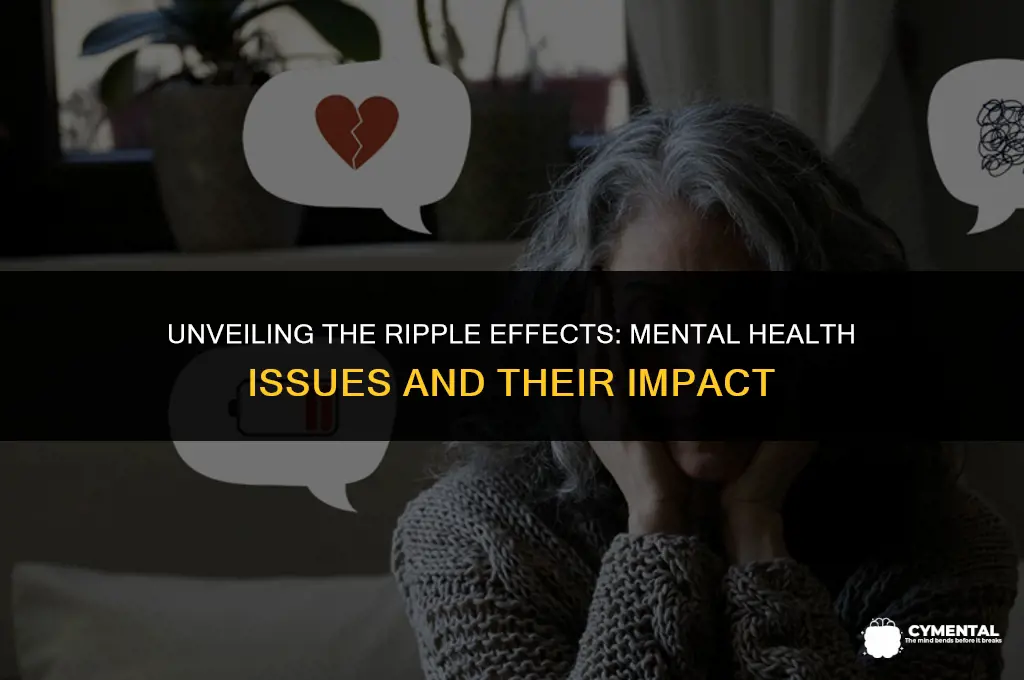
Mental health issues can have far-reaching consequences that affect various aspects of an individual's life. These challenges can lead to difficulties in maintaining relationships, performing at work or school, and managing daily tasks. Over time, untreated mental health conditions may worsen, resulting in more severe symptoms and a decreased quality of life. In some cases, mental health issues can also lead to physical health problems, as the mind and body are closely interconnected. It is essential to recognize the signs of mental health struggles and seek appropriate support to prevent these potential negative outcomes and promote overall well-being.
Explore related products


What You'll Learn
- Social Withdrawal: Mental health issues can cause individuals to isolate themselves from friends, family, and social activities
- Physical Health Problems: Poor mental health can lead to physical symptoms like headaches, digestive issues, and chronic pain
- Substance Abuse: Some individuals may turn to drugs or alcohol as a coping mechanism for their mental health struggles
- Impaired Cognitive Function: Mental health issues can affect concentration, memory, and decision-making abilities
- Increased Risk of Suicide: Severe mental health conditions can lead to suicidal thoughts and behaviors

Social Withdrawal: Mental health issues can cause individuals to isolate themselves from friends, family, and social activities
Social withdrawal is a significant concern when it comes to mental health issues. It often manifests as a desire to isolate oneself from friends, family, and social activities, which can exacerbate the underlying mental health condition. This behavior can be particularly challenging to address because it reinforces feelings of loneliness and disconnection, creating a vicious cycle that is difficult to break.
One of the key reasons why social withdrawal occurs is due to the overwhelming feelings of anxiety and depression that often accompany mental health issues. These emotions can make it seem impossible to engage in social interactions, leading individuals to avoid situations that might trigger their symptoms. Over time, this avoidance can lead to a loss of social skills and confidence, making it even more difficult to re-engage with others.
Another factor that contributes to social withdrawal is the stigma surrounding mental health issues. Many individuals feel ashamed or embarrassed about their struggles, leading them to hide their symptoms and avoid seeking help. This can result in a sense of isolation and loneliness, as they feel unable to share their experiences with others.
To address social withdrawal, it is essential to take a multi-faceted approach. This may include therapy to address the underlying mental health issues, as well as social skills training to help individuals rebuild their confidence and ability to interact with others. Additionally, it is important to address the stigma surrounding mental health issues by promoting awareness and understanding.
In conclusion, social withdrawal is a complex issue that can have a significant impact on an individual's mental health and well-being. By understanding the underlying causes and taking a comprehensive approach to treatment, it is possible to help individuals overcome their struggles and re-engage with the world around them.
Unveiling the Impact: School-Related Mental and Behavioral Challenges
You may want to see also
Explore related products


Physical Health Problems: Poor mental health can lead to physical symptoms like headaches, digestive issues, and chronic pain
Poor mental health can manifest in a myriad of physical symptoms, often overlooked or misdiagnosed. One of the most common physical manifestations is headaches. These can range from mild tension headaches to severe migraines, often occurring with no apparent physical cause. Research suggests that individuals with depression, anxiety, and stress disorders are more prone to experiencing chronic headaches.
Digestive issues are another significant physical symptom linked to poor mental health. Conditions such as irritable bowel syndrome (IBS) and gastroesophageal reflux disease (GERD) are frequently exacerbated by stress and anxiety. The gut-brain axis, a bidirectional communication system between the gut and the brain, plays a crucial role in this relationship. When mental health is compromised, it can disrupt this axis, leading to digestive problems.
Chronic pain is a pervasive issue that can stem from mental health disorders. Conditions like fibromyalgia and chronic fatigue syndrome are often associated with depression and anxiety. The exact mechanism is not fully understood, but it is believed that mental health issues can lower the threshold for pain perception, making individuals more sensitive to physical discomfort.
Moreover, poor mental health can lead to a weakened immune system, making individuals more susceptible to infections and illnesses. This is partly due to the release of stress hormones like cortisol, which can suppress immune function. Additionally, individuals with mental health issues may engage in unhealthy behaviors such as poor diet, lack of exercise, and substance abuse, further compromising their physical health.
In conclusion, the interplay between mental and physical health is complex and bidirectional. Addressing mental health issues is crucial not only for psychological well-being but also for maintaining physical health. A holistic approach that integrates mental health care with physical health management is essential for treating conditions that arise from this intricate relationship.
Exploring the Psychological Aspects of Third-Person Speech
You may want to see also
Explore related products




Substance Abuse: Some individuals may turn to drugs or alcohol as a coping mechanism for their mental health struggles
Substance abuse often emerges as a maladaptive coping strategy in response to mental health struggles. This can manifest in various ways, such as using drugs or alcohol to numb emotional pain, alleviate anxiety, or escape from overwhelming feelings. Over time, this behavior can lead to a vicious cycle where the temporary relief provided by substances exacerbates underlying mental health issues, prompting increased use and eventually dependence.
One of the critical aspects of addressing substance abuse in the context of mental health is recognizing the complex interplay between the two. Effective treatment approaches must consider both the mental health symptoms and the substance use disorder simultaneously. Integrated treatment models, such as dual diagnosis treatment, aim to address these co-occurring issues by providing comprehensive care that includes detoxification, therapy, and medication management.
Prevention strategies are also crucial in mitigating the risk of substance abuse among individuals with mental health struggles. This can involve educating individuals about the potential risks and consequences of using substances as a coping mechanism, as well as providing them with alternative, healthier coping strategies. Mindfulness practices, cognitive-behavioral therapy, and social support networks are examples of effective tools that can help individuals manage their mental health symptoms without resorting to substance use.
In addition to individual-level interventions, addressing substance abuse related to mental health struggles requires a broader societal perspective. This includes advocating for increased access to mental health services, reducing the stigma associated with seeking help, and implementing policies that promote responsible substance use and prevent misuse. By adopting a multifaceted approach that addresses both the individual and societal factors contributing to substance abuse, we can work towards creating a healthier, more supportive environment for those struggling with mental health issues.
Supporting Students' Mental Health: Strategies for Educators and Schools
You may want to see also
Explore related products


Impaired Cognitive Function: Mental health issues can affect concentration, memory, and decision-making abilities
Cognitive impairment is a significant consequence of mental health issues, manifesting as difficulties in concentration, memory retention, and decision-making. This impairment can stem from various psychiatric conditions, including depression, anxiety, and schizophrenia, among others. Research indicates that prolonged exposure to stress hormones, such as cortisol, can damage the hippocampus, a brain region crucial for memory formation. Consequently, individuals may find it challenging to recall recent events or learn new information.
In addition to memory problems, mental health issues can severely impact concentration and attention span. For instance, individuals with ADHD often struggle to maintain focus on tasks, leading to difficulties in academic and professional settings. Similarly, those experiencing depression may find it hard to concentrate due to persistent negative thoughts and feelings of hopelessness. Decision-making abilities can also be compromised, as mental health issues may lead to impaired judgment, impulsivity, or indecision.
The effects of cognitive impairment can be far-reaching, influencing various aspects of an individual's life. For example, impaired concentration and memory can hinder academic performance, leading to lower grades or even dropout. In the workplace, these difficulties can result in decreased productivity, increased errors, and strained relationships with colleagues. Furthermore, impaired decision-making can lead to risky behaviors, such as substance abuse or reckless driving, which can have serious consequences for personal safety and well-being.
It is essential to address cognitive impairment as part of mental health treatment. Cognitive-behavioral therapy (CBT) and other forms of psychotherapy can help individuals develop strategies to improve concentration, memory, and decision-making. Additionally, medication may be prescribed to manage symptoms and improve cognitive function. Lifestyle changes, such as regular exercise, a balanced diet, and adequate sleep, can also support cognitive health and mitigate the effects of mental health issues.
In conclusion, impaired cognitive function is a critical aspect of mental health issues that can significantly impact an individual's daily life and overall well-being. By understanding the specific cognitive challenges associated with different mental health conditions, we can develop targeted interventions to support cognitive health and improve quality of life for those affected.
Effective Strategies to Prevent and Manage Mental Health Challenges
You may want to see also
Explore related products

$19.99 $39.99


$16.87 $19.99


Increased Risk of Suicide: Severe mental health conditions can lead to suicidal thoughts and behaviors
Severe mental health conditions can significantly increase the risk of suicide. This is a critical concern that requires immediate attention and action. Individuals struggling with conditions such as depression, schizophrenia, bipolar disorder, and post-traumatic stress disorder (PTSD) are at a higher risk of experiencing suicidal thoughts and behaviors. It is essential to recognize the warning signs and seek help promptly.
One of the most alarming aspects of this issue is the prevalence of suicide among young people. According to recent statistics, suicide is the second leading cause of death among individuals aged 15-24. This highlights the need for targeted interventions and support systems for young people struggling with mental health issues. Parents, educators, and healthcare professionals must be vigilant in identifying and addressing potential warning signs.
In addition to young people, certain demographic groups are at a higher risk of suicide due to their mental health conditions. For example, veterans with PTSD, individuals with a history of trauma, and those experiencing chronic pain or illness are more likely to have suicidal thoughts. It is crucial to develop tailored approaches that address the unique needs of these populations.
Prevention strategies are key in reducing the risk of suicide among those with severe mental health conditions. This includes increasing access to mental health services, promoting awareness and education about mental health issues, and encouraging open conversations about suicide. Additionally, crisis intervention services, such as hotlines and emergency response teams, play a vital role in providing immediate support to those in distress.
Ultimately, addressing the increased risk of suicide due to severe mental health conditions requires a multifaceted approach. By combining prevention strategies, targeted interventions, and increased access to mental health services, we can work towards reducing the number of suicides and improving the lives of those affected by mental health issues.
Supporting Foster Teens: Strategies for Navigating Mental Health Challenges
You may want to see also
Frequently asked questions
Common symptoms of mental health issues include persistent feelings of sadness, anxiety, or anger, changes in appetite or sleep patterns, difficulty concentrating, and withdrawal from social activities.
Yes, mental health issues can significantly impact physical health. For example, chronic stress can lead to cardiovascular problems, and depression can cause changes in appetite and energy levels, affecting overall physical well-being.
Yes, many mental health issues are treatable with a combination of therapy, medication, and lifestyle changes. Seeking professional help is crucial for effective treatment and recovery.
Supporting someone with mental health issues involves being a good listener, offering encouragement, and helping them access professional help. It's also important to educate oneself about their condition and be patient and understanding.