Harper Lewis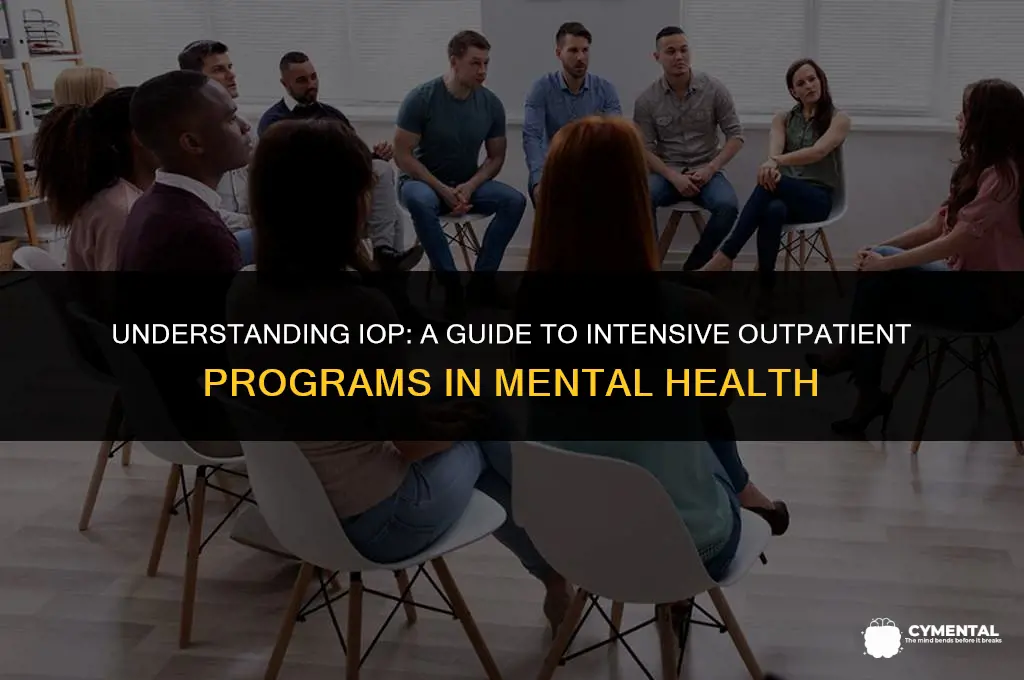
IOP stands for Intensive Outpatient Program, which is a structured mental health treatment option designed to provide comprehensive care to individuals struggling with various mental health conditions. These programs typically offer a higher level of support than traditional outpatient therapy, with more frequent sessions and a multidisciplinary approach involving psychiatrists, therapists, and other mental health professionals. IOPs are often utilized for individuals who require more intensive treatment than what can be provided in a standard outpatient setting but do not necessitate the 24-hour care of an inpatient program. They can be particularly beneficial for those dealing with issues such as depression, anxiety, trauma, or substance abuse, offering a structured environment to address these challenges while still allowing patients to maintain some aspects of their daily lives.
| Characteristics | Values |
|---|---|
| Definition | IOP stands for Intensive Outpatient Program, a structured treatment program for individuals with mental health or substance abuse issues. |
| Duration | Typically 3-5 days a week, for 2-4 hours per day. |
| Setting | Outpatient clinics, community mental health centers, or specialized treatment facilities. |
| Patient Population | Adults and adolescents with acute or chronic mental health conditions, such as depression, anxiety, bipolar disorder, or substance abuse. |
| Treatment Approach | Multidisciplinary team providing individual therapy, group therapy, family therapy, and medication management. |
| Goals | Stabilize symptoms, improve functioning, and prevent hospitalization or relapse. |
| Admission Criteria | Individuals experiencing significant distress or impairment in daily life, but do not require 24-hour inpatient care. |
| Discharge Criteria | Improved symptoms, increased coping skills, and ability to manage daily life with reduced support. |
| Cost | Varies depending on location, program type, and insurance coverage. Can be more cost-effective than inpatient treatment. |
| Benefits | Provides intensive treatment while allowing patients to maintain daily routines and responsibilities. |
| Challenges | Requires significant time commitment and may not be suitable for individuals with severe symptoms or safety concerns. |
| Alternatives | Inpatient treatment, partial hospitalization programs, or standard outpatient therapy. |
| Effectiveness | Research suggests IOP can be effective in reducing symptoms and improving functioning, particularly for substance abuse and eating disorders. |
| Accessibility | Widely available in urban areas, but may be limited in rural or underserved communities. |
| Insurance Coverage | Often covered by private insurance, Medicaid, and Medicare, but coverage may vary depending on the program and location. |
Explore related products


$36.79 $45.99


What You'll Learn
- Definition: IOP stands for Intensive Outpatient Program, a structured treatment plan for mental health disorders
- Purpose: IOPs provide comprehensive care for individuals with moderate to severe mental health conditions, promoting recovery
- Structure: Programs typically include individual and group therapy sessions, medication management, and educational workshops
- Duration: IOPs usually last for several weeks to a few months, with sessions occurring multiple times a week
- Benefits: IOPs offer a higher level of care than traditional outpatient services, helping individuals achieve stability and improve functioning

Definition: IOP stands for Intensive Outpatient Program, a structured treatment plan for mental health disorders
An Intensive Outpatient Program (IOP) is a highly structured and intensive treatment plan designed for individuals struggling with mental health disorders. It offers a comprehensive approach to care, typically involving multiple therapy sessions per week, each lasting several hours. IOPs are tailored to meet the specific needs of each patient, providing a range of therapeutic interventions such as individual therapy, group therapy, family therapy, and medication management.
One of the key benefits of an IOP is its ability to provide a high level of care while still allowing patients to maintain their daily routines and responsibilities. This makes it an ideal option for individuals who require intensive treatment but are unable to commit to inpatient care. IOPs are often used as a step-down from inpatient treatment or as an alternative to hospitalization for those who do not require 24-hour supervision.
The structure of an IOP typically includes a combination of evidence-based therapies, such as cognitive-behavioral therapy (CBT), dialectical behavior therapy (DBT), and trauma-focused therapies. These therapies are designed to help patients develop coping skills, improve emotional regulation, and address underlying issues contributing to their mental health struggles. In addition to therapy, IOPs may also incorporate psychoeducation, mindfulness practices, and holistic approaches to promote overall well-being.
The duration of an IOP can vary depending on the individual's needs and progress, but it generally ranges from a few weeks to several months. Throughout the program, patients work closely with a multidisciplinary team of mental health professionals, including psychiatrists, psychologists, social workers, and counselors. This collaborative approach ensures that patients receive comprehensive care that addresses all aspects of their mental health.
In conclusion, an Intensive Outpatient Program (IOP) is a structured and intensive treatment plan for mental health disorders that provides a high level of care while allowing patients to maintain their daily routines. It combines evidence-based therapies, psychoeducation, and holistic approaches to promote overall well-being and help patients develop the skills they need to manage their mental health effectively.
Prioritizing Wellness: The Vital Role of Mental Health Days for Students
You may want to see also
Explore related products


Purpose: IOPs provide comprehensive care for individuals with moderate to severe mental health conditions, promoting recovery
Intensive Outpatient Programs (IOPs) are structured treatment plans designed to address the needs of individuals experiencing moderate to severe mental health issues. These programs offer a higher level of care than traditional outpatient services, providing comprehensive support to promote recovery and improve overall well-being. IOPs typically involve a combination of individual therapy, group therapy, and medication management, tailored to meet the unique needs of each patient.
One of the key benefits of IOPs is their ability to provide intensive treatment without the need for inpatient hospitalization. This allows individuals to receive the care they need while still maintaining their daily routines and responsibilities. IOPs are often recommended for those who have completed inpatient treatment and require ongoing support, or for those who need more intensive care than what is available through standard outpatient services.
The structure of an IOP can vary depending on the specific program and the needs of the individual. However, most IOPs involve a set number of therapy sessions per week, which may include a combination of individual, group, and family therapy. Medication management is also a crucial component of IOPs, ensuring that patients receive the appropriate medications to help manage their symptoms.
In addition to therapy and medication management, IOPs may also incorporate other supportive services, such as case management, vocational training, and educational programs. These services are designed to help individuals develop the skills and resources they need to maintain their recovery and lead fulfilling lives.
Overall, the purpose of IOPs is to provide comprehensive, intensive care for individuals with moderate to severe mental health conditions. By offering a structured treatment plan that addresses the unique needs of each patient, IOPs can help promote recovery and improve overall well-being.
Empowering Baytown: A Guide to Mental Health Volunteering Opportunities
You may want to see also
Explore related products


Structure: Programs typically include individual and group therapy sessions, medication management, and educational workshops
Intensive Outpatient Programs (IOPs) in mental health are structured to provide comprehensive care without the need for inpatient admission. These programs typically include a combination of individual and group therapy sessions, medication management, and educational workshops. This multifaceted approach allows individuals to receive the support and treatment they need while still being able to return home at the end of the day.
Individual therapy sessions in an IOP setting are crucial for addressing personal issues and developing coping strategies. These sessions are usually conducted by a licensed therapist and are tailored to the specific needs of each patient. Group therapy, on the other hand, provides a supportive environment where individuals can share their experiences and learn from others who are facing similar challenges. This can be particularly beneficial for those struggling with feelings of isolation or stigma.
Medication management is another key component of IOPs. Psychiatrists or other medical professionals work closely with patients to ensure that their medications are effective and that any side effects are minimized. This can involve adjusting dosages, changing medications, or introducing new ones as needed. Educational workshops are also an important part of the IOP structure. These workshops cover a variety of topics related to mental health, such as stress management, relapse prevention, and healthy living skills.
The structure of an IOP can vary depending on the specific program and the needs of the individuals involved. However, most programs meet for several hours a day, several days a week. This allows patients to receive intensive treatment while still being able to maintain their daily routines and responsibilities. The duration of an IOP can also vary, but it typically lasts for several weeks to a few months.
In conclusion, the structure of an Intensive Outpatient Program is designed to provide individuals with the support and treatment they need to manage their mental health conditions. Through a combination of individual and group therapy, medication management, and educational workshops, IOPs offer a comprehensive approach to mental health care that can be highly effective for those who need it.
Illuminating Concerns: Fluorescent Lights and Mental Health
You may want to see also
Explore related products


Duration: IOPs usually last for several weeks to a few months, with sessions occurring multiple times a week
Intensive Outpatient Programs (IOPs) are structured treatment plans designed to provide comprehensive mental health care while allowing patients to maintain their daily routines. Unlike inpatient programs, which require a full-time commitment and residential stay, IOPs offer flexibility by scheduling sessions multiple times a week, typically in the evenings or on weekends. This format is particularly beneficial for individuals who need intensive therapy but have responsibilities such as work, school, or family care that they cannot neglect.
The duration of an IOP can vary depending on the specific needs of the patient and the program's design, but it generally ranges from several weeks to a few months. This timeframe allows for a thorough exploration of the patient's mental health concerns, the development of coping strategies, and the establishment of a strong support network. The frequency of sessions ensures that patients receive consistent care and can practice new skills and insights in real-time, enhancing the effectiveness of the treatment.
IOPs often incorporate a variety of therapeutic approaches, including individual therapy, group therapy, family therapy, and medication management. This multidisciplinary approach addresses the complex nature of mental health issues and provides patients with a holistic understanding of their conditions. Additionally, IOPs may offer specialized tracks for specific disorders, such as anxiety, depression, or substance abuse, ensuring that patients receive targeted care relevant to their unique challenges.
One of the key advantages of IOPs is their ability to provide a high level of care without the need for hospitalization. This not only reduces the financial burden on patients but also minimizes the disruption to their lives. By maintaining their regular routines, patients can apply the skills and strategies learned in therapy to their everyday experiences, reinforcing their progress and promoting long-term recovery.
In conclusion, the duration and structure of Intensive Outpatient Programs make them a valuable option for individuals seeking comprehensive mental health care while balancing other life responsibilities. The flexibility and intensity of IOPs allow patients to receive the support they need without sacrificing their daily routines, making it an effective and practical choice for many.
Exploring the Link: Spiritual Health and Mental-Emotional Well-being
You may want to see also
Explore related products


Benefits: IOPs offer a higher level of care than traditional outpatient services, helping individuals achieve stability and improve functioning
Intensive Outpatient Programs (IOPs) provide a structured and comprehensive approach to mental health treatment, offering a higher level of care than traditional outpatient services. This increased level of support is particularly beneficial for individuals who require more intensive therapy to achieve stability and improve their overall functioning. IOPs typically involve multiple therapy sessions per week, often including both individual and group counseling, which allows for a more in-depth exploration of mental health issues and the development of effective coping strategies.
One of the key benefits of IOPs is their ability to provide a more immersive treatment experience without the need for residential care. This makes them an ideal option for individuals who need significant support but are not ready or able to commit to an inpatient program. The structured nature of IOPs ensures that participants receive consistent and focused care, which can be crucial for those struggling with severe mental health symptoms or co-occurring disorders. Additionally, IOPs often incorporate a variety of therapeutic modalities, such as cognitive-behavioral therapy (CBT), dialectical behavior therapy (DBT), and trauma-focused therapies, allowing for a tailored treatment approach that addresses the unique needs of each individual.
Another advantage of IOPs is their emphasis on building a strong support network. Group therapy sessions provide opportunities for participants to connect with others who are facing similar challenges, fostering a sense of community and mutual understanding. This peer support can be a valuable asset in the recovery process, helping individuals to feel less isolated and more motivated to engage in their treatment. Furthermore, IOPs often involve family therapy sessions, which can help to educate loved ones about mental health issues and improve communication and support within the family unit.
In conclusion, Intensive Outpatient Programs offer a higher level of care than traditional outpatient services, providing individuals with the support and structure they need to achieve stability and improve their functioning. Through a combination of individual and group therapy, IOPs address mental health issues comprehensively, helping participants to develop effective coping strategies and build a strong support network. This makes IOPs an invaluable resource for those seeking intensive mental health treatment without the need for residential care.
Boosting Mental Health: The Benefits of a Later School Start Time
You may want to see also
Frequently asked questions
IOP stands for Intensive Outpatient Program. It is a structured treatment program for individuals with mental health or substance abuse issues that requires regular attendance at a treatment facility, but does not involve overnight stays.
Intensive Outpatient Programs (IOPs) typically offer a range of services, including individual therapy, group therapy, family therapy, medication management, and psychoeducation. These services are designed to provide comprehensive support and treatment for individuals with mental health or substance abuse issues.
An Intensive Outpatient Program (IOP) is a step down from inpatient care, which involves overnight stays at a treatment facility. IOPs provide more intensive treatment than traditional outpatient therapy, which may involve only one or two sessions per week. IOPs are designed for individuals who require more support than traditional outpatient therapy, but do not need the 24-hour supervision and care provided in an inpatient setting.