Ava Ramirez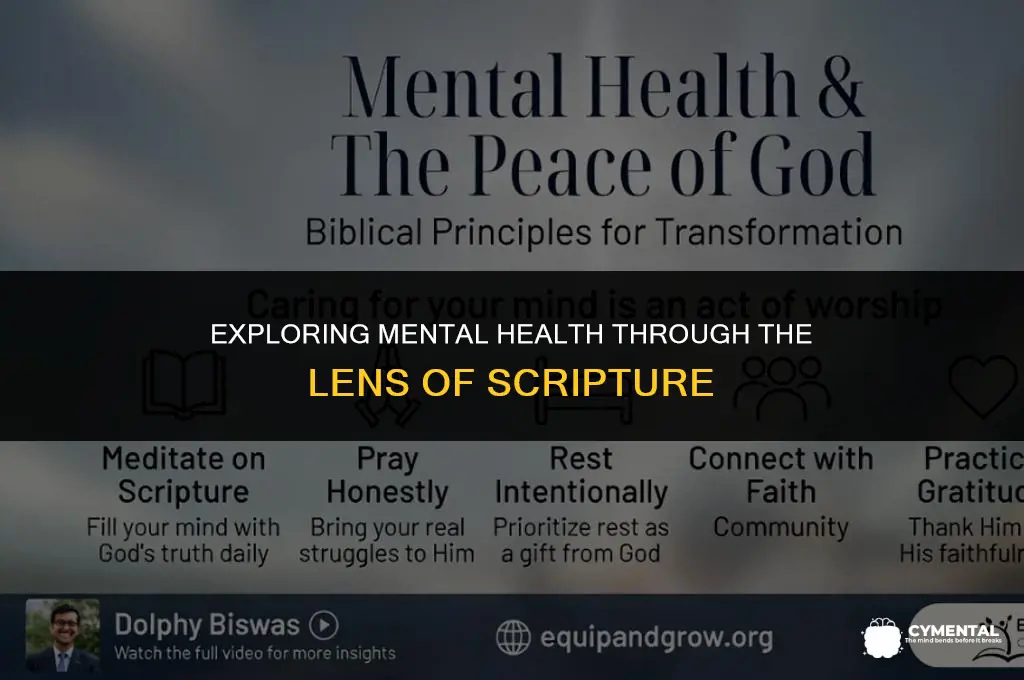
The Bible, while not a comprehensive guide to mental health, does offer insights and perspectives on mental issues. It acknowledges the existence of emotional and psychological struggles, often referred to as troubles, sorrows, or afflictions. The scriptures provide examples of individuals who experienced mental distress, such as King David, who expressed feelings of despair and anxiety in the Psalms. Additionally, the Bible emphasizes the importance of emotional well-being, encouraging believers to seek peace, joy, and hope. While it does not provide specific diagnoses or treatments for mental illnesses, it does offer spiritual guidance and comfort to those facing mental health challenges.
| Characteristics | Values |
|---|---|
| Historical Context | The Bible was written in a time when mental health issues were not understood as they are today. It was composed over a period of approximately 1,500 years, with contributions from various authors in different historical and cultural contexts. |
| Language and Translation | The original languages of the Bible are Hebrew, Aramaic, and Greek. Over the centuries, it has been translated into numerous languages, which can affect the interpretation of specific passages related to mental health. |
| Cultural Perspectives | The Bible reflects the cultural and religious perspectives of its time, which often viewed mental issues through a spiritual lens, sometimes attributing them to demonic possession or divine punishment. |
| Key Passages | - Psalm 34:18: "The Lord is close to the brokenhearted and saves the crushed in spirit." - Isaiah 40:31: "But those who hope in the Lord will renew their strength. They will soar on wings like eagles; they will run and not grow weary, they will walk and not be faint." - Matthew 11:28-30: "Come to me, all you who are weary and burdened, and I will give you rest. Take my yoke upon you and learn from me, for I am gentle and humble in heart, and you will find rest for your souls." |
| Interpretation | Interpretation of these passages can vary widely depending on the theological perspective. Some view mental health issues as a spiritual battle, while others see them as medical conditions that require professional treatment. |
| Stigma and Support | Historically, the Bible has been used to both stigmatize and provide comfort to those suffering from mental health issues. Its teachings can be interpreted to promote compassion and support, but also to condemn or ostracize. |
| Modern Relevance | Today, many people continue to look to the Bible for guidance and comfort in dealing with mental health challenges. However, there is also a growing recognition of the need for professional mental health care alongside spiritual support. |
| Counseling and Therapy | Some modern Christian counselors and therapists integrate biblical principles into their practice, offering a faith-based approach to mental health treatment. |
| Community and Fellowship | Churches and religious communities can provide a sense of belonging and support for individuals struggling with mental health issues, although the level of understanding and acceptance can vary widely. |
| Education and Awareness | There is an increasing effort within religious communities to educate members about mental health issues, reduce stigma, and promote seeking professional help when needed. |
Explore related products


$15.78 $16.99

$12.44 $17.99


What You'll Learn
- Biblical Perspectives on Mental Health: Exploring scriptural views on psychological well-being and emotional stability
- Scriptural Guidance for Coping: Practical advice from the Bible on managing stress, anxiety, and depression
- Faith and Therapy: Integrating religious beliefs with modern therapeutic practices for mental health treatment
- Biblical Figures and Mental Health: Analyzing the mental and emotional struggles of notable biblical characters
- Church Support for Mental Illness: The role of religious communities in providing support and resources for mental health issues

Biblical Perspectives on Mental Health: Exploring scriptural views on psychological well-being and emotional stability
The Bible offers a holistic view of mental health, intertwining spiritual, emotional, and physical well-being. Scripture presents a framework where mental health is not just the absence of illness but the presence of wholeness and peace. For instance, the book of Philippians emphasizes the importance of a peaceful mind, stating, "Do not be anxious about anything, but in every situation, by prayer and petition, with thanksgiving, present your requests to God. And the peace of God, which transcends all understanding, will guard your hearts and your minds in Christ Jesus" (Philippians 4:6-7). This passage suggests that prayer and a relationship with God can lead to a state of mental tranquility.
Moreover, the Bible portrays mental health as a community issue. The concept of 'shalom,' which means peace and wholeness, is often used in a communal context, implying that mental well-being is not just an individual concern but also a collective responsibility. The book of Proverbs highlights the importance of wise counsel and support, stating, "Plans fail for lack of counsel, but with many advisers they succeed" (Proverbs 15:22). This suggests that seeking guidance and support from others is crucial for maintaining mental health.
The Bible also addresses the role of faith in mental health. Faith is presented as a source of strength and resilience, enabling individuals to navigate life's challenges with hope and perseverance. The apostle Paul, in his letter to the Romans, writes, "We also glory in our sufferings, because we know that suffering produces perseverance; perseverance, character; and character, hope" (Romans 5:3-4). This passage underscores the transformative power of faith in the face of adversity, suggesting that a strong spiritual foundation can contribute to emotional stability.
Furthermore, the Bible emphasizes the importance of self-care and balance. The concept of 'rest' is frequently mentioned, highlighting the need for physical and mental rejuvenation. For example, the book of Exodus mandates the observance of the Sabbath, a day of rest, stating, "Remember the Sabbath day, to keep it holy. Six days you shall labor and do all your work, but the seventh day is a Sabbath of the Lord your God" (Exodus 20:8-10). This commandment underscores the importance of taking time to rest and recharge, which is essential for maintaining mental health.
In conclusion, the Bible provides a comprehensive perspective on mental health, emphasizing the importance of spiritual well-being, community support, faith, and self-care. These scriptural insights offer a unique and holistic approach to understanding and addressing mental health issues, highlighting the interconnectedness of spiritual, emotional, and physical well-being.
Navigating Legal Complexities in Mental Health Modeling
You may want to see also
Explore related products


Scriptural Guidance for Coping: Practical advice from the Bible on managing stress, anxiety, and depression
The Bible offers numerous passages that provide guidance on coping with mental health challenges such as stress, anxiety, and depression. One key theme is the importance of trust in God. For instance, Psalm 56:3 states, "When I am afraid, I put my trust in you." This verse encourages individuals to place their confidence in God's protection and care, which can alleviate feelings of fear and anxiety.
Another important aspect is the practice of prayer. Philippians 4:6-7 advises, "Do not be anxious about anything, but in every situation, by prayer and petition, with thanksgiving, present your requests to God. And the peace of God, which transcends all understanding, will guard your hearts and your minds in Christ Jesus." This passage not only promotes prayer as a means of addressing anxiety but also promises that doing so will bring a sense of peace that surpasses human comprehension.
The Bible also emphasizes the value of community and support. In Ecclesiastes 4:9-10, it is written, "Two are better than one, because they have a good return for their labor: If either of them falls down, one can help the other up. But pity anyone who falls and has no one to help them up." This highlights the importance of having a support system and being there for others in times of need, which can be crucial for managing mental health struggles.
Furthermore, the Bible encourages the practice of gratitude. In 1 Thessalonians 5:16-18, believers are instructed, "Rejoice always, pray continually, give thanks in all circumstances; for this is God’s will for you in Christ Jesus." Cultivating a mindset of gratitude can help shift focus away from negative thoughts and emotions, promoting a more positive outlook on life.
Lastly, the Bible provides examples of individuals who faced mental health challenges and found solace in their faith. For example, King David, who is known for his struggles with depression and anxiety, wrote many psalms that express his emotions and his reliance on God. His experiences serve as a testament to the power of faith in overcoming mental health issues.
In conclusion, the Bible offers practical advice and encouragement for those coping with stress, anxiety, and depression. By placing trust in God, engaging in prayer, seeking support from others, practicing gratitude, and learning from the experiences of biblical figures, individuals can find strength and hope in their faith as they navigate mental health challenges.
Homicidal Tendencies: Unraveling the Mental Health Connection and Implications
You may want to see also
Explore related products


Faith and Therapy: Integrating religious beliefs with modern therapeutic practices for mental health treatment
Integrating religious beliefs with modern therapeutic practices for mental health treatment can be a complex and nuanced process. One approach is to use cognitive-behavioral therapy (CBT) techniques to help individuals identify and challenge negative thought patterns that may be rooted in their religious beliefs. For example, a therapist might work with a client to reframe their understanding of a biblical passage that they find distressing or harmful.
Another approach is to incorporate spiritual practices into therapy sessions, such as prayer, meditation, or mindfulness exercises. This can help clients connect with their faith in a more positive and healing way. Therapists might also encourage clients to explore their religious beliefs and values as a source of strength and support during difficult times.
It's important to note that integrating faith and therapy is not a one-size-fits-all approach. Therapists must be sensitive to the individual's unique beliefs and values, and be willing to adapt their treatment plan accordingly. Additionally, therapists should be aware of the potential for religious beliefs to be used as a coping mechanism, and should work to ensure that clients are not relying solely on their faith to address their mental health concerns.
Ultimately, the goal of integrating faith and therapy is to provide a holistic approach to mental health treatment that addresses the individual's spiritual, emotional, and psychological needs. By combining the wisdom of religious teachings with the evidence-based practices of modern therapy, individuals can find a more comprehensive and effective path to healing and recovery.
Navigating the Complex Landscape of Children's Mental Health Care
You may want to see also
Explore related products

$12.49 $17.99





Biblical Figures and Mental Health: Analyzing the mental and emotional struggles of notable biblical characters
The Bible, while not a modern psychological text, offers profound insights into the mental and emotional struggles of its characters. By examining the lives of notable biblical figures, we can gain a deeper understanding of how they coped with their mental health challenges and what lessons we can learn from their experiences.
One such figure is King David, who is often regarded as a model of faith and leadership. However, his life was not without its struggles. In the Psalms, David openly expresses his feelings of anxiety, depression, and fear. For example, in Psalm 13, he writes, "How long, O Lord? Will you forget me forever? How long will you hide your face from me?" This passage reveals David's deep sense of abandonment and despair. Yet, despite these struggles, David also demonstrates resilience and hope. In Psalm 23, he writes, "The Lord is my shepherd; I shall not want. He makes me lie down in green pastures; he leads me beside still waters." This passage shows David's ability to find comfort and peace in his faith, even in the midst of his mental health challenges.
Another biblical figure who faced mental health struggles is Elijah. In 1 Kings 19, Elijah is described as being overwhelmed by his circumstances and fleeing into the wilderness. He tells God that he has had enough and wants to die. However, God responds by sending an angel to comfort and encourage Elijah. This passage highlights the importance of seeking support and comfort during times of mental health struggles.
The story of Job also offers valuable insights into mental health. Job's life is marked by a series of tragic events, including the loss of his family, his possessions, and his health. In Job 3, he expresses his deep anguish and despair, saying, "Why did I not die at birth? Why did I not perish when I came out of the womb?" However, despite his suffering, Job remains faithful to God and ultimately finds healing and restoration. His story teaches us the importance of perseverance and faith in the face of mental health challenges.
These biblical figures, among others, demonstrate that mental health struggles are not unique to modern times. They also show that faith can be a powerful tool in coping with these challenges. By examining their stories, we can gain a deeper understanding of how to support ourselves and others during times of mental health struggles.
Navigating Mental Health Emergencies: When to Call 911
You may want to see also
Explore related products

$13.87 $24.99

$36.83 $44.99


$19.99 $32.99


Church Support for Mental Illness: The role of religious communities in providing support and resources for mental health issues
Religious communities, particularly churches, have historically played a significant role in providing support and resources for individuals struggling with mental health issues. This support is often rooted in the belief that mental illness is not just a medical condition but also a spiritual one, requiring a holistic approach that addresses both the mind and the soul. Churches often offer counseling services, support groups, and educational programs aimed at helping individuals and families cope with mental illness. These services are typically provided by trained professionals who are also members of the religious community, allowing for a unique blend of spiritual and psychological support.
One of the key ways in which churches support mental health is through the creation of safe spaces where individuals can openly discuss their struggles without fear of judgment or stigma. This is particularly important in communities where mental illness is often misunderstood or stigmatized. Churches also play a crucial role in raising awareness about mental health issues and advocating for better mental health care. Many churches organize events, workshops, and seminars that focus on mental health education, aiming to dispel myths and provide accurate information about mental illness.
Furthermore, churches often provide practical resources such as food, clothing, and shelter to individuals and families affected by mental illness. This support can be especially vital for those who are struggling financially or who lack access to basic necessities. Churches may also offer spiritual support through prayer, meditation, and other religious practices, which can provide comfort and solace to individuals dealing with mental health challenges.
In addition to these direct forms of support, churches can also play a role in promoting mental health through their teachings and sermons. By addressing mental health issues from a spiritual perspective, churches can help to reduce the stigma associated with mental illness and encourage individuals to seek help. This can be particularly effective in communities where religious leaders are highly respected and influential.
Overall, the role of churches in supporting mental health is multifaceted and can have a profound impact on individuals and communities. By providing a combination of spiritual, emotional, and practical support, churches can help to address the complex needs of those struggling with mental illness and promote a more compassionate and understanding society.
Snapchat's Dark Side: Uncovering Its Impact on Mental Well-Being
You may want to see also
Frequently asked questions
While the Bible does not use modern psychological terms, it does address various mental and emotional states. For instance, it mentions anxiety, depression, and stress, offering guidance on coping with these through faith and prayer.
Yes, several biblical figures are depicted as experiencing mental health struggles. For example, King David wrote about his depression in the Psalms, and the prophet Elijah experienced burnout. These stories can provide comfort and insight for those facing similar challenges.
The Bible emphasizes the importance of community and support. It encourages believers to care for one another, to pray for each other, and to offer comfort and encouragement. This can be applied to supporting someone with mental health issues by being a listening ear, offering practical help, and praying for their well-being.