Madison Cole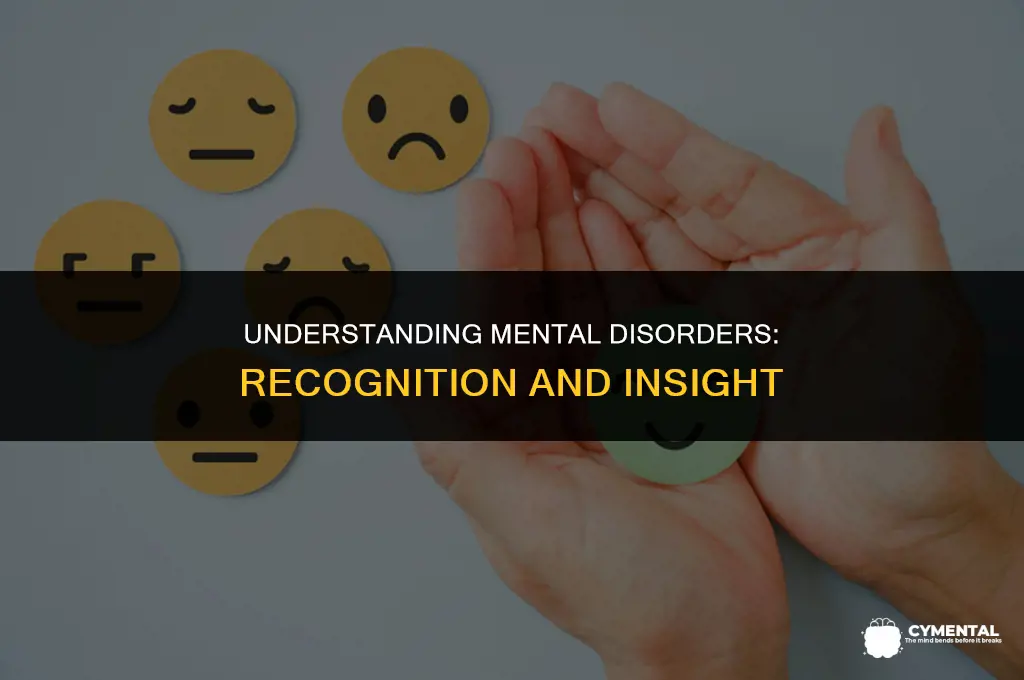
Mental disorders are complex conditions that affect an individual's thinking, feeling, and behavior, often causing significant distress or impairment in daily functioning. Recognizing mental disorders involves identifying specific symptoms and patterns of behavior that deviate from what is considered typical or healthy. This process typically requires a comprehensive evaluation by a mental health professional, who will consider factors such as the individual's personal history, family background, and current circumstances. Mental disorders can manifest in various ways, including anxiety, depression, psychosis, and personality disorders, among others. Early recognition and diagnosis are crucial for effective treatment and management, as they can help individuals regain control over their lives and improve their overall well-being.
Explore related products

$32.99 $32.99


What You'll Learn

Definition and classification of mental disorders
Mental disorders are defined as conditions that affect an individual's thinking, feeling, or behavior, causing significant distress or impairment in daily functioning. These disorders are recognized through a combination of clinical evaluation, psychological testing, and sometimes, laboratory tests. The classification of mental disorders is a complex process that involves categorizing symptoms and behaviors into specific diagnostic categories.
The Diagnostic and Statistical Manual of Mental Disorders (DSM) is the primary tool used by mental health professionals to classify mental disorders. The DSM provides a standardized set of criteria for diagnosing mental health conditions, including descriptions of symptoms, severity levels, and diagnostic codes. The manual is regularly updated to reflect new research and clinical findings, and it currently includes over 300 different mental disorder diagnoses.
The classification process typically begins with a thorough clinical evaluation, during which a mental health professional will assess the individual's symptoms, medical history, and social functioning. This evaluation may include interviews with the individual, as well as with family members or other caregivers. Psychological testing may also be used to assess cognitive functioning, personality traits, and emotional states.
In some cases, laboratory tests may be ordered to rule out underlying medical conditions that could be contributing to the individual's symptoms. For example, a thyroid function test may be ordered to rule out hypothyroidism, which can cause symptoms similar to depression. Once a thorough evaluation has been completed, the mental health professional will use the DSM criteria to classify the individual's symptoms into a specific diagnostic category.
The classification of mental disorders is not always straightforward, as many conditions can have overlapping symptoms and may be difficult to distinguish from one another. Additionally, cultural and social factors can influence the expression and interpretation of symptoms, making it important for mental health professionals to consider these factors when making a diagnosis. Despite these challenges, the classification of mental disorders is a critical step in developing effective treatment plans and improving outcomes for individuals with mental health conditions.
Understanding Neurodivergence: A Mental Health Perspective
You may want to see also
Explore related products


Diagnostic criteria and assessment tools
Mental health professionals use a variety of diagnostic criteria and assessment tools to identify and understand mental disorders. These tools are essential for accurate diagnosis, treatment planning, and monitoring of patient progress. The diagnostic process typically involves a combination of clinical interviews, behavioral observations, and standardized assessment measures.
One of the primary diagnostic criteria used in psychiatry is the Diagnostic and Statistical Manual of Mental Disorders (DSM-5), published by the American Psychiatric Association. The DSM-5 provides a standardized set of criteria for diagnosing mental disorders, including symptoms, duration, and severity. It also includes information on the differential diagnosis of disorders, which helps clinicians distinguish between similar conditions.
In addition to the DSM-5, there are numerous other assessment tools available for use in clinical practice. These tools can be used to measure specific symptoms, assess cognitive functioning, evaluate personality traits, and monitor treatment outcomes. Some common assessment tools include the Beck Depression Inventory (BDI), the Anxiety Disorders Interview Schedule (ADIS), and the Mini-Mental State Examination (MMSE).
The choice of assessment tool depends on the specific needs of the patient and the clinical question being addressed. For example, if a patient is presenting with symptoms of depression, the BDI may be used to assess the severity of their symptoms. If a patient is experiencing cognitive difficulties, the MMSE may be used to evaluate their cognitive functioning.
It is important to note that the diagnostic process is not always straightforward, and mental health professionals must consider a range of factors when making a diagnosis. These factors may include the patient's medical history, family history, social circumstances, and cultural background. Additionally, the diagnostic process often involves collaboration between multiple healthcare providers, including psychiatrists, psychologists, social workers, and primary care physicians.
In conclusion, diagnostic criteria and assessment tools play a critical role in the recognition and treatment of mental disorders. By using these tools, mental health professionals can make accurate diagnoses, develop effective treatment plans, and monitor patient progress over time.
Exploring Alzheimer's Disease: Mental Disorder or Neurological Condition?
You may want to see also
Explore related products


$12.88 $20.95



Common types of mental disorders
Mental disorders encompass a wide range of conditions that affect mood, thinking, and behavior. Among the most common types are anxiety disorders, which include generalized anxiety disorder, panic disorder, and phobias. These conditions are characterized by excessive worry, fear, and avoidance behaviors that interfere with daily life. Another prevalent category is mood disorders, such as major depressive disorder and bipolar disorder, which involve persistent feelings of sadness, hopelessness, or extreme mood swings.
Personality disorders are another significant group, marked by long-standing patterns of thinking and behavior that deviate from societal norms and cause distress or impairment. Examples include borderline personality disorder, narcissistic personality disorder, and antisocial personality disorder. Psychotic disorders, like schizophrenia and schizoaffective disorder, are characterized by symptoms such as hallucinations, delusions, and disorganized thinking, which can severely impact a person's ability to function.
Eating disorders, including anorexia nervosa, bulimia nervosa, and binge-eating disorder, are serious conditions that involve extreme behaviors and attitudes towards food and body image. These disorders can lead to severe physical health problems if left untreated. Substance use disorders, such as alcohol use disorder and opioid use disorder, are also common and involve the excessive and compulsive use of substances, leading to negative consequences in various aspects of life.
Trauma-related disorders, like post-traumatic stress disorder (PTSD) and acute stress disorder, develop in response to traumatic events and are characterized by symptoms such as flashbacks, nightmares, and heightened arousal. Dissociative disorders, including dissociative identity disorder and depersonalization disorder, involve disruptions in consciousness, memory, or identity, often as a coping mechanism for trauma.
It's important to note that each of these disorders has specific diagnostic criteria and treatment options. Recognizing the symptoms and seeking professional help is crucial for effective management and recovery. Mental health professionals use various tools, such as psychological assessments and interviews, to diagnose mental disorders and develop individualized treatment plans.
Understanding Schizophrenia: Prevalence and Misconceptions
You may want to see also
Explore related products


Symptoms and warning signs
Recognizing the symptoms and warning signs of a mental disorder is crucial for early intervention and effective treatment. One key indicator is a significant change in behavior or mood that persists over time. For instance, a person who was once outgoing and sociable may become withdrawn and isolated, or someone who was consistently productive at work may start to neglect their responsibilities.
Another warning sign is the presence of physical symptoms without a clear medical cause. This can include headaches, stomachaches, or sleep disturbances that do not respond to typical treatments. Additionally, individuals may experience changes in appetite or weight, which can be a sign of underlying mental health issues.
Cognitive symptoms, such as difficulty concentrating, remembering, or making decisions, can also be indicative of a mental disorder. These symptoms may manifest as a decline in academic or work performance, or as challenges in managing daily tasks and responsibilities.
It is important to note that the symptoms and warning signs of mental disorders can vary widely depending on the specific condition and the individual. Therefore, it is essential to approach each case with sensitivity and an open mind, avoiding assumptions or judgments based on limited information.
In summary, recognizing the symptoms and warning signs of a mental disorder involves paying attention to persistent changes in behavior, mood, and physical health, as well as cognitive difficulties that interfere with daily functioning. Early detection and intervention can significantly improve outcomes for individuals struggling with mental health issues.
Navigating the Labyrinth: Understanding the Challenges of Complex Mental Disorders
You may want to see also
Explore related products


Treatment options and support resources
Individuals diagnosed with mental disorders have access to a variety of treatment options and support resources. Treatment plans are typically tailored to the specific needs of the individual and may include psychotherapy, medication, or a combination of both. Cognitive-behavioral therapy (CBT) is a common form of psychotherapy that helps individuals identify and change negative thought patterns and behaviors. Medications such as antidepressants, anti-anxiety drugs, and antipsychotics can also be effective in managing symptoms.
In addition to traditional treatment options, there are numerous support resources available to individuals with mental disorders. Support groups, both in-person and online, provide a safe space for individuals to share their experiences and connect with others who understand what they are going through. Many organizations, such as the National Alliance on Mental Illness (NAMI) and the American Psychological Association (APA), offer educational resources and advocacy services to help individuals navigate the mental health system.
It is important for individuals with mental disorders to have a strong support network, which can include family, friends, and mental health professionals. Building a support network can help individuals feel less isolated and more empowered to manage their condition. Additionally, lifestyle changes such as regular exercise, a healthy diet, and stress management techniques can also be beneficial in supporting mental health.
In recent years, there has been a growing emphasis on the importance of early intervention and prevention in mental health. By identifying and addressing mental health issues early on, individuals can potentially avoid more serious complications down the road. This can involve seeking help from a mental health professional, engaging in self-care practices, and staying connected with supportive individuals in one's life.
Overall, while mental disorders can be challenging to navigate, there are a variety of treatment options and support resources available to help individuals manage their symptoms and improve their overall well-being. By seeking help and building a strong support network, individuals with mental disorders can lead fulfilling and meaningful lives.
Exploring the Controversial Link Between Liberalism and Mental Health
You may want to see also
Frequently asked questions
A mental disorder is a condition that affects a person's thinking, feeling, or behavior, causing significant distress or impairment in their daily life. These disorders can be caused by a combination of genetic, environmental, and psychological factors.
Mental disorders are recognized through a process of diagnosis, which involves a mental health professional evaluating a person's symptoms, behavior, and medical history. This process may include interviews, questionnaires, and sometimes physical examinations or laboratory tests.
Some common types of mental disorders include anxiety disorders, mood disorders (such as depression and bipolar disorder), personality disorders, psychotic disorders (such as schizophrenia), and eating disorders.
The signs and symptoms of a mental disorder can vary widely depending on the specific disorder. However, some common symptoms include persistent feelings of sadness or anxiety, changes in appetite or sleep patterns, difficulty concentrating or making decisions, and withdrawal from social activities.
Mental disorders can be treated through a variety of methods, including psychotherapy (talk therapy), medication, and lifestyle changes. The specific treatment plan will depend on the individual's diagnosis, symptoms, and personal preferences. In some cases, a combination of treatments may be most effective.