Lucas Bennett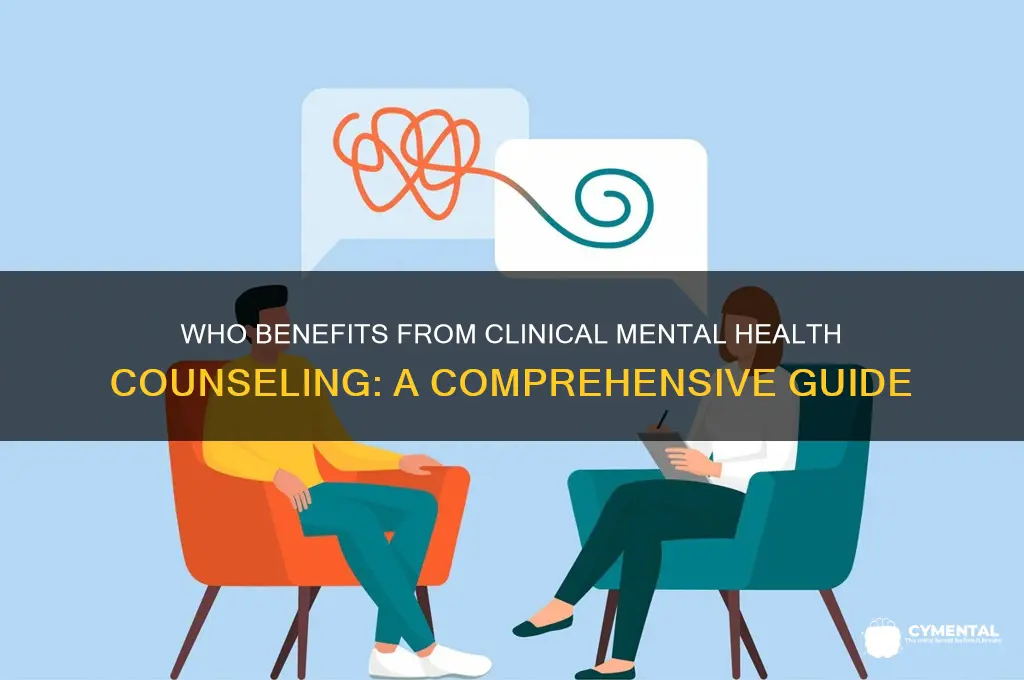
Clinical mental health counselors provide essential support to a diverse range of individuals facing various emotional, psychological, and behavioral challenges. They assist people struggling with anxiety, depression, trauma, grief, addiction, and relationship issues, as well as those dealing with life transitions, stress, and self-esteem concerns. These counselors work with clients across all ages, from children and adolescents to adults and seniors, offering tailored interventions to address specific needs. They also support individuals from different cultural, socioeconomic, and identity backgrounds, ensuring inclusive and compassionate care. By employing evidence-based therapies and strategies, clinical mental health counselors empower their clients to navigate difficulties, build resilience, and achieve improved mental well-being.
Explore related products


What You'll Learn

Individuals with anxiety disorders
Anxiety disorders affect approximately 40 million adults in the United States alone, making them the most common mental health challenge. Clinical mental health counselors play a critical role in helping these individuals navigate the overwhelming symptoms that can disrupt daily life. From generalized anxiety disorder to panic disorder, counselors employ evidence-based techniques like cognitive-behavioral therapy (CBT) to reframe negative thought patterns and build coping strategies. For instance, a counselor might guide a client through progressive muscle relaxation, a technique proven to reduce physiological symptoms of anxiety by systematically tensing and releasing muscle groups.
Consider the case of a 28-year-old professional experiencing panic attacks before work presentations. A counselor could introduce exposure therapy, gradually exposing the individual to the feared situation in a controlled manner. This might start with visualizing the presentation, then role-playing, and finally practicing in a low-stakes environment. Research shows that 50–70% of individuals with panic disorder experience significant symptom reduction after 12–16 sessions of CBT. Counselors also often recommend mindfulness practices, such as 10 minutes of daily meditation, which has been shown to decrease anxiety levels by 30% in some studies.
While medication like SSRIs (e.g., 10–20 mg of escitalopram daily) can be effective for severe cases, counselors focus on non-pharmacological interventions to empower clients with long-term tools. For adolescents, counselors might incorporate creative therapies, such as art or journaling, to help express emotions that are difficult to verbalize. Group therapy is another valuable option, providing a supportive community where individuals can share experiences and learn from peers. However, counselors must be cautious not to push clients into group settings prematurely, as this could exacerbate anxiety.
A key takeaway is that anxiety disorders are highly treatable, but success depends on personalized care. Counselors assess each client’s unique triggers and strengths, tailoring interventions accordingly. For example, a counselor might help a college student with social anxiety develop a "fear ladder," starting with small challenges like initiating a conversation with a classmate and progressing to larger goals like speaking in class. By combining structured techniques with empathy and patience, clinical mental health counselors enable individuals with anxiety disorders to regain control and lead fulfilling lives.
Phones and Mental Health: A Double-Edged Digital Companion?
You may want to see also
Explore related products


People experiencing depression symptoms
Depression symptoms often manifest as persistent sadness, loss of interest in activities, and fatigue, but they can also include less obvious signs like irritability, changes in appetite, or difficulty concentrating. Clinical mental health counselors are trained to recognize these varied presentations, tailoring their approach to the individual’s unique experience. For instance, a young adult struggling with academic pressure might exhibit procrastination and social withdrawal, while an older adult might express physical complaints like chronic pain. Counselors use evidence-based techniques, such as cognitive-behavioral therapy (CBT), to help clients identify and reframe negative thought patterns that contribute to depressive symptoms.
Consider the case of a 28-year-old professional who reports feeling "stuck" in their career and overwhelmed by daily tasks. Their counselor might start by exploring the client’s sleep patterns, as insomnia or oversleeping is a common symptom of depression. Practical tips, like maintaining a consistent sleep schedule and limiting screen time before bed, can be introduced alongside therapeutic interventions. The counselor might also recommend a mood-tracking journal to help the client monitor triggers and progress. This dual focus on behavioral changes and emotional processing is key to addressing depression effectively.
For individuals experiencing severe depression, counselors often collaborate with psychiatrists to explore medication options. Antidepressants like selective serotonin reuptake inhibitors (SSRIs) may be prescribed, with dosages starting as low as 10 mg daily for medications like escitalopram and adjusted based on response. Counselors play a critical role in educating clients about potential side effects, such as nausea or drowsiness, and emphasizing the importance of consistent use, as it can take 4–6 weeks to notice improvements. This integrated approach ensures that both psychological and biological factors are addressed.
One often overlooked aspect of depression is its impact on relationships. A counselor might work with a couple where one partner’s depression has led to emotional distance and conflict. Through techniques like emotion-focused therapy, the counselor helps the couple improve communication and rebuild emotional connection. For example, the non-depressed partner might learn to express empathy without enabling avoidance behaviors, while the depressed partner practices articulating their needs. This relational focus not only alleviates symptoms but also strengthens the support system crucial for long-term recovery.
Finally, counselors empower clients with tools to manage depression proactively. Mindfulness practices, such as guided meditation or deep breathing exercises, can reduce stress and improve emotional regulation. Physical activity, even as little as 20–30 minutes of walking daily, has been shown to boost mood by increasing endorphin levels. Counselors also encourage clients to set small, achievable goals, like completing one task per day, to counteract feelings of helplessness. By combining these strategies with therapy, individuals can develop resilience and regain a sense of control over their lives.
Exploring Careers in Mental Health Research and Support
You may want to see also
Explore related products





Trauma survivors seeking recovery
Trauma survivors often carry invisible wounds that shape their thoughts, emotions, and behaviors long after the event has passed. Clinical mental health counselors play a critical role in helping these individuals navigate the complex path to recovery. Whether the trauma stems from a single incident like an accident or assault, or prolonged experiences such as abuse or war, survivors frequently struggle with symptoms like flashbacks, anxiety, depression, and difficulty trusting others. Counselors provide a safe, nonjudgmental space where survivors can process their experiences, develop coping strategies, and rebuild a sense of control over their lives.
One of the first steps in counseling trauma survivors is establishing safety—both physical and emotional. This often involves grounding techniques, such as deep breathing exercises or progressive muscle relaxation, to help clients manage overwhelming emotions. For example, a counselor might teach a survivor to focus on their five senses during a flashback, bringing them back to the present moment. Over time, counselors use evidence-based approaches like Cognitive Behavioral Therapy (CBT) or Eye Movement Desensitization and Reprocessing (EMDR) to help survivors reframe traumatic memories and reduce their emotional intensity. EMDR, for instance, involves guided eye movements while recalling the trauma, a process that has been shown to reduce distress in 84–90% of single-trauma victims after just three 90-minute sessions.
Recovery from trauma is not linear; it’s a process marked by setbacks and breakthroughs. Counselors must be patient and flexible, adapting their approach to meet the survivor’s needs at each stage. For instance, a counselor working with a veteran might initially focus on reducing hypervigilance and nightmares before addressing deeper issues like guilt or anger. Group therapy can also be beneficial, as it allows survivors to connect with others who understand their struggles, reducing feelings of isolation. However, counselors must carefully assess whether a client is ready for group settings, as premature exposure can sometimes retraumatize.
A key takeaway for trauma survivors is that seeking help is a sign of strength, not weakness. Clinical mental health counselors are trained to meet survivors where they are, offering tools and support tailored to their unique experiences. Recovery may take months or even years, but with consistent effort and the right guidance, survivors can regain a sense of hope and purpose. Practical tips, such as maintaining a routine, journaling, and limiting exposure to triggers, can complement counseling sessions and empower survivors to take an active role in their healing journey. Ultimately, the goal is not to erase the past but to help survivors build resilience and create a future where trauma no longer defines them.
Supporting Struggling Minds: Compassionate Ways to Help Someone Heal
You may want to see also
Explore related products


Clients with substance abuse issues
Substance abuse issues cast a long shadow, affecting not only the individual but also their families, workplaces, and communities. Clinical mental health counselors play a pivotal role in helping clients navigate the complex web of addiction, offering evidence-based strategies and compassionate support. These professionals address the psychological, emotional, and behavioral aspects of substance use disorders, which often co-occur with other mental health conditions like depression, anxiety, or trauma.
Consider the case of a 32-year-old client who began using opioids after a workplace injury. What started as a prescribed pain management solution spiraled into dependency, exacerbated by untreated PTSD from the accident. A clinical mental health counselor would employ techniques such as cognitive-behavioral therapy (CBT) to challenge the client’s maladaptive thought patterns, such as "I need pills to function," while integrating trauma-focused interventions to address the root cause of their distress. Practical tools, like creating a structured daily routine or identifying triggers (e.g., stress, social isolation), empower the client to regain control.
One critical aspect of counseling clients with substance abuse issues is harm reduction, a pragmatic approach that meets individuals where they are. For instance, a counselor might work with a client who is not yet ready to quit alcohol entirely but wants to reduce consumption from 10 drinks daily to 2–3. This involves setting realistic goals, such as alternating alcoholic beverages with water or avoiding triggers like certain social settings. Counselors also educate clients about safe dosage limits—for example, the CDC recommends no more than one drink per day for women and two for men—and the risks of mixing substances, such as alcohol and benzodiazepines, which can depress the central nervous system and lead to overdose.
Adolescents and young adults, aged 15–25, present unique challenges in substance abuse counseling due to their developmental stage. Peer pressure, academic stress, and a still-maturing prefrontal cortex make this age group particularly vulnerable to experimentation and addiction. Counselors often involve family members in treatment, using modalities like multifamily group therapy to improve communication and reduce enabling behaviors. For teens, counselors might incorporate motivational interviewing to explore ambivalence about change, asking questions like, "What would life look like if you cut back on vaping?" or "How might your relationships improve if you stopped using marijuana daily?"
Ultimately, the role of clinical mental health counselors in treating substance abuse is both demanding and deeply rewarding. By combining therapeutic expertise with empathy, they help clients dismantle the cycle of addiction, rebuild relationships, and reclaim their lives. Whether through individual sessions, group therapy, or crisis intervention, these professionals provide a lifeline to those struggling with the grip of substances, offering hope and a path forward.
Sculpting for Serenity: Unveiling Art's Healing Power on Mental Health
You may want to see also
Explore related products


Those facing relationship or family conflicts
Relationship and family conflicts can erode emotional well-being, often leaving individuals feeling isolated, misunderstood, or overwhelmed. Clinical mental health counselors specialize in helping those entangled in such disputes navigate their complexities. By employing evidence-based techniques like cognitive-behavioral therapy (CBT) or emotionally focused therapy (EFT), counselors identify destructive communication patterns and foster healthier interactions. For instance, a couple struggling with frequent arguments over finances might learn to reframe criticisms as "I" statements, reducing defensiveness and promoting empathy. Similarly, family members caught in generational cycles of conflict can benefit from structured interventions that clarify roles and expectations, breaking the chain of unresolved tension.
Consider the case of a 32-year-old woman whose marriage is strained by her husband’s workaholic tendencies and her feelings of neglect. A counselor might guide her in setting boundaries and expressing needs assertively, while helping her partner recognize the emotional toll of his absence. Practical tools, such as scheduling dedicated "couple time" or using a shared calendar to balance responsibilities, can restore equilibrium. For families, counselors often recommend weekly meetings to discuss grievances openly, ensuring all voices are heard without interruption. These strategies not only address immediate issues but also equip individuals with skills to manage future conflicts independently.
Adolescents, too, frequently find themselves at the crossroads of family discord, particularly during developmental stages marked by rebellion or identity formation. Counselors working with this age group (typically 12–18 years) often incorporate family therapy sessions to bridge generational gaps. For example, a teenager clashing with parents over curfews might engage in role-playing exercises to understand each other’s perspectives. Counselors may also teach mindfulness techniques to reduce emotional reactivity during heated exchanges. Research shows that involving the entire family in therapy can lead to more sustainable outcomes, as it addresses systemic issues rather than individual behaviors in isolation.
While counseling offers transformative potential, it’s crucial to approach it with realistic expectations. Progress is rarely linear, and some sessions may feel unproductive. Counselors often caution against expecting immediate resolutions, emphasizing that healing is a gradual process. Additionally, not all conflicts stem from interpersonal dynamics; underlying mental health conditions like depression or anxiety can exacerbate tensions. In such cases, counselors may recommend adjunctive treatments, such as medication or individual therapy, to address root causes. Ultimately, the goal is not to eliminate disagreements—an impossible feat—but to cultivate resilience and mutual respect in the face of them.
For those seeking support, finding a qualified counselor is paramount. Look for professionals licensed in clinical mental health counseling (LMHC) or marriage and family therapy (LMFT), ensuring they have experience with relationship-based issues. Many counselors offer sliding-scale fees or accept insurance, making services accessible across socioeconomic levels. Online platforms like BetterHelp or ReGain provide virtual options for those with scheduling constraints. Remember, acknowledging the need for help is a sign of strength, not weakness. By investing in counseling, individuals and families can transform their most challenging conflicts into opportunities for growth and deeper connection.
Boost Mental Resilience: Exercises to Strengthen Your Mind Effectively
You may want to see also
Frequently asked questions
Clinical mental health counselors assist individuals, families, and groups dealing with a wide range of emotional, behavioral, and mental health issues, including anxiety, depression, trauma, relationship problems, and life transitions.
No, they work with individuals across the spectrum of mental health concerns, from mild stress and adjustment issues to severe and persistent mental illnesses like schizophrenia or bipolar disorder.
Yes, they also support individuals seeking personal growth, improved relationships, or better coping strategies, even if they are not experiencing a diagnosed mental health condition.