Ava Ramirez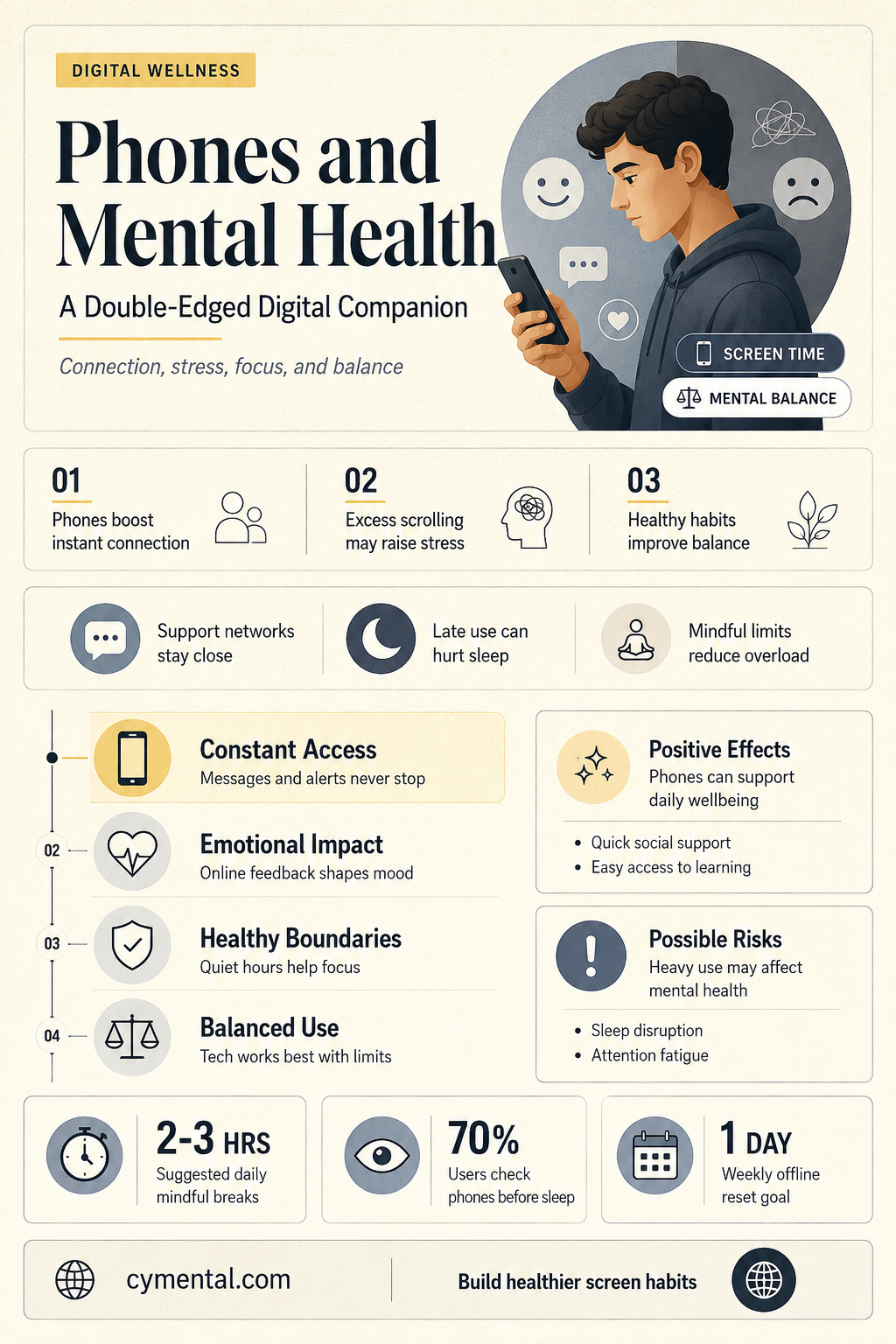
Smartphones have become an integral part of daily life, offering tools and resources that can significantly impact mental health. While excessive screen time and social media use have been linked to increased anxiety and depression, phones also provide access to mental health apps, telehealth services, and supportive communities. These devices enable individuals to track mood patterns, practice mindfulness, and connect with therapists remotely, making mental health care more accessible. However, the key lies in balanced usage, as phones can both exacerbate and alleviate mental health challenges depending on how they are utilized.
| Characteristics | Values |
|---|---|
| Access to Mental Health Resources | Provides access to mental health apps, hotlines, and online therapy platforms, increasing support options. |
| Social Connection | Facilitates communication with friends, family, and support networks, reducing feelings of loneliness. |
| Mindfulness & Relaxation Apps | Offers tools for meditation, breathing exercises, and stress reduction techniques. |
| Information & Education | Allows access to reliable mental health information, self-help resources, and awareness campaigns. |
| Tracking & Monitoring | Enables users to track mood, sleep patterns, and habits, providing insights for self-management. |
| Distraction & Coping Mechanisms | Can provide temporary distraction from negative thoughts or stressful situations through games, music, etc. |
| Potential for Overuse & Addiction | Excessive phone use can lead to increased anxiety, depression, and sleep disturbances. |
| Cyberbullying & Online Harassment | Exposure to negative online interactions can harm mental well-being. |
| Social Comparison & FOMO | Constant exposure to curated online lives can lead to feelings of inadequacy and fear of missing out. |
| Sleep Disruption | Blue light emission and stimulating content can interfere with sleep quality. |
| Privacy Concerns | Sharing personal information online can cause anxiety and stress. |
Explore related products


What You'll Learn
- Access to Support Networks: Phones connect users to friends, family, and mental health professionals instantly
- Mental Health Apps: Apps offer tools for meditation, therapy, mood tracking, and stress management
- Social Media Impact: Excessive use can increase anxiety, depression, and feelings of inadequacy
- Digital Detox Benefits: Limiting phone use improves sleep, focus, and overall mental well-being
- Emergency Resources: Phones provide quick access to crisis hotlines and emergency mental health services

Access to Support Networks: Phones connect users to friends, family, and mental health professionals instantly
One of the most transformative aspects of smartphones is their ability to bridge physical distances, creating instant connections to support networks. For individuals struggling with mental health, this accessibility can be a lifeline. A study published in the *Journal of Medical Internet Research* found that 70% of participants reported feeling more emotionally supported when they could text or call a friend during moments of distress. Unlike traditional methods of communication, phones eliminate barriers like time zones or physical proximity, allowing users to reach out whenever they need reassurance, advice, or simply a listening ear.
Consider the practical steps to leverage this connectivity effectively. First, curate a list of trusted contacts—friends, family, or mental health professionals—and save their numbers for quick access. Apps like *Crisis Text Line* or *BetterHelp* provide immediate connections to trained counselors, often within minutes. For younger users, particularly those aged 13–25, platforms like *7 Cups* offer peer support tailored to their age group. Pairing these tools with regular check-ins can create a robust safety net, ensuring help is always within reach.
However, reliance on phones for support isn’t without caution. Overuse can lead to dependency, where individuals may avoid face-to-face interactions or delay seeking professional help. A 2021 survey by the *American Psychological Association* revealed that 45% of respondents felt less inclined to meet in person when they could text instead. To mitigate this, balance digital communication with in-person connections and set boundaries, such as designating phone-free hours to foster real-world relationships.
The comparative advantage of phones lies in their versatility. While a face-to-face conversation might be ideal, it’s not always feasible. Phones offer alternatives like voice notes, video calls, or even group chats, catering to different communication preferences. For instance, someone with social anxiety might find it easier to express themselves via text, while another might benefit from the immediacy of a voice call. This adaptability ensures that support is tailored to the individual’s needs, making phones an indispensable tool in mental health management.
In conclusion, phones democratize access to support networks, breaking down barriers that once isolated individuals in their struggles. By combining instant connectivity with thoughtful usage, they can serve as a powerful ally in maintaining mental well-being. Whether through a quick text, a video call with a therapist, or a supportive group chat, phones provide a means to stay connected—and in doing so, they remind us that we’re never truly alone.
Sex and Mental Health: Exploring the Surprising Benefits and Connections
You may want to see also
Explore related products





Mental Health Apps: Apps offer tools for meditation, therapy, mood tracking, and stress management
Smartphones, once blamed for distracting us from the present moment, are now doubling as pocket-sized therapists. Mental health apps, a booming category in app stores, offer a diverse toolkit for anyone seeking support. Imagine having guided meditations, mood journals, and even cognitive behavioral therapy techniques at your fingertips. These apps aren't replacements for professional help, but they're powerful supplements, providing accessible and often affordable tools for managing stress, anxiety, and depression.
Think of them as a gym membership for your mind, offering daily exercises to strengthen emotional resilience.
Let's break down the arsenal these apps provide. Meditation apps like Headspace and Calm guide users through mindfulness practices, proven to reduce stress and improve focus. Mood tracking apps like Daylio and Moodpath encourage self-awareness by prompting users to log daily emotions, identifying patterns and potential triggers. Therapy apps like Sanvello and Talkspace connect users with licensed therapists for virtual sessions, making professional help more convenient and often less intimidating. Stress management apps like Breathe2Relax and Stop, Breathe & Think offer breathing exercises and relaxation techniques to calm the nervous system in moments of overwhelm.
Each app caters to different needs and preferences, allowing users to curate a personalized mental wellness routine.
While the potential benefits are significant, it's crucial to approach these apps with realistic expectations. They're not magic bullets. Consistency is key; using these tools regularly, even for short periods, yields the best results. It's also important to choose apps backed by research and developed with input from mental health professionals. Look for apps that prioritize user privacy and data security, especially when dealing with sensitive information. Remember, these apps are tools, not substitutes for human connection. If you're struggling with severe mental health issues, seeking professional help remains essential.
Think of mental health apps as a bridge, connecting you to resources and strategies that can empower you on your journey towards well-being.
Civil War Soldiers: Mental Health Support and Its Historical Context
You may want to see also
Explore related products


Social Media Impact: Excessive use can increase anxiety, depression, and feelings of inadequacy
Excessive social media use has been linked to heightened levels of anxiety, particularly among adolescents and young adults. A 2021 study published in the *Journal of Social and Clinical Psychology* found that limiting social media usage to 30 minutes per day significantly reduced feelings of anxiety and loneliness in participants aged 18–22. The constant exposure to curated, idealized versions of others’ lives triggers a psychological phenomenon known as "social comparison," where individuals measure their self-worth against others’ perceived successes. This habit, when unchecked, can lead to a persistent state of unease, as the brain becomes wired to anticipate validation through likes, comments, or shares, creating a cycle of dependency and stress.
Depression often follows in the wake of prolonged social media engagement, particularly when users feel their online interactions lack depth or authenticity. A meta-analysis in *JAMA Psychiatry* (2019) revealed that individuals spending more than three hours daily on social platforms were 60% more likely to report symptoms of depression. The passive consumption of content, rather than active engagement, exacerbates this risk. For instance, scrolling through feeds without meaningful interaction can foster a sense of isolation, as users witness others’ social connections without participating in them. This disconnect between virtual and real-life relationships can deepen feelings of loneliness, a known precursor to depressive episodes.
Feelings of inadequacy are another byproduct of excessive social media use, fueled by the pervasive culture of perfectionism. Platforms like Instagram and TikTok often showcase meticulously crafted images and narratives, creating unrealistic benchmarks for beauty, success, and happiness. A 2020 survey by the Royal Society for Public Health found that 60% of respondents aged 16–24 reported feeling inadequate after using social media. To mitigate this, experts recommend setting boundaries, such as unfollowing accounts that trigger negative emotions and limiting daily usage to 1–2 hours. Practicing mindfulness during online activity—such as asking oneself, "How does this post make me feel?"—can also help users become more aware of their emotional responses and curb impulsive comparisons.
Practical steps can be taken to reduce the mental health toll of social media. First, enable screen time tracking on your device to monitor usage patterns. Second, designate "tech-free" zones or times, such as during meals or one hour before bed, to foster real-world connections and improve sleep quality. Third, curate your feed intentionally by following accounts that inspire or educate rather than those that provoke envy or self-doubt. Finally, engage in offline activities that boost self-esteem, such as exercise, hobbies, or volunteering, to counteract the passive nature of social media consumption. By adopting these strategies, individuals can reclaim control over their digital habits and safeguard their mental well-being.
Can Ibuprofen Ease Mental Pain? Exploring Science and Limits
You may want to see also
Explore related products


Digital Detox Benefits: Limiting phone use improves sleep, focus, and overall mental well-being
Excessive phone use disrupts sleep by exposing users to blue light, which suppresses melatonin production. Studies show that even an hour of screen time before bed can delay sleep onset by up to 30 minutes. A digital detox, particularly in the evening, can restore natural sleep patterns. For instance, a 2020 study published in *Sleep Health* found that participants who reduced phone use by 30 minutes nightly experienced deeper REM sleep within two weeks. To implement this, set a "digital sunset" at least 60 minutes before bedtime, replacing screens with activities like reading or meditation.
Limiting phone use sharpens focus by reducing cognitive overload. Constant notifications and multitasking fragment attention, leading to a 40% decrease in productivity, according to a *Journal of Experimental Psychology* study. A digital detox retrains the brain to sustain attention. Start with small steps: designate phone-free blocks during work or study sessions, gradually increasing to 2–3 hours daily. Tools like app timers or "Do Not Disturb" modes can enforce boundaries, allowing for deeper concentration on tasks.
The mental health benefits of a digital detox extend beyond sleep and focus. Overuse of social media correlates with increased anxiety and depression, particularly in teens and young adults. A 2018 *JAMA Psychiatry* study found that limiting social media to 30 minutes daily significantly reduced loneliness and depressive symptoms in participants aged 18–22. To counter this, replace mindless scrolling with offline activities like journaling, exercise, or face-to-face conversations. Even a weekend detox can provide immediate mood improvements.
While phones offer connectivity and convenience, their overuse undermines well-being. A balanced approach involves mindful usage rather than complete avoidance. For example, use apps like *Screen Time* or *Digital Wellbeing* to track and limit daily usage to 2 hours. Prioritize intentional use—responding to messages during set times instead of constantly checking them. By reclaiming control over phone habits, individuals can harness technology’s benefits without sacrificing mental health.
Music as Therapy: How Curating Playlists Boosts Mental Well-Being
You may want to see also
Explore related products



Emergency Resources: Phones provide quick access to crisis hotlines and emergency mental health services
In moments of crisis, every second counts. Phones act as lifelines, connecting individuals to emergency mental health resources with a simple call or tap. Crisis hotlines like the National Suicide Prevention Lifeline (988 in the U.S.) are accessible 24/7, offering immediate support from trained professionals. Unlike traditional methods, phones eliminate barriers like travel time or waiting for appointments, ensuring help is available when it’s needed most.
Consider this scenario: a teenager experiencing overwhelming anxiety late at night. Instead of suffering in silence, they can text a crisis line like Crisis Text Line (741741), where counselors respond within minutes. This instant connection can de-escalate distress, provide coping strategies, and even save lives. Studies show that timely intervention during mental health emergencies significantly reduces the risk of self-harm or hospitalization. Phones make this immediacy possible.
However, not all emergency resources are created equal. Some hotlines specialize in specific issues, such as the Trevor Project for LGBTQ+ youth or the Veterans Crisis Line for military personnel. Knowing which service to contact can maximize effectiveness. For instance, a veteran struggling with PTSD-related flashbacks would benefit more from a service familiar with military trauma. Apps like *Crisis Connect* or *NotOK* can help users quickly identify and access the most relevant resources based on their needs.
While phones are invaluable tools, they’re not without limitations. Poor signal, dead batteries, or lack of awareness about available services can hinder access. To mitigate these risks, keep your phone charged, save emergency numbers in your contacts, and familiarize yourself with local and national resources. Additionally, share this information with loved ones so they can assist in times of need. Phones are only as effective as the user’s preparedness to utilize them.
In conclusion, phones serve as critical bridges to emergency mental health support, offering speed, accessibility, and specificity. By leveraging these tools wisely, individuals can navigate crises more safely and effectively. The key lies in knowing how and when to use them—a small effort that can yield life-changing results.
Happiness Boosts Mental Health: Doctors Reveal Surprising Benefits
You may want to see also
Frequently asked questions
Yes, phones can improve mental health by providing access to mental health apps, therapy platforms, and supportive communities. They also enable quick communication with loved ones, reducing feelings of isolation.
Yes, excessive phone use can negatively impact mental health by promoting social comparison, disrupting sleep, and increasing stress or anxiety, especially with constant notifications and social media consumption.
Use your phone mindfully by setting boundaries on screen time, prioritizing mental health apps or tools, and avoiding excessive social media. Balance digital use with offline activities for a healthier mental state.

![HELDSON® Wooden Therapy Massage Tools [6 Pieces] - Wood Rollers for Body Sculpting - Lymphatic Drainage Massager - Cellulite Tool - Maderoterapia Kit - Back Rolling Stick - Wellness Gifts Women, Men](https://m.media-amazon.com/images/I/91amA9dlX7L._AC_UL320_.jpg)