Lucas Bennett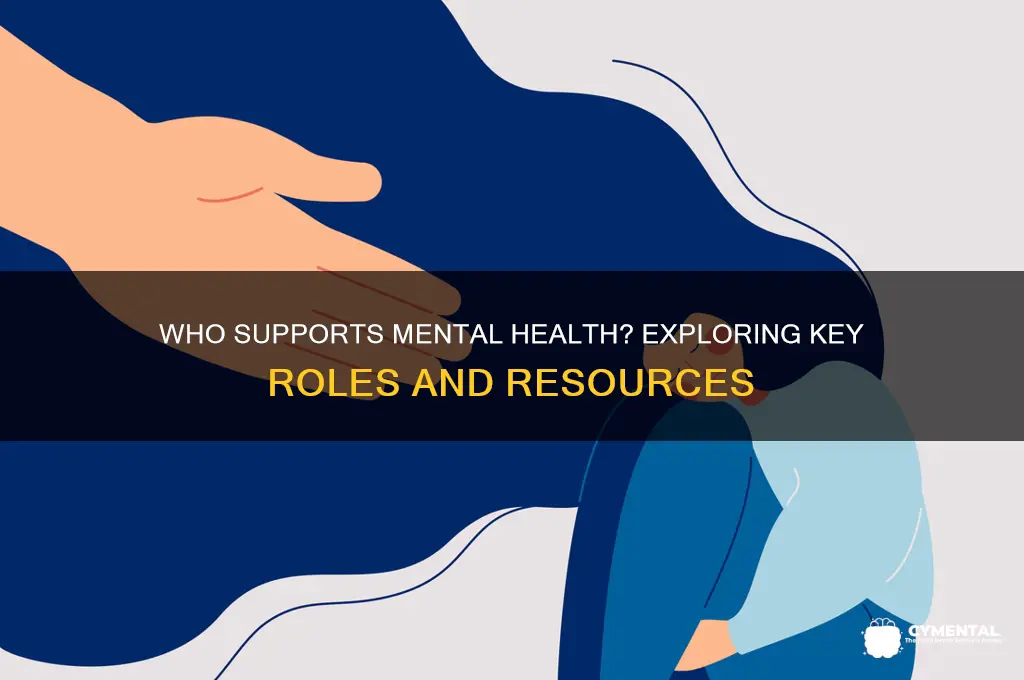
Mental health support is a multifaceted and essential aspect of overall well-being, and numerous individuals play pivotal roles in helping those who struggle with mental health challenges. From licensed professionals such as psychiatrists, psychologists, and therapists who provide clinical expertise and evidence-based treatments, to counselors, social workers, and peer support specialists who offer guidance and empathy, the spectrum of helpers is broad. Family members, friends, and caregivers also contribute significantly by providing emotional support, understanding, and encouragement. Additionally, community organizations, helplines, and online resources serve as accessible avenues for assistance, ensuring that individuals have a variety of options to seek help. Together, these diverse contributors form a network of support that fosters resilience, recovery, and improved mental health outcomes.
Explore related products


What You'll Learn
- Therapists: Provide counseling, support, and strategies for managing mental health conditions effectively
- Support Groups: Offer peer connections, shared experiences, and emotional encouragement in a safe space
- Psychiatrists: Diagnose, prescribe medication, and monitor mental health treatment plans professionally
- Crisis Hotlines: Offer immediate help, guidance, and resources during mental health emergencies
- Friends/Family: Provide emotional support, understanding, and encouragement in daily life struggles

Therapists: Provide counseling, support, and strategies for managing mental health conditions effectively
Therapists are often the first line of defense in the battle against mental health challenges, offering a unique blend of professional expertise and empathetic support. Unlike general practitioners, therapists specialize in the intricacies of the mind, employing evidence-based techniques to address conditions like anxiety, depression, and PTSD. For instance, Cognitive Behavioral Therapy (CBT) is a widely used approach where therapists help clients identify and reframe negative thought patterns, often over 12 to 20 sessions. This structured yet adaptable method has proven effective across age groups, from adolescents grappling with academic stress to adults navigating workplace pressures.
Consider the case of a 28-year-old professional diagnosed with generalized anxiety disorder. A therapist might begin by assessing the severity of symptoms using tools like the GAD-7 questionnaire, then tailor a treatment plan that includes mindfulness exercises, journaling, and gradual exposure to anxiety triggers. Over time, the therapist provides not just coping strategies but also a safe space to explore underlying emotional conflicts. This dual focus on symptom management and emotional healing distinguishes therapists from other mental health professionals, making them invaluable in long-term recovery.
However, the therapist-client relationship is not a one-size-fits-all solution. Success hinges on factors like rapport, consistency, and the client’s willingness to engage. For example, a therapist might recommend daily 10-minute mindfulness practices, but adherence varies widely. Studies show that clients who actively participate in therapy homework, such as tracking mood patterns or practicing relaxation techniques, experience more significant improvements. This underscores the collaborative nature of therapy, where the therapist provides tools, but the client’s effort determines the outcome.
Critics sometimes argue that therapy is time-consuming or expensive, but its benefits often outweigh the costs. For instance, untreated mental health conditions can lead to physical ailments, strained relationships, and reduced productivity, all of which carry their own financial and emotional tolls. Moreover, many therapists now offer sliding-scale fees or telehealth options, making services more accessible. For those hesitant to start, beginning with a single session can provide clarity on whether therapy aligns with their needs, demystifying the process and reducing stigma.
In essence, therapists serve as both guides and allies in the journey toward mental wellness. By combining clinical knowledge with personalized care, they empower individuals to navigate life’s challenges with resilience and insight. Whether through CBT, dialectical behavior therapy, or other modalities, their role is not to “fix” clients but to equip them with the skills to heal and thrive independently. For anyone struggling, reaching out to a therapist could be the first step toward reclaiming control over their mental health.
Rebuilding Minds: Strategies for Mental Recovery After a Stroke
You may want to see also
Explore related products


Support Groups: Offer peer connections, shared experiences, and emotional encouragement in a safe space
Human connection is a powerful antidote to the isolation often experienced by those struggling with mental health. Support groups leverage this by creating a community of individuals who understand each other’s challenges firsthand. Unlike clinical settings, these groups foster peer connections that feel less formal and more relatable. For instance, a person battling anxiety might find solace in hearing someone else describe their panic attacks in a way that mirrors their own experience. This shared language breaks down barriers, making it easier to open up without fear of judgment.
The structure of support groups varies, but most follow a consistent format to ensure safety and productivity. Typically, meetings begin with introductions and ground rules, such as confidentiality and respect. Participants then share their experiences, struggles, or victories, often guided by a facilitator who keeps the conversation on track. For example, a depression support group might use a "check-in" system where each member rates their mood on a scale of 1 to 10, providing a snapshot of the group’s collective emotional state. This structured yet flexible approach ensures everyone has a voice while maintaining a safe space.
One of the most compelling aspects of support groups is their ability to provide emotional encouragement through shared experiences. Hearing someone say, "I’ve been there, and this is how I coped," can be profoundly validating. For instance, a young adult dealing with social anxiety might learn practical strategies, like gradual exposure techniques, from a peer who has successfully managed similar symptoms. This exchange of lived wisdom often feels more accessible and actionable than clinical advice, which can sometimes seem abstract or overwhelming.
However, support groups are not a one-size-fits-all solution. They work best when complemented with professional treatment, especially for severe mental health conditions. For example, someone with bipolar disorder might attend a support group for emotional support but still rely on medication and therapy for symptom management. It’s also crucial to find the right group—whether in-person or online—that aligns with your specific needs and comfort level. Websites like Meetup, Psychology Today, or local community centers often list groups tailored to conditions like PTSD, grief, or addiction.
In practice, joining a support group requires minimal commitment but yields significant benefits. Most groups meet weekly or biweekly for 60–90 minutes, making them accessible even for busy individuals. To maximize the experience, come prepared to listen actively, share honestly (but only when comfortable), and respect others’ boundaries. Over time, the connections formed in these groups can become a vital part of one’s mental health toolkit, offering not just support but a sense of belonging in the journey toward healing.
Boost Your Brain: How Reading Enhances Mental Stimulation and Focus
You may want to see also
Explore related products


Psychiatrists: Diagnose, prescribe medication, and monitor mental health treatment plans professionally
Psychiatrists are medical doctors who specialize in mental health, uniquely qualified to diagnose, treat, and manage complex psychiatric conditions. Unlike therapists or counselors, they can prescribe medication, a critical tool for conditions like schizophrenia, bipolar disorder, and severe depression. For instance, a psychiatrist might prescribe a selective serotonin reuptake inhibitor (SSRI) like fluoxetine (Prozac) at a starting dose of 20 mg/day for depression, adjusting based on patient response and side effects. This ability to integrate pharmacological treatment with psychotherapy makes them indispensable in comprehensive mental health care.
Consider the diagnostic process: psychiatrists use structured interviews, psychological assessments, and medical tests to differentiate between conditions with overlapping symptoms. For example, a patient presenting with fatigue and low mood might be experiencing depression, hypothyroidism, or a side effect of medication. A psychiatrist would order blood tests (e.g., TSH levels) alongside a mental health evaluation to rule out physical causes before prescribing an antidepressant. This medical expertise ensures treatment is tailored and safe, particularly for patients with co-occurring physical health issues.
Medication management is both an art and a science. Psychiatrists monitor patients regularly to assess efficacy and side effects, often starting with lower doses and titrating upward. For instance, when prescribing lithium for bipolar disorder, they would monitor serum levels (target range: 0.8–1.0 mEq/L) and kidney function to prevent toxicity. They also educate patients on adherence, potential interactions (e.g., SSRIs with NSAIDs increasing bleeding risk), and lifestyle adjustments. This proactive approach minimizes risks and maximizes therapeutic benefits.
One underappreciated aspect of psychiatrists’ work is their role in long-term treatment planning. Beyond medication, they collaborate with therapists, primary care providers, and families to create holistic care strategies. For adolescents with ADHD, a psychiatrist might prescribe methylphenidate (Ritalin) while recommending behavioral therapy and school accommodations. For older adults, they might adjust dosages to account for age-related changes in metabolism or polypharmacy concerns. This integrated approach ensures mental health care is sustainable and patient-centered.
Critics sometimes argue that psychiatrists over-rely on medication, but their training emphasizes evidence-based practice. They know when medication is necessary (e.g., for treatment-resistant depression) and when therapy alone suffices. For example, a psychiatrist might recommend cognitive-behavioral therapy (CBT) for mild anxiety before considering benzodiazepines, due to the latter’s risk of dependence. By balancing pharmacotherapy with other modalities, psychiatrists address mental health from multiple angles, offering hope and healing to those in need.
Voc Rehab Lexington SC: Mental Health Support and Resources Explored
You may want to see also
Explore related products


Crisis Hotlines: Offer immediate help, guidance, and resources during mental health emergencies
In moments of acute mental distress, every second counts. Crisis hotlines serve as a vital lifeline, offering immediate support to individuals grappling with suicidal thoughts, severe anxiety, or overwhelming emotional pain. These services are staffed by trained professionals and volunteers who provide a compassionate ear, practical guidance, and critical resources to stabilize callers until further help can be secured. Unlike therapy or medication, which require time and planning, crisis hotlines are accessible 24/7, ensuring that no one faces their darkest moments alone.
Consider the mechanics of how these hotlines operate. A caller in crisis is met with a calm, nonjudgmental voice that assesses the situation, de-escalates tension, and connects them to local emergency services if necessary. For instance, the National Suicide Prevention Lifeline (988 in the U.S.) not only offers emotional support but also provides referrals to mental health providers, support groups, and community resources. Similarly, the Crisis Text Line (text 741741) caters to those who prefer texting over calling, making it an ideal option for individuals in noisy environments or those who struggle with verbal communication. These services are free, confidential, and tailored to meet the caller’s immediate needs.
While crisis hotlines are indispensable, they are not a substitute for long-term mental health care. Think of them as the emergency room of mental health—a place to go when you’re bleeding out emotionally, but not where you’ll receive ongoing treatment. For sustained recovery, individuals should follow up with therapists, psychiatrists, or support groups. Hotlines, however, bridge the gap between crisis and care, ensuring that people have a starting point for healing. A practical tip: save crisis hotline numbers in your phone or write them down somewhere visible, so they’re readily available when needed.
Critically, crisis hotlines also play a role in destigmatizing mental health struggles. By normalizing the act of reaching out for help, they encourage more people to seek support before their situations become dire. For example, a teenager experiencing bullying-related depression might hesitate to confide in a parent or teacher but could text a crisis line for advice. This accessibility lowers barriers to care, particularly for marginalized communities that may face systemic obstacles to traditional mental health services. In this way, hotlines are both a tool for immediate relief and a catalyst for broader cultural change.
To maximize the effectiveness of crisis hotlines, it’s essential to spread awareness and educate communities about their existence. Schools, workplaces, and public spaces should prominently display hotline numbers alongside other emergency contacts. Additionally, training programs can equip bystanders with the skills to recognize signs of distress and guide someone toward calling a hotline. By integrating these services into the fabric of society, we ensure that no one slips through the cracks during their darkest hours. Crisis hotlines are more than just a phone number—they’re a promise that help is always within reach.
Setting Goals: A Powerful Tool for Enhancing Mental Wellness
You may want to see also
Explore related products


Friends/Family: Provide emotional support, understanding, and encouragement in daily life struggles
Observation: In the intricate web of mental health support, friends and family often serve as the first line of defense against emotional turmoil. Their role is not just passive; it’s active, woven into the fabric of daily life through small, consistent acts of care. A well-timed text, a listening ear, or a shared laugh can mitigate the weight of stress, anxiety, or depression more effectively than one might assume.
Analysis: Emotional support from loved ones operates on a principle of accessibility and familiarity. Unlike professional interventions, which are often scheduled and structured, familial or friendly support is immediate and tailored. For instance, a friend who notices subtle changes in behavior—like withdrawal or irritability—can intervene early, preventing minor issues from escalating. Studies show that individuals with strong social support networks report higher resilience and lower rates of chronic mental health conditions. However, this dynamic requires reciprocity; one-sided support can lead to burnout for the giver and resentment for the receiver.
Practical Steps: To maximize the impact of this support, establish clear boundaries and communication norms. For example, designate "check-in" times where both parties can openly discuss their mental state without fear of judgment. Encourage active listening by summarizing what the other person has said before responding. For families, integrate mental health conversations into routine activities—like dinner or car rides—to normalize the topic. If a loved one is struggling, avoid platitudes like "It’ll get better" and instead offer specific, actionable help, such as, "I’ll stay with you until you feel calmer."
Cautions: While friends and family are invaluable, they are not substitutes for professional care. Over-reliance on them can lead to emotional exhaustion or misplaced expectations. For instance, a parent might feel ill-equipped to handle a child’s severe anxiety, leading to frustration on both sides. Recognize when a situation requires external expertise and involve therapists or counselors as needed. Additionally, be mindful of cultural or generational differences that may affect how mental health is perceived and discussed within families.
Takeaway: The power of friends and family in mental health lies in their ability to provide consistent, personalized support that professionals cannot replicate. By fostering open communication, setting boundaries, and knowing when to seek additional help, these relationships can become a cornerstone of emotional well-being. Remember, the goal is not to fix problems but to create a safe space where struggles can be acknowledged and endured together.
Supporting Student Minds: Strategies to Tackle Campus Mental Health Crisis
You may want to see also
Frequently asked questions
Professionals include psychiatrists, psychologists, therapists, counselors, social workers, and psychiatric nurses, each offering specialized care tailored to mental health needs.
Therapists provide talk therapy, such as cognitive-behavioral therapy (CBT) or mindfulness-based therapy, to help individuals manage symptoms, develop coping strategies, and improve emotional well-being.
Yes, primary care doctors can diagnose and treat mild to moderate mental health conditions, prescribe medication, and refer patients to specialists when needed.
Support groups provide a safe space for individuals to share experiences, gain emotional support, and learn from others facing similar challenges, fostering a sense of community.
Helplines offer immediate support, crisis intervention, and resources for individuals in distress, connecting them to professional help or guiding them through difficult moments.