Lucas Bennett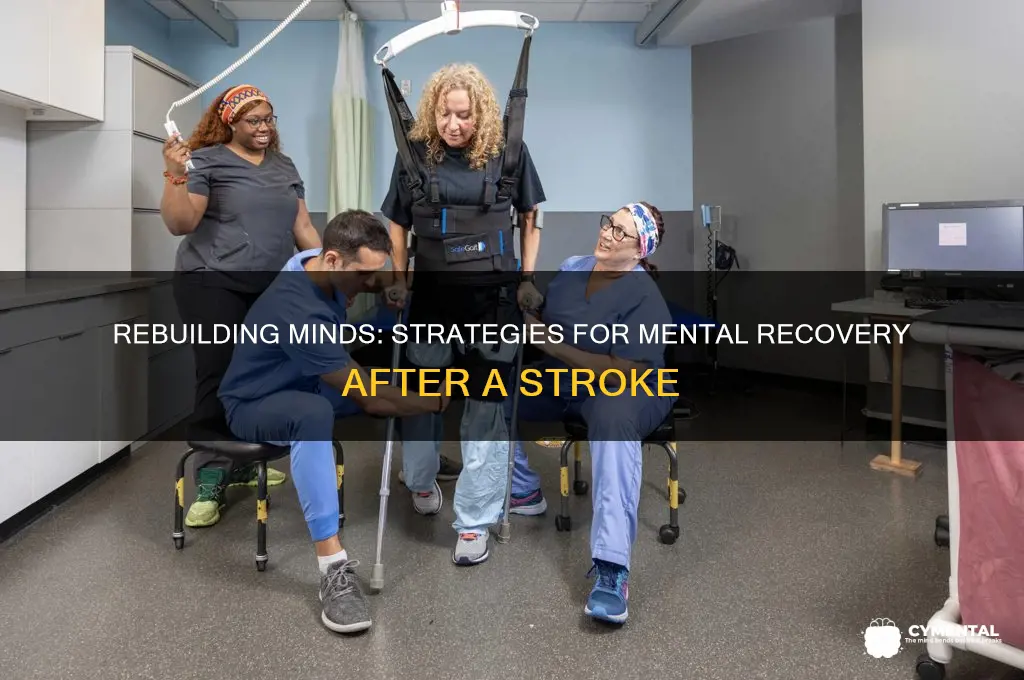
Helping individuals recover mentally after a stroke is a multifaceted process that requires patience, understanding, and tailored support. Strokes can significantly impact cognitive functions, emotional well-being, and overall mental health, leaving survivors feeling overwhelmed, anxious, or depressed. To aid in their recovery, it is essential to create a supportive environment that encourages open communication, provides cognitive rehabilitation through exercises and therapy, and fosters a sense of purpose and independence. Family, caregivers, and healthcare professionals play a crucial role in offering emotional reassurance, helping set realistic goals, and promoting healthy lifestyle changes. Additionally, integrating mindfulness, counseling, and social engagement can help rebuild confidence and resilience, enabling stroke survivors to navigate their new challenges and regain a sense of normalcy in their lives.
| Characteristics | Values |
|---|---|
| Early Intervention | Start rehabilitation as soon as possible after the stroke. Early intervention improves recovery outcomes and prevents complications. |
| Cognitive Rehabilitation Therapy (CRT) | Tailored exercises to improve memory, attention, problem-solving, and language skills. CRT can involve computer-based programs, puzzles, and real-life tasks. |
| Speech and Language Therapy | Helps with communication difficulties (aphasia) and swallowing problems (dysphagia) through exercises and alternative communication methods. |
| Occupational Therapy | Focuses on regaining independence in daily activities like dressing, cooking, and bathing through adaptive techniques and tools. |
| Physical Therapy | Improves mobility, strength, and balance to enhance physical function and reduce the risk of falls. |
| Psychological Support | Counseling, support groups, and therapy to address depression, anxiety, and emotional challenges post-stroke. |
| Social Engagement | Encourage participation in social activities, hobbies, and community events to combat isolation and boost mental well-being. |
| Brain Stimulation Techniques | Non-invasive methods like transcranial magnetic stimulation (TMS) or transcranial direct current stimulation (tDCS) to enhance brain recovery. |
| Healthy Lifestyle Changes | Promote a balanced diet, regular exercise, adequate sleep, and stress management to support overall brain health. |
| Family and Caregiver Involvement | Educate and involve family members in the recovery process to provide consistent support and understanding. |
| Technology and Assistive Devices | Use apps, speech-generating devices, and mobility aids to assist with cognitive and physical challenges. |
| Goal Setting and Motivation | Set achievable, personalized goals to maintain motivation and track progress in recovery. |
| Mindfulness and Relaxation Techniques | Practices like meditation, yoga, and deep breathing to reduce stress and improve mental clarity. |
| Memory Aids | Use calendars, reminders, and organizational tools to help with memory and planning difficulties. |
| Regular Monitoring and Adjustments | Continuously assess progress and adjust rehabilitation plans to address evolving needs and challenges. |
Explore related products


What You'll Learn
- Cognitive Rehabilitation: Exercises to improve memory, attention, problem-solving, and language skills post-stroke
- Emotional Support: Addressing depression, anxiety, and mood swings through therapy and counseling
- Social Reintegration: Encouraging participation in community activities and rebuilding social connections
- Mindfulness Techniques: Using meditation and relaxation to reduce stress and enhance mental clarity
- Goal Setting: Creating achievable milestones to boost motivation and restore a sense of purpose

Cognitive Rehabilitation: Exercises to improve memory, attention, problem-solving, and language skills post-stroke
Stroke survivors often face significant cognitive challenges, including memory loss, diminished attention, impaired problem-solving, and language difficulties. Cognitive rehabilitation, a tailored approach to retraining the brain, offers a pathway to recovery. By engaging in specific exercises, individuals can rebuild neural connections and regain lost skills. These exercises are not one-size-fits-all; they are customized to address the unique deficits of each survivor, ensuring targeted and effective recovery.
Memory Enhancement Techniques
Memory deficits post-stroke can range from mild forgetfulness to severe amnesia. One effective exercise is the spaced repetition technique, where information is reviewed at increasing intervals (e.g., 1 hour, 1 day, 1 week) to reinforce retention. For instance, a survivor might practice recalling a grocery list, starting with 5 items and gradually increasing complexity. Another method is visual association, pairing words or tasks with vivid images. For example, linking "apple" with a mental picture of a red fruit can improve recall. Caregivers can assist by creating structured routines, such as placing everyday items in consistent locations to reduce cognitive load.
Attention and Problem-Solving Exercises
Attention deficits often manifest as difficulty focusing or multitasking. Dual-task exercises, like walking while naming objects aloud, can improve divided attention. Start with simple combinations and progress to more complex tasks, such as solving math problems while following a visual cue. Problem-solving skills benefit from puzzle-based activities, such as Sudoku or jigsaw puzzles, which encourage logical thinking and persistence. For older adults, incorporating familiar themes (e.g., crossword puzzles with nostalgic clues) can increase engagement and motivation.
Language and Communication Recovery
Aphasia, a common post-stroke condition, impairs language production and comprehension. Naming therapy involves repeatedly labeling objects or pictures to strengthen word retrieval. For example, a survivor might practice naming household items in a timed session, gradually increasing speed and accuracy. Script training focuses on rehearsing common phrases or conversations, such as ordering food or asking for directions. This builds confidence in real-world communication. Caregivers can support this process by using clear, concise language and avoiding complex sentences during conversations.
Practical Tips for Consistent Practice
Consistency is key in cognitive rehabilitation. Exercises should be practiced daily, with sessions lasting 20–30 minutes to avoid mental fatigue. Incorporate variety to prevent boredom; for instance, alternate between memory games, problem-solving puzzles, and language drills. Technology can be a valuable tool—apps like Lumosity or speech therapy platforms offer interactive exercises tailored to cognitive needs. Finally, track progress using journals or digital logs to celebrate small victories, which can boost morale and reinforce commitment to recovery.
By integrating these exercises into a structured routine, stroke survivors can systematically rebuild cognitive functions. While progress may be gradual, the brain’s capacity for neuroplasticity means improvement is always possible. With patience, persistence, and the right strategies, mental recovery becomes an achievable goal.
Supporting Mental Health: Practical Ways to Help Loved Ones Heal
You may want to see also
Explore related products



Emotional Support: Addressing depression, anxiety, and mood swings through therapy and counseling
Stroke survivors often face a tempest of emotions, with depression, anxiety, and mood swings emerging as unwelcome companions on their road to recovery. These emotional challenges are not mere side effects; they are significant barriers to rehabilitation, impacting motivation, cognitive function, and overall quality of life. Recognizing and addressing these issues through therapy and counseling is crucial, as it provides survivors with the tools to navigate this emotional labyrinth and reclaim their mental well-being.
The Therapeutic Alliance: A Powerful Tool
Cognitive-behavioral therapy (CBT) stands as a beacon of hope in this context. This evidence-based approach empowers individuals to challenge negative thought patterns and replace them with healthier, more adaptive ones. For instance, a stroke survivor experiencing anxiety about their physical limitations might learn to identify and reframe catastrophic thoughts like "I'll never walk again" into more realistic and encouraging statements such as "Recovery takes time, and I'm making progress every day." Over time, this cognitive restructuring can lead to significant reductions in anxiety and depression symptoms.
Tailored Interventions for Unique Needs
The beauty of therapy lies in its adaptability. For older adults, who constitute a significant portion of stroke survivors, age-specific considerations are essential. Therapists might incorporate reminiscence therapy, encouraging patients to reflect on past achievements and positive experiences to boost self-esteem and hope. Group therapy sessions can also be particularly beneficial, offering a sense of community and understanding that individual sessions might not provide. Here, survivors can share their struggles and triumphs, fostering a supportive environment that combats feelings of isolation.
A Holistic Approach: Combining Therapies for Optimal Results
While CBT is a cornerstone, a multifaceted approach often yields the best outcomes. Incorporating mindfulness techniques, such as meditation and deep breathing exercises, can help manage anxiety and mood fluctuations. These practices teach individuals to observe their thoughts and emotions without judgment, promoting a sense of calm and emotional regulation. Additionally, art or music therapy can provide an alternative means of expression, particularly for those who struggle to articulate their emotions verbally.
The Role of Caregivers and Support Systems
The impact of emotional support extends beyond the therapy room. Caregivers and family members play a pivotal role in reinforcing therapeutic gains. They can be educated on recognizing signs of depression and anxiety, learning to provide encouragement and assistance in implementing coping strategies. Regular family counseling sessions can also address the emotional strain on caregivers, ensuring they are equipped to offer sustained support. This network of understanding and empathy becomes a safety net, catching survivors when they falter and celebrating their victories.
In the journey of stroke recovery, emotional healing is as vital as physical rehabilitation. Therapy and counseling offer a structured path to confront and overcome the mental health challenges that often accompany this life-altering event. By embracing these supportive measures, stroke survivors can not only regain their emotional equilibrium but also discover newfound resilience and strength.
Creative Writing: A Powerful Tool for Healing and Mental Wellness
You may want to see also
Explore related products


Social Reintegration: Encouraging participation in community activities and rebuilding social connections
Stroke survivors often face a silent battle: the struggle to re-engage with the world around them. Social isolation, a common aftermath of stroke, can exacerbate depression, anxiety, and cognitive decline, hindering overall recovery. Combating this isolation through social reintegration is crucial. This involves actively encouraging participation in community activities and rebuilding the social connections that provide a sense of belonging and purpose.
One powerful strategy is to identify local community groups aligned with the individual's pre-stroke interests. For a former book club enthusiast, a local library reading group could offer familiar ground. A gardening enthusiast might find solace and camaraderie in a community garden project. These existing interests provide a natural entry point, reducing the anxiety associated with entirely new social situations.
However, simply suggesting activities isn't enough. Practical considerations are key. Transportation can be a significant barrier. Explore options like accessible public transport, volunteer driving schemes, or arranging carpools with fellow group members. For those with physical limitations, consider activities that accommodate their needs – seated yoga classes, online book clubs, or community events with wheelchair accessibility.
Additionally, the role of caregivers and family members is vital. They can act as facilitators, accompanying the stroke survivor to initial meetings, providing emotional support, and gradually encouraging independent participation. Caregivers can also help identify potential social opportunities within the community, such as local support groups specifically for stroke survivors, where shared experiences foster understanding and connection.
It's important to manage expectations. Social reintegration is a gradual process. Start with small, manageable steps, celebrating each success along the way. A short coffee meetup with a friend, attending a single community event, or joining an online forum are all positive strides. Over time, these small steps build confidence and pave the way for more sustained social engagement. Remember, the goal isn't to recreate the past but to create a new, fulfilling social life that reflects the individual's current abilities and interests.
Supporting Young Minds: Education Systems Empowering Mentally Ill Children
You may want to see also
Explore related products



Mindfulness Techniques: Using meditation and relaxation to reduce stress and enhance mental clarity
Stroke survivors often face a daunting mental recovery, grappling with cognitive changes, emotional turmoil, and overwhelming stress. Mindfulness techniques, rooted in meditation and relaxation, offer a powerful tool to navigate this challenging journey. By cultivating present-moment awareness and non-judgmental acceptance, individuals can reduce stress, improve focus, and regain a sense of control over their mental well-being.
Imagine a stroke survivor struggling with anxiety and difficulty concentrating. Guided meditation, a cornerstone of mindfulness, provides a structured approach to calming the mind. Start with short, 5-10 minute sessions, focusing on the sensation of breath entering and leaving the body. Apps like Headspace or Calm offer accessible guided meditations tailored for beginners. Over time, gradually increase session length, aiming for 20-30 minutes daily. Research suggests consistent practice can lead to measurable reductions in stress hormones like cortisol, promoting a sense of calm and mental clarity.
Unlike medication, mindfulness is a skill cultivated through practice. Think of it as mental exercise, strengthening the brain's ability to manage stress and focus attention. Just as physical therapy rebuilds muscle strength, mindfulness trains the mind to observe thoughts and emotions without getting overwhelmed by them. This mental distancing allows individuals to respond to challenges with greater resilience and clarity.
Incorporating mindfulness into daily routines is key. Simple practices like mindful eating, where one focuses on the taste, texture, and aroma of food, can ground individuals in the present moment. Similarly, mindful walking, paying attention to the sensation of feet touching the ground, can transform a mundane activity into a calming experience. These micro-moments of mindfulness throughout the day accumulate, creating a foundation for sustained mental well-being.
While mindfulness is a powerful tool, it's not a magic bullet. It requires commitment and patience. Some individuals may find it challenging to quiet their minds initially. It's crucial to approach mindfulness with self-compassion, acknowledging that progress is gradual. Combining mindfulness with other therapeutic approaches, such as cognitive-behavioral therapy, can further enhance its effectiveness in supporting stroke survivors on their path to mental recovery.
Emotional Support: A Lifeline for Mental Health in Tough Times
You may want to see also
Explore related products


Goal Setting: Creating achievable milestones to boost motivation and restore a sense of purpose
After a stroke, the mental recovery process is often as critical as the physical one. Setting achievable goals can be a powerful tool to reignite motivation and help individuals regain a sense of purpose. The key lies in breaking down larger, overwhelming objectives into smaller, manageable milestones. For instance, if a stroke survivor aims to regain the ability to walk independently, a realistic first goal might be to stand unsupported for 30 seconds. This approach not only makes the journey less daunting but also provides frequent opportunities for celebration, reinforcing progress and building confidence.
Consider the SMART criteria when setting these goals: Specific, Measurable, Achievable, Relevant, and Time-bound. For a 65-year-old stroke survivor, a SMART goal could be, “Walk 50 feet with a walker three times a week for the next month.” This clarity ensures both the survivor and their support system understand what success looks like. Pairing goals with tangible rewards, such as a favorite meal or a short outing, can further enhance motivation. However, it’s crucial to balance ambition with realism; goals that are too easy may not inspire effort, while those that are too difficult can lead to frustration and discouragement.
The role of a caregiver or therapist in this process is invaluable. They can help tailor goals to the individual’s unique challenges and strengths, ensuring they align with their recovery stage. For example, a speech therapist might set a goal of practicing five new words daily for a survivor working on language skills. Progress tracking tools, such as journals or apps, can also keep both the survivor and their support team accountable. Regularly reviewing and adjusting goals as abilities improve ensures the milestones remain challenging yet attainable.
One often overlooked aspect of goal setting is its psychological impact. Achieving even small milestones triggers the brain’s reward system, releasing dopamine, which fosters a positive mindset. This can counteract feelings of helplessness or depression, common after a stroke. For instance, a 70-year-old who successfully completes a goal of folding laundry independently might feel a renewed sense of self-worth. Over time, these successes accumulate, rebuilding not just physical or cognitive abilities but also the individual’s identity and purpose.
Finally, it’s essential to acknowledge that setbacks are a natural part of the recovery process. A missed goal should not be seen as a failure but as an opportunity to reassess and adapt. For example, if a survivor struggles to meet a goal of walking 10 minutes daily, reducing the time to 5 minutes and gradually increasing it can make the goal more achievable. Patience, flexibility, and unwavering encouragement are the cornerstones of effective goal setting in stroke recovery. By creating a roadmap of achievable milestones, survivors can transform their journey from one of struggle to one of triumph, one step at a time.
Microdosing Acid: A Potential Ally in Mental Health Treatment?
You may want to see also
Frequently asked questions
Encourage mental exercises like puzzles, memory games, and reading. Use repetitive tasks to reinforce learning, and provide a structured daily routine to reduce confusion.
Offer emotional support through active listening and reassurance. Encourage participation in therapy or support groups, and help them identify and express their feelings.
Regular social interaction boosts mood and cognitive function. Encourage visits from friends and family, and engage in group activities or community programs.
Use clear, simple language and allow extra time for responses. Practice patience, and consider speech therapy or communication aids if needed.
Set small, achievable goals and celebrate progress. Incorporate activities they enjoy, and provide gentle encouragement to maintain engagement.