Madison Cole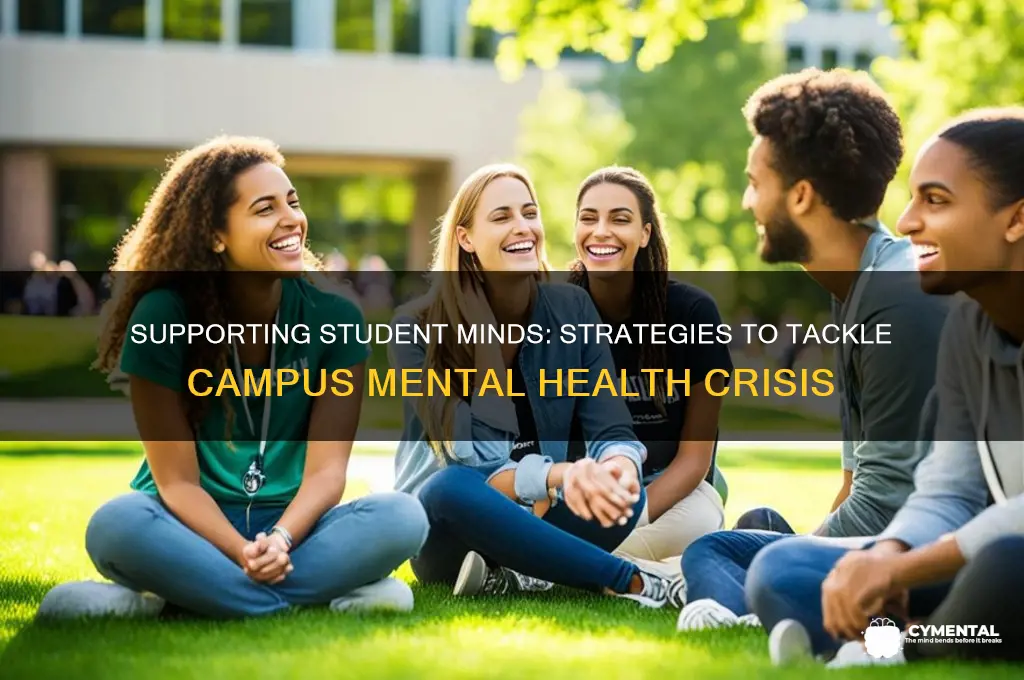
The mental health epidemic on college campuses has reached a critical point, with increasing rates of anxiety, depression, and other mental health issues among students. As academic pressures, social challenges, and financial stressors mount, many students struggle to cope, often lacking the necessary resources and support systems. Addressing this crisis requires a multifaceted approach, including increased access to mental health services, destigmatization of seeking help, and the integration of wellness programs into campus culture. By fostering a supportive environment, colleges can empower students to prioritize their mental well-being and thrive academically and personally.
Explore related products

$15.99 $21.95


$24.99 $24.99


What You'll Learn

Increase access to mental health services
College students often face long wait times for mental health appointments, a delay that can exacerbate their struggles. To address this, campuses must expand their counseling center staff and hours of operation. Hiring more licensed therapists, psychologists, and psychiatric nurse practitioners can significantly reduce wait times, ensuring students receive timely support. Additionally, extending service hours to include evenings and weekends accommodates students with busy schedules, making care more accessible.
Another critical step is integrating telehealth services into campus mental health offerings. Teletherapy platforms allow students to access counseling remotely, breaking down barriers related to transportation, stigma, or physical distance. Institutions should partner with reputable telehealth providers or develop in-house platforms, ensuring these services are covered under student health plans. This approach not only increases accessibility but also normalizes seeking help by meeting students where they are—often on their devices.
Financial barriers frequently deter students from seeking mental health care. Colleges can mitigate this by subsidizing or fully covering the cost of therapy sessions, medication, and psychiatric evaluations for enrolled students. Establishing a mental health fund or incorporating these services into tuition fees ensures that cost is not a prohibitive factor. Institutions should also train staff to inform students about these resources, as awareness is key to utilization.
Finally, creating satellite mental health clinics in high-traffic areas of campus can reduce the stigma associated with visiting a centralized counseling center. These smaller, discreet locations can offer walk-in hours for crisis intervention, group therapy sessions, or brief consultations. By embedding mental health services within the fabric of campus life, colleges signal that seeking support is a normal and encouraged part of the student experience. This decentralized approach fosters a culture of proactive mental health care.
Medical Marijuana's Role in Alleviating Mental Health Symptoms Explained
You may want to see also
Explore related products


Promote mental health awareness campaigns
College students face unique stressors—academic pressure, financial strain, and social isolation—that can exacerbate mental health issues. Promoting mental health awareness campaigns is a proactive way to destigmatize these struggles and encourage students to seek help. By integrating creative, evidence-based strategies, campuses can foster a culture of openness and support.
One effective approach is to leverage peer-led initiatives. Students are more likely to engage with campaigns led by their peers, as they perceive the messaging as relatable and authentic. For instance, training student volunteers to share their personal experiences with mental health challenges during orientation or through social media can humanize the issue. Pairing these stories with actionable resources, such as counseling services or mindfulness apps, ensures that awareness translates into tangible support. Campaigns like "Real Talk" at the University of Michigan exemplify this, where student ambassadors host workshops and discussions to normalize conversations about mental health.
Visual and interactive elements amplify the impact of awareness campaigns. Installing art installations or interactive displays in high-traffic areas, like libraries or student unions, can spark curiosity and dialogue. For example, a "Wall of Resilience" featuring anonymous student quotes about overcoming adversity can inspire hope and connection. Similarly, hosting mental health fairs with stress-relief activities, such as yoga sessions or therapy dog visits, combines education with immediate self-care opportunities. These tactile experiences leave a lasting impression, making abstract concepts like mental health feel more accessible.
Timing and consistency are critical for campaign success. Aligning efforts with key moments in the academic calendar—midterms, finals, or the start of a new semester—maximizes relevance and engagement. For instance, a "Stress Less Week" campaign during exam periods can offer daily workshops on time management, sleep hygiene, and emotional coping strategies. Sustaining momentum through recurring events, like monthly mental health check-in days, reinforces the message that mental health is an ongoing priority, not a one-time concern.
Finally, measuring the effectiveness of campaigns ensures their long-term viability. Distributing anonymous surveys before and after initiatives can gauge shifts in student attitudes and behaviors. Tracking metrics like counseling service utilization or participation rates in mental health programs provides concrete evidence of impact. For example, a campaign at the University of Pennsylvania saw a 25% increase in counseling appointments after implementing a peer-led awareness program. Such data not only validates the effort but also informs future improvements, ensuring campaigns remain responsive to student needs.
By combining peer influence, interactive engagement, strategic timing, and measurable outcomes, mental health awareness campaigns can transform college campuses into environments where students feel seen, supported, and empowered to prioritize their well-being.
Oxytocin's Role in Boosting Mental Health and Emotional Well-Being
You may want to see also
Explore related products





Train faculty in mental health support
Faculty members are often the first point of contact for students experiencing mental health challenges, yet many feel ill-equipped to respond effectively. Training faculty in mental health support can bridge this gap, fostering a campus environment where students feel seen, heard, and supported.
Step 1: Implement Mandatory Mental Health First Aid Training
All faculty, regardless of discipline, should complete Mental Health First Aid (MHFA) certification. This 8-hour course teaches participants to recognize signs of mental health crises (e.g., depression, anxiety, suicidal ideation) and apply a structured action plan (ALGEE: Assess for risk of suicide or harm, Listen nonjudgmentally, Give reassurance and information, Encourage appropriate professional help, Encourage self-help and other support strategies). Institutions like the University of Michigan have reported increased faculty confidence in addressing student distress after implementing MHFA training.
Step 2: Integrate Role-Playing Scenarios for Real-World Application
Theoretical knowledge alone is insufficient. Faculty should participate in role-playing exercises that simulate common student mental health scenarios, such as a student disclosing suicidal thoughts during office hours or exhibiting signs of severe anxiety in class. These simulations, facilitated by mental health professionals, help faculty practice active listening, boundary-setting, and appropriate referral techniques. For example, a professor might learn to say, "I’m concerned about what you’ve shared. Let’s connect you with the counseling center right now," rather than offering unsolicited advice.
Caution: Avoid Overburdening Faculty
While training faculty is critical, it’s essential to clarify their role as supportive intermediaries, not therapists. Faculty should be trained to recognize their limits and avoid taking on responsibilities that require clinical expertise. Institutions must simultaneously invest in robust counseling services to ensure faculty can refer students to qualified professionals promptly.
Training faculty in mental health support creates a ripple effect, normalizing conversations about mental health and reducing stigma across campus. When faculty feel prepared to respond compassionately and effectively, students are more likely to seek help early, preventing crises before they escalate. This approach not only benefits individual students but also enhances the overall academic and emotional climate of the institution.
Empowering Heroes: A Guide to Becoming a Volunteer Firefighter Mental Health Coach
You may want to see also
Explore related products



Encourage peer support programs
Peer support programs harness the power of shared experience, offering students a unique form of mental health assistance that traditional counseling services often cannot. Unlike professional therapists, peer supporters are fellow students who have received specialized training to provide emotional support, active listening, and guidance. This model thrives on the understanding that sometimes, the most comforting voice is one that speaks from a place of similar struggle and triumph.
Colleges can foster these programs by establishing clear guidelines and training protocols. Training should cover active listening techniques, boundary setting, confidentiality, and recognizing signs of crisis. Programs like the University of Michigan's *Peer-to-Peer* initiative demonstrate the effectiveness of this approach, reporting increased help-seeking behavior and reduced stigma surrounding mental health issues.
Implementing peer support programs requires careful consideration. While peer supporters offer invaluable empathy, they are not substitutes for professional mental health services. Clear distinctions between the roles of peers and professionals must be established, and pathways for referral to licensed counselors should be readily available. Additionally, ongoing supervision and support for peer supporters themselves is crucial to prevent burnout and ensure their own well-being.
Regular evaluation of program effectiveness is essential. This can be achieved through feedback from both peer supporters and those they assist, as well as tracking metrics like participation rates and reported improvements in mental well-being.
The beauty of peer support programs lies in their ability to create a culture of empathy and understanding. By empowering students to support one another, colleges can foster a sense of community and belonging, crucial factors in combating the isolation and loneliness that often exacerbate mental health struggles. Imagine a campus where students feel comfortable reaching out to a peer for support, knowing they will be met with compassion and understanding. This is the transformative potential of peer support programs.
Supporting the Unwilling: Strategies to Aid Self-Neglecting Mental Health
You may want to see also
Explore related products


Reduce stigma through open conversations
Stigma silences. It transforms mental health struggles into shameful secrets, isolating students who desperately need support. To dismantle this barrier, we must foster a culture of open dialogue where vulnerability is met with empathy, not judgment.
Imagine a freshman battling anxiety, afraid to seek help because they fear being labeled "weak" or "crazy." This scenario is all too common, perpetuated by societal misconceptions and a lack of understanding.
The antidote lies in creating safe spaces for honest conversations. This doesn't mean forcing disclosures, but rather normalizing discussions about mental health in everyday interactions. Faculty can integrate mental health awareness into syllabi, residence halls can host workshops on stress management, and student organizations can organize peer-to-peer support groups.
Think of it as a ripple effect. One student sharing their experience with depression might inspire another to seek counseling. A professor openly discussing their own struggles with burnout could encourage a student to prioritize self-care. These conversations chip away at the stigma, replacing it with a sense of shared humanity and collective responsibility.
Implementing this requires intentionality. Train faculty and staff in mental health first aid, ensuring they can recognize signs of distress and provide appropriate referrals. Encourage student leaders to model vulnerability and promote inclusive language. Utilize social media platforms to amplify positive narratives and challenge harmful stereotypes.
Remember, reducing stigma isn't a one-time event, but a continuous process. It demands sustained effort, empathy, and a commitment to creating a campus environment where seeking help is seen as a sign of strength, not weakness. By fostering open conversations, we can transform college campuses into havens of support, where students feel empowered to prioritize their mental well-being.
Meditation's Impact: Enhancing Mental Health and Emotional Well-being
You may want to see also
Frequently asked questions
Effective strategies include hosting educational workshops, inviting mental health professionals for talks, utilizing social media campaigns, and sharing personal stories to reduce stigma.
Colleges can expand counseling services, offer telehealth options, reduce wait times, and provide free or low-cost resources, including crisis hotlines and peer support programs.
Faculty and staff can receive training to recognize signs of mental distress, foster a supportive classroom environment, and connect students to appropriate resources without overstepping boundaries.
Students can actively listen without judgment, encourage peers to seek professional help, and promote mental health initiatives on campus while being mindful of their own well-being.
Policies such as mandatory mental health training for staff, flexible academic accommodations, and integrating mental health services into student health plans can make a significant impact.