Ava Ramirez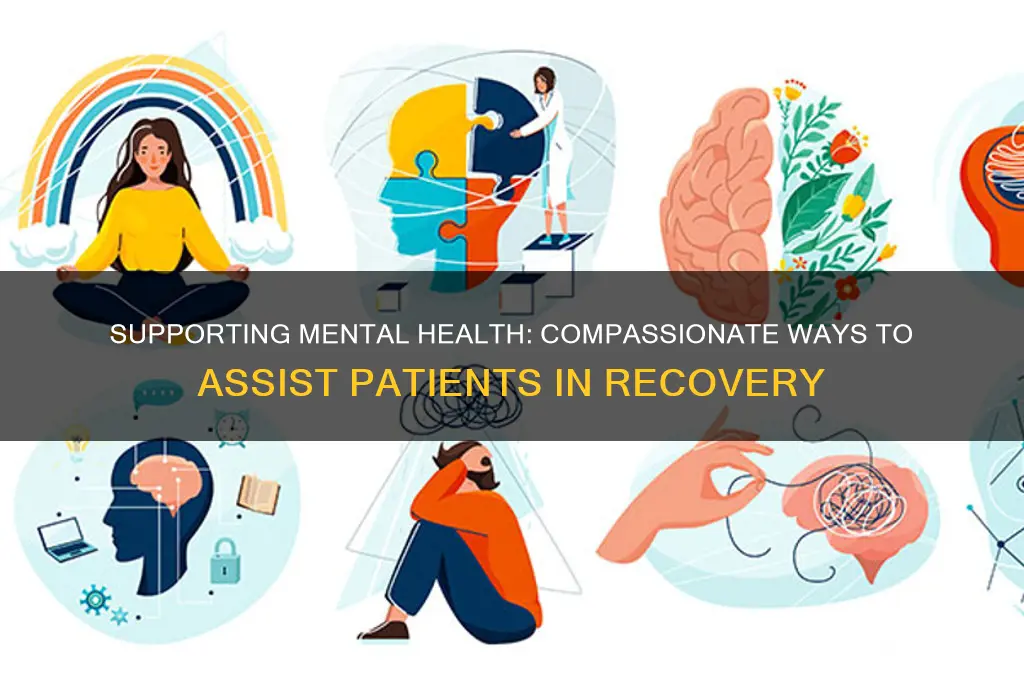
Helping individuals in a mental hospital requires a compassionate, informed, and supportive approach. It begins with understanding their unique needs and challenges, as mental health struggles vary widely. Volunteers and staff can make a significant impact by offering a non-judgmental listening ear, creating a safe and empathetic environment, and encouraging open communication. Engaging in meaningful activities, such as art therapy, group discussions, or gentle exercises, can foster connection and healing. Additionally, educating oneself about mental health conditions and treatment processes ensures that support is both respectful and effective. Small acts of kindness, like offering a comforting presence or helping with daily tasks, can also provide immense relief. Ultimately, the goal is to empower patients, validate their experiences, and contribute to their journey toward recovery with patience and understanding.
Explore related products


What You'll Learn
- Active Listening: Show empathy, listen without judgment, and validate their feelings to build trust and rapport
- Encourage Activities: Promote art, music, or group therapy to foster engagement and emotional expression
- Maintain Boundaries: Be supportive but respect personal space and professional roles for patient safety
- Educate on Resources: Share information about therapy, medication, and coping strategies to empower recovery
- Offer Consistent Presence: Regular visits or check-ins provide stability and reassurance during their stay

Active Listening: Show empathy, listen without judgment, and validate their feelings to build trust and rapport
In the sterile, often overwhelming environment of a mental hospital, the simplest yet most profound act of care is to listen—truly listen. Active listening isn’t about waiting for your turn to speak or formulating a response; it’s about creating a safe space where a person feels heard, understood, and valued. For individuals in mental health crises, this can be a lifeline, a reminder that their experiences matter and that they are not alone.
Consider this: a patient expresses fear of never feeling "normal" again. Instead of offering platitudes like "It’ll get better," an active listener might say, "It sounds like you’re carrying a lot of uncertainty right now, and that must be incredibly heavy." This response acknowledges the emotion, validates it, and avoids minimizing their struggle. The key is to reflect their feelings without judgment, even if those feelings seem irrational or distressing. Research shows that validation reduces defensiveness and fosters trust, making it easier for patients to engage in therapeutic conversations.
Empathy is the cornerstone of active listening, but it requires practice. Start by observing nonverbal cues—a clenched jaw, fidgeting hands, or averted gaze—and use them to guide your response. For instance, if a patient hesitates before sharing something, you might say, "Take your time. I’m here to listen whenever you’re ready." This approach reassures them that their pace is respected, not rushed. Avoid interrupting or shifting the focus to yourself, even if you have similar experiences. The goal is to keep the spotlight on their narrative, not yours.
Validation doesn’t mean agreeing with every statement; it means acknowledging the *experience* behind the words. For example, if a patient says, "I’m worthless," respond with, "It’s clear you’re in a lot of pain right now, and that’s completely valid." This separates the emotion from the self-criticism, helping them feel understood without reinforcing negative beliefs. Over time, consistent validation can help patients distinguish between their feelings and their self-perception, a critical step in recovery.
Finally, active listening is a skill, not an innate talent. It requires patience, presence, and a willingness to sit with discomfort. In a mental hospital setting, where patients often feel scrutinized or dismissed, this approach can be transformative. It communicates, "You matter. Your feelings matter. And I’m here to listen." That message, delivered consistently, can rebuild trust, foster rapport, and lay the groundwork for healing.
Supporting Your Mom: A Guide to Finding Mental Health Assistance
You may want to see also
Explore related products


Encourage Activities: Promote art, music, or group therapy to foster engagement and emotional expression
Art, music, and group therapy aren’t just distractions in a mental hospital—they’re tools for rebuilding connection, both to oneself and to others. Patients often struggle to articulate their emotions or engage with their surroundings, but creative activities bypass these barriers. For instance, a study published in *The Arts in Psychotherapy* found that 78% of participants reported reduced anxiety after just one 45-minute art therapy session. Unlike talk-based interventions, these activities allow expression without the pressure of words, making them particularly effective for individuals with trauma or severe depression.
Implementing these activities requires intentionality. Start with structured yet flexible sessions: provide art supplies like clay, markers, or paint for 30-minute periods, allowing patients to work independently or collaboratively. For music therapy, incorporate both passive listening (curated playlists tailored to mood regulation) and active participation (drumming circles or lyric analysis). Group therapy should focus on shared experiences, such as creating a mural together or co-writing a song, to foster a sense of collective achievement. Avoid forcing participation; instead, create an environment where engagement feels safe and voluntary.
The benefits extend beyond the moment. Art and music stimulate neural pathways associated with emotional processing, often helping patients externalize feelings they couldn’t previously name. For example, a patient might use abstract shapes to represent chaos in their mind, then gradually introduce order through color or form—a metaphor for their healing process. Group activities, meanwhile, combat isolation by normalizing vulnerability. A 2020 meta-analysis in *Psychiatry Research* highlighted that group creative therapies reduce symptoms of depression by 30% more than individual interventions, likely due to the added layer of social support.
Practical considerations matter. Ensure materials are non-toxic and age-appropriate (e.g., avoid small parts for younger patients or those at risk of self-harm). Train facilitators to observe non-verbal cues, such as agitation or withdrawal, and adjust the activity accordingly. For instance, if a patient becomes overwhelmed during a drumming session, offer them a quieter alternative like coloring. Document outcomes informally—note which activities resonate most with specific demographics (e.g., adolescents often respond better to music-based interventions than older adults).
Ultimately, these activities aren’t just about filling time—they’re about reclaiming agency. A patient who paints their first canvas or writes their first lyric isn’t just creating art; they’re proving to themselves that they can still contribute, feel, and grow. In a setting where hopelessness often reigns, that’s a powerful act of defiance. By prioritizing creativity, mental health facilities don’t just treat symptoms—they nurture the human spirit.
Sauna Therapy: Unlocking Mental Health Benefits for Mind and Body
You may want to see also
Explore related products


Maintain Boundaries: Be supportive but respect personal space and professional roles for patient safety
In mental health settings, the line between support and intrusion can blur, especially when empathy drives interactions. Patients often crave connection but may struggle with boundaries due to their conditions. Overstepping—even with good intentions—can exacerbate anxiety, trigger dependency, or compromise safety protocols. For instance, a well-meaning volunteer who shares excessive personal details might unintentionally shift the focus from the patient’s needs to their own, derailing therapeutic progress. Recognizing this dynamic is the first step in fostering a balanced, respectful environment.
Consider the role of physical and emotional space in recovery. A patient in acute distress may interpret a prolonged touch or close proximity as a threat, even if meant to comfort. Professionals adhere to strict guidelines: maintaining an arm’s length distance during conversations, avoiding unsolicited physical contact, and using neutral body language to signal safety. Visitors or volunteers can adopt similar practices by asking, “Would a handshake or fist bump be okay?” before initiating contact, or stepping back slightly if a patient appears agitated. These small adjustments communicate respect while offering support.
Boundaries also extend to professional roles. While it’s tempting to offer advice or share amateur diagnoses, such actions can undermine the expertise of trained staff. For example, suggesting a patient “just try meditation” for severe schizophrenia disregards the complexity of their treatment plan. Instead, channel helpfulness into actions within your scope: assisting with group activities, providing quiet companionship, or reporting observations (e.g., “I noticed they seemed withdrawn during lunch”) to nurses without speculation. This collaboration supports patients without overstepping clinical boundaries.
Finally, self-awareness is critical. Volunteers and staff must monitor their own emotional responses to avoid projection or enmeshment. A common pitfall is the “savior complex,” where helpers derive self-worth from being needed, leading to boundary violations like oversharing or overcommitting time. To counter this, establish clear limits: set a timer for visits, prepare scripted responses for personal questions (e.g., “I’m here to listen, but let’s focus on your day”), and debrief with supervisors after challenging interactions. By safeguarding your own boundaries, you model healthy behavior and sustain your ability to help effectively.
In practice, maintaining boundaries requires mindfulness, humility, and adherence to structured protocols. It’s not about detachment but about creating a framework where support can flourish without risk. Patients in mental health facilities often face fragmented senses of self; consistent, respectful boundaries help rebuild trust in relationships. Ultimately, this approach transforms support from a fleeting gesture into a sustainable foundation for healing.
Exploring Psilocybin's Potential: Can Shrooms Improve Mental Health?
You may want to see also
Explore related products


Educate on Resources: Share information about therapy, medication, and coping strategies to empower recovery
Knowledge is a powerful tool in the journey toward mental health recovery. Educating individuals in a mental hospital about the resources available to them can foster a sense of agency and hope. This empowerment begins with demystifying the very tools that can aid their healing: therapy, medication, and coping strategies.
Therapy: Imagine a toolbox for the mind. Therapy equips individuals with specific tools to manage their unique challenges. Cognitive Behavioral Therapy (CBT), for instance, helps identify and reframe negative thought patterns, while Dialectical Behavior Therapy (DBT) focuses on emotion regulation and distress tolerance. Group therapy offers a sense of community and shared experience, combating the isolating nature of mental illness. Providing information about these different modalities, their goals, and potential benefits allows individuals to actively participate in choosing the approach that resonates most with them.
Think of it as a menu – knowing the ingredients and flavors helps you make an informed choice.
Medication: Medication is often a crucial component of treatment, but it can be shrouded in fear and misinformation. Educating patients about the purpose of their medication, potential side effects, and the importance of adherence is vital. For example, explaining how antidepressants work to balance brain chemistry, or detailing the dosage and timing of antipsychotics, empowers individuals to understand their treatment plan. This knowledge fosters trust in the process and encourages open communication with healthcare providers about any concerns.
Remember, medication is not a one-size-fits-all solution; personalized information is key.
Coping Strategies: Beyond professional interventions, equipping individuals with practical coping strategies is essential for long-term resilience. This could include mindfulness techniques like deep breathing exercises or guided meditations, journaling to process emotions, or engaging in creative outlets like art or music therapy. Providing resources like worksheets, apps, or access to calming activities within the hospital environment empowers individuals to actively manage their symptoms and build a toolkit for future challenges.
By sharing information about therapy, medication, and coping strategies in a clear and accessible manner, we move beyond simply treating symptoms. We empower individuals to become active participants in their recovery, fostering a sense of control and hope for a brighter future. This knowledge becomes a beacon, illuminating the path towards healing and a life beyond the confines of the hospital walls.
Meditation Yoga: Enhancing Facial and Mental Health Naturally
You may want to see also
Explore related products


Offer Consistent Presence: Regular visits or check-ins provide stability and reassurance during their stay
One of the most destabilizing aspects of a mental health crisis is the sense of isolation it fosters. Patients in mental hospitals often feel disconnected from their support systems, exacerbating feelings of loneliness and despair. Regular visits or check-ins from trusted individuals can counteract this by providing a consistent anchor to the outside world. These interactions remind patients they are not alone, offering a sense of continuity in a disrupted life. For example, a weekly visit from a family member or friend can become a stabilizing ritual, something the patient can anticipate and rely on during their stay.
To maximize the impact of your presence, structure your visits with intention. Aim for consistency—whether it’s a 30-minute weekly visit or a 10-minute daily phone call—as predictability fosters security. During these interactions, focus on active listening rather than problem-solving. Patients often need to feel heard more than they need advice. For instance, instead of saying, “You’ll feel better soon,” try, “I’m here to listen if you want to talk.” Additionally, bring small, thoughtful items like a favorite snack or a book, which can serve as tangible reminders of your care between visits.
Compare this to sporadic, unpredictable contact, which can inadvertently heighten anxiety. Inconsistent visits may leave patients wondering if they’ve been forgotten or if their well-being is a low priority. A study published in the *Journal of Psychiatric and Mental Health Nursing* found that patients with regular visitors reported higher levels of emotional stability compared to those with infrequent or irregular contact. This highlights the importance of reliability in fostering trust and reassurance during a vulnerable time.
Practical tips can make your presence even more effective. For younger patients (teens or early adults), incorporate activities like playing a card game or watching a short video together to create a sense of normalcy. For older adults, reminiscing over photos or discussing familiar topics can provide comfort. If in-person visits aren’t feasible, leverage technology—video calls can be just as impactful as physical presence. The key is to tailor your approach to the individual’s needs and preferences, ensuring your interactions feel meaningful rather than obligatory.
Ultimately, offering a consistent presence is about more than just showing up—it’s about creating a safe, reliable connection that reinforces the patient’s sense of worth and belonging. By committing to regular check-ins, you become a steady force in their recovery journey, helping to bridge the gap between the hospital environment and their life outside. This simple yet powerful act can make a profound difference in their mental health trajectory, reminding them that they are valued, remembered, and supported.
Relaxation's Power: Boosting Mental Health and Reducing Stress Naturally
You may want to see also
Frequently asked questions
As a volunteer, you can offer companionship, listen without judgment, and engage in activities like art, music, or games. Respect boundaries, follow staff guidance, and avoid giving medical advice. Your presence and empathy can make a meaningful difference.
Be patient, kind, and non-judgmental. Use calm and reassuring language, and avoid pressuring them to talk if they’re uncomfortable. Show genuine interest in their feelings and experiences, and let them lead the conversation.
Visit regularly if they’re comfortable with it, and stay in touch through calls or letters. Educate yourself about their condition, advocate for their needs, and support their treatment plan. Reassure them of your love and patience during their recovery.