Madison Cole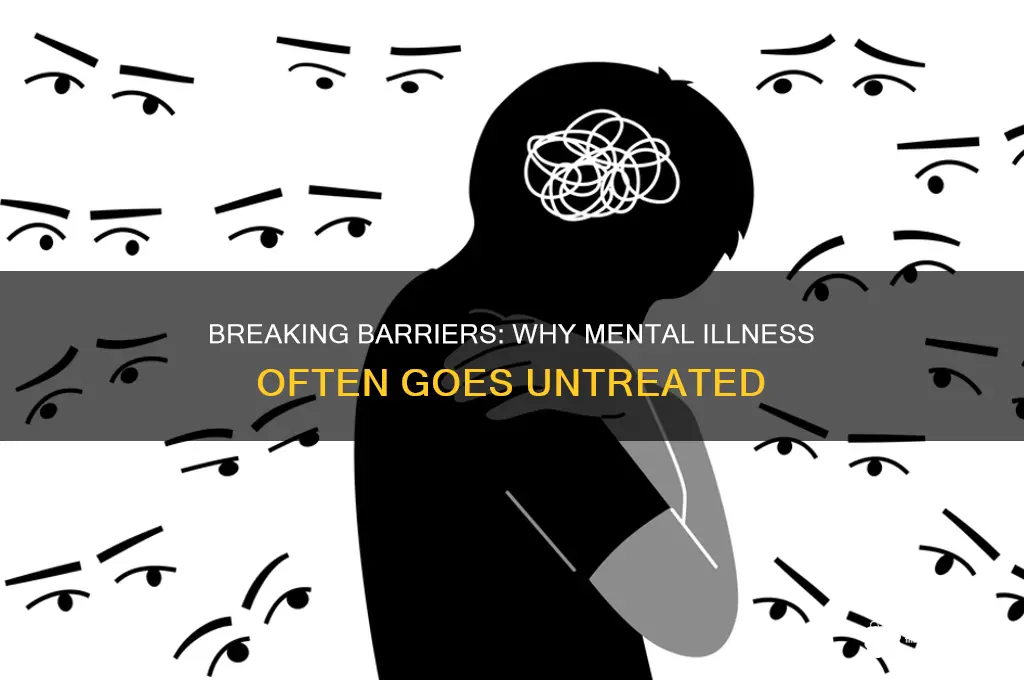
Many individuals with mental illness face significant barriers to accessing the help they need, often due to a combination of stigma, lack of awareness, and systemic challenges. Societal stigma surrounding mental health can lead to fear of judgment or discrimination, causing people to avoid seeking treatment. Limited awareness about available resources and symptoms of mental illness may leave individuals unsure of where to turn or even unaware that they need help. Additionally, financial constraints, inadequate healthcare coverage, and shortages of mental health professionals create practical obstacles. Cultural beliefs and mistrust of the healthcare system can further deter individuals from reaching out. Together, these factors contribute to a pervasive reluctance to seek support, exacerbating the struggles of those living with mental illness.
Explore related products


What You'll Learn

Stigma and Discrimination
The stigma surrounding mental illness manifests in various ways, from subtle microaggressions to overt discrimination. For instance, phrases like "just snap out of it" or "you don’t look depressed" trivialize experiences and invalidate struggles. Such comments, though often unintentional, reinforce the misconception that mental illness is a choice or a sign of weakness. This internalized stigma can lead individuals to question the legitimacy of their own suffering, making them less likely to reach out for support.
Discrimination in healthcare settings further exacerbates the problem. A 2019 report by the World Health Organization (WHO) highlighted that people with mental health conditions are less likely to receive adequate physical healthcare, often due to biases held by medical professionals. For example, a person with schizophrenia might have their physical symptoms dismissed as "all in their head," delaying critical diagnoses and treatments. This systemic discrimination not only deters help-seeking but also perpetuates a cycle of neglect and worsening health outcomes.
To combat stigma and discrimination, actionable steps are essential. First, educate yourself and others about mental health to challenge misconceptions. Share personal stories, if comfortable, to humanize the issue and foster empathy. Second, advocate for policy changes that promote mental health parity in healthcare systems. Finally, create safe spaces where individuals feel heard and validated. For instance, peer support groups can provide a judgment-free environment, encouraging open dialogue and reducing the fear of seeking help.
In conclusion, stigma and discrimination are not insurmountable obstacles but require deliberate, collective effort to dismantle. By addressing these issues head-on, we can create a society where seeking help for mental illness is met with compassion, not judgment, and where everyone has the opportunity to thrive.
Phy Ed's Impact: Boosting Children's Mental Health and Well-being
You may want to see also
Explore related products


Lack of Access to Care
Geographic isolation often turns mental health care into a luxury rather than a necessity. Rural residents face a stark reality: 77% of nonmetropolitan counties in the U.S. lack a psychiatrist, according to the American Psychiatric Association. Telehealth emerged as a lifeline during the pandemic, but its effectiveness hinges on reliable internet access—a privilege only 63% of rural households possess, per the Pew Research Center. For those in remote areas, the nearest therapist might be a two-hour drive away, making weekly sessions impractical. This physical distance compounds emotional distress, leaving individuals to navigate crises alone.
Financial barriers erect another wall between patients and care. Despite the Affordable Care Act’s mandates, mental health coverage remains inconsistent. High-deductible plans force individuals to pay $1,500 or more out-of-pocket before insurance kicks in, while copays for therapy sessions average $65—a prohibitive cost for those earning minimum wage. Medicaid, though available, is not universally accepted; 40% of mental health providers decline it due to low reimbursement rates. Without insurance, a single psychotherapy session can cost $100–$200, pricing out those already struggling financially. This economic exclusion perpetuates a cycle where mental illness worsens due to untreated symptoms, further limiting earning potential.
Workforce shortages cripple the system’s ability to meet demand. The Health Resources and Services Administration projects a shortage of 15,600 psychiatrists by 2025, disproportionately affecting underserved communities. In urban areas, wait times for a therapy appointment average 21 days, but in rural regions, they stretch to 60 days or more. This delay is fatal for those in acute crisis; untreated depression, for instance, increases suicide risk by 20-fold. Even when providers are available, cultural competency gaps alienate marginalized groups. Only 5% of psychologists in the U.S. are Black, despite Black Americans comprising 13% of the population, creating a mismatch that discourages engagement.
Policy failures exacerbate these access issues. While 21 states have enacted mental health parity laws, enforcement remains lax. Insurers often restrict coverage by limiting session counts—typically 20 per year—insufficient for chronic conditions like PTSD or schizophrenia. School-based mental health programs, proven to reduce symptoms by 40%, are underfunded, leaving students without early intervention. Meanwhile, criminal justice systems funnel mentally ill individuals into prisons instead of treatment facilities; 40% of inmates have a history of mental illness, yet only 1 in 3 receives adequate care. These systemic oversights transform treatable conditions into lifelong struggles.
Practical solutions exist but require collective action. Expanding loan forgiveness programs could incentivize providers to serve rural areas, while integrating mental health services into primary care clinics bridges gaps in underserved regions. Employers can subsidize Employee Assistance Programs (EAPs) offering 6–10 free counseling sessions annually. Policymakers must mandate higher Medicaid reimbursement rates and enforce parity laws with penalties for non-compliance. Individuals can advocate by contacting representatives or supporting organizations like NAMI. Until these steps are taken, access to care will remain a privilege, not a right, for millions.
Empowering Young Hearts: Children Supporting Seniors with Mental Health Challenges
You may want to see also
Explore related products



Financial Barriers to Treatment
Financial barriers to mental health treatment are a stark reality for millions, often turning a manageable condition into a lifelong struggle. Consider this: in the United States, nearly 10 million adults with mental illness report unmet treatment needs, with cost being the primary reason. For those without insurance, a single therapy session can range from $100 to $200, and psychiatric medications like SSRIs (e.g., sertraline) can cost upwards of $50 per month without coverage. Even with insurance, high deductibles and copays create a hidden toll, forcing individuals to choose between mental health care and other essentials like rent or groceries. This financial strain disproportionately affects low-income individuals, who are twice as likely to experience mental health issues but half as likely to receive treatment.
To illustrate, imagine a 28-year-old single mother working a minimum-wage job. She’s diagnosed with generalized anxiety disorder and prescribed escitalopram (Lexapro), which costs $70 monthly without insurance. Her employer-provided plan covers only 60%, leaving her with a $28 copay—a significant chunk of her weekly grocery budget. Therapy, recommended biweekly, would add another $40 per session after insurance. Faced with these costs, she skips medication doses to make it last longer and cancels therapy appointments, exacerbating her symptoms. This scenario isn’t rare; it’s systemic, highlighting how financial barriers don’t just delay treatment—they prevent it entirely.
Addressing these barriers requires a multi-faceted approach. First, policymakers must expand Medicaid and ensure mental health parity in insurance plans, as mandated by the Mental Health Parity and Addiction Equity Act. Second, employers can offer more comprehensive health benefits, including low-cost or free mental health services through Employee Assistance Programs (EAPs). For individuals, practical steps include researching sliding-scale clinics, which adjust fees based on income, or utilizing telehealth platforms like BetterHelp or Talkspace, which often cost 30-50% less than in-person therapy. Additionally, pharmaceutical assistance programs like RxAssist provide discounts on medications, reducing costs by up to 75%.
However, caution is necessary. While sliding-scale clinics and telehealth are valuable, they often have long waitlists or limited availability. Pharmaceutical assistance programs may exclude newer, brand-name medications, leaving patients with fewer options. Moreover, relying solely on cost-cutting measures ignores the root issue: mental health care should be affordable and accessible to all, not a privilege for those who can afford it. Until systemic changes are made, individuals must navigate this flawed system with creativity and persistence, advocating for themselves and leveraging every available resource.
In conclusion, financial barriers to mental health treatment are not insurmountable, but they require proactive solutions at both the individual and systemic levels. By understanding the costs, exploring affordable alternatives, and pushing for policy reforms, we can begin to dismantle the economic obstacles that prevent millions from receiving the care they need. Mental health is not a luxury—it’s a fundamental right, and no one should be priced out of healing.
Mental Health Support for Single Moms: Agencies Offering Essential Help
You may want to see also
Explore related products





Fear of Diagnosis or Labeling
The fear of being diagnosed with a mental illness or labeled as "mentally ill" is a significant barrier to seeking help. This fear often stems from the stigma surrounding mental health, which can lead to social rejection, discrimination, and a sense of personal failure. For many, the prospect of having a mental health condition confirmed by a professional feels like a life sentence, complete with societal judgment and limitations. This perception is exacerbated by media portrayals and cultural narratives that equate mental illness with danger, incompetence, or weakness. As a result, individuals may avoid seeking help, fearing that a diagnosis will permanently alter how they are viewed by others and how they view themselves.
Consider the case of a young professional who suspects they might be experiencing depression but hesitates to consult a therapist. They worry that a diagnosis will appear on their medical record, potentially affecting their career prospects or relationships. This fear is not unfounded; while laws like the Americans with Disabilities Act (ADA) protect against discrimination, biases persist. For instance, a 2019 study published in *Psychiatric Services* found that individuals with mental health diagnoses were less likely to be recommended for hiring, even when qualifications were identical to those without such diagnoses. Such realities fuel the reluctance to seek help, as individuals weigh the potential benefits of treatment against the risks of being labeled.
To address this fear, it’s essential to reframe the narrative around mental health diagnoses. A diagnosis is not a definition of one’s identity but a tool for understanding and addressing specific challenges. For example, recognizing symptoms of anxiety as part of generalized anxiety disorder can open doors to evidence-based treatments like cognitive-behavioral therapy (CBT) or medication, such as selective serotonin reuptake inhibitors (SSRIs) at a starting dose of 10–20 mg/day for adults. Practical steps include starting with anonymous resources, such as online mental health screenings, to explore concerns without the pressure of a formal diagnosis. Gradually, individuals can build trust with a mental health professional who emphasizes confidentiality and focuses on collaborative goal-setting rather than labels.
Comparing the fear of a mental health diagnosis to the acceptance of physical health diagnoses can also be illuminating. Few hesitate to seek treatment for diabetes or hypertension, yet the stigma around mental illness creates a double standard. Just as managing diabetes involves lifestyle changes and medication, addressing mental health often requires a combination of therapy, self-care, and sometimes medication. By normalizing mental health care as a routine part of overall well-being, society can reduce the fear associated with diagnosis and labeling.
In conclusion, the fear of diagnosis or labeling is a deeply rooted obstacle to mental health care, but it can be mitigated through education, empathy, and systemic change. Encouraging open conversations about mental health, promoting accurate representations in media, and strengthening anti-discrimination policies are critical steps. For individuals, acknowledging that seeking help is a sign of strength, not weakness, can empower them to take the first step. Remember, a diagnosis is not a limitation but a pathway to healing and growth.
Struggling to Afford Mental Health Care? You're Not Alone
You may want to see also
Explore related products




Limited Mental Health Awareness
Stigma remains a formidable barrier, but limited mental health awareness compounds the problem by leaving individuals unable to recognize symptoms in themselves or others. Without understanding that persistent sadness might be depression, or that intrusive thoughts could signal anxiety, people often attribute their struggles to personal failings rather than treatable conditions. This lack of awareness delays intervention, allowing symptoms to worsen and reducing the likelihood of seeking help. For instance, a 2020 study found that 50% of individuals experiencing their first psychotic episode waited over a year before receiving treatment, largely due to unrecognized symptoms.
Consider the role of cultural narratives in shaping awareness. In many communities, mental health is conflated with weakness or spiritual deficiency, leading individuals to dismiss their experiences rather than seek professional support. For example, in some Asian cultures, mental illness is often seen as a source of shame, discouraging open dialogue. Even in Western societies, where mental health discussions are more normalized, awareness gaps persist. A 2019 survey revealed that 40% of Americans could not identify the symptoms of major depressive disorder, despite its prevalence.
To bridge this awareness gap, targeted education is essential. Schools, workplaces, and community centers should integrate mental health literacy into their programs. For instance, teaching adolescents the difference between typical stress and generalized anxiety disorder can empower them to seek help early. Similarly, workplace training sessions that highlight signs of burnout or depression can reduce stigma and encourage employees to access available resources. Practical tools, such as symptom checklists or self-assessment apps, can also aid in early recognition.
However, awareness alone is insufficient without actionable steps. Once individuals recognize symptoms, they need clear pathways to care. This includes disseminating information about local mental health services, telehealth options, and crisis hotlines. For example, campaigns like Australia’s *Beyond Blue* provide not only education but also direct access to support, ensuring awareness translates into action. By combining knowledge with accessibility, societies can dismantle the barriers created by limited mental health awareness.
Steroids and Mental Health: Exploring Potential Benefits and Risks
You may want to see also
Frequently asked questions
Common barriers include stigma and fear of judgment, lack of awareness about mental health, financial constraints, limited access to mental health services, and personal beliefs or denial about the severity of their condition.
Stigma creates fear of being labeled, discriminated against, or misunderstood, which discourages people from seeking treatment. It can also lead to self-stigma, where individuals internalize negative beliefs about their condition, further preventing them from reaching out.
Lack of awareness about mental health symptoms, denial of the problem, or attributing symptoms to other causes (e.g., stress or fatigue) can prevent individuals from recognizing the need for help. Additionally, some mental illnesses impair insight, making it difficult for individuals to acknowledge their condition.
High costs of therapy, medication, and psychiatric services can be prohibitive for many individuals, especially those without insurance or with inadequate coverage. Financial strain often forces people to prioritize basic needs over mental health care.
Limited availability of mental health professionals, long wait times, and geographic barriers (e.g., living in rural areas) can make it difficult for individuals to access care. Additionally, systemic issues like inadequate funding for mental health programs exacerbate this problem.


![Shame (The Criterion Collection) [Blu-ray]](https://m.media-amazon.com/images/I/81L-2w6IK0L._AC_UY218_.jpg)