Lucas Bennett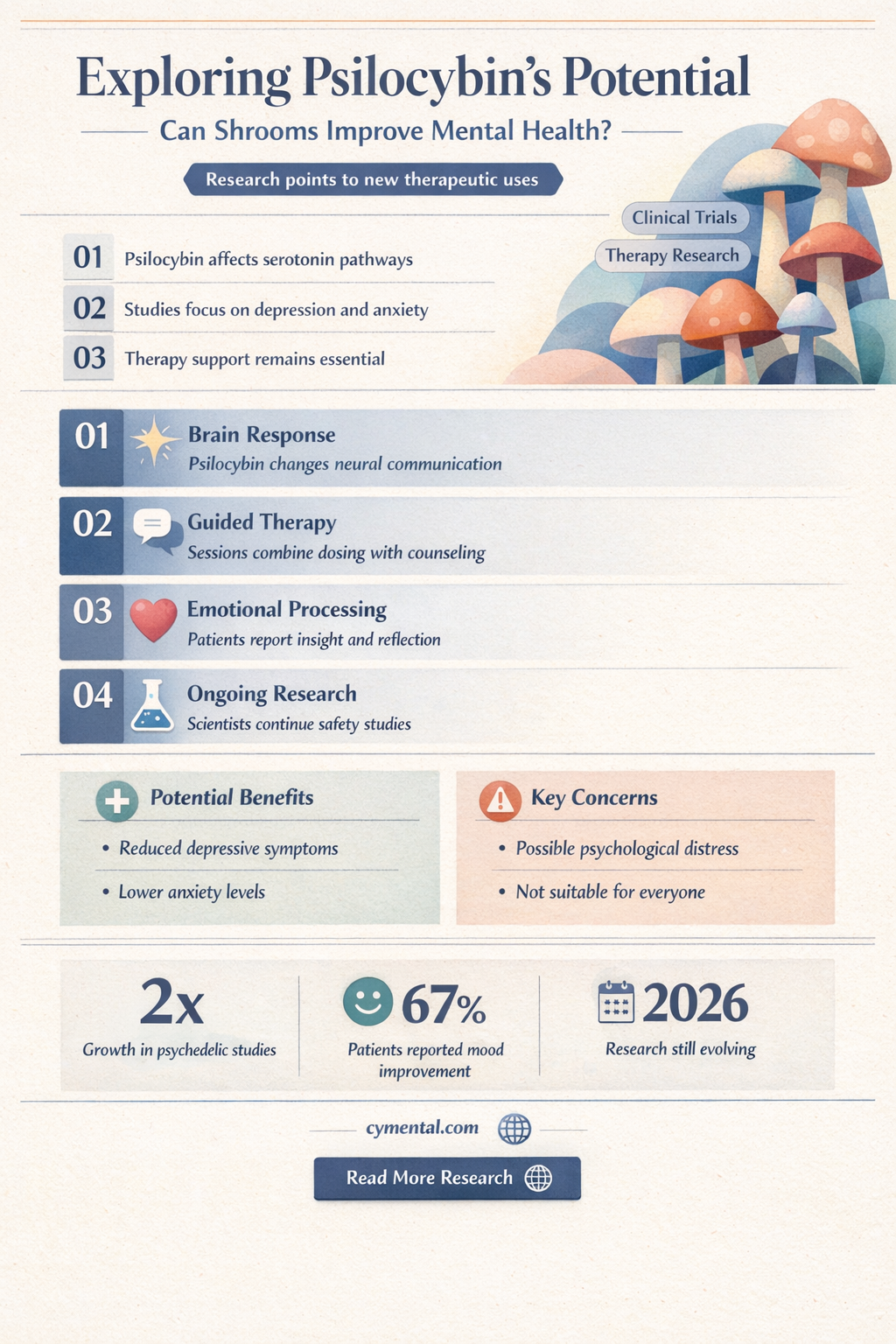
The potential therapeutic benefits of psilocybin mushrooms, commonly known as shrooms, for mental health have garnered significant attention in recent years. Research suggests that psilocybin, the active compound in these fungi, may offer promising effects in treating conditions such as depression, anxiety, PTSD, and addiction when used in controlled, clinical settings. Studies have shown that it can facilitate profound emotional and psychological experiences, often leading to increased self-awareness, reduced symptoms, and long-lasting positive changes in mood and behavior. However, while the results are encouraging, the use of shrooms for mental health remains highly regulated and is not without risks, including potential adverse reactions and the need for professional guidance to ensure safety and efficacy.
| Characteristics | Values |
|---|---|
| Potential for Treating Depression | Clinical trials show significant reduction in symptoms of treatment-resistant depression with psilocybin (active compound in shrooms) in a single dose, effects lasting up to 3 months. |
| Anxiety and End-of-Life Distress | Studies indicate reduced anxiety and depression in patients with life-threatening illnesses after psilocybin-assisted therapy. |
| PTSD and Trauma | Emerging research suggests potential benefits in reducing PTSD symptoms, though more studies are needed. |
| Addiction Treatment | Promising results in treating alcohol and nicotine addiction, with higher abstinence rates compared to traditional methods. |
| Mechanism of Action | Believed to promote neuroplasticity, increase connectivity in brain regions associated with mood, and facilitate emotional processing. |
| Therapeutic Setting | Effects are highly dependent on the setting and support provided during the experience (set and setting). |
| Legal Status | Illegal in most countries for recreational use; however, some regions (e.g., Oregon, Canada) allow supervised therapeutic use. |
| Side Effects | Potential for anxiety, paranoia, or "bad trips"; physical risks are minimal but psychological risks exist, especially in unsupervised settings. |
| Long-Term Effects | Limited data on long-term effects; some users report lasting positive changes in personality and outlook. |
| Research Status | Growing body of research, but still considered experimental; not yet widely approved as a standard treatment. |
| Dosage and Administration | Typically administered in controlled, therapeutic doses (10-25 mg psilocybin) under professional supervision. |
| Cultural and Historical Use | Historically used in indigenous cultures for spiritual and healing purposes. |
Explore related products


What You'll Learn

Psilocybin's impact on depression
Psilocybin, the active compound in magic mushrooms, has emerged as a promising treatment for depression, particularly for those who have not responded to traditional therapies. Clinical trials have shown that a single dose of 25 milligrams of psilocybin, administered in a controlled, therapeutic setting, can lead to significant and sustained reductions in depressive symptoms. These effects often manifest within hours and can last for weeks or even months, offering a stark contrast to the gradual and sometimes ineffective nature of conventional antidepressants.
Consider the process: patients undergo preparatory sessions to establish trust with a therapist, followed by the psilocybin experience itself, which typically lasts 6–8 hours. During this time, individuals are guided through intense emotional and psychological states, often described as profound or transformative. Post-session integration therapy helps patients process these experiences and apply insights to their daily lives. This structured approach is critical, as it ensures safety and maximizes therapeutic benefit, distinguishing it from recreational use.
Critics argue that the hallucinogenic effects of psilocybin could pose risks, such as psychological distress or reactivation of trauma. However, studies have consistently shown that when administered by trained professionals to carefully screened individuals—excluding those with a personal or family history of psychotic disorders—the risks are minimal. For example, a 2021 study published in *JAMA Psychiatry* found that psilocybin-assisted therapy was well-tolerated and effective in adults aged 21–65 with treatment-resistant depression. The key lies in the controlled environment and the presence of a therapist to navigate challenging experiences.
Practical considerations are essential for those exploring this treatment. First, legality is a barrier in most regions, though clinical trials and decriminalization efforts are expanding access. Second, cost and availability of trained therapists limit widespread use. For those eligible, combining psilocybin therapy with lifestyle changes—such as mindfulness practices, regular exercise, and a balanced diet—can enhance its long-term benefits. While not a panacea, psilocybin represents a revolutionary approach to treating depression, offering hope where other methods have failed.
Helping Reluctant Loved Ones Access Mental Health Care in Texas
You may want to see also
Explore related products


Shrooms for anxiety relief
Psilocybin, the active compound in magic mushrooms, has emerged as a potential ally in the battle against anxiety, particularly for those who find traditional treatments ineffective. Recent studies, such as those conducted by Johns Hopkins University, reveal that controlled, low doses of psilocybin (typically 10-20 milligrams) can significantly reduce symptoms of anxiety and depression in patients with life-threatening illnesses. These findings suggest that shrooms may offer a novel approach to anxiety relief, especially when combined with psychotherapy. However, it’s crucial to note that these studies are conducted in highly supervised, clinical settings, emphasizing the importance of professional guidance.
For individuals considering shrooms for anxiety relief, the process is far from a casual experiment. Microdosing—taking sub-perceptual doses (0.1-0.3 grams of dried mushrooms) every few days—has gained popularity as a self-administered method. Advocates claim it enhances mood, focus, and emotional resilience without the hallucinogenic effects of a full dose. However, this practice lacks standardized guidelines, and long-term effects remain largely unstudied. Those interested should approach microdosing with caution, maintaining a journal to track effects and consulting a healthcare provider to avoid interactions with medications like SSRIs.
Comparing shrooms to conventional anxiety treatments highlights their unique mechanism of action. Unlike benzodiazepines or antidepressants, which often provide symptomatic relief, psilocybin appears to induce profound psychological shifts by promoting neuroplasticity and altering default mode network activity in the brain. This can lead to lasting changes in perspective and emotional processing, potentially addressing the root causes of anxiety rather than merely suppressing symptoms. However, this intensity also underscores the need for a supportive environment during and after use, as challenging experiences can occur.
Practical considerations are paramount for anyone exploring shrooms for anxiety. Setting and mindset—often referred to as "set and setting"—are critical. A calm, familiar environment and a positive mental state can enhance the therapeutic potential, while a chaotic or anxious mindset may exacerbate negative experiences. Additionally, legality remains a barrier in most regions, with psilocybin still classified as a Schedule I substance in the U.S., though cities like Denver and states like Oregon have begun decriminalization or legalization efforts. For those in restrictive areas, clinical trials or travel to jurisdictions with legal access may be the only viable options.
In conclusion, while shrooms show promise for anxiety relief, they are not a one-size-fits-all solution. Their efficacy depends on factors like dosage, context, and individual psychology. As research progresses and legal barriers shift, psilocybin could become a transformative tool in mental health treatment—but for now, it remains a frontier requiring careful navigation, informed decision-making, and, ideally, professional oversight.
Accessing Mental Health Support: Affordable Options for the Uninsured
You may want to see also
Explore related products



PTSD treatment with psychedelics
Psychedelic therapy for PTSD is gaining traction as a novel approach to treating a condition that often resists conventional methods. Clinical trials have shown that substances like psilocybin, the active compound in magic mushrooms, can facilitate profound emotional breakthroughs when paired with psychotherapy. For instance, a 2021 study published in *Nature Medicine* found that MDMA-assisted therapy significantly reduced PTSD symptoms in 67% of participants, with many experiencing remission after just three sessions. These results underscore the potential of psychedelics to address the root causes of trauma rather than merely managing symptoms.
Administering psychedelics for PTSD requires precision and care. Typical protocols involve a low to moderate dose of psilocybin (10–25 mg) in a controlled, therapeutic setting. The session lasts 6–8 hours, during which patients are guided by trained therapists to explore traumatic memories and emotions. Unlike traditional exposure therapy, psychedelics appear to enhance neuroplasticity, allowing individuals to reprocess trauma with less emotional distress. However, this approach is not for everyone; individuals with a history of psychosis or severe cardiovascular conditions are often excluded due to safety concerns.
One of the most compelling aspects of psychedelic therapy is its efficiency. Traditional PTSD treatments, such as SSRIs and cognitive-behavioral therapy, can take months or years to show significant improvement. In contrast, psychedelic-assisted therapy often yields measurable results after just 1–3 sessions. This rapid efficacy is particularly valuable for veterans and first responders, who often face urgent mental health needs. For example, a 2020 study by the Multidisciplinary Association for Psychedelic Studies (MAPS) demonstrated that 88% of participants with treatment-resistant PTSD showed improvement after MDMA-assisted therapy.
Despite promising results, integrating psychedelics into mainstream PTSD treatment faces regulatory and cultural hurdles. Currently, psilocybin and MDMA are classified as Schedule I substances in the U.S., limiting access to research and clinical use. However, organizations like MAPS are working to secure FDA approval for MDMA by 2024, which could pave the way for broader acceptance. For those considering this treatment, it’s crucial to seek out licensed clinical trials or jurisdictions where psychedelic therapy is legal, such as Oregon or the Netherlands.
In practice, preparing for a psychedelic therapy session involves both mental and physical readiness. Patients should engage in preparatory sessions with their therapist to set intentions and build trust. On the day of treatment, a light meal and comfortable clothing are recommended, as physical discomfort can distract from the therapeutic process. Afterward, integration sessions are essential to process insights and apply them to daily life. While not a panacea, psychedelic therapy offers a unique and powerful tool for those struggling with PTSD, providing hope where other treatments have fallen short.
Shower Therapy: How Daily Showers Boost Mental Health and Well-being
You may want to see also
Explore related products


Shrooms and addiction therapy
Psilocybin, the active compound in magic mushrooms, has emerged as a promising tool in addiction therapy, challenging traditional treatment paradigms. Clinical trials have shown that a single high-dose session (25–30 mg/70 kg body weight) administered in a controlled, therapeutic setting can significantly reduce cravings and relapse rates in individuals with alcohol and nicotine dependence. For instance, a 2019 study published in *JAMA Psychiatry* found that 80% of participants with alcohol use disorder abstained from drinking for weeks following psilocybin treatment, compared to 50% in the control group.
The mechanism behind psilocybin’s efficacy lies in its ability to disrupt entrenched behavioral patterns. By binding to serotonin receptors in the brain, it induces a heightened state of neuroplasticity, allowing individuals to reframe their relationship with addictive substances. Patients often report profound emotional breakthroughs, such as a renewed sense of purpose or a reconnection with values, which can diminish the psychological grip of addiction. However, this is not a standalone cure; integration sessions with therapists are critical to process the experience and translate insights into lasting behavioral change.
Despite its potential, psilocybin therapy is not without risks. Contraindications include a personal or family history of psychotic disorders, as the drug can exacerbate latent conditions. Additionally, the intensity of the experience—often described as emotionally overwhelming—requires careful screening and preparation. Therapists must ensure participants are mentally stable and fully informed about what to expect. For those over 25 with mild to moderate addiction, combining psilocybin with cognitive-behavioral therapy (CBT) has shown synergistic effects, enhancing both self-awareness and coping strategies.
Practical implementation of psilocybin therapy remains a hurdle due to its Schedule I classification in many countries, limiting access to research and clinical use. However, organizations like the Multidisciplinary Association for Psychedelic Studies (MAPS) are advocating for regulatory changes, and some jurisdictions, such as Oregon, have legalized psilocybin for therapeutic use. For individuals considering this approach, it’s essential to seek out licensed professionals in regions where it’s legal, as DIY experimentation lacks the safety and support necessary for transformative outcomes.
In conclusion, while psilocybin therapy represents a groundbreaking shift in addiction treatment, it is not a panacea. Its success hinges on rigorous protocols, skilled facilitation, and a commitment to aftercare. As research expands and legal barriers fall, this innovative approach could redefine how we address addiction, offering hope to those for whom conventional methods have fallen short.
Addressing Youth Mental Health: Strategies for Enhanced Support and Prevention
You may want to see also
Explore related products


Mental health risks of shrooms
While psilocybin mushrooms, or "shrooms," have gained attention for their potential therapeutic benefits in mental health, particularly in treating depression, anxiety, and PTSD, their use is not without risks. One of the most immediate dangers is the potential for a "bad trip," an intensely distressing psychological experience characterized by paranoia, anxiety, and hallucinations. These episodes can be so severe that they lead to long-term psychological trauma, especially in individuals predisposed to mental health conditions like schizophrenia or bipolar disorder. For instance, a study published in the *Journal of Psychopharmacology* found that individuals with a family history of psychosis are at higher risk of experiencing psychotic-like symptoms after consuming psilocybin.
Another critical risk is the lack of control over dosage and purity when using shrooms recreationally. Unlike clinical settings where doses are precisely measured (typically 20–30 mg of psilocybin), recreational users often consume unknown quantities, increasing the likelihood of overwhelming experiences. High doses can exacerbate anxiety, trigger panic attacks, or induce depersonalization, where individuals feel detached from their identity or reality. For younger users, particularly those under 25 whose brains are still developing, such experiences can have lasting impacts on cognitive function and emotional regulation.
The long-term mental health risks of shrooms are less understood but equally concerning. Repeated use, especially in high doses, may lead to persistent changes in perception, such as flashbacks or hallucinations long after the drug has left the system. This condition, known as Hallucinogen Persisting Perception Disorder (HPPD), can severely disrupt daily life. Additionally, frequent use may contribute to emotional blunting or increased tolerance, reducing the potential therapeutic benefits while heightening the risks.
Practical precautions are essential for minimizing these risks. If considering shrooms for mental health, always seek a controlled, clinical environment with professional supervision. Avoid self-medication, especially if you have a personal or family history of mental illness. Start with the lowest effective dose (typically 10–20 mg of psilocybin) and ensure a supportive setting to reduce the likelihood of a negative experience. Finally, integrate the experience with therapy to process insights and mitigate potential psychological harm. While shrooms may offer hope for some, their risks demand respect and caution.
Running for Mental Health: How Lacing Up Boosts Your Mind
You may want to see also
Frequently asked questions
Research suggests that psilocybin, the active compound in shrooms, may help alleviate symptoms of depression, particularly treatment-resistant depression, when used in controlled therapeutic settings alongside professional support.
Studies indicate that psilocybin-assisted therapy can reduce anxiety and PTSD symptoms in some individuals, though results vary, and it is not a standalone treatment but part of a structured therapeutic process.
Psilocybin has shown promise in treating addictions, such as smoking and alcohol dependence, in clinical trials, but it should only be used under professional guidance and not as a self-medication tool.
Some users report increased mindfulness, emotional openness, and a sense of well-being after psilocybin experiences, but these effects are highly individual and depend on set, setting, and dosage.
Yes, risks include psychological distress, anxiety, or worsening of mental health conditions, especially in unsupervised settings. Psilocybin should only be used in controlled, therapeutic environments with professional oversight.