Lucas Bennett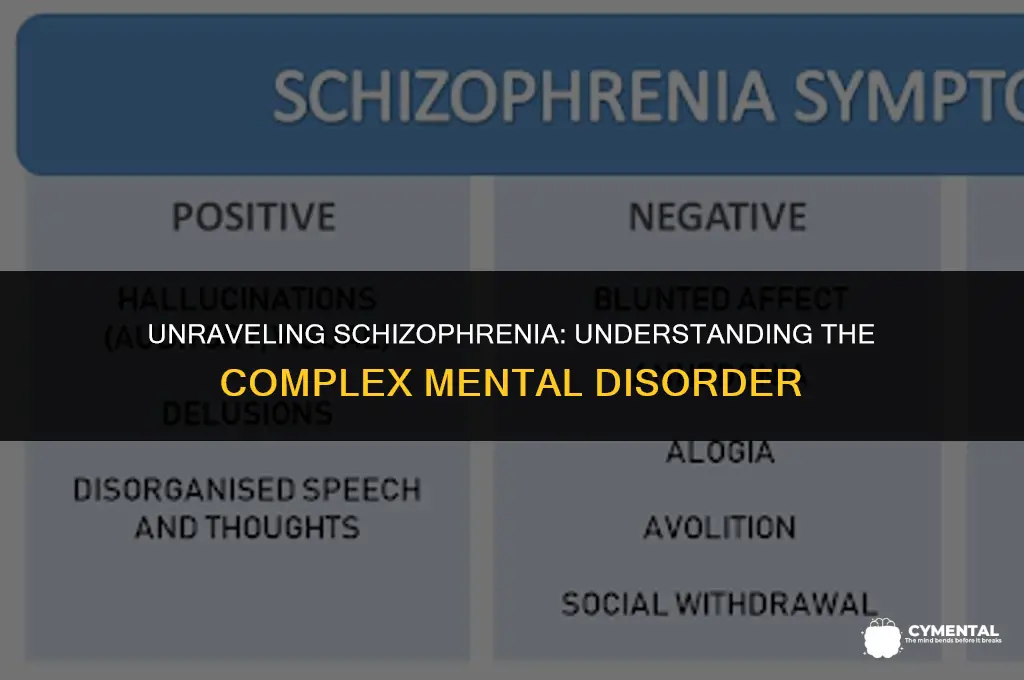
Schizophrenia is a chronic brain disorder characterized by symptoms such as delusions, hallucinations, trouble with thinking, and concentration. It affects approximately 1% of the global population and typically begins in late adolescence or early adulthood. While the exact cause of schizophrenia is unknown, it is believed to involve a combination of genetic, environmental, and neurochemical factors. Treatment usually involves a combination of antipsychotic medications and psychotherapy, with the goal of managing symptoms and improving quality of life. Despite its prevalence, schizophrenia remains a misunderstood condition, and individuals living with it often face stigma and discrimination.
| Characteristics | Values |
|---|---|
| Definition | Schizophrenia is a chronic brain disorder characterized by symptoms such as delusions, hallucinations, trouble with thinking, and concentration. |
| Prevalence | It affects approximately 1% of the global population, with about 20 million people worldwide diagnosed with the condition. |
| Onset | Typically begins in late adolescence or early adulthood, between the ages of 15 and 25. |
| Gender Distribution | It occurs equally in males and females. |
| Symptoms | Positive symptoms include hallucinations and delusions, while negative symptoms include reduced expression of emotions and lack of motivation. |
| Causes | The exact cause is unknown but is believed to involve a combination of genetic, environmental, and neurochemical factors. |
| Diagnosis | Diagnosed based on a combination of clinical interviews, behavioral observations, and sometimes brain imaging studies. |
| Treatment | Treatment usually involves a combination of antipsychotic medications and psychotherapy. |
| Prognosis | With proper treatment, many individuals with schizophrenia can lead productive lives, though the disorder is chronic and requires ongoing management. |
| Comorbidities | Commonly co-occurs with other mental health conditions such as depression, anxiety disorders, and substance abuse. |
| Impact on Daily Life | Can significantly impact daily functioning, including work, social interactions, and self-care. |
| Research | Ongoing research aims to better understand the underlying causes and develop more effective treatments. |
| Stigma | Individuals with schizophrenia often face stigma and discrimination, which can hinder their recovery and integration into society. |
| Support Systems | Support from family, friends, and mental health professionals is crucial for managing the condition. |
| Famous Individuals | Several famous individuals, including artists and scientists, have been diagnosed with schizophrenia, highlighting the diverse impact of the disorder. |
Explore related products


$23.32 $32.95


What You'll Learn
- Definition and Symptoms: Schizophrenia is a chronic brain disorder characterized by symptoms like delusions, hallucinations, trouble with thinking, and concentration
- Causes and Risk Factors: It is caused by a combination of genetic, environmental, and brain chemistry factors. Risk factors include family history and certain infections
- Types of Schizophrenia: There are several types, including paranoid, disorganized, catatonic, and undifferentiated schizophrenia, each with distinct symptoms
- Diagnosis and Treatment: Diagnosis is based on symptoms and ruling out other conditions. Treatment typically involves antipsychotic medications and psychotherapy
- Prognosis and Management: With proper treatment, many individuals can manage their symptoms effectively. However, the disorder often requires lifelong management and support

Definition and Symptoms: Schizophrenia is a chronic brain disorder characterized by symptoms like delusions, hallucinations, trouble with thinking, and concentration
Schizophrenia is a complex mental health condition that affects how a person thinks, feels, and behaves. It is characterized by a range of symptoms that can significantly impact daily life and functioning. One of the key features of schizophrenia is the presence of psychotic symptoms, such as delusions and hallucinations. Delusions are false beliefs that are not based in reality, while hallucinations involve perceiving things that are not actually present. These symptoms can be distressing and may lead to difficulties in distinguishing between what is real and what is not.
In addition to psychotic symptoms, individuals with schizophrenia may also experience cognitive difficulties, such as trouble with thinking, concentration, and memory. These cognitive impairments can make it challenging to perform everyday tasks, maintain relationships, and engage in meaningful activities. Furthermore, people with schizophrenia may also exhibit negative symptoms, such as a lack of motivation, reduced emotional expression, and social withdrawal. These symptoms can contribute to a decreased quality of life and may make it difficult for individuals to participate fully in society.
Schizophrenia is a chronic condition, meaning that it typically persists over time and requires ongoing treatment and support. While there is no cure for schizophrenia, there are effective treatments available that can help manage symptoms and improve overall functioning. These treatments may include medication, psychotherapy, and social support services. Early diagnosis and treatment are crucial in managing schizophrenia, as they can help prevent the condition from worsening and improve long-term outcomes.
It is important to note that schizophrenia is a highly individualized condition, and the specific symptoms and experiences can vary greatly from person to person. Some individuals may experience more severe symptoms, while others may have milder symptoms that are more manageable. Additionally, schizophrenia can co-occur with other mental health conditions, such as depression or anxiety, which can further complicate the diagnostic and treatment process.
In conclusion, schizophrenia is a chronic brain disorder characterized by a range of symptoms, including delusions, hallucinations, cognitive difficulties, and negative symptoms. These symptoms can significantly impact daily life and functioning, and ongoing treatment and support are necessary to manage the condition effectively. Early diagnosis and individualized treatment plans are crucial in improving long-term outcomes for individuals with schizophrenia.
Unraveling the Complexities of DID: A Mental Health Disorder Explained
You may want to see also
Explore related products


Causes and Risk Factors: It is caused by a combination of genetic, environmental, and brain chemistry factors. Risk factors include family history and certain infections
Schizophrenia is a complex mental disorder that arises from an interplay of genetic, environmental, and neurochemical factors. While the exact causes are still under investigation, research has identified several key contributors to the development of this condition.
Genetic factors play a significant role in schizophrenia, with studies showing that individuals with a family history of the disorder are at a higher risk of developing it themselves. Certain genetic variations, particularly those affecting the dopamine and serotonin systems, have been implicated in the pathophysiology of schizophrenia.
Environmental factors also contribute to the risk of developing schizophrenia. Prenatal complications, such as maternal infections or malnutrition, have been linked to an increased risk of the disorder. Additionally, early life stressors, including childhood trauma or neglect, can impact brain development and increase the likelihood of schizophrenia later in life.
Brain chemistry imbalances are another critical factor in schizophrenia. Abnormalities in neurotransmitter systems, particularly dopamine and glutamate, have been observed in individuals with the disorder. These imbalances can lead to the characteristic symptoms of schizophrenia, including delusions, hallucinations, and cognitive impairments.
Risk factors for schizophrenia include not only family history and certain infections but also substance abuse, particularly cannabis use, which has been shown to increase the risk of developing the disorder. Other risk factors include social isolation, poverty, and migration, which can contribute to the stress and uncertainty that may trigger the onset of schizophrenia.
In conclusion, schizophrenia is a multifaceted disorder with a range of causes and risk factors. Understanding these factors is crucial for developing effective prevention and treatment strategies, as well as for reducing the stigma associated with this challenging mental health condition.
Understanding Dementia: Is It a Mental Health Disorder?
You may want to see also
Explore related products


Types of Schizophrenia: There are several types, including paranoid, disorganized, catatonic, and undifferentiated schizophrenia, each with distinct symptoms
Schizophrenia is a complex mental disorder that manifests in various ways, with each type presenting a unique set of symptoms and challenges. Understanding these types is crucial for accurate diagnosis and effective treatment.
Paranoid schizophrenia is perhaps the most well-known type, characterized by delusions of persecution or grandeur. Individuals with this type often believe they are being watched, followed, or plotted against by others. They may also experience hallucinations, such as hearing voices that reinforce their delusions. Treatment for paranoid schizophrenia typically involves antipsychotic medications and cognitive-behavioral therapy to help manage symptoms and improve functioning.
Disorganized schizophrenia, on the other hand, is marked by a lack of organization and coherence in thought and behavior. People with this type may have difficulty maintaining a conversation, following a train of thought, or completing tasks. Their speech may be disjointed or nonsensical, and they may exhibit inappropriate or bizarre behavior. Treatment for disorganized schizophrenia often focuses on improving cognitive functioning and social skills through a combination of medication and psychotherapy.
Catatonic schizophrenia is a rare but severe type of the disorder, characterized by extreme physical immobility or excessive movement. Individuals with catatonic schizophrenia may remain in a fixed position for hours or days, or they may exhibit rapid, purposeless movements. They may also experience echolalia (repeating others' words) or echopraxia (imitating others' actions). Treatment for catatonic schizophrenia typically involves a combination of antipsychotic medications, benzodiazepines, and electroconvulsive therapy (ECT) to help alleviate symptoms.
Undifferentiated schizophrenia is a type that does not fit neatly into the other categories, presenting a mix of symptoms from multiple types. People with undifferentiated schizophrenia may experience delusions, hallucinations, disorganized thinking, and catatonic behavior. Treatment for this type of schizophrenia is highly individualized, depending on the specific symptoms and needs of the person affected.
In conclusion, schizophrenia is a multifaceted disorder with several distinct types, each requiring a tailored approach to treatment. By understanding the unique symptoms and challenges associated with each type, mental health professionals can provide more effective care and support for individuals living with schizophrenia.
Unraveling the Truth: Britney Spears' Mental Health Journey
You may want to see also
Explore related products


Diagnosis and Treatment: Diagnosis is based on symptoms and ruling out other conditions. Treatment typically involves antipsychotic medications and psychotherapy
Schizophrenia is a complex mental disorder that requires a comprehensive approach to diagnosis and treatment. The diagnostic process begins with a thorough evaluation of the patient's symptoms, medical history, and family background. Clinicians use various assessment tools, such as the Diagnostic and Statistical Manual of Mental Disorders (DSM-5), to identify the characteristic symptoms of schizophrenia, including delusions, hallucinations, disorganized thinking, and negative symptoms like social withdrawal and emotional blunting.
One of the challenges in diagnosing schizophrenia is ruling out other conditions that may present with similar symptoms. For example, bipolar disorder, major depressive disorder, and certain medical conditions like thyroid disorders or neurological diseases can mimic the symptoms of schizophrenia. To exclude these possibilities, healthcare providers may conduct physical examinations, laboratory tests, and imaging studies like MRI or CT scans.
Once a diagnosis of schizophrenia is confirmed, treatment typically involves a combination of antipsychotic medications and psychotherapy. Antipsychotic drugs, such as olanzapine, risperidone, and quetiapine, are used to manage the positive symptoms of schizophrenia like delusions and hallucinations. These medications work by blocking the activity of dopamine, a neurotransmitter that plays a key role in the development of psychotic symptoms. However, antipsychotic medications can have side effects, such as weight gain, drowsiness, and movement disorders, which require careful monitoring.
Psychotherapy is an essential component of schizophrenia treatment, as it helps patients cope with the emotional and social challenges associated with the disorder. Cognitive-behavioral therapy (CBT) is a commonly used approach that focuses on identifying and changing negative thought patterns and behaviors. Family therapy is another important intervention that educates family members about schizophrenia and helps them support their loved one's recovery.
In addition to medication and psychotherapy, lifestyle modifications can also play a role in managing schizophrenia. Regular exercise, a balanced diet, and adequate sleep are important for maintaining overall health and well-being. Social support networks, such as peer support groups and community mental health services, can provide valuable resources and assistance for individuals with schizophrenia and their families.
In conclusion, the diagnosis and treatment of schizophrenia require a multifaceted approach that combines clinical evaluation, medication management, psychotherapy, and lifestyle interventions. By working closely with healthcare providers and support networks, individuals with schizophrenia can achieve a better quality of life and improved mental health outcomes.
Exploring the Thin Line: Delusions and Mental Health Disorders
You may want to see also
Explore related products





Prognosis and Management: With proper treatment, many individuals can manage their symptoms effectively. However, the disorder often requires lifelong management and support
Schizophrenia is a chronic mental disorder that affects millions of people worldwide. While there is no cure, proper treatment and management can help individuals with schizophrenia lead fulfilling lives. Treatment typically involves a combination of antipsychotic medications, psychotherapy, and social support. Antipsychotic medications can help reduce symptoms such as hallucinations and delusions, while psychotherapy can help individuals cope with the emotional and social challenges of the disorder. Social support, such as family therapy and support groups, can also play a crucial role in helping individuals with schizophrenia manage their symptoms and improve their quality of life.
One of the key challenges in managing schizophrenia is ensuring that individuals adhere to their treatment plan. This can be difficult, as symptoms such as paranoia and disorganized thinking can make it hard for individuals to recognize the importance of treatment. Additionally, side effects of antipsychotic medications can be unpleasant, leading some individuals to stop taking their medication. To address these challenges, healthcare providers often work closely with individuals and their families to develop a personalized treatment plan that takes into account their unique needs and circumstances.
Another important aspect of managing schizophrenia is addressing the social and economic challenges that individuals with the disorder often face. Many people with schizophrenia experience social isolation, unemployment, and poverty, which can exacerbate their symptoms and make it harder to manage the disorder. To address these challenges, healthcare providers and social workers often work together to provide individuals with schizophrenia with access to education, employment, and housing resources.
In addition to these challenges, individuals with schizophrenia also face a higher risk of developing other health problems, such as heart disease and diabetes. This is partly due to the side effects of antipsychotic medications, which can lead to weight gain and other metabolic changes. To address these risks, healthcare providers often work with individuals to develop a comprehensive health plan that includes regular exercise, a healthy diet, and monitoring for potential health problems.
Overall, while schizophrenia is a challenging disorder to manage, proper treatment and support can help individuals lead fulfilling lives. By addressing the unique needs and challenges of individuals with schizophrenia, healthcare providers and social workers can help them manage their symptoms, improve their quality of life, and achieve their goals.
Understanding Personality Disorders: Are They Mental Illnesses?
You may want to see also
Frequently asked questions
Schizophrenia is a chronic brain disorder characterized by symptoms such as delusions, hallucinations, trouble with thinking, and concentration.
Common symptoms of schizophrenia include delusions, hallucinations, disorganized thinking, difficulty concentrating, and social withdrawal.
Schizophrenia is typically treated with a combination of antipsychotic medications, psychotherapy, and social support. Treatment aims to manage symptoms and improve the individual's quality of life.