Ava Ramirez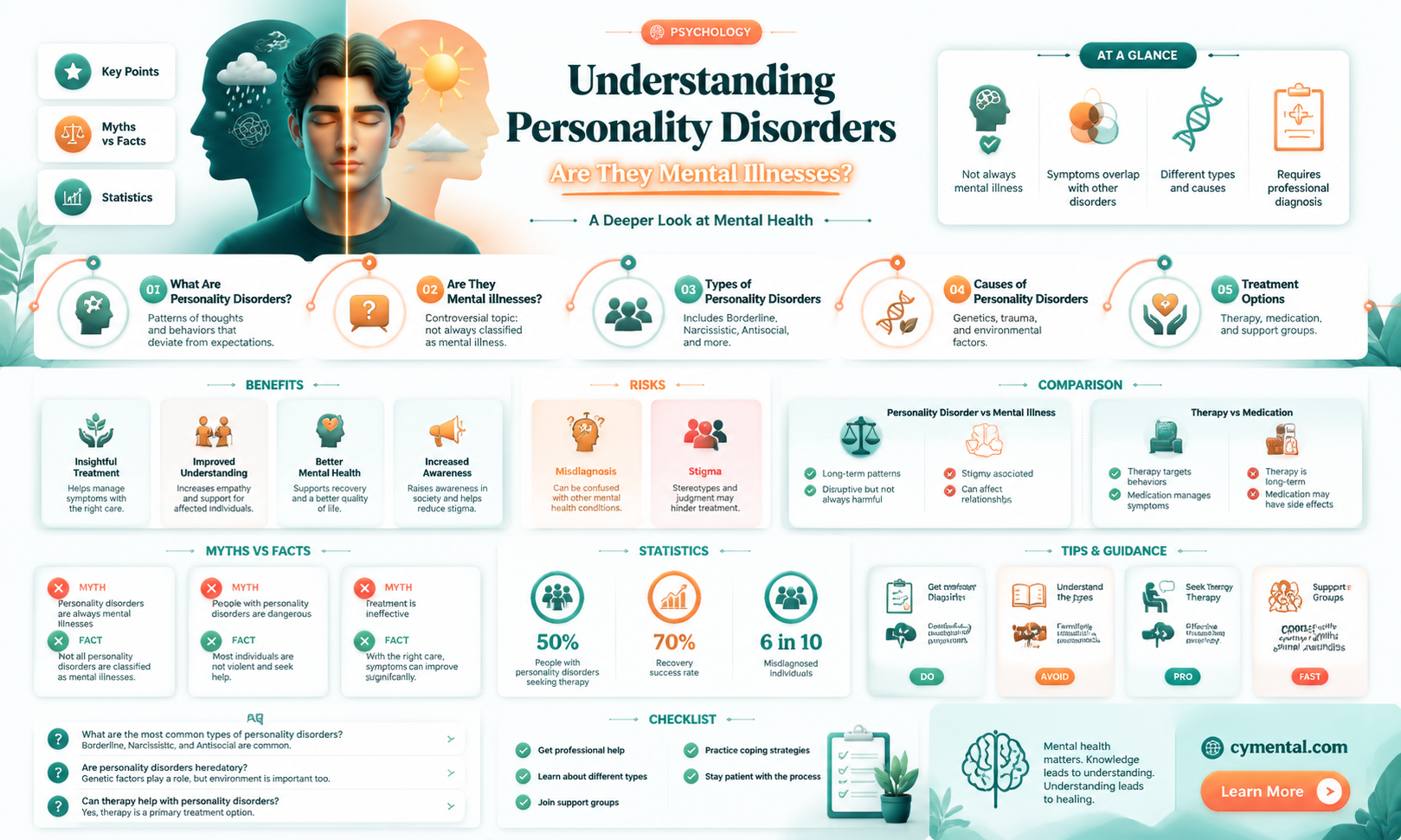
Personality disorders are a category of mental health conditions characterized by long-standing patterns of thinking, feeling, and behaving that deviate significantly from societal norms and expectations. These disorders can cause significant distress and impairment in various aspects of life, including relationships, work, and overall well-being. While they are classified as mental illnesses, there is ongoing debate among mental health professionals about the nature and definition of personality disorders. Some argue that they represent maladaptive coping mechanisms or learned behaviors, while others view them as inherent neurological or genetic conditions. Understanding personality disorders is crucial for developing effective treatment strategies and reducing the stigma associated with mental illness.
| Characteristics | Values |
|---|---|
| Definition | Personality disorders are a group of mental health conditions characterized by long-standing patterns of thinking and behavior that are inflexible and maladaptive, causing significant distress or impairment in social, occupational, or other areas of functioning. |
| Types | There are several types of personality disorders, including but not limited to: Antisocial, Avoidant, Borderline, Dependent, Histrionic, Narcissistic, Obsessive-Compulsive, Paranoid, Schizoid, and Schizotypal. |
| Symptoms | Symptoms vary depending on the specific type of personality disorder but may include: Difficulty with emotional regulation, Impaired social interactions, Rigid and inflexible behavior, Lack of empathy, Manipulative behavior, Self-centeredness, Excessive need for attention, Avoidance of social situations, Detachment from others, Suspiciousness, and Paranoia. |
| Causes | The exact causes of personality disorders are not fully understood but are believed to involve a combination of genetic, environmental, and psychological factors. Childhood trauma, neglect, and abuse are thought to play a significant role in the development of some personality disorders. |
| Diagnosis | Diagnosis is typically made by a mental health professional through a combination of clinical interviews, psychological assessments, and observation of behavior over time. The Diagnostic and Statistical Manual of Mental Disorders (DSM-5) provides criteria for diagnosing personality disorders. |
| Treatment | Treatment for personality disorders can be challenging, as these conditions are often deeply ingrained and resistant to change. However, various therapeutic approaches, such as Cognitive-Behavioral Therapy (CBT), Dialectical Behavior Therapy (DBT), and Psychodynamic Therapy, can be helpful in managing symptoms and improving functioning. Medications may also be used to treat co-occurring conditions, such as depression or anxiety. |
| Prognosis | The prognosis for personality disorders varies depending on the specific type and the individual's circumstances. With appropriate treatment, some individuals may experience significant improvement in their symptoms and quality of life, while others may continue to struggle with ongoing difficulties. Early intervention and consistent treatment can lead to better outcomes. |
| Impact on daily life | Personality disorders can significantly impact an individual's daily life, affecting their relationships, work, and overall well-being. Individuals with personality disorders may experience difficulties in maintaining stable relationships, holding down a job, and managing their emotions and behaviors in various situations. |
| Stigma and misconceptions | There is often stigma and misconceptions surrounding personality disorders, leading to misunderstandings and negative attitudes towards individuals with these conditions. It is important to educate the public about personality disorders and promote empathy and understanding to reduce stigma and improve support for those affected. |
| Support and resources | Various support groups, online forums, and mental health organizations provide resources and assistance for individuals with personality disorders and their families. These resources can offer valuable information, guidance, and a sense of community for those navigating the challenges of personality disorders. |
Explore related products

$11.99

$12.36 $20.95


What You'll Learn

Definition and Classification
Personality disorders are a class of mental health conditions characterized by long-standing patterns of thinking and behavior that deviate significantly from societal norms and expectations. These disorders are classified within the broader category of mental illnesses due to their impact on an individual's emotional, social, and occupational functioning. The definition of personality disorders is rooted in the concept of enduring personality traits that cause distress or impairment in various areas of life.
The classification of personality disorders has evolved over time, with the current framework outlined in the Diagnostic and Statistical Manual of Mental Disorders (DSM-5). The DSM-5 categorizes personality disorders into three clusters: Cluster A (paranoid, schizoid, and schizotypal), Cluster B (antisocial, borderline, histrionic, and narcissistic), and Cluster C (avoidant, dependent, and obsessive-compulsive). Each cluster represents a distinct set of personality traits and behaviors that contribute to the overall diagnosis.
One unique aspect of personality disorders is their pervasive nature, meaning that the characteristic traits and behaviors are consistent across different situations and relationships. This pervasiveness distinguishes personality disorders from other mental health conditions that may be more situational or episodic in nature. Additionally, personality disorders often have their onset in adolescence or early adulthood, although they may not be formally diagnosed until later in life.
The classification of personality disorders is not without controversy, as some critics argue that the diagnostic criteria can be subjective and culturally influenced. Furthermore, there is ongoing debate about the validity and reliability of the DSM-5 classification system, with some researchers advocating for alternative approaches that focus on dimensional models of personality rather than categorical diagnoses.
Despite these controversies, the classification of personality disorders remains an important tool for mental health professionals in understanding and treating these conditions. Accurate diagnosis can guide treatment planning and help individuals with personality disorders manage their symptoms and improve their overall quality of life. As our understanding of personality disorders continues to evolve, so too will the classification systems and diagnostic criteria used to identify and treat these complex mental health conditions.
Unraveling the Complexities: Pathological Lying and Mental Health
You may want to see also
Explore related products


Types of Personality Disorders
Personality disorders are a group of mental health conditions characterized by long-standing patterns of thinking and behavior that are inflexible and maladaptive, causing significant distress or impairment in social, occupational, or other areas of functioning. These disorders are deeply ingrained and often go unnoticed until they cause problems in a person's life. There are several types of personality disorders, each with its own set of symptoms and characteristics.
One of the most well-known types is Antisocial Personality Disorder (ASPD), which is characterized by a disregard for the rights of others, a lack of empathy, and a tendency to engage in manipulative or exploitative behavior. Individuals with ASPD may have a history of criminal behavior, substance abuse, and unstable relationships. Another type is Borderline Personality Disorder (BPD), which is marked by emotional instability, intense relationships, and a fear of abandonment. People with BPD may experience rapid mood swings, engage in self-harming behaviors, and have difficulty maintaining stable relationships.
Narcissistic Personality Disorder (NPD) is another type, characterized by an inflated sense of self-importance, a need for admiration, and a lack of empathy for others. Individuals with NPD may be overly critical of others, have a sense of entitlement, and experience difficulty in maintaining relationships due to their arrogant and self-centered behavior. Avoidant Personality Disorder (AVPD) is marked by feelings of inadequacy, social inhibition, and a tendency to avoid social interactions due to fear of rejection or criticism. People with AVPD may be overly sensitive to criticism, have low self-esteem, and experience anxiety in social situations.
Dependent Personality Disorder (DPD) is characterized by an excessive need for others to take care of them, a fear of being alone, and a tendency to cling to relationships even when they are harmful. Individuals with DPD may have difficulty making decisions, taking responsibility for their own needs, and may experience anxiety when separated from their caregivers. Lastly, there is Schizoid Personality Disorder (SPD), which is marked by a lack of interest in social relationships, a tendency to be solitary, and a restricted range of emotional expression. People with SPD may appear aloof, have difficulty relating to others, and may be preoccupied with their own thoughts and interests.
Each type of personality disorder has its own unique set of symptoms and characteristics, and they can vary widely in terms of severity and impact on a person's life. It is important to note that personality disorders are not a result of personal weakness or character flaws, but rather they are complex mental health conditions that require professional treatment and support. With the right help, individuals with personality disorders can learn to manage their symptoms and improve their quality of life.
Exploring Feline Psychology: Do Cats Experience Mental Disorders?
You may want to see also
Explore related products


Symptoms and Diagnosis
Personality disorders are characterized by deeply ingrained patterns of thinking, feeling, and behaving that deviate significantly from societal norms and expectations. These patterns are often inflexible and pervasive, affecting various aspects of an individual's life, including personal relationships, work, and overall well-being. Unlike other mental health conditions, personality disorders are typically long-standing and may not always be accompanied by acute symptoms that prompt immediate medical attention.
Diagnosing personality disorders can be challenging due to their complex nature and the subjective interpretation of symptoms. Mental health professionals often rely on a combination of clinical interviews, psychological assessments, and observation of behavior over time to make an accurate diagnosis. The Diagnostic and Statistical Manual of Mental Disorders (DSM-5) provides a framework for diagnosing personality disorders, categorizing them into ten distinct types based on specific criteria.
One of the key challenges in diagnosing personality disorders is distinguishing them from other mental health conditions that may present with similar symptoms. For example, borderline personality disorder (BPD) and bipolar disorder can both involve mood instability and impulsive behavior, but they have distinct underlying causes and treatment approaches. Additionally, personality disorders often co-occur with other mental health conditions, such as depression or anxiety, which can further complicate the diagnostic process.
To address these challenges, mental health professionals may use a variety of assessment tools, including self-report questionnaires, projective tests, and behavioral rating scales. These tools can help to identify specific personality traits and patterns that are indicative of a particular disorder. Furthermore, a thorough understanding of the individual's personal history, including childhood experiences, relationships, and coping mechanisms, can provide valuable context for making an accurate diagnosis.
In conclusion, diagnosing personality disorders requires a nuanced and comprehensive approach that takes into account the individual's unique experiences and circumstances. By combining clinical expertise with standardized assessment tools and a deep understanding of the individual's personal history, mental health professionals can make more accurate diagnoses and develop effective treatment plans that address the complex needs of individuals with personality disorders.
Understanding Stockholm Syndrome: A Complex Psychological Phenomenon
You may want to see also
Explore related products


Causes and Risk Factors
Personality disorders are complex mental health conditions that can arise from a combination of genetic, environmental, and psychological factors. Research suggests that certain genetic predispositions can increase the likelihood of developing a personality disorder, particularly when coupled with adverse life experiences. For instance, a study published in the Journal of Psychiatric Research found that individuals with a family history of mental illness are more prone to developing personality disorders themselves.
Environmental factors also play a significant role in the development of personality disorders. Traumatic events, such as physical or emotional abuse, neglect, or bullying, can have a profound impact on an individual's psychological well-being. Chronic stress, social isolation, and exposure to toxic environments can further exacerbate the risk. For example, a longitudinal study conducted by the American Psychological Association revealed that children who experienced prolonged periods of stress were more likely to exhibit traits of personality disorders later in life.
Psychological factors, such as cognitive biases and maladaptive coping mechanisms, can also contribute to the development of personality disorders. Individuals who struggle with emotional regulation, impulse control, or interpersonal relationships may be more susceptible to these conditions. A study published in the Journal of Clinical Psychology found that cognitive distortions, such as catastrophizing and all-or-nothing thinking, were common among individuals with personality disorders.
It is essential to recognize that personality disorders are not the result of personal weakness or character flaws. Rather, they are legitimate mental health conditions that can be influenced by a complex interplay of factors. Understanding the causes and risk factors associated with personality disorders can help to reduce stigma and promote more effective treatment approaches. By addressing the underlying genetic, environmental, and psychological contributors, mental health professionals can develop tailored interventions that target the specific needs of individuals with personality disorders.
Exploring the Signs: Could You Have a Mental Health Condition?
You may want to see also
Explore related products

$13.99 $13.99


Treatment and Management
Personality disorders, while often misunderstood, are indeed recognized as mental illnesses that can significantly impact an individual's life. Treatment and management of these disorders require a multifaceted approach, combining psychotherapy, medication, and lifestyle changes. One of the primary goals in treating personality disorders is to help individuals develop healthier coping mechanisms and improve their ability to function in daily life.
Cognitive-behavioral therapy (CBT) and dialectical behavior therapy (DBT) are two effective psychotherapeutic approaches for managing personality disorders. CBT focuses on identifying and challenging negative thought patterns, while DBT emphasizes the development of emotional regulation skills and interpersonal effectiveness. In some cases, medication may also be prescribed to help manage symptoms such as anxiety, depression, or impulsivity.
Lifestyle changes can also play a crucial role in the management of personality disorders. Regular exercise, a balanced diet, and adequate sleep are essential for maintaining overall mental health. Additionally, individuals may benefit from learning stress management techniques, such as mindfulness meditation or deep breathing exercises, to help them cope with challenging situations.
It is important to note that the treatment and management of personality disorders can be complex and may require a team of mental health professionals, including psychiatrists, psychologists, and social workers. With the right support and resources, individuals with personality disorders can learn to manage their symptoms and lead fulfilling lives.
Understanding ADHD: Is Attention Deficit Disorder a Mental Illness?
You may want to see also
Frequently asked questions
Yes, personality disorders are classified as mental illnesses. They are characterized by long-standing patterns of thinking and behavior that deviate from societal norms and cause significant distress or impairment in various areas of life.
Personality disorders differ from other mental illnesses in that they typically involve enduring patterns of behavior and thought that are deeply ingrained in a person's personality. These patterns often lead to difficulties in social interactions, work, and personal relationships, and they can be more challenging to treat compared to other mental health conditions.
Some examples of personality disorders include Antisocial Personality Disorder, Borderline Personality Disorder, Histrionic Personality Disorder, Narcissistic Personality Disorder, Obsessive-Compulsive Personality Disorder, Paranoid Personality Disorder, Schizoid Personality Disorder, and Avoidant Personality Disorder.
Yes, personality disorders can be treated, although the treatment process can be complex and lengthy. Common treatment approaches include psychotherapy, such as cognitive-behavioral therapy (CBT) and dialectical behavior therapy (DBT), as well as medication to manage specific symptoms. The goal of treatment is to help individuals develop healthier coping mechanisms and improve their overall quality of life.
The stigma surrounding personality disorders often stems from misconceptions and a lack of understanding about these conditions. People with personality disorders may be unfairly judged as being difficult, manipulative, or unlikable. To address this stigma, it is important to increase awareness and education about personality disorders, promote empathy and understanding, and encourage open conversations about mental health. By fostering a more supportive and accepting environment, individuals with personality disorders can feel more comfortable seeking help and support.