Noah Parker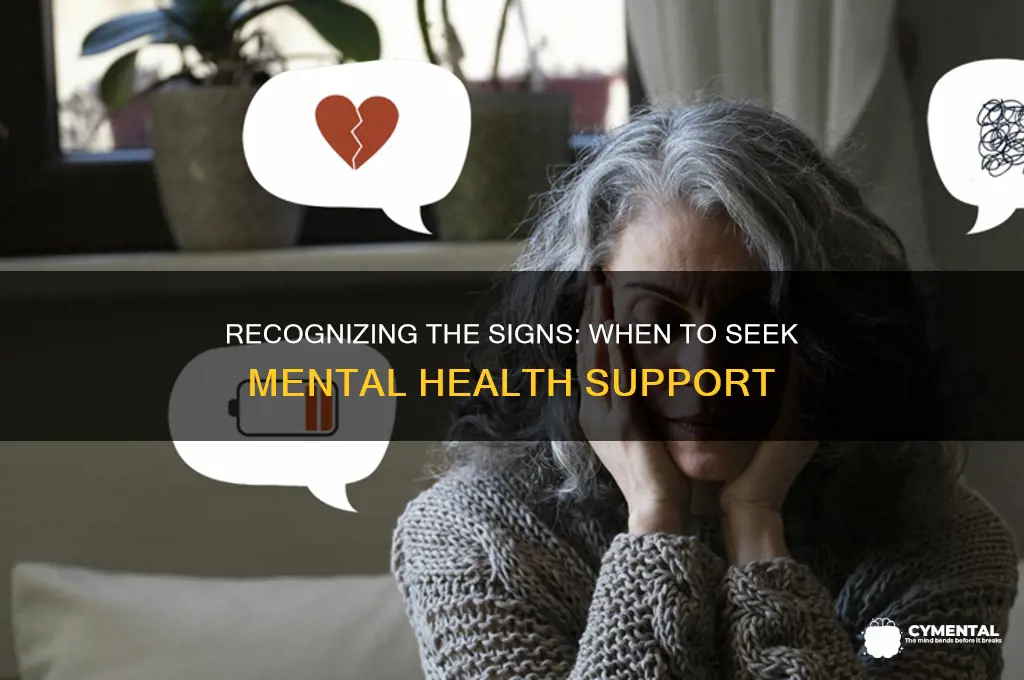
Recognizing when someone needs mental health support is crucial, as early intervention can significantly improve outcomes. Signs may include persistent feelings of sadness, anxiety, or hopelessness; sudden changes in behavior, such as withdrawal from social activities or increased irritability; difficulty managing daily tasks; or expressions of self-harm or suicidal thoughts. It’s important to approach the person with empathy, listen without judgment, and encourage them to seek professional help, whether through therapy, counseling, or medical treatment. Offering support and understanding can make a meaningful difference in their journey toward healing and recovery.
Explore related products


What You'll Learn
- Recognizing Warning Signs: Sudden mood changes, withdrawal, or self-harm behaviors indicate a need for intervention
- Breaking Stigma: Encourage open conversations to reduce shame and promote seeking professional support
- Finding Resources: Locate therapists, hotlines, or support groups tailored to specific mental health challenges
- Supporting Loved Ones: Listen without judgment, offer patience, and help them access appropriate care
- Self-Care Strategies: Prioritize sleep, exercise, and mindfulness to maintain mental well-being proactively

Recognizing Warning Signs: Sudden mood changes, withdrawal, or self-harm behaviors indicate a need for intervention
Sudden mood swings can be a red flag, especially when they seem disproportionate to the situation or occur frequently. Imagine a colleague who shifts from euphoric laughter to tearful despair within minutes, or a friend who becomes aggressively angry over minor inconveniences. These aren’t just "bad days"—they’re potential indicators of underlying mental health issues like bipolar disorder, borderline personality disorder, or severe stress. Tracking patterns is key: note if these shifts disrupt daily functioning, relationships, or work performance. If you observe this, gently suggest professional help, emphasizing that mood instability is treatable with therapy, medication, or both.
Withdrawal from social activities or relationships often flies under the radar but can signal deep distress. A once-social teenager now spends hours alone in their room, declining invitations without explanation. An adult stops attending family gatherings or responding to messages. While solitude can be healthy, abrupt or prolonged isolation may reflect depression, anxiety, or trauma. Approach this delicately—avoid phrases like "What’s wrong with you?" Instead, say, "I’ve noticed you’ve been less involved lately. Is there something you’d like to talk about?" Offer specific support, such as accompanying them to a therapist’s office or simply spending time together without pressure.
Self-harm behaviors—cutting, burning, or hitting oneself—are urgent cries for help, often linked to conditions like depression, PTSD, or borderline personality disorder. These acts aren’t attention-seeking but rather maladaptive coping mechanisms for emotional pain. If you discover scars, fresh injuries, or tools like razors hidden in someone’s belongings, act calmly but decisively. Say, "I’m concerned about your safety. Can we talk about what’s going on?" Avoid judgment or shock; instead, encourage professional intervention. Resources like crisis hotlines (e.g., 988 in the U.S.) or emergency rooms can provide immediate assistance while arranging long-term therapy.
Comparing these warning signs reveals a common thread: they’re often misunderstood or dismissed. Mood swings are written off as "drama," withdrawal as "being antisocial," and self-harm as "teenage rebellion." This minimizes the suffering and delays critical care. Education is vital—know that these behaviors aren’t choices but symptoms of deeper struggles. By recognizing them early and responding with empathy, you can help bridge the gap to professional support, potentially preventing crises like severe depression, hospitalization, or even suicide. Remember, intervention isn’t about fixing someone but about guiding them toward resources that can heal.
Mental Health Week: Awareness Boost or Superficial Support?
You may want to see also
Explore related products


Breaking Stigma: Encourage open conversations to reduce shame and promote seeking professional support
Mental health struggles often thrive in silence, shrouded by a stigma that whispers of weakness or shame. This stigma acts as a barrier, preventing individuals from seeking the help they desperately need. Imagine a broken leg – we wouldn't hesitate to seek medical attention. Yet, when our minds are fractured, we often suffer in isolation, fearing judgment and misunderstanding.
Breaking this stigma requires a fundamental shift: we must normalize open conversations about mental health.
Consider this: 1 in 4 people globally will experience a mental health issue in their lifetime. That's not a small, isolated group; it's our friends, family, colleagues, and potentially ourselves. By sharing our experiences, whether personal struggles or observations, we chip away at the wall of silence. It's not about oversharing, but about creating a safe space where vulnerability is met with empathy, not judgment.
Think of it as a ripple effect. One person sharing their story can inspire another to seek help, who in turn might encourage someone else. This chain reaction of openness fosters a culture of understanding and support, making it easier for everyone to say, "I'm not okay, and I need help."
But how do we initiate these conversations? Start small. Ask open-ended questions like, "How are you really doing?" instead of settling for a superficial "Fine." Share articles or resources about mental health, normalizing the topic in everyday discourse. If you're comfortable, share your own experiences, even if it's just acknowledging a difficult day. Remember, vulnerability is strength, not weakness.
For those struggling, remember: seeking help is a sign of courage, not defeat. Therapists, counselors, and support groups offer invaluable tools for managing mental health challenges. Just as we prioritize physical health, we must prioritize our mental well-being.
Breaking the stigma surrounding mental health is a collective effort. By encouraging open conversations, we create a world where seeking help is not only acceptable but encouraged. Let's replace silence with understanding, shame with support, and isolation with connection. Let's build a world where everyone feels safe to say, "I need help," and know they will be met with compassion and care.
Protesting for Change: Combating Mental Illness Stigma and Discrimination
You may want to see also
Explore related products





Finding Resources: Locate therapists, hotlines, or support groups tailored to specific mental health challenges
Recognizing the need for mental health support is only the first step; the next critical phase is finding the right resources. Tailored assistance can make a significant difference in outcomes, whether it’s therapy, crisis hotlines, or peer support groups. For instance, someone struggling with anxiety may benefit from cognitive-behavioral therapy (CBT), while a person experiencing suicidal thoughts requires immediate access to a crisis hotline like the 988 Suicide & Crisis Lifeline. The key is specificity—matching the resource to the challenge.
To locate a therapist, start with platforms like Psychology Today or BetterHelp, which allow filtering by specialization (e.g., PTSD, eating disorders, or LGBTQ+ issues). Insurance providers often have directories of in-network mental health professionals, reducing out-of-pocket costs. For those without insurance, community health centers or sliding-scale clinics offer affordable options. When contacting a therapist, ask about their approach, experience with your specific issue, and availability. A good fit isn’t just about credentials; it’s about feeling heard and understood.
Hotlines serve as immediate lifelines during crises. Beyond the well-known 988, there are specialized lines like the Crisis Text Line (text HOME to 741741) for those who prefer texting, or The Trevor Project (1-866-488-7386) for LGBTQ+ youth. These services are free, confidential, and available 24/7. For non-emergency situations, warm lines (e.g., peer support lines) provide emotional support and resource referrals. Knowing these numbers in advance can save time and reduce panic when help is needed urgently.
Support groups offer a sense of community and shared understanding. Organizations like the National Alliance on Mental Illness (NAMI) host peer-led groups for conditions like depression, bipolar disorder, or schizophrenia. Online platforms such as 7 Cups or In The Rooms cater to those who prefer anonymity or have limited mobility. When joining a group, consider the format (in-person vs. virtual), frequency of meetings, and whether it’s moderated by a professional or peer-led. Consistency is key; regular attendance fosters trust and deeper connections.
Finally, combining resources often yields the best results. For example, someone with severe depression might work with a therapist, use a mood-tracking app, and attend a support group. Apps like Calm or Headspace can complement therapy by teaching mindfulness techniques, while journals or workbooks (e.g., *The Anxiety and Phobia Workbook*) provide structured exercises. The goal is to create a holistic support system that addresses immediate needs while building long-term resilience. With the right tools, recovery becomes not just possible, but probable.
Avoiding Common Pitfalls: What Hinders Mental Wellness and Recovery
You may want to see also
Explore related products


Supporting Loved Ones: Listen without judgment, offer patience, and help them access appropriate care
Recognizing when a loved one needs mental health support can be subtle, often manifesting as changes in behavior, mood, or daily functioning. Once you’ve identified the need, your role shifts to providing meaningful assistance. The foundation of this support lies in three pillars: listening without judgment, offering patience, and helping them access appropriate care. These actions, though simple in concept, require intentionality and understanding to execute effectively.
Listening without judgment is an art that demands practice and empathy. When a loved one opens up about their struggles, resist the urge to offer quick fixes, unsolicited advice, or comparisons to others. Instead, create a safe space by actively listening—nodding, maintaining eye contact, and reflecting back what they’ve said to show you’re fully present. For example, phrases like, “It sounds like you’re feeling overwhelmed,” validate their emotions without minimizing their experience. Avoid phrases like, “Just think positively,” or “Others have it worse,” which can inadvertently shame them into silence. The goal is to make them feel heard, not fixed.
Patience is equally critical, as mental health recovery is rarely linear. Progress may be slow, and setbacks are common. Avoid setting timelines or expressing frustration if they don’t “snap out of it.” Instead, normalize the process by acknowledging its complexity. For instance, say, “Healing takes time, and I’m here for you every step of the way.” Practical ways to demonstrate patience include offering small, consistent gestures of support, like checking in regularly or helping with daily tasks when they’re overwhelmed. Remember, your loved one is not their diagnosis, and their struggles do not define their worth.
Helping them access appropriate care requires research and collaboration. Start by encouraging professional help without being pushy. Say, “I’ve found a few therapists who specialize in what you’re going through. Would you like me to share their information?” If they’re hesitant, suggest starting with a mental health hotline or online resources like the National Alliance on Mental Illness (NAMI). For severe cases, such as suicidal ideation, accompany them to appointments or help them create a safety plan. Be mindful of cultural or financial barriers they may face and offer solutions, like sliding-scale therapy options or support groups.
In conclusion, supporting a loved one’s mental health is a delicate balance of emotional availability and practical assistance. By listening without judgment, offering unwavering patience, and actively helping them access care, you become a vital part of their support system. These actions not only foster trust but also empower them to take steps toward healing. Remember, your role isn’t to solve their problems but to walk alongside them as they navigate their journey.
Capote's Complex Compassion: Aiding the Mentally Unstable Through Literature?
You may want to see also
Explore related products


Self-Care Strategies: Prioritize sleep, exercise, and mindfulness to maintain mental well-being proactively
Sleep deprivation doesn't just make you grumpy; it unravels your mental defenses. Adults need 7-9 hours nightly, yet 35% get less. Chronic short sleep increases anxiety risk by 30% and depression by 50%. Prioritize a consistent bedtime, limit screens an hour before, and create a dark, cool environment. Think of sleep as your brain's nightly repair shop—skimp, and you'll pay in emotional resilience.
Exercise isn't just for physical health; it's a natural antidepressant. 30 minutes of moderate daily activity (brisk walking, cycling) reduces stress hormones and boosts endorphins. For severe depression, combine it with therapy—studies show this duo is as effective as medication for some. Start small: take the stairs, dance during commercials, or try a 10-minute yoga video. Your body doesn't need a marathon; your brain needs consistency.
Mindfulness isn't about emptying your mind—it's noticing thoughts without judgment. A 5-minute daily practice lowers cortisol by 14%. Try this: sit upright, focus on your breath, and label distractions ("thinking," "planning") before returning to inhales/exhales. Apps like Headspace offer guided sessions, but simplicity works: observe sensations while washing dishes or walking. It's mental weight training, building focus to handle life's chaos.
Combine these strategies deliberately. Exercise in the morning boosts sleep quality; mindfulness before bed quiets racing thoughts. Track progress with a journal: note sleep hours, workout duration, and stress levels. Adjust as needed—maybe swap evening caffeine for herbal tea, or add a 2-minute gratitude practice post-meditation. These aren't luxuries; they're non-negotiables for a mind under siege. Treat them as prescriptions, not suggestions.
Strategies to Foster Mental Wellness and Prevent Illness
You may want to see also
Frequently asked questions
Signs that someone may need mental health help include persistent changes in mood, behavior, or personality; withdrawal from social activities; difficulty functioning at work, school, or home; expressions of hopelessness or suicidal thoughts; and physical symptoms like unexplained pain or fatigue. If you notice these signs and they last for two weeks or more, encourage the person to seek professional support.
Approach the person with empathy and express your concern without judgment. Share specific examples of behaviors that worry you and emphasize your support. Offer to help them find a mental health professional or accompany them to an appointment. If they remain resistant, consider seeking advice from a counselor or crisis hotline for guidance on how to proceed.
Be a compassionate listener and validate their feelings without trying to "fix" their problems. Encourage them to stick with their treatment plan and celebrate their progress. Educate yourself about their condition to better understand their experience. Ensure they know you’re there for them, but also respect their boundaries and avoid pressuring them.