Lucas Bennett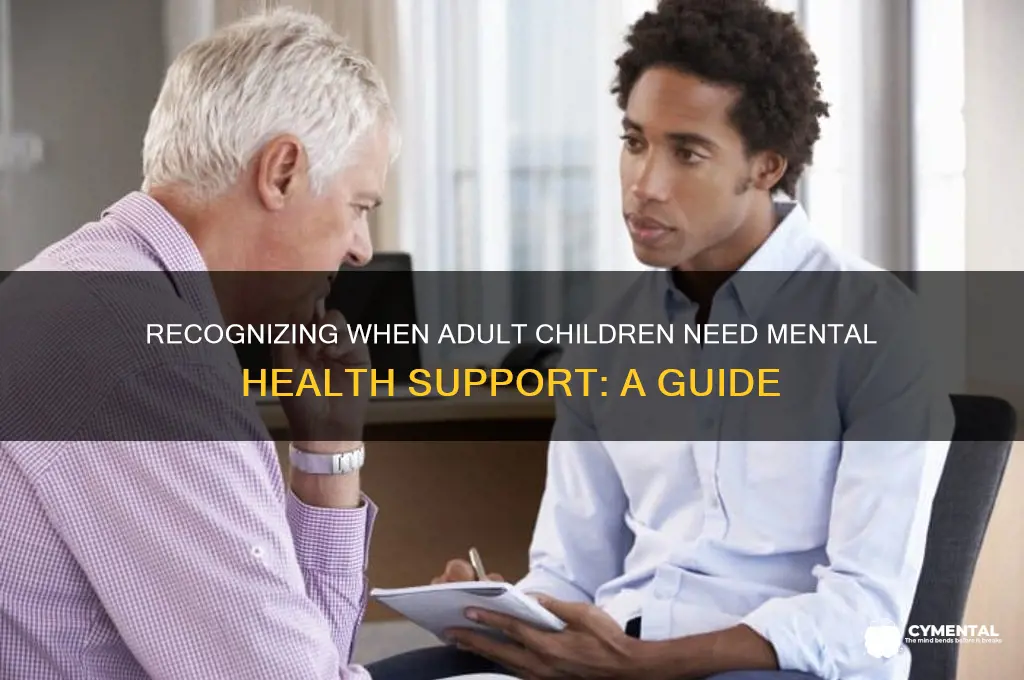
Recognizing when adult children need mental health support can be challenging for parents, as the transition to adulthood often blurs traditional caregiving roles. While young adults are expected to navigate independence, signs such as persistent sadness, withdrawal from social activities, significant changes in behavior, or struggles with daily functioning may indicate underlying mental health issues. It’s crucial to approach the conversation with empathy and respect for their autonomy, offering support rather than imposing solutions. Encouraging professional help, such as therapy or counseling, can provide them with tools to manage their challenges effectively. Ultimately, fostering open communication and being attuned to subtle changes can help parents determine when it’s time to intervene and guide their adult children toward appropriate mental health resources.
Explore related products

$10.99 $18.99


What You'll Learn
- Recognizing Warning Signs: Sudden changes in behavior, mood, or functioning may indicate a need for intervention
- Crisis Situations: Immediate help is crucial if there’s self-harm, suicidal thoughts, or severe aggression
- Persistent Struggles: Long-term issues like anxiety, depression, or substance abuse require professional support
- Impact on Daily Life: Interference with work, relationships, or independence signals a need for help
- Family Concerns: When parental worry grows, consulting a therapist can guide appropriate action

Recognizing Warning Signs: Sudden changes in behavior, mood, or functioning may indicate a need for intervention
Adult children, often in their late teens to late twenties, are in a critical life stage where mental health challenges can emerge or escalate. Sudden changes in behavior, mood, or functioning are red flags that should not be ignored. These shifts can manifest as unexplained irritability, withdrawal from social activities, or a decline in academic or professional performance. Recognizing these signs early is crucial, as they may signal underlying issues such as depression, anxiety, or even more severe conditions like bipolar disorder or schizophrenia. Early intervention can prevent long-term consequences and improve outcomes.
Consider a scenario where a once outgoing 22-year-old begins isolating themselves, skipping work, and neglecting personal hygiene. These changes, especially if they occur over a short period (e.g., weeks), warrant attention. Compare this to typical mood swings or stress responses, which are usually transient and context-specific. Sudden, persistent alterations in behavior often reflect deeper struggles. For instance, a study published in *JAMA Psychiatry* highlights that 75% of mental health disorders begin by age 24, emphasizing the importance of vigilance during this period.
To effectively address these warning signs, follow a structured approach. First, observe patterns rather than isolated incidents. Document specific behaviors, such as frequent absences from work or sudden disinterest in hobbies, to identify trends. Second, initiate a non-confrontational conversation, using "I" statements to express concern without assigning blame. For example, "I’ve noticed you’ve been staying in a lot lately, and I’m worried about you." Third, encourage professional help by offering to assist in finding a therapist or scheduling an appointment. Resources like the Substance Abuse and Mental Health Services Administration (SAMHSA) helpline (1-800-662-HELP) can provide immediate guidance.
However, be cautious of overreacting to minor fluctuations or dismissing concerns due to stigma. Not all changes indicate a crisis; some may reflect normal developmental adjustments. Yet, trust your instincts—if something feels off, it’s better to err on the side of caution. Additionally, avoid pressuring your adult child into treatment, as this can foster resentment. Instead, emphasize support and collaboration, framing therapy as a tool for self-improvement rather than a sign of weakness.
In conclusion, sudden changes in behavior, mood, or functioning are critical indicators that your adult child may need mental health support. By observing patterns, communicating empathetically, and leveraging available resources, you can play a pivotal role in their journey toward healing. Remember, early intervention is not just about addressing current struggles but also about equipping them with the tools to navigate future challenges.
Psychedelics as Treatment: Healing Drug-Induced Mental Illness?
You may want to see also
Explore related products


Crisis Situations: Immediate help is crucial if there’s self-harm, suicidal thoughts, or severe aggression
In moments of crisis, hesitation can be deadly. If your adult child exhibits signs of self-harm, expresses suicidal thoughts, or displays severe aggression, immediate action is non-negotiable. These behaviors are red flags signaling a mental health emergency that demands urgent intervention. Ignoring or downplaying them can lead to irreversible consequences. Recognizing the gravity of the situation is the first step toward ensuring their safety and well-being.
Steps to Take in a Crisis:
- Assess the Immediate Danger: Determine if your child is at risk of harming themselves or others. Look for visible signs of self-harm, such as cuts or burns, or verbal threats of suicide. Severe aggression, like violent outbursts or threats toward others, also warrants immediate attention.
- Contact Emergency Services: If the situation is life-threatening, call 911 or your local emergency number. Clearly communicate the nature of the crisis, including any suicidal statements or violent behavior. Emergency responders are trained to handle mental health crises and can provide critical on-site assistance.
- Remove Harmful Objects: If safe to do so, remove any weapons, medications, or sharp objects that could be used for self-harm. This reduces the risk of immediate danger while waiting for help to arrive.
- Stay Calm and Reassure: Approach your child with a calm demeanor. Avoid confrontation or judgmental language. Use phrases like, “I’m here for you,” or “We’re going to get through this together.” Reassurance can help de-escalate the situation and build trust.
Cautions to Keep in Mind:
Avoid attempting to handle the crisis alone, especially if aggression is involved. Your safety is paramount, and professional intervention is often necessary to prevent harm. Additionally, refrain from dismissing their feelings or minimizing the situation. Statements like, “You’re just being dramatic,” can deepen their distress and erode trust.
Crisis situations involving self-harm, suicidal thoughts, or severe aggression require swift, decisive action. By following these steps and seeking professional help, you can provide the immediate support your adult child needs. Remember, acting quickly can save lives and pave the way for long-term recovery.
Strategies to Foster Mental Wellness and Prevent Illness
You may want to see also
Explore related products


Persistent Struggles: Long-term issues like anxiety, depression, or substance abuse require professional support
Adult children grappling with long-term mental health issues like anxiety, depression, or substance abuse often require more than familial support or temporary coping mechanisms. These persistent struggles can erode their quality of life, strain relationships, and hinder personal growth if left unaddressed. Recognizing when professional intervention is necessary is crucial, as these conditions rarely resolve without targeted treatment. For instance, untreated depression can lead to chronic physical health problems, while substance abuse can escalate into life-threatening dependencies. The key is to identify the signs early and act decisively.
Consider the case of a 25-year-old struggling with generalized anxiety disorder. Despite their best efforts, they find themselves paralyzed by worry, unable to maintain employment or sustain meaningful relationships. Here, professional support—such as cognitive-behavioral therapy (CBT) or medication like selective serotonin reuptake inhibitors (SSRIs, typically starting at 10–20 mg daily)—can provide structured tools to manage symptoms. Similarly, for someone battling depression, a combination of psychotherapy and antidepressants (e.g., sertraline 50–100 mg daily) may be necessary to restore emotional balance. The takeaway? Long-term issues demand long-term solutions, and professionals are equipped to tailor these solutions effectively.
Substance abuse presents a unique challenge, as it often coexists with other mental health disorders, forming a vicious cycle. For example, an adult child using alcohol to self-medicate anxiety may develop a dependency, exacerbating both conditions. In such cases, integrated treatment programs—like dual diagnosis therapy or inpatient rehab—are essential. These programs address both the addiction and underlying mental health issues simultaneously. Practical steps include staging an intervention, researching treatment centers, and encouraging participation in support groups like Alcoholics Anonymous. The goal is not just sobriety but holistic recovery.
A comparative analysis reveals that while short-term issues may resolve with lifestyle changes or brief counseling, long-term struggles necessitate sustained, expert-led interventions. For instance, mindfulness practices or exercise can alleviate mild anxiety, but they are insufficient for managing severe, chronic cases. Similarly, occasional sadness differs from clinical depression, which often requires a psychiatrist’s oversight. The distinction lies in the duration, intensity, and impact on daily functioning. If an adult child’s struggles persist for months, interfere with responsibilities, or involve self-harm, professional help is non-negotiable.
Finally, a persuasive argument for early intervention is its potential to prevent long-term damage. Untreated mental health issues can lead to social isolation, financial instability, and even legal problems. For example, a young adult with unmanaged depression might drop out of college, limiting future career prospects. Conversely, timely intervention—such as enrolling in a therapy program or starting medication—can help them regain stability and pursue their goals. Families play a critical role by encouraging treatment, offering emotional support, and removing barriers to access. The message is clear: persistent struggles are not a sign of weakness but a call for professional expertise. Act early, act decisively, and prioritize long-term well-being.
Supporting Mental Health: Charities Dedicated to Helping the Mentally Ill
You may want to see also
Explore related products

$29.23 $14.95


$10.21 $18.95


Impact on Daily Life: Interference with work, relationships, or independence signals a need for help
Adult children struggling with mental health often exhibit signs that their challenges are no longer contained within their inner world but are spilling over into their daily lives. One of the most telling indicators is when their mental health begins to interfere with work, relationships, or their ability to maintain independence. These areas are critical markers of functioning adulthood, and disruptions here suggest a need for intervention. For instance, a young adult who consistently misses work deadlines, withdraws from social interactions, or relies excessively on family for tasks they once managed independently may be signaling a deeper issue.
Consider the workplace, where mental health struggles can manifest as chronic absenteeism, decreased productivity, or conflicts with colleagues. A 2021 study by the American Psychological Association found that 81% of workers reported experiencing at least one physical or emotional symptom of stress in the past month, with younger adults being disproportionately affected. For adult children, this might look like a once-ambitious professional suddenly becoming disengaged or unable to meet basic job expectations. Employers and family members alike should recognize these changes as potential red flags rather than dismissing them as laziness or lack of commitment.
In relationships, mental health issues can create a ripple effect, straining connections with partners, friends, and family. For example, an adult child experiencing untreated anxiety or depression might become increasingly irritable, withdrawn, or dependent on others for emotional regulation. This can lead to misunderstandings, resentment, and even the breakdown of relationships. A practical tip for loved ones is to observe patterns rather than isolated incidents. If conflicts or withdrawals persist for weeks or months, it’s time to encourage professional help. Couples therapy or family counseling can also serve as a bridge to individual treatment, addressing both the adult child’s struggles and the family dynamics at play.
Independence, often a hallmark of adulthood, can be particularly vulnerable when mental health falters. Simple tasks like paying bills, maintaining hygiene, or managing a household may become overwhelming. For instance, an adult child who stops opening mail, neglects personal care, or relies on parents to handle basic responsibilities may be struggling with executive dysfunction, a common symptom of conditions like depression or ADHD. Encouraging self-reliance is important, but so is recognizing when the struggle exceeds their current capacity. A step-by-step approach, such as breaking tasks into smaller, manageable steps or using apps for reminders, can help rebuild independence while seeking professional support.
The takeaway is clear: when mental health issues begin to erode an adult child’s ability to function in work, relationships, or daily life, it’s a critical moment for intervention. Waiting for them to “figure it out” on their own can lead to further deterioration. Instead, families can play a proactive role by initiating conversations about therapy, medication, or other forms of support. Practical steps include researching mental health providers, offering to accompany them to appointments, and creating a supportive environment that reduces stigma. By addressing these disruptions early, families can help their adult children regain stability and move toward a healthier, more independent future.
Colleges Offering Mental Health Support: A Comprehensive Guide
You may want to see also
Explore related products



Family Concerns: When parental worry grows, consulting a therapist can guide appropriate action
Parental intuition often signals trouble before it becomes undeniable. A once-outgoing adult child withdraws from family gatherings, their laughter replaced by monosyllabic responses. A high-achiever suddenly struggles to hold down a job, their confidence crumbling. These subtle shifts, though alarming, don't always warrant immediate intervention. However, when worry persists, intensifies, or disrupts family life, consulting a therapist becomes a crucial step in understanding and addressing the underlying issues.
Therapists act as impartial guides, helping parents differentiate between typical young adult struggles and potential mental health concerns. They provide a safe space to explore worries without judgment, offering insights into age-appropriate behaviors versus red flags. For instance, a therapist might explain that occasional mood swings are common in early adulthood, while persistent sadness, changes in sleep patterns, or social isolation could indicate depression. This nuanced understanding empowers parents to respond appropriately, avoiding both overreaction and dangerous neglect.
Consider a scenario where a 25-year-old, previously independent, starts relying heavily on parents for financial support and expresses feelings of hopelessness. While offering temporary help is natural, a therapist can help parents assess if this is a temporary setback or a symptom of a deeper issue like anxiety or unresolved trauma. They can also guide parents in setting healthy boundaries, ensuring support doesn't inadvertently enable unhealthy patterns.
Importantly, therapy isn't solely about diagnosing problems. It equips parents with communication tools to foster open dialogue with their adult children. Therapists can teach parents how to express concern without sounding accusatory, encouraging honest conversations about mental health. This collaborative approach, guided by professional expertise, increases the likelihood of the adult child seeking help willingly.
Remember, seeking professional guidance isn't an admission of failure but a proactive step towards ensuring the well-being of a loved one. It's an investment in the family's collective health, fostering understanding, empathy, and ultimately, healing.
The Cost of Mental Health Care: Expensive Reality and Affordable Options
You may want to see also
Frequently asked questions
Look for persistent changes in behavior, mood, or functioning, such as withdrawal, severe anxiety, depression, substance abuse, or difficulty managing daily tasks. If these issues interfere with their life, it may be time to seek professional help.
Approach the conversation with empathy and respect for their autonomy. Express your concerns calmly, offer support, and suggest resources like therapy or counseling. Avoid ultimatums and let them know you’re there to help without pressuring them.
Focus on maintaining open communication and offering support while respecting their decisions. Encourage small steps, like speaking to a trusted friend or trying self-help resources. In a crisis, consult a mental health professional for guidance on intervention options.