Caleb Wright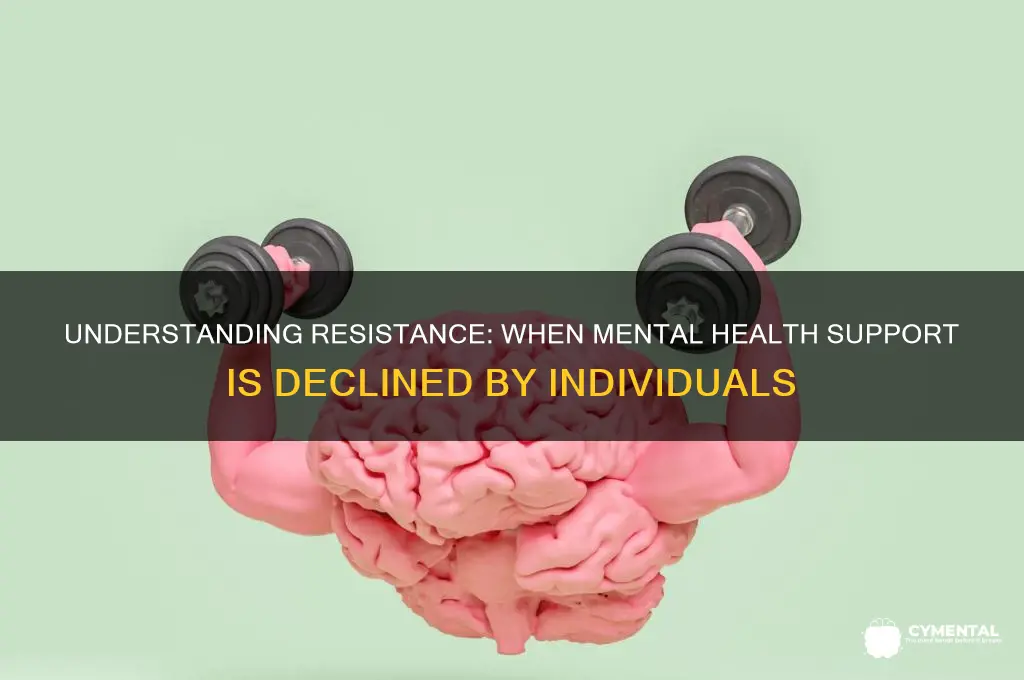
When individuals with mental health issues refuse help, it presents a complex and challenging situation for both the person affected and their support network. This refusal can stem from various factors, including stigma, fear of judgment, lack of awareness about their condition, or a desire to maintain control over their lives. While it is essential to respect autonomy and personal boundaries, untreated mental health issues can exacerbate symptoms, strain relationships, and lead to crises. Balancing empathy, patience, and persistence is crucial, as is fostering open communication and offering non-judgmental support. Understanding the underlying reasons for resistance and exploring alternative approaches, such as gradual engagement or involving trusted individuals, can help bridge the gap and encourage acceptance of assistance when the individual feels ready.
Explore related products


What You'll Learn
- Stigma and Shame: Fear of judgment often prevents individuals from seeking necessary mental health support
- Lack of Insight: Some may not recognize their condition, denying the need for assistance
- Trust Issues: Past trauma or negative experiences can make people hesitant to accept help
- Autonomy Concerns: Desire to maintain control over decisions may lead to refusal of interventions
- System Barriers: Inaccessible or inadequate mental health resources discourage people from seeking aid

Stigma and Shame: Fear of judgment often prevents individuals from seeking necessary mental health support
Stigma acts as an invisible barrier, trapping individuals with mental health issues in a cycle of silence and suffering. Consider this: a 2021 study by the American Psychological Association found that 57% of adults with mental illness reported experiencing stigma, with fear of judgment being a primary reason for avoiding treatment. This statistic isn’t just a number—it’s a reflection of how societal attitudes can literally block access to life-saving care. When someone fears being labeled as "weak," "crazy," or "unreliable," they’re more likely to internalize their struggles, delaying intervention until symptoms become unmanageable.
Now, let’s break this down practically. Imagine a 28-year-old professional who notices persistent anxiety affecting their work performance. Despite knowing therapy could help, they hesitate. Why? Because admitting to anxiety feels like admitting failure in a culture that glorifies productivity and emotional resilience. This isn’t just about personal pride—it’s about the very real consequences of being judged by colleagues, friends, or even family. The fear of being treated differently, losing opportunities, or becoming a topic of gossip outweighs the perceived benefits of seeking help.
To address this, we need strategies that dismantle stigma at both individual and systemic levels. Start by normalizing conversations about mental health in everyday settings. For instance, workplaces can implement policies like mandatory mental health training for managers, ensuring they know how to support employees without judgment. Schools can integrate mental health education into curricula, teaching students from age 12 onward that seeking help is a sign of strength, not weakness. On a personal level, language matters—replace phrases like "commit suicide" with "die by suicide" to reduce sensationalism and blame.
Here’s a tangible tip: If you’re trying to encourage someone to seek help, avoid phrases like, "You just need to get over it" or "Everyone feels that way sometimes." Instead, use open-ended questions like, "How can I support you right now?" or "Have you considered talking to someone about this?" These approaches validate their experience without minimizing it. Additionally, share resources discreetly—a text with a link to a telehealth platform or a local support group can feel less intimidating than a face-to-face confrontation.
Finally, let’s compare this to physical health. No one hesitates to seek treatment for a broken leg, yet mental health issues are often treated as optional or self-inflicted. This double standard is rooted in centuries of misinformation and fear. By reframing mental health as a fundamental aspect of overall well-being, we can begin to erode the stigma that keeps people isolated. It’s not just about changing minds—it’s about saving lives. Every time someone overcomes their fear of judgment to seek help, they contribute to a culture where vulnerability is met with compassion, not condemnation.
Healing Conversations: Talk Shows Shedding Light on Mental Health Struggles
You may want to see also
Explore related products


Lack of Insight: Some may not recognize their condition, denying the need for assistance
A startling reality in mental health is that up to 50% of individuals with severe conditions like schizophrenia or bipolar disorder experience anosognosia, a neurological impairment that leaves them unaware of their illness. This isn’t denial or stubbornness—it’s a brain-based inability to perceive their condition, often stemming from damage to the frontal lobe or disrupted neural pathways. For example, a person with schizophrenia might hear voices but believe they’re receiving divine messages, not hallucinations. This lack of insight isn’t a choice; it’s a symptom, making it nearly impossible for them to voluntarily seek help without external intervention.
Consider the case of a 28-year-old man diagnosed with bipolar disorder who stopped his lithium medication (typically prescribed at 900–1200 mg daily) because he felt “cured.” His family noticed manic episodes returning—sleepless nights, reckless spending, and grandiose plans—but he insisted he was simply “more productive.” Here, the lack of insight wasn’t about ignoring symptoms but genuinely believing his altered state was normal. This scenario highlights the challenge: how do you convince someone to accept help when their reality doesn’t align with yours?
To address this, caregivers and professionals must adopt a non-confrontational approach. Directly challenging someone’s perception can trigger defensiveness or withdrawal. Instead, focus on observable behaviors: “I’ve noticed you’ve been staying up late and seem more restless. How are you feeling?” Pair this with practical steps, like involving a trusted third party (e.g., a friend or clergy member) who can validate concerns without triggering resistance. For medication adherence, tools like pill organizers or apps can subtly reinforce routines without emphasizing the illness itself.
A comparative perspective reveals that cultural beliefs often exacerbate lack of insight. In collectivist societies, mental illness may be stigmatized as a family shame, leading individuals to suppress symptoms to protect their social standing. Conversely, in individualistic cultures, the emphasis on self-reliance can make admitting vulnerability feel like failure. Tailoring interventions to cultural norms—such as framing treatment as a way to regain strength or honor family values—can bridge this gap. For instance, a study in Asian communities found that reframing therapy as “stress management” increased acceptance rates by 30%.
The takeaway is clear: lack of insight isn’t a barrier to be broken but a symptom to be navigated. By understanding its neurological roots, using empathetic communication, and adapting strategies to cultural contexts, caregivers can create pathways to care that respect the individual’s reality while gently guiding them toward support. It’s not about forcing acknowledgment but fostering an environment where acceptance becomes possible—one step, one conversation, at a time.
Supporting Your Child’s Mental Health: Practical Steps for Parents
You may want to see also
Explore related products

$5.95


Trust Issues: Past trauma or negative experiences can make people hesitant to accept help
Past trauma casts a long shadow, often manifesting as deep-seated trust issues that complicate the acceptance of mental health support. For individuals who have experienced betrayal, neglect, or abuse, the very act of seeking help can feel like a vulnerability too risky to embrace. Consider a survivor of medical malpractice who, after a misdiagnosis or mistreatment, now views healthcare professionals with suspicion. Their reluctance to engage with therapists or psychiatrists isn’t stubbornness—it’s a survival mechanism rooted in self-preservation. This dynamic isn’t limited to professional settings; it extends to friends, family, or even support groups, where the fear of judgment or re-traumatization looms large.
To address this, start by acknowledging the validity of their fears. Instead of dismissing their concerns as irrational, validate their experiences and affirm that their hesitancy makes sense given their history. For instance, a therapist might say, “It’s completely understandable that you’d feel this way after what you’ve been through. How can we work together to rebuild trust at a pace that feels safe for you?” Practical steps include offering control over the process—allowing the individual to choose the setting, frequency, or even the initial focus of sessions. For younger adults or teens, incorporating creative therapies like art or music can bypass verbal communication, reducing pressure and fostering trust indirectly.
A comparative approach reveals that trust issues aren’t unique to mental health but are amplified in this context due to the intimate nature of the support required. Unlike seeking help for a physical ailment, mental health interventions often demand vulnerability and self-disclosure, which can trigger past traumas. For example, a person who experienced gaslighting in a previous relationship might fear that their therapist will invalidate their feelings or manipulate their narrative. Here, transparency becomes key. Providers should clearly explain their methods, intentions, and boundaries, ensuring the individual feels informed and empowered rather than coerced.
Persuasion in this scenario should focus on long-term benefits without minimizing immediate fears. Frame acceptance of help as an act of courage rather than a sign of weakness. Share anecdotes (with consent) of others who’ve overcome similar trust barriers, emphasizing the transformative power of consistent, compassionate support. For instance, a peer mentor who’s navigated their own trauma can serve as a relatable figure, bridging the gap between skepticism and hope. Additionally, offering low-stakes entry points, such as group sessions or online resources, can ease the transition into more personalized care.
In conclusion, rebuilding trust requires patience, empathy, and a tailored approach. Avoid generic reassurances and instead, meet the individual where they are—emotionally and psychologically. By respecting their pace, validating their fears, and providing tangible control over the process, you can gradually dismantle the barriers trauma has erected. Remember, the goal isn’t to convince them to trust immediately but to create an environment where trust can organically grow over time.
Nurturing Your Mind: Practical Strategies for Improving Mental Well-being
You may want to see also
Explore related products




Autonomy Concerns: Desire to maintain control over decisions may lead to refusal of interventions
The desire for autonomy is a fundamental human need, and for individuals with mental health issues, this need can become a powerful force that shapes their decisions about treatment. When faced with the prospect of interventions, some people may prioritize maintaining control over their lives, even if it means refusing potentially beneficial help. This refusal is not merely a matter of stubbornness or denial; it often stems from a deep-seated fear of losing agency in an already vulnerable state.
Consider the case of Sarah, a 28-year-old woman diagnosed with severe depression. Despite her therapist's recommendation for a combination of medication and cognitive-behavioral therapy, Sarah hesitates. She fears that starting an antidepressant, such as a selective serotonin reuptake inhibitor (SSRI) at a typical dosage of 20-40 mg daily, will alter her personality or make her feel "unnatural." This concern is not uncommon; many individuals worry that medication will change who they are, stripping them of their ability to make independent choices. Sarah's reluctance is a direct response to the perceived threat to her autonomy, as she values her emotional authenticity and the belief that she can overcome her struggles without external interventions.
In such situations, it is crucial to acknowledge and respect the individual's right to self-determination. Mental health professionals can employ a collaborative approach, engaging in open dialogues about the person's fears and preferences. For instance, a therapist might discuss the potential side effects of medication, emphasizing that adjustments can be made to find the right balance. They could also explore alternative therapies, like mindfulness-based cognitive therapy, which focuses on empowering individuals to manage their symptoms through self-awareness and skill-building. By offering choices and involving the person in decision-making, professionals can help alleviate autonomy concerns.
A persuasive argument can be made for the importance of informed consent and shared decision-making in mental health care. When individuals feel heard and understood, they are more likely to engage with treatment options. For example, a study on schizophrenia patients found that those who participated in shared decision-making processes had higher satisfaction rates and were more adherent to treatment plans. This approach allows individuals to weigh the benefits and risks of interventions, ensuring their values and preferences guide the process. It is a delicate balance between providing professional guidance and respecting the person's right to accept or refuse help.
In practice, addressing autonomy concerns requires a tailored approach. For adolescents, who are often navigating the development of their sense of self, involving parents or guardians in treatment decisions can be beneficial, but it should be done with the young person's consent. For older adults, who may have experienced a lifetime of making their own choices, a gentle, non-paternalistic approach is essential. Offering practical tips, such as providing written information about treatments to review at home, can help individuals feel more in control. Ultimately, the goal is to create a supportive environment where the desire for autonomy is respected, and interventions are seen as tools to enhance, rather than diminish, personal agency.
Seeking Support: A Guide to Asking for Mental Health Assistance
You may want to see also
Explore related products




System Barriers: Inaccessible or inadequate mental health resources discourage people from seeking aid
Mental health resources are often designed with a one-size-fits-all approach, ignoring the diverse needs of individuals. For instance, a 2021 study revealed that only 30% of mental health apps cater to specific demographics like adolescents, seniors, or culturally diverse groups. This oversight creates a significant barrier, as a 45-year-old immigrant struggling with depression may find little relevance in a platform primarily tailored for college students. Without targeted resources, these individuals are less likely to engage, perpetuating their reluctance to seek help.
Consider the logistical hurdles: a single mother working two jobs cannot afford a $150 therapy session or a 45-minute commute to the nearest clinic. In rural areas, where 60% of non-metropolitan counties lack psychiatrists, the situation is dire. Telehealth services, while promising, require reliable internet and tech literacy—luxuries not everyone possesses. A 2020 survey found that 40% of low-income individuals skipped mental health appointments due to transportation or cost, highlighting how systemic inaccessibility directly discourages engagement.
Even when resources exist, their inadequacy can be demoralizing. A patient prescribed antidepressants might abandon treatment if side effects aren’t managed properly, or if follow-up care is nonexistent. For example, SSRIs like fluoxetine require 4–6 weeks to take effect, but without consistent monitoring, patients may discontinue use prematurely. Similarly, group therapy sessions that fail to address individual trauma can feel dismissive, reinforcing the belief that "the system doesn’t understand me."
To dismantle these barriers, start by auditing resource availability in your community. Advocate for sliding-scale fees, multilingual services, and culturally competent providers. For instance, a clinic offering $20 sessions for those earning under $30,000 annually saw a 70% increase in low-income clients. Additionally, push for integrated care models where mental health services are embedded in primary care settings, reducing stigma and improving accessibility. Small, strategic changes can transform systemic barriers into pathways to support.
Jazz Therapy: How Music Improves Mental Health and Well-being
You may want to see also
Frequently asked questions
People may refuse help due to stigma, fear of judgment, lack of awareness about their condition, or a desire to maintain control over their lives. Additionally, symptoms of their mental health issue, such as paranoia or hopelessness, can make them resistant to assistance.
Approach them with empathy, listen without judgment, and validate their feelings. Encourage small steps toward help, such as speaking to a trusted friend or accessing resources. Avoid forcing treatment, as it may increase resistance.
If the person is at immediate risk of harm to themselves or others, contact emergency services or a mental health crisis team. Otherwise, continue to offer support and gently encourage professional help while respecting their autonomy.
In some cases, involuntary treatment may be legally possible if the person is deemed a danger to themselves or others. However, this varies by region and requires professional assessment. It’s generally a last resort and should be approached with caution.