Harper Lewis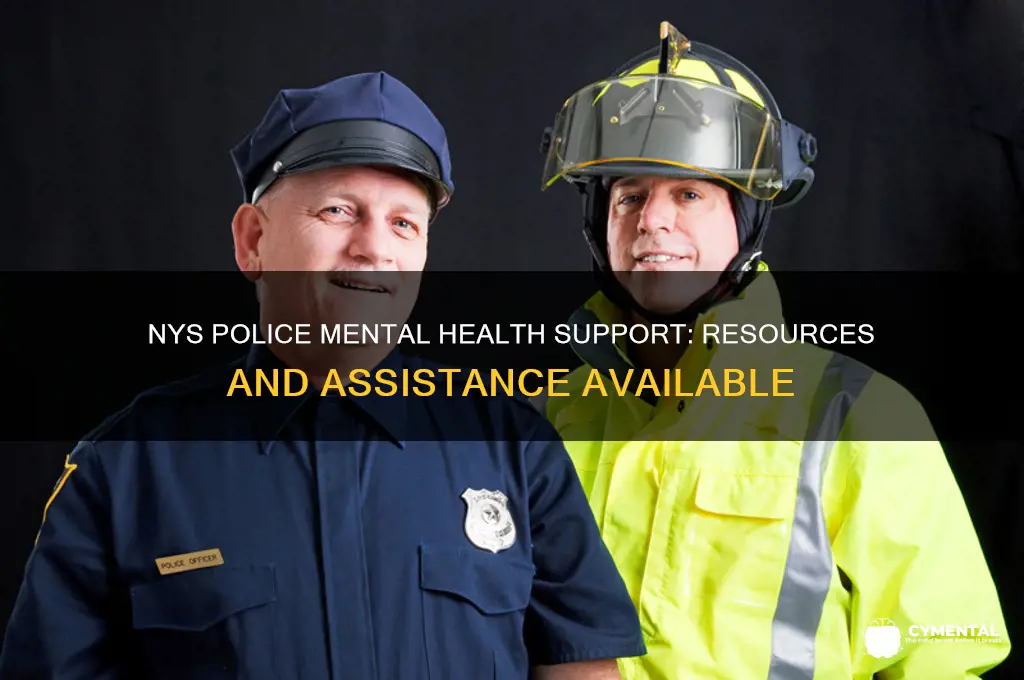
In New York State (NYS), police officers face unique challenges that can significantly impact their mental health, including high-stress situations, trauma exposure, and the constant pressure of their roles. Recognizing the critical need for support, NYS has established specialized resources and programs to address the mental well-being of law enforcement personnel. Officers can access confidential counseling services, peer support programs, and crisis hotlines tailored to their specific needs. Additionally, organizations like the Police Organization Providing Peer Assistance (POPPA) and the NYS Division of Criminal Justice Services offer training and resources to promote resilience and mental health awareness within police departments. These initiatives aim to ensure that officers have the necessary tools and support to manage stress, cope with trauma, and maintain their overall well-being while serving their communities.
Explore related products

$19.95


What You'll Learn
- Peer Support Programs: Officers connect with colleagues for emotional support and shared experiences
- Employee Assistance Programs (EAPs): Confidential counseling and resources for mental health and personal issues
- Critical Incident Stress Management (CISM): Immediate support after traumatic events to prevent long-term effects
- NYS Mental Health Clinics: Specialized clinics offering therapy and treatment tailored for law enforcement
- Training & Resilience Programs: Workshops to build coping skills and mental resilience for officers

Peer Support Programs: Officers connect with colleagues for emotional support and shared experiences
Police officers in New York State face unique stressors that can take a toll on their mental health. Peer support programs offer a powerful solution by connecting officers with colleagues who understand their experiences firsthand. These programs foster a culture of openness and trust, allowing officers to share their struggles without fear of judgment.
Unlike traditional therapy, peer support relies on shared experiences rather than clinical expertise. Officers who have navigated similar challenges act as confidants, providing emotional support, practical advice, and a sense of belonging. This camaraderie can be particularly effective in breaking down the stigma surrounding mental health within law enforcement.
Consider the following scenario: A young officer witnesses a traumatic event on duty. Feeling overwhelmed and isolated, they hesitate to seek help through formal channels. A peer support program could connect them with a seasoned officer who has experienced similar trauma. This connection provides a safe space to process emotions, learn coping mechanisms, and realize they are not alone.
Research suggests peer support programs can significantly improve officer well-being. A study by the National Institute of Justice found that officers participating in such programs reported reduced symptoms of PTSD, depression, and anxiety. Furthermore, these programs can enhance resilience, improve job satisfaction, and foster a more supportive work environment.
Implementing effective peer support requires careful consideration. Selecting and training peer supporters is crucial. These individuals should possess strong communication skills, empathy, and a deep understanding of law enforcement culture. Establishing clear guidelines and confidentiality protocols is essential to ensure officers feel safe and supported. Regular supervision and ongoing training for peer supporters are also vital to maintain program integrity and effectiveness.
By embracing peer support programs, New York State law enforcement agencies can create a culture that prioritizes officer mental health. These programs offer a unique and powerful tool to address the unique challenges faced by those who serve and protect our communities.
Typing for Tranquility: How Keystrokes Boost Mental Well-Being
You may want to see also
Explore related products


Employee Assistance Programs (EAPs): Confidential counseling and resources for mental health and personal issues
Police officers in New York State face unique stressors that can take a toll on their mental health, from high-pressure situations to traumatic incidents. Employee Assistance Programs (EAPs) offer a critical lifeline, providing confidential counseling and resources tailored to these challenges. Unlike general mental health services, EAPs are specifically designed to address the occupational demands and cultural nuances of law enforcement, ensuring officers receive support that resonates with their experiences.
Consider the structure of an EAP: it typically includes access to licensed therapists who understand the law enforcement context, 24/7 crisis hotlines, and resources for issues like substance abuse, family conflicts, or financial stress. For instance, the NYS Division of Criminal Justice Services partners with EAP providers to offer specialized programs for officers, often at no cost. These programs emphasize confidentiality, a key factor in encouraging officers to seek help without fear of stigma or career repercussions.
A practical example is the use of peer support groups within EAPs, where officers can connect with colleagues who have faced similar struggles. These groups foster a sense of community and provide actionable coping strategies. Additionally, EAPs often offer workshops on stress management, resilience-building, and trauma recovery, equipping officers with tools to navigate both on-duty and off-duty challenges.
However, leveraging EAPs effectively requires awareness and proactive engagement. Officers should familiarize themselves with their department’s EAP offerings, including how to access services and what to expect during counseling sessions. Supervisors play a crucial role too, by normalizing discussions around mental health and encouraging participation without judgment. For families, understanding EAP resources can help them support their loved ones in law enforcement more effectively.
In conclusion, EAPs are not just a benefit—they are a necessity for police officers in NYS. By offering confidential, specialized support, these programs address the unique mental health needs of law enforcement, fostering resilience and well-being in one of the most demanding professions. Officers should view EAPs as a proactive tool, not a last resort, to maintain their mental health and continue serving their communities effectively.
Hockey's Mental Edge: Boosting Resilience, Focus, and Well-Being
You may want to see also
Explore related products




Critical Incident Stress Management (CISM): Immediate support after traumatic events to prevent long-term effects
Police officers in New York State face high-stress situations daily, from violent crimes to natural disasters, which can lead to critical incident stress. Without immediate intervention, this stress can develop into long-term mental health issues like PTSD, depression, or anxiety. Critical Incident Stress Management (CISM) is a structured, peer-driven approach designed to mitigate these effects by providing timely psychological support. Implemented within 24–72 hours of a traumatic event, CISM aims to normalize responses, reduce distress, and foster resilience.
The CISM process typically involves a group debriefing led by trained peers or mental health professionals. During these sessions, officers discuss their experiences, emotions, and reactions in a safe, non-judgmental environment. For example, after a fatal shooting or a harrowing rescue, officers might gather to share their thoughts, fears, and coping strategies. This collective processing helps validate their feelings and reduces the sense of isolation that often follows trauma. Research shows that early intervention through CISM can significantly lower the risk of chronic psychological disorders.
While CISM is effective, it’s not a one-size-fits-all solution. Officers with pre-existing mental health conditions or those who experience severe reactions may require additional support, such as individual counseling or medication. In NYS, departments often partner with organizations like the Police Organization Providing Peer Assistance (POPPA) or the NYS Division of Criminal Justice Services (DCJS) to provide CISM services. These programs ensure confidentiality and are tailored to the unique challenges faced by law enforcement.
Implementing CISM requires proactive leadership and a culture that prioritizes mental health. Departments should train officers as peer support specialists, integrate CISM into their critical incident response protocols, and encourage participation without stigma. Practical tips include scheduling debriefings promptly, ensuring privacy, and offering follow-up resources like EAPs (Employee Assistance Programs) or telehealth services. By addressing trauma head-on, CISM not only protects individual officers but also enhances overall departmental morale and effectiveness.
Finding Mental Health Support: Where to Go for Help and Healing
You may want to see also
Explore related products


NYS Mental Health Clinics: Specialized clinics offering therapy and treatment tailored for law enforcement
New York State recognizes the unique mental health challenges faced by law enforcement officers, who often witness trauma, make split-second decisions, and carry the weight of public safety. To address these specific needs, NYS has established specialized mental health clinics tailored for police officers. These clinics offer a range of services, from individual therapy to group support, designed to address the psychological toll of the job.
One key feature of these clinics is their focus on confidentiality and trust. Officers often hesitate to seek help due to stigma or fear of professional repercussions. NYS mental health clinics for law enforcement are staffed by professionals trained to understand the culture and demands of policing, creating a safe space for officers to discuss their experiences without judgment. For instance, therapists might use evidence-based approaches like Cognitive Behavioral Therapy (CBT) to help officers reframe traumatic incidents or manage stress-related symptoms.
Another critical aspect is the integration of peer support programs within these clinics. Peer support officers, who are trained in mental health first aid, work alongside clinicians to provide additional layers of assistance. This dual approach ensures officers receive both professional treatment and the camaraderie of someone who understands the job firsthand. For example, a peer support officer might accompany a colleague to their first therapy session, easing anxiety and fostering a sense of solidarity.
Practical considerations are also addressed in these clinics. Recognizing the unpredictable schedules of law enforcement, many offer flexible appointment times, including evenings and weekends. Some clinics even provide telehealth options, allowing officers to access care remotely when in-person visits are not feasible. Additionally, clinics often collaborate with police departments to offer workshops on stress management, resilience-building, and self-care strategies tailored to the demands of the profession.
While these specialized clinics are a significant step forward, their success relies on continued funding and awareness. Departments must actively encourage officers to utilize these resources, emphasizing that seeking help is a sign of strength, not weakness. By investing in the mental well-being of law enforcement, NYS not only supports its officers but also enhances public safety, as healthier officers are better equipped to serve their communities effectively.
Empowering Minds: Careers That Support Mental Health and Well-Being
You may want to see also
Explore related products




Training & Resilience Programs: Workshops to build coping skills and mental resilience for officers
Police officers in New York State face unique stressors that can erode mental resilience over time. High-pressure situations, long shifts, and exposure to trauma are just a few factors contributing to elevated rates of anxiety, depression, and PTSD among law enforcement. Recognizing this, departments across NYS are increasingly turning to Training & Resilience Programs designed to equip officers with practical coping skills and mental fortitude. These workshops go beyond traditional physical training, addressing the psychological demands of the job head-on.
One effective approach is Cognitive Behavioral Therapy (CBT)-based workshops, which teach officers to identify and reframe negative thought patterns. For instance, a 6-week program might include weekly 2-hour sessions focusing on stress management techniques, such as mindfulness exercises and progressive muscle relaxation. Officers learn to challenge catastrophic thinking—a common response to high-stakes scenarios—by breaking situations into manageable parts. A study by the NYPD found that officers who completed such programs reported a 30% reduction in stress levels within three months.
Another critical component is Peer Support Training, which fosters a culture of openness and mutual aid within departments. These workshops train officers to recognize signs of distress in colleagues and provide initial support before professional intervention is needed. For example, the NYS Division of Criminal Justice Services offers a 16-hour course that covers active listening, boundary-setting, and referral protocols. This approach not only builds resilience but also strengthens unit cohesion, a key factor in long-term mental health.
Scenario-based resilience training is also gaining traction, simulating real-world challenges to prepare officers emotionally and mentally. These workshops use role-playing exercises to recreate high-stress situations, such as domestic violence calls or active shooter scenarios. Afterward, facilitators lead debrief sessions to process emotions and discuss coping strategies. A pilot program in Albany reported that officers who participated in these simulations felt more prepared and less overwhelmed when facing similar situations on the job.
Finally, digital resilience tools are being integrated into training programs to provide ongoing support. Apps like *Headspace* or *CopLine* offer guided meditations, crisis hotlines, and self-assessment tools tailored to law enforcement. Departments are encouraged to incorporate these resources into their wellness initiatives, ensuring officers have access to help anytime, anywhere. For instance, the Suffolk County Police Department mandates that all new recruits download a mental health app as part of their onboarding process.
In conclusion, Training & Resilience Programs are not just a luxury but a necessity for NYS police officers. By combining evidence-based therapies, peer support, scenario training, and digital tools, these workshops empower officers to navigate the mental challenges of their profession. Departments that invest in such programs not only protect their officers’ well-being but also enhance overall community safety and trust.
Recognizing Signs: When to Seek Mental Health Support for Others
You may want to see also
Frequently asked questions
Police officers in NYS can access mental health support through the NYS Police Benevolent Association (PBA) programs, local Employee Assistance Programs (EAPs), and specialized organizations like the Code Green Campaign, which focus on first responder mental health.
Yes, confidential resources include the NYS Office of Mental Health’s crisis hotlines, peer support programs within police departments, and external counseling services that adhere to strict privacy policies.
NYS police officers receive training in crisis intervention, stress management, and recognizing signs of mental health issues in themselves and colleagues, often through programs like Crisis Intervention Team (CIT) training.
Yes, many departments offer free mental health services through EAPs, nonprofit organizations, or state-funded programs specifically designed for first responders.
Family members can access support through organizations like the NYS PBA Family Assistance Program, local counseling services, and community resources focused on first responder families.